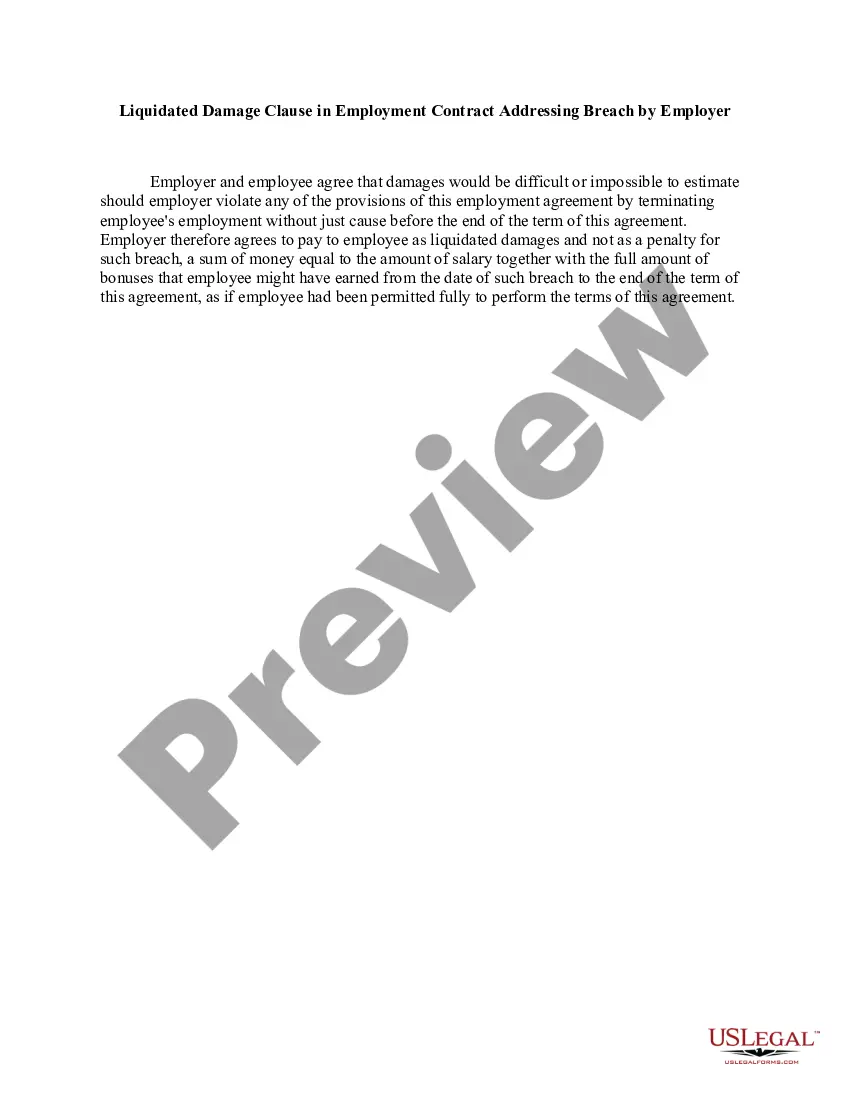
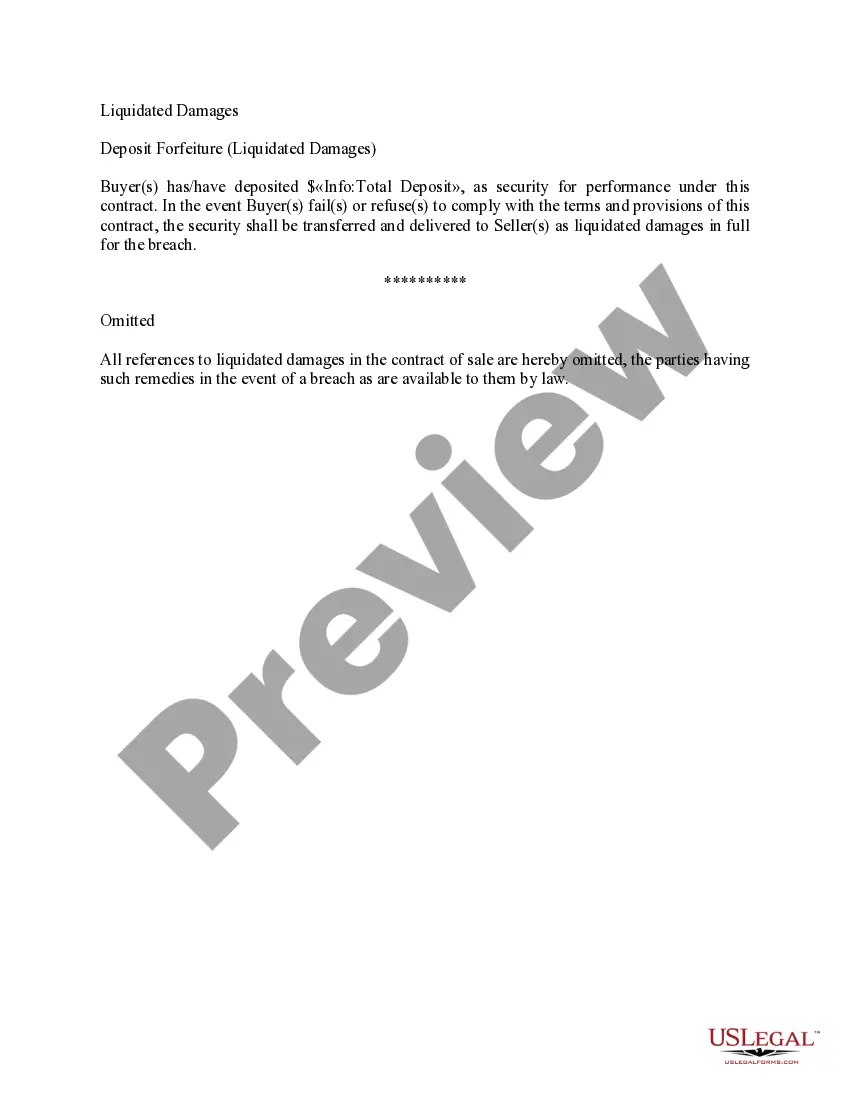
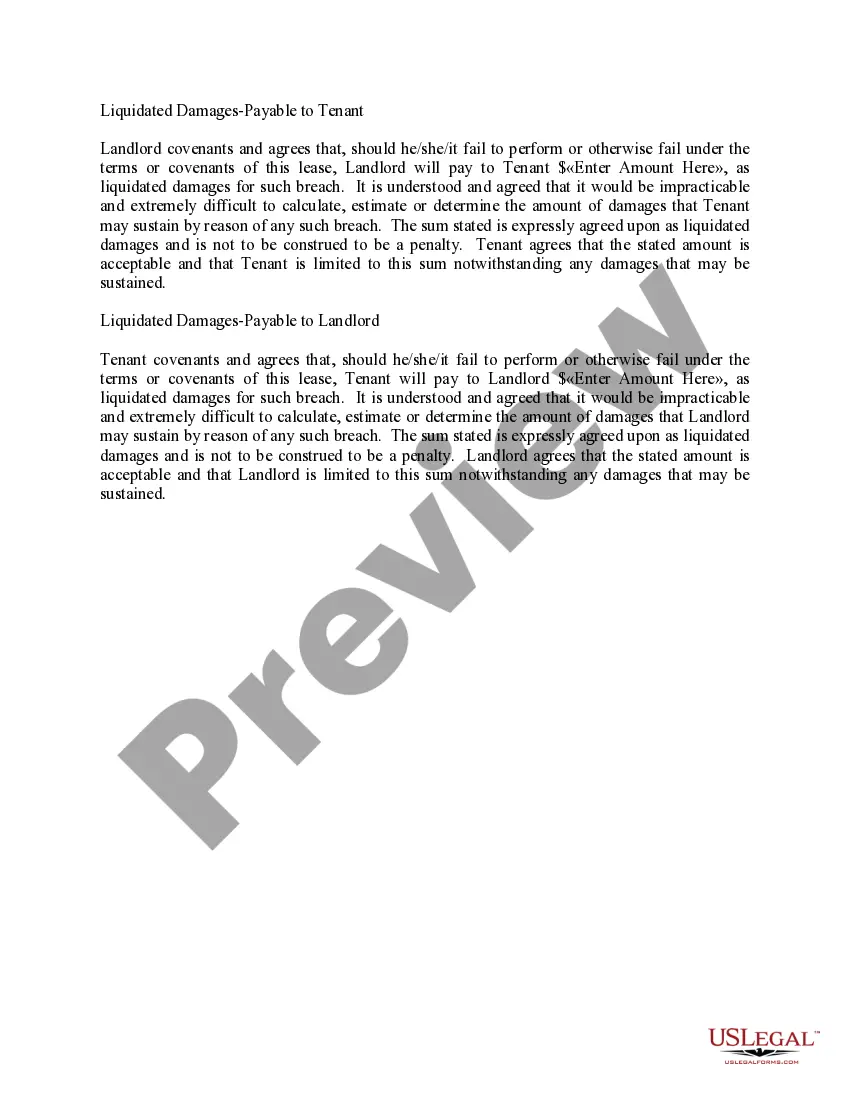
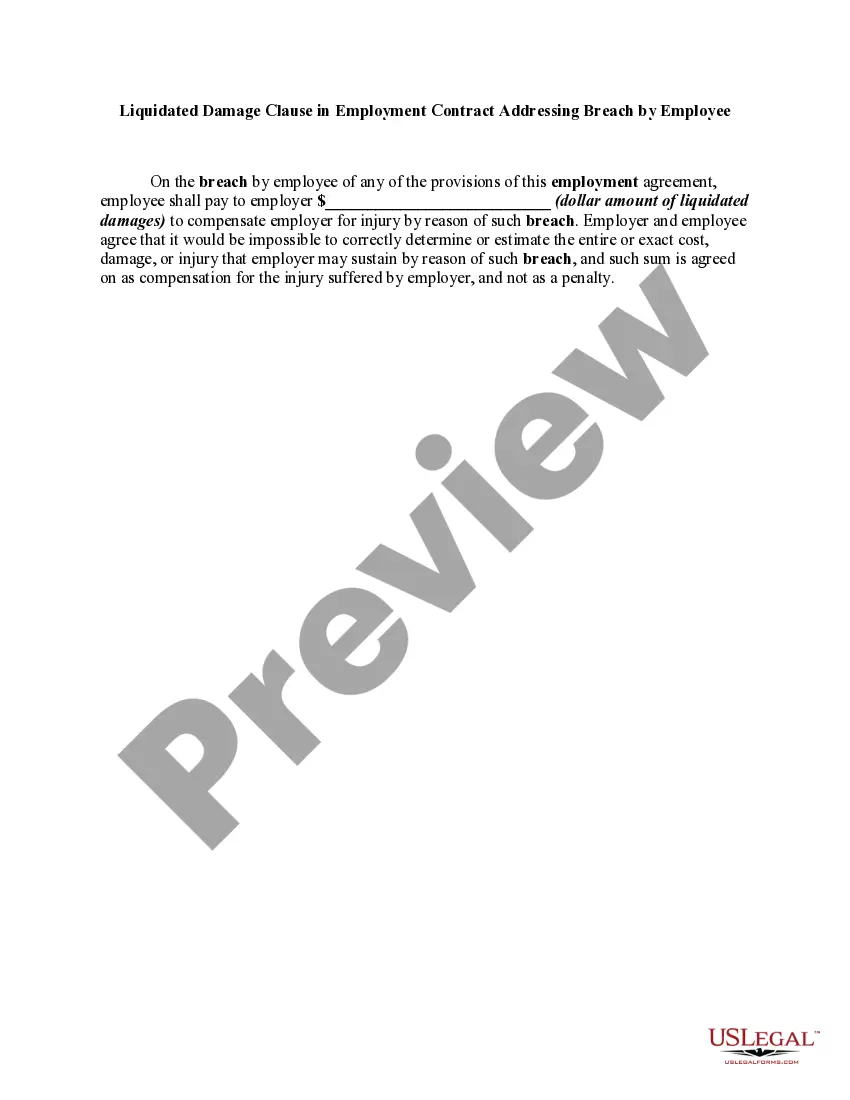
Examples of clauses regarding Liquidated Damages, for such breach, for property, by Tenant OR by Landlord. A buyer and seller of real estate will often include a liquidated damages provision in the purchase and sale agreement as a means for stipulating the amount of damages the seller will receive in the event of a breach of the agreement by the buyer.
Absolutely! They’re often seen in construction and service contracts as both parties want to protect their interests and ensure accountability.
Yes, you can! If you believe the clause is too harsh or not applicable, you can contest it in court. Courts generally look for fairness, so it helps if your argument is strong.
There isn't a specific maximum; however, the amount should be reasonable and reflect actual expected damages to be enforceable in court.
Typically, the amount is determined based on estimated losses that might occur due to a breach of contract or delay. It's like a ballpark figure that both sides agree on upfront.
Including this clause can act as a safety net. It helps both parties understand the stakes and can prevent disputes by having a clear picture of penalties for not meeting deadlines.