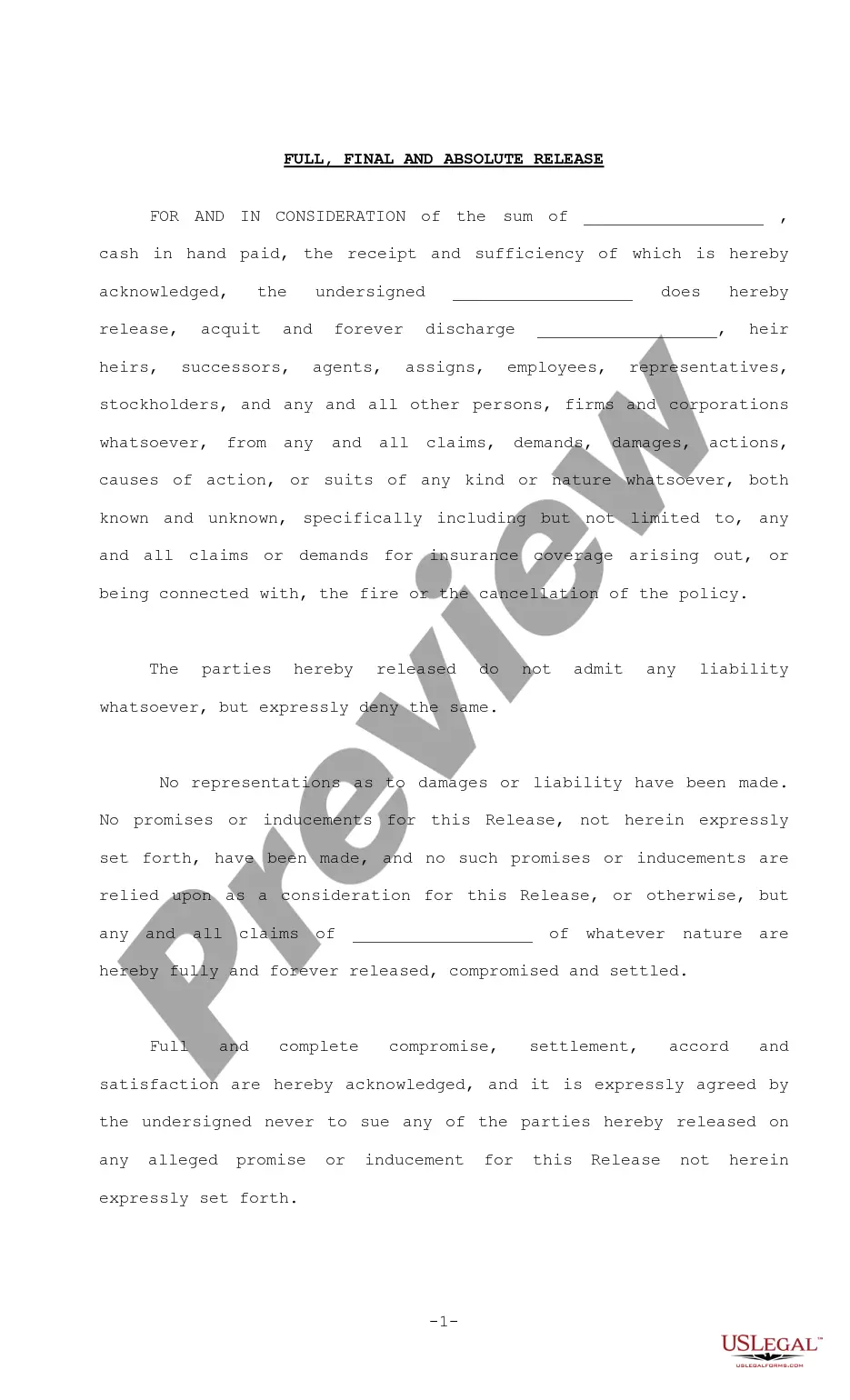
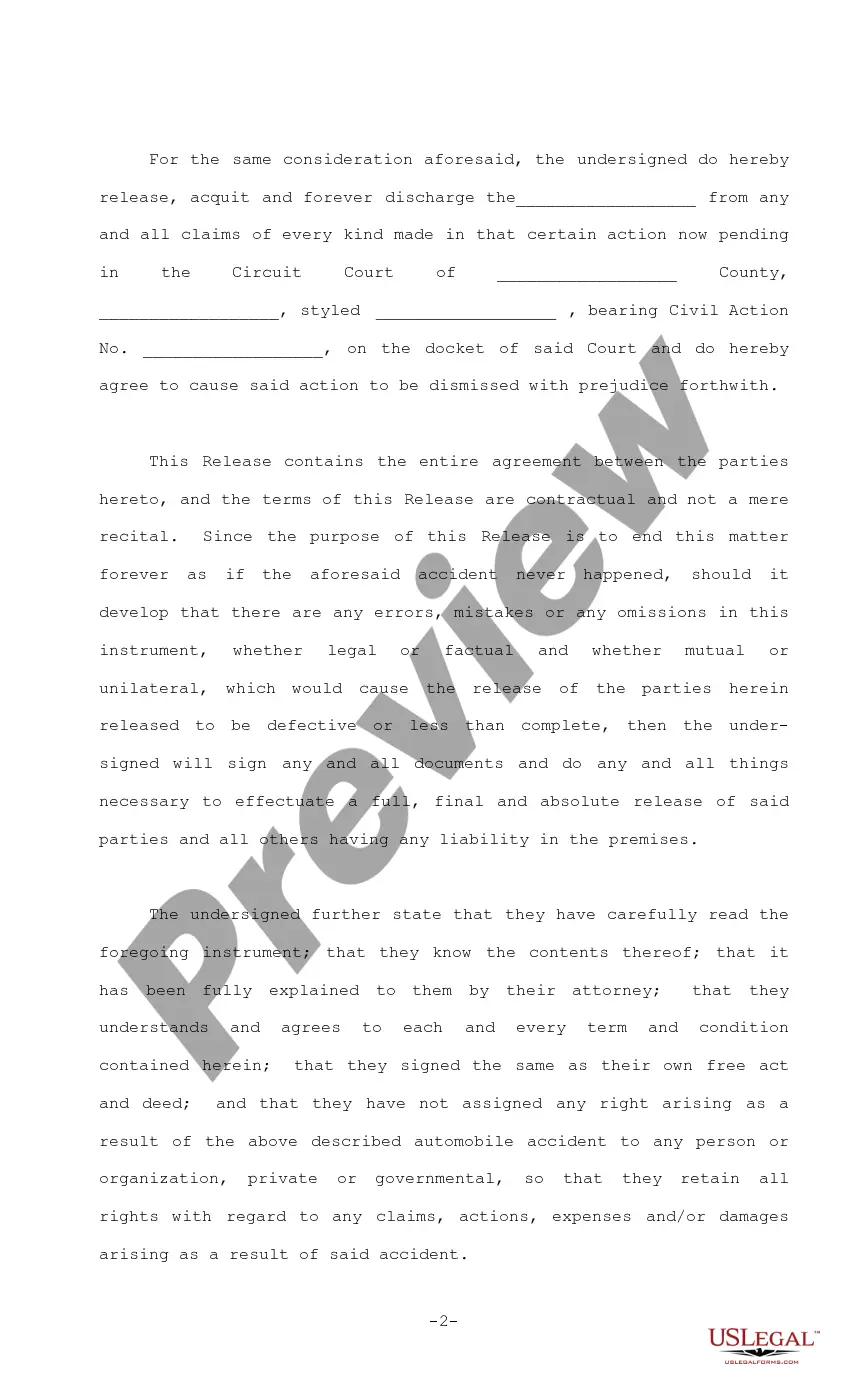
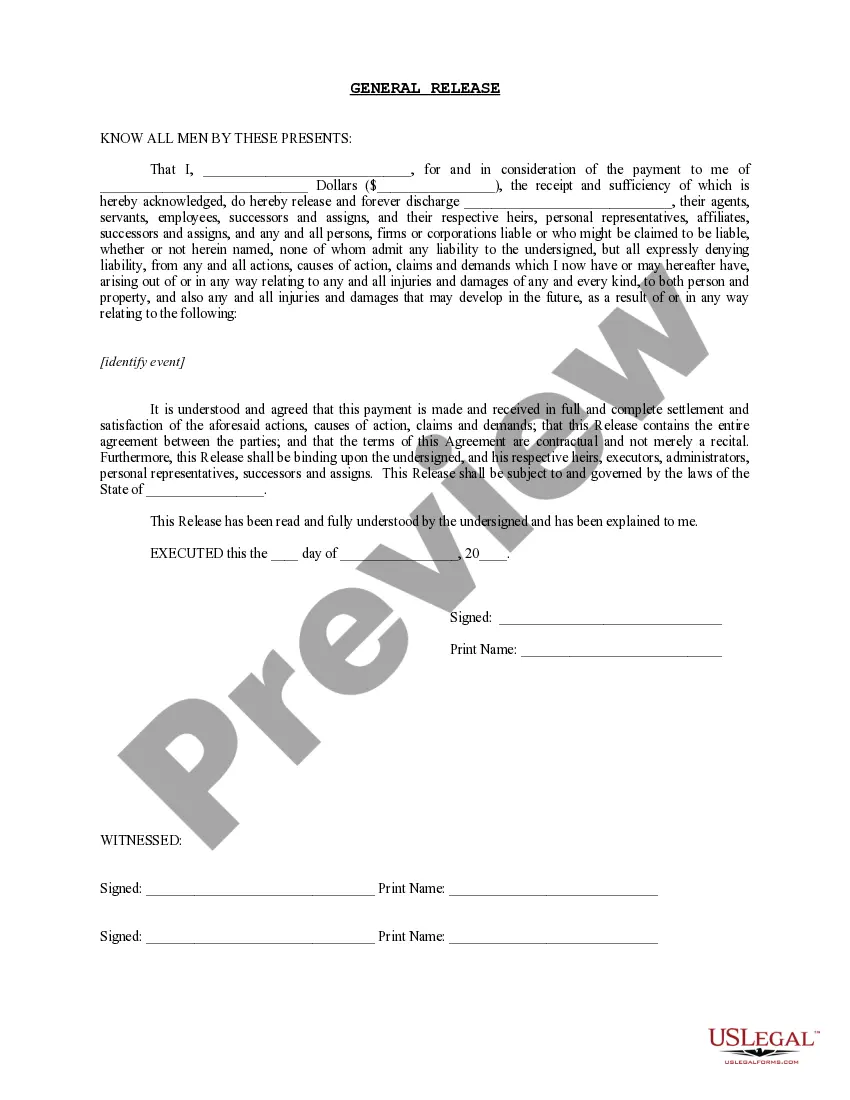
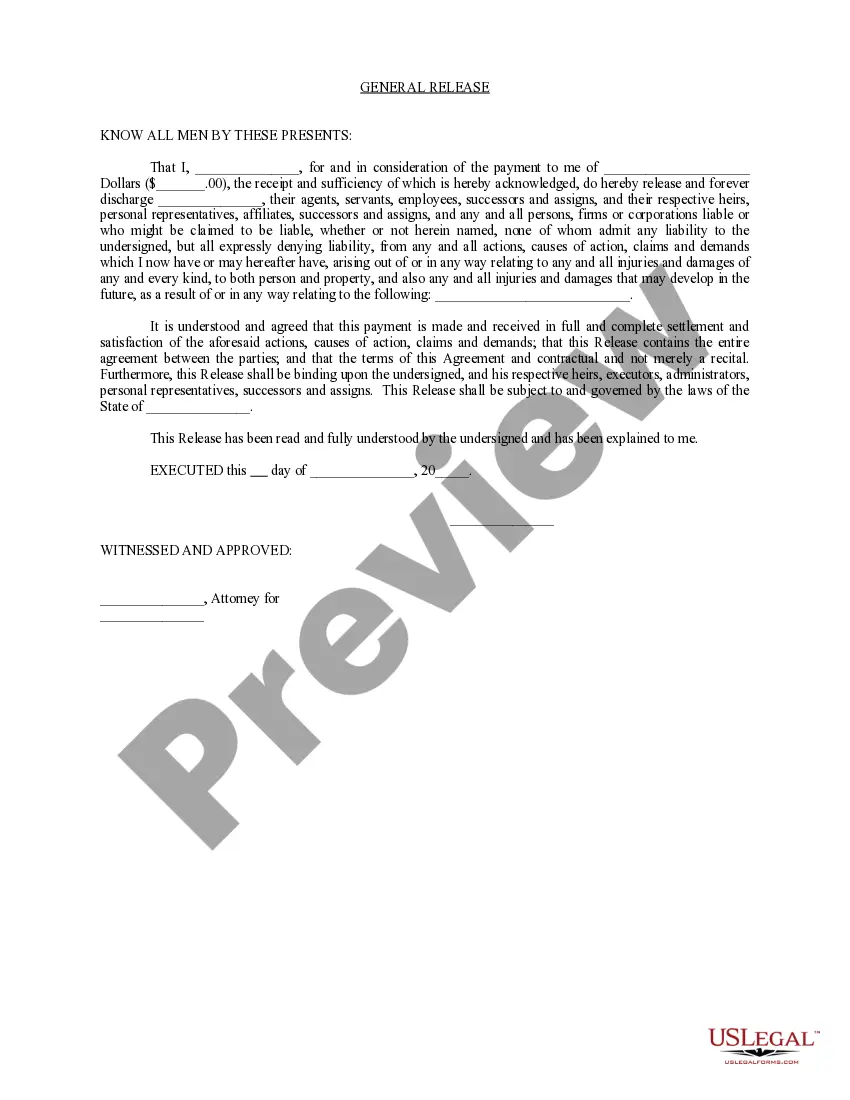
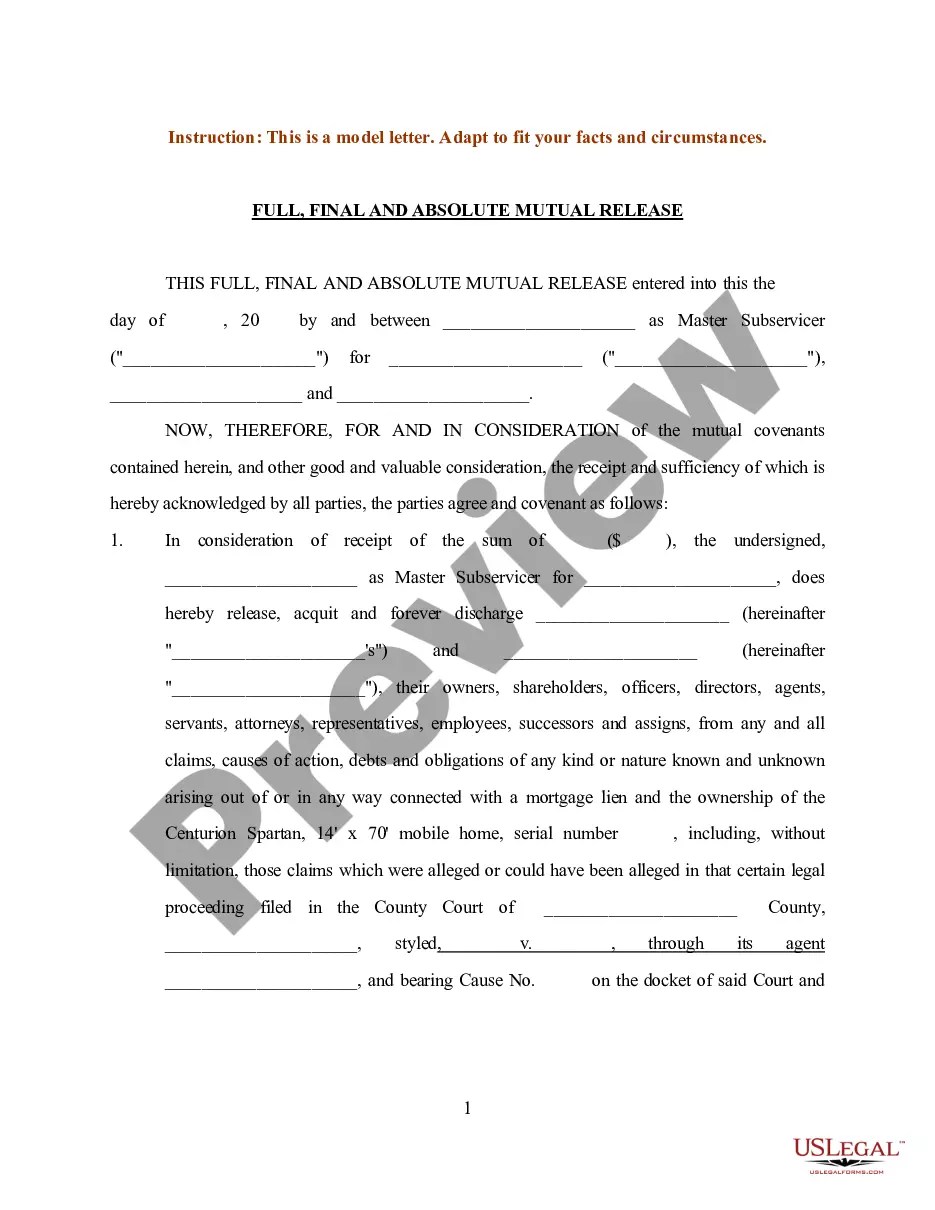
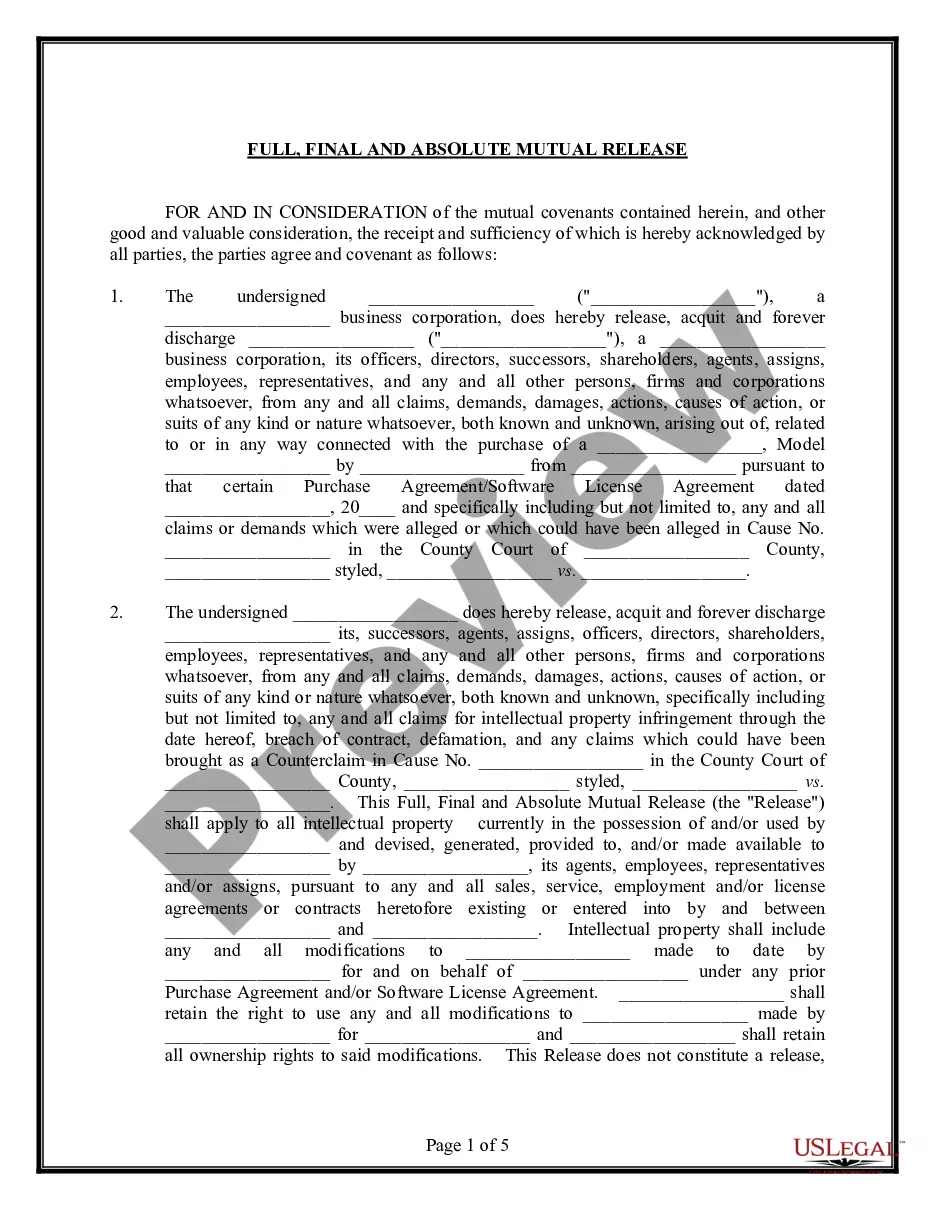
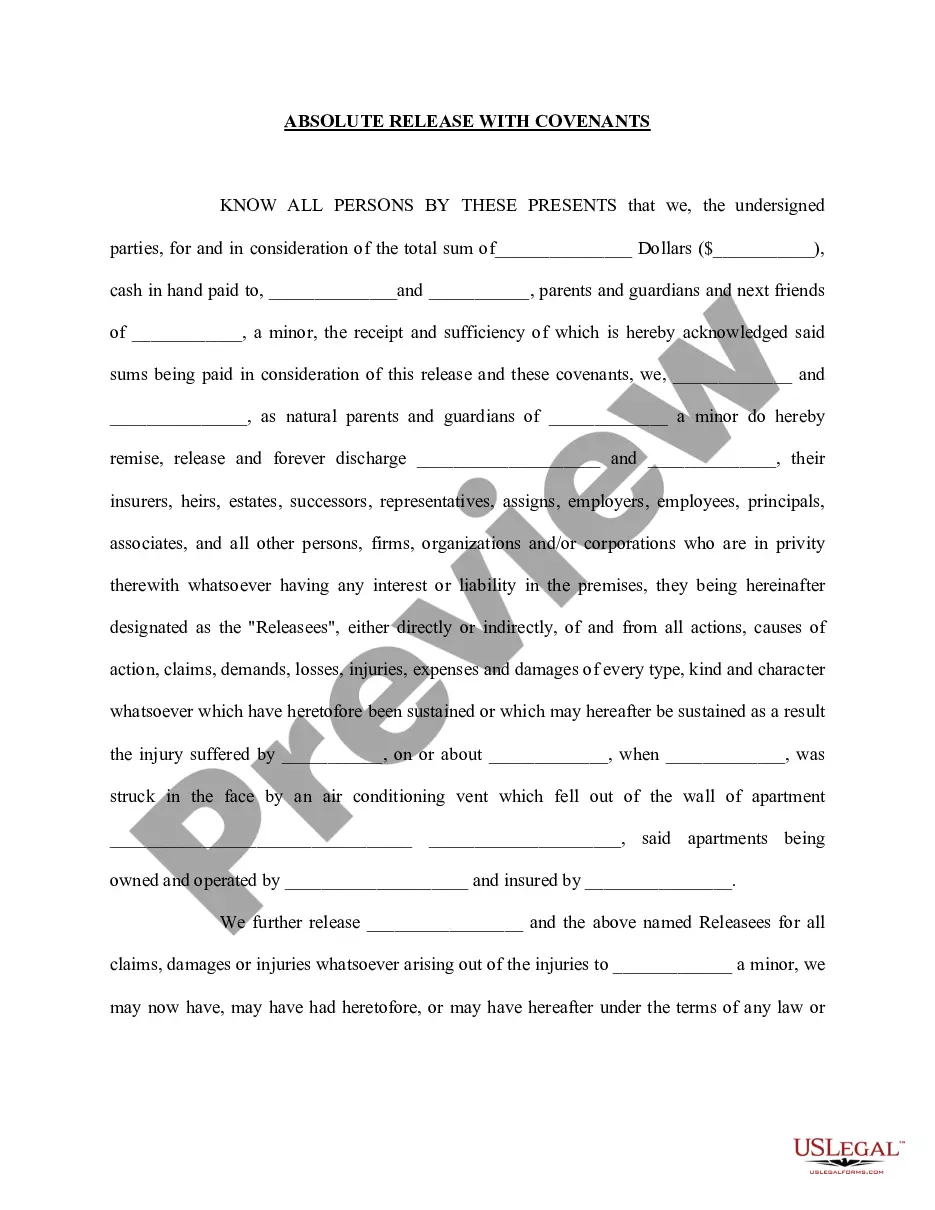
This form is a full, final and absolute release. The releasor acquits and discharges the releasee from any and all claims arising out of a fire and the cancellation of an insurance policy. The releasee does not admit any liability, but expressly denies the same. Also, no representations as to damages or liability have been made.
If you’re not comfortable signing, it’s best to communicate your concerns. It might seem like a dead end, but there may be room for negotiation or alternative resolutions.
Once you sign off, you wave goodbye to any future claims related to that issue, so it’s important to know what you’re letting go of before you sign.
You should outline who is involved, what claims are being released, and include a statement saying that this release is the final nail in the coffin for those claims.
Generally speaking, once it's signed, it’s hard to backtrack. However, if there’s proof of trickery or misunderstanding, it might be worth a shot to contest it.
While it's possible to draft one yourself, getting a lawyer is often a good idea to make sure everything's on the up and up and protecting your interests.
People usually sign this release to settle a dispute or claim, allowing them to put that chapter behind them and move forward without looking over their shoulder.
A Full, Final and Absolute Release is a legal document that clears you from any future claims or obligations related to a specific issue, kind of like a clean slate for both sides.