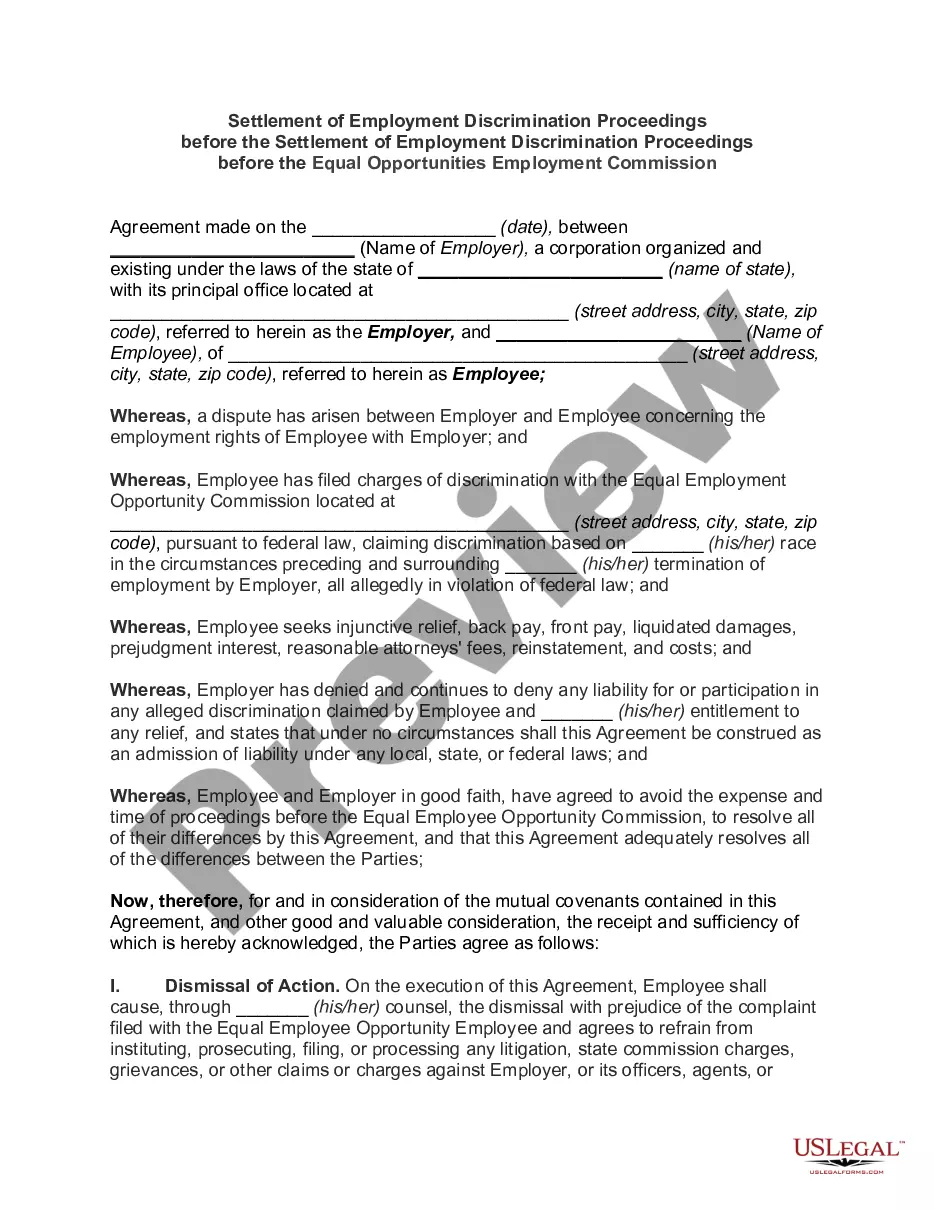
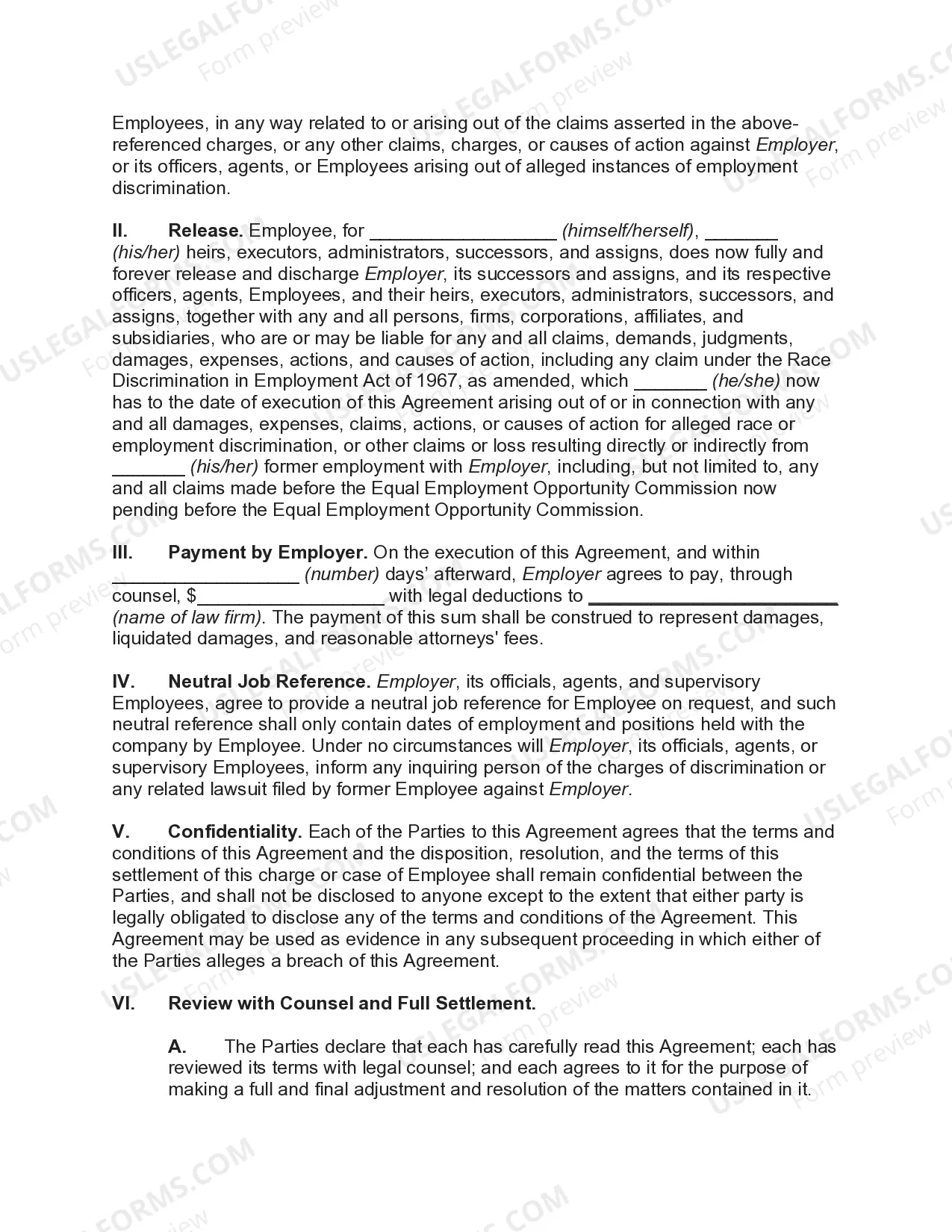
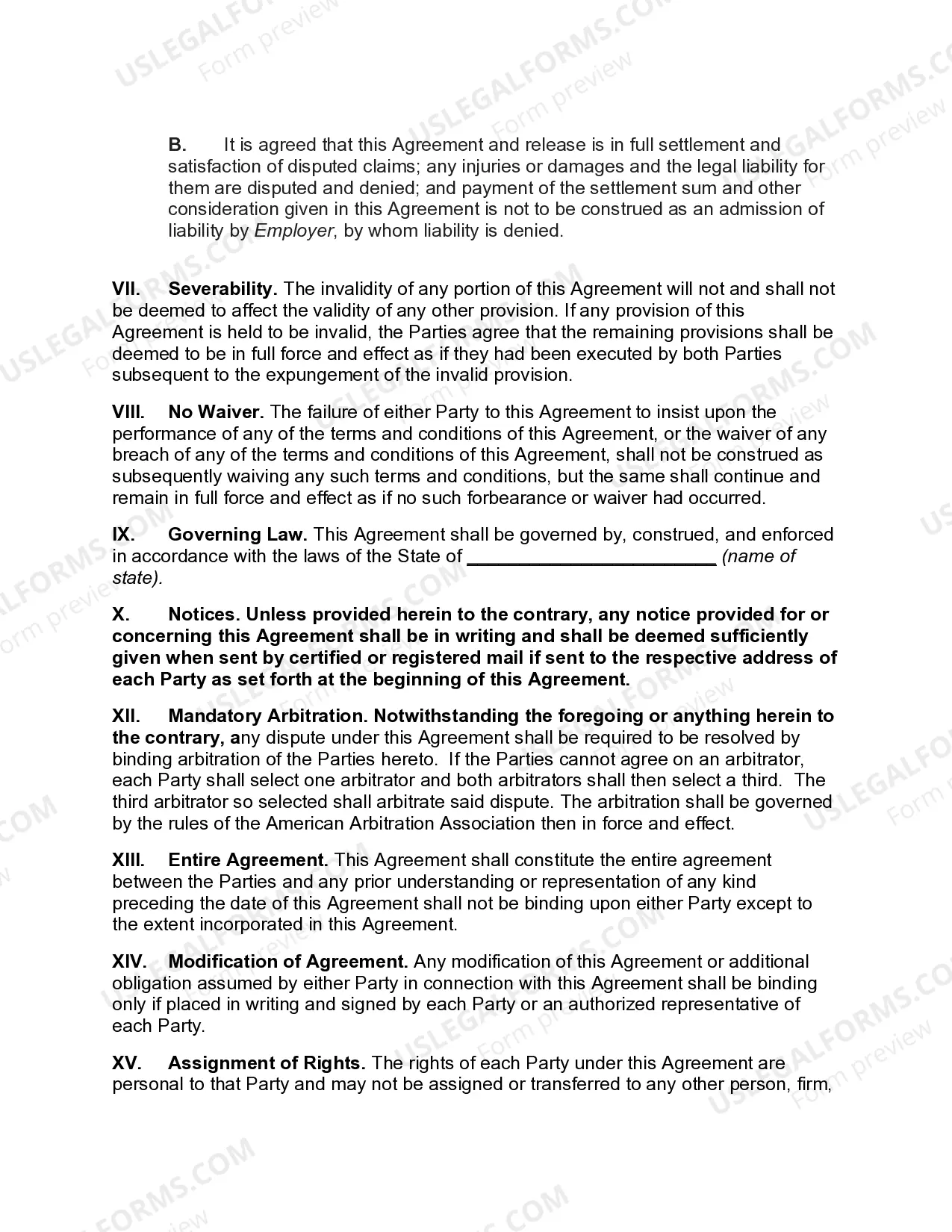
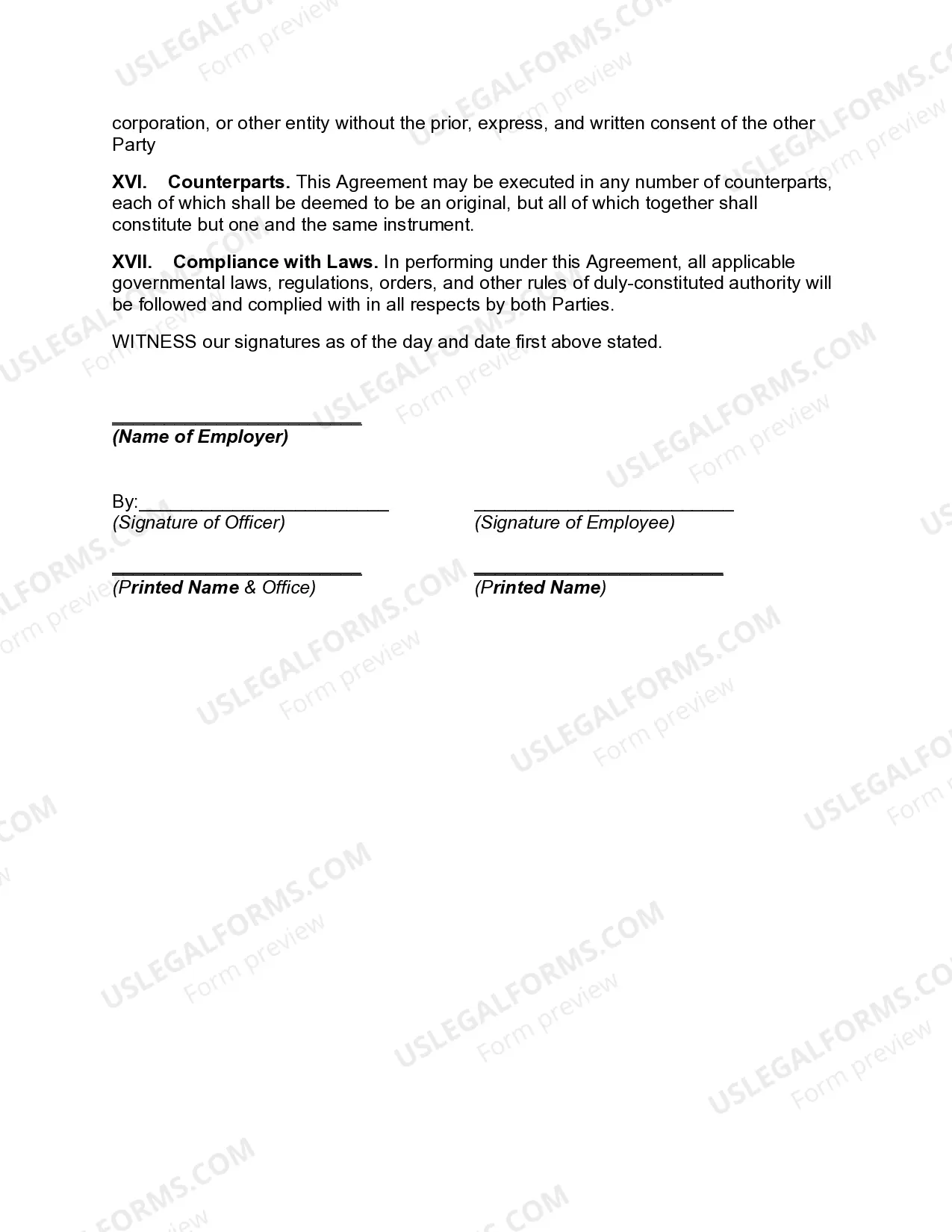
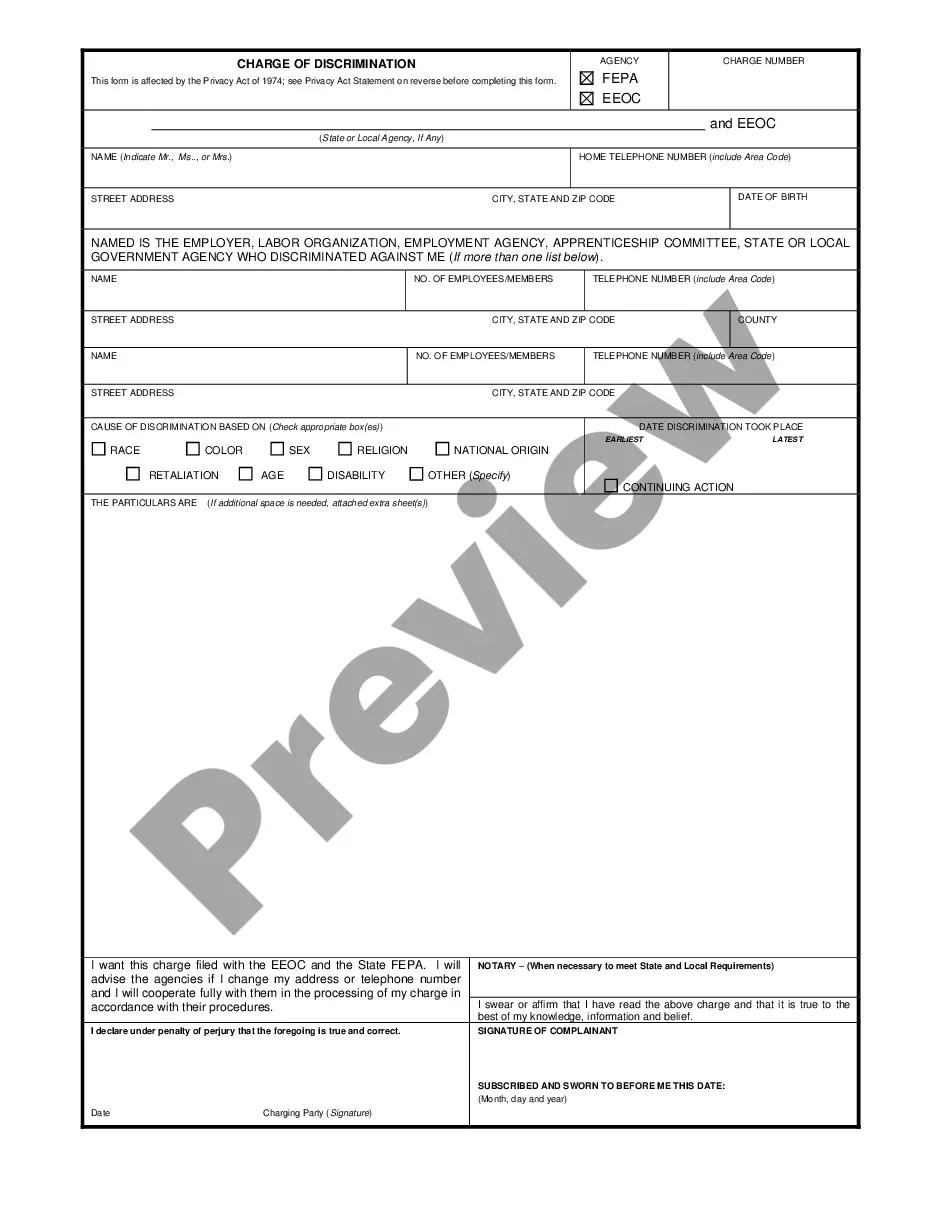
Travis Texas Settlement of Employment Discrimination Proceedings before the Equal Opportunities Employment Commission (EEOC)
Description
Get your form ready online
Our built-in tools help you complete, sign, share, and store your documents in one place.
Make edits, fill in missing information, and update formatting in US Legal Forms—just like you would in MS Word.
Download a copy, print it, send it by email, or mail it via USPS—whatever works best for your next step.
Sign and collect signatures with our SignNow integration. Send to multiple recipients, set reminders, and more. Go Premium to unlock E-Sign.
If this form requires notarization, complete it online through a secure video call—no need to meet a notary in person or wait for an appointment.
We protect your documents and personal data by following strict security and privacy standards.

Make edits, fill in missing information, and update formatting in US Legal Forms—just like you would in MS Word.

Download a copy, print it, send it by email, or mail it via USPS—whatever works best for your next step.

Sign and collect signatures with our SignNow integration. Send to multiple recipients, set reminders, and more. Go Premium to unlock E-Sign.

If this form requires notarization, complete it online through a secure video call—no need to meet a notary in person or wait for an appointment.

We protect your documents and personal data by following strict security and privacy standards.
Looking for another form?
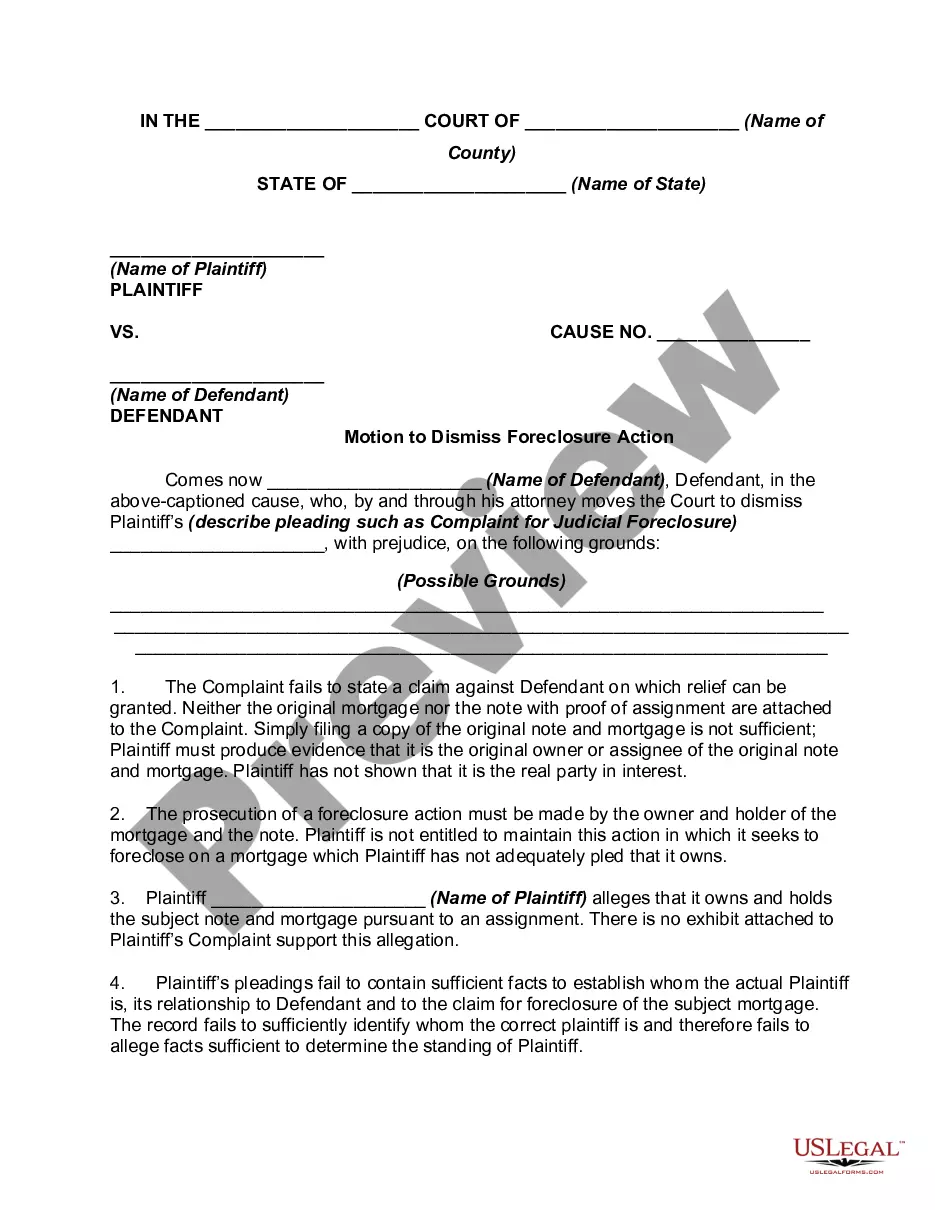
How to fill out Settlement Of Employment Discrimination Proceedings Before The Equal Opportunities Employment Commission (EEOC)?
Drafting legal paperwork can be daunting. Additionally, if you opt to hire a lawyer to create a business contract, documents for property transfer, pre-nuptial agreement, divorce documents, or the Travis Settlement of Employment Discrimination Proceedings before the Equal Opportunities, it could cost a significant amount. So what is the most efficient way to economize time and finances while generating valid papers that fully comply with your state and municipal statutes and regulations.
US Legal Forms is an excellent choice, whether you are seeking forms for personal or commercial purposes.
Do not fret if the document does not meet your needs - look for the appropriate one in the header.
- US Legal Forms is the largest online repository of region-specific legal documents, offering users the most current and professionally endorsed templates for any situation all compiled in a single location.
- Consequently, if you require the latest version of the Travis Settlement of Employment Discrimination Proceedings before the Equal Opportunities, you can quickly locate it on our site.
- Acquiring the documents takes little time.
- Those who possess an account should verify their subscription's validity, Log In, and choose the template by clicking on the Download button.
- If you have not yet subscribed, here’s how to obtain the Travis Settlement of Employment Discrimination Proceedings before the Equal Opportunities.
- Peruse the page and confirm that there is a sample available for your area.
- Review the form description and utilize the Preview option, if available, to ensure it is the form you require.
Form popularity
FAQ
In most state and federal discrimination cases, the employee is entitled to receive the following types of damages: back pay; front pay; lost benefits such as health, vacation, sick leave, and pension; reinstatement; reasonable accommodations; and compensatory and punitive damages.
When a case has been completed and an award has been provided to the aggrieved party, he or she must determine if this is worth settling the case for or if additional monetary support is needed. In many instances where these claims arise, the person has lost his or her job and must seek work elsewhere.
$50,000 to an employee if the employer has between 15 and 100 employees; $100,000 if the employer has 101 to 200 employees; $200,000 if the employer has 201 to 500 employees; and. $300,000 if the employer has more than 500 employees.
Your chances of winning a discrimination case will depend on how you proceed. The Harvard Law and Policy Review published an article in 2009 which found that employees only win discrimination cases against their employers 15% of the time.
According to EEOC data, the average out-of-court settlement for employment discrimination claims is about $40,000. Studies of verdicts have shown that about 10% of wrongful termination cases result in a verdict of $1 million or more. Of these, employees lost at least half of all cases.
According to EEOC data, the average out-of-court settlement for employment discrimination claims is about $40,000. Studies of verdicts have shown that about 10% of wrongful termination cases result in a verdict of $1 million or more.
In terms of a typical amount for EEOC mediation settlements, an average out of court settlement is around $40,000. However, about ten percent of employment discrimination and wrongful termination cases result in a $1 million dollar settlement.
What are the Most Common Forms of Disability Discrimination? Refusing to Hire a Job Applicant Based on Their Disability.Firing or Demoting an Employee Because of Their Disability.Failing to Give Disabled Employees the Same Opportunities.Harassing an Employee Based on Their Disability.
$50,000 to an employee if the employer has between 15 and 100 employees; $100,000 if the employer has 101 to 200 employees; $200,000 if the employer has 201 to 500 employees; and. $300,000 if the employer has more than 500 employees.
The goal of settlement is to reach an agreement that is satisfactory to all parties. There is no admission of liability. If the parties, including EEOC, reach a voluntary agreement, the charge will be dismissed. Settlement agreements are enforceable.