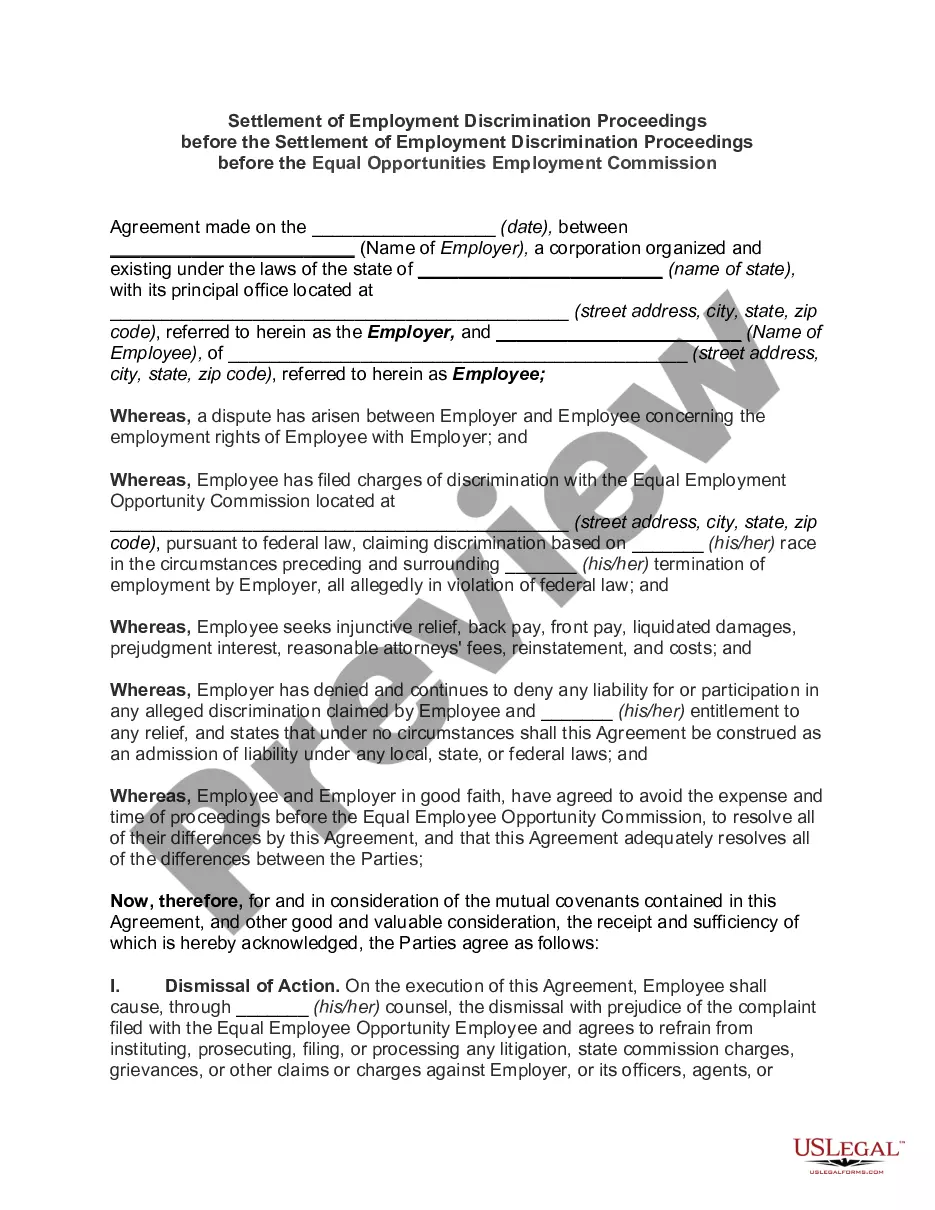
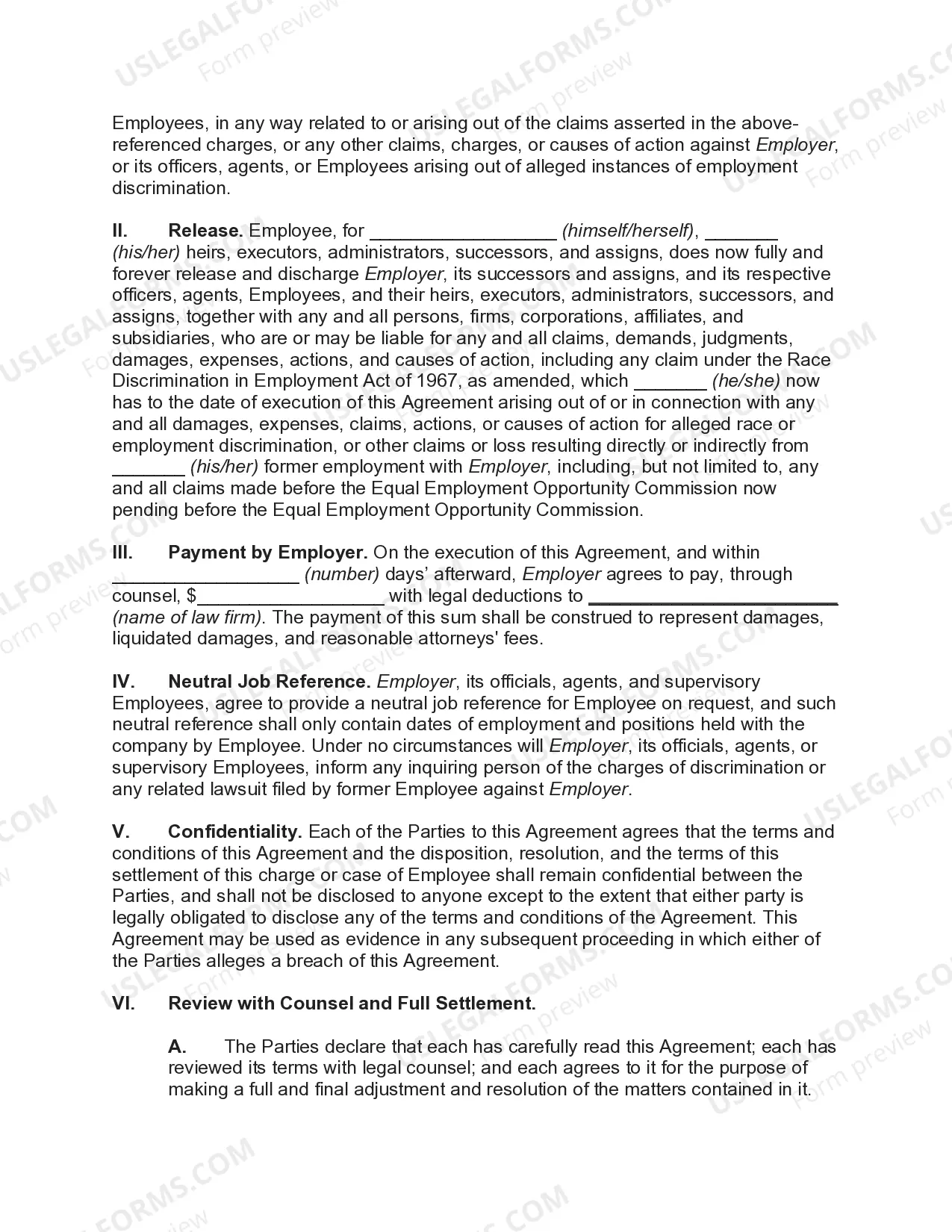
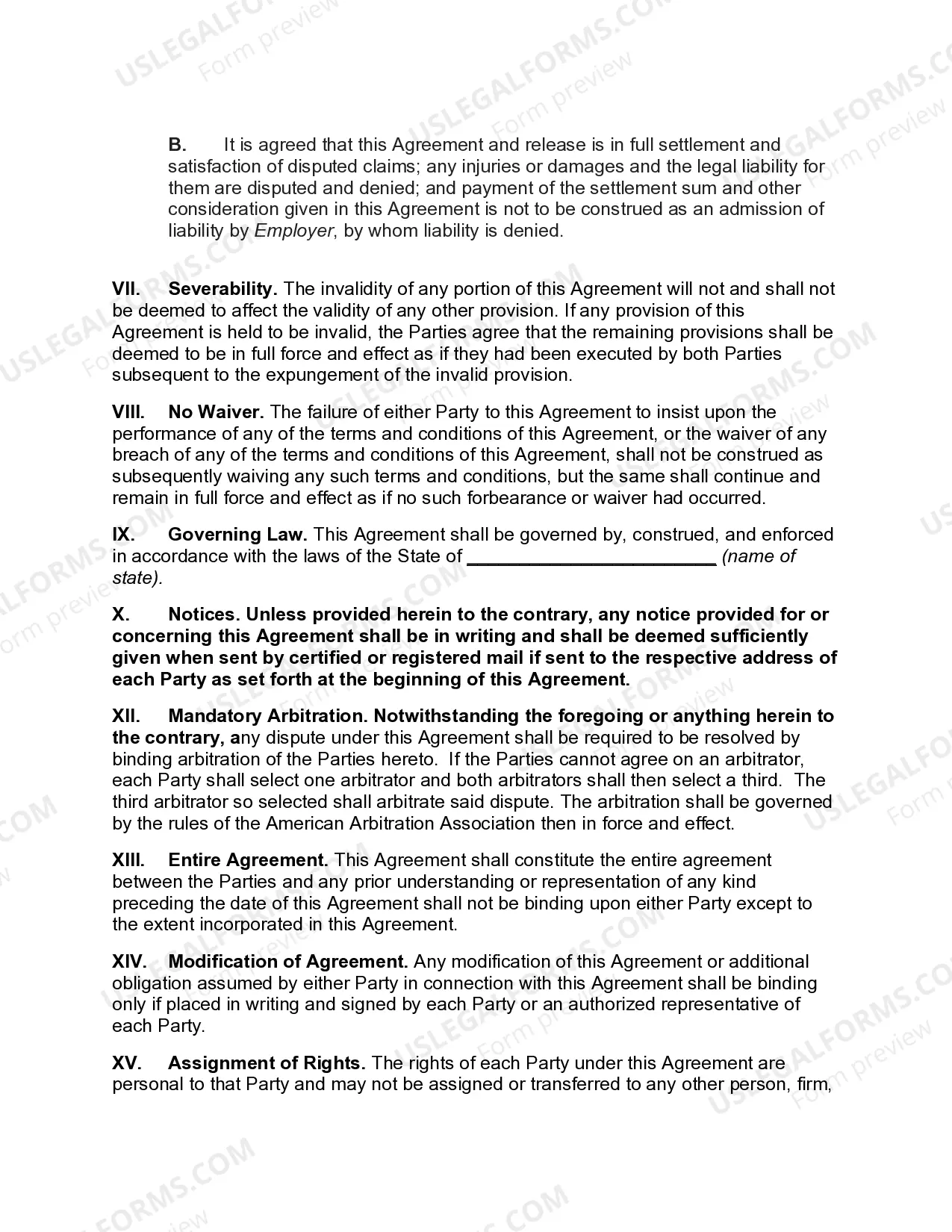
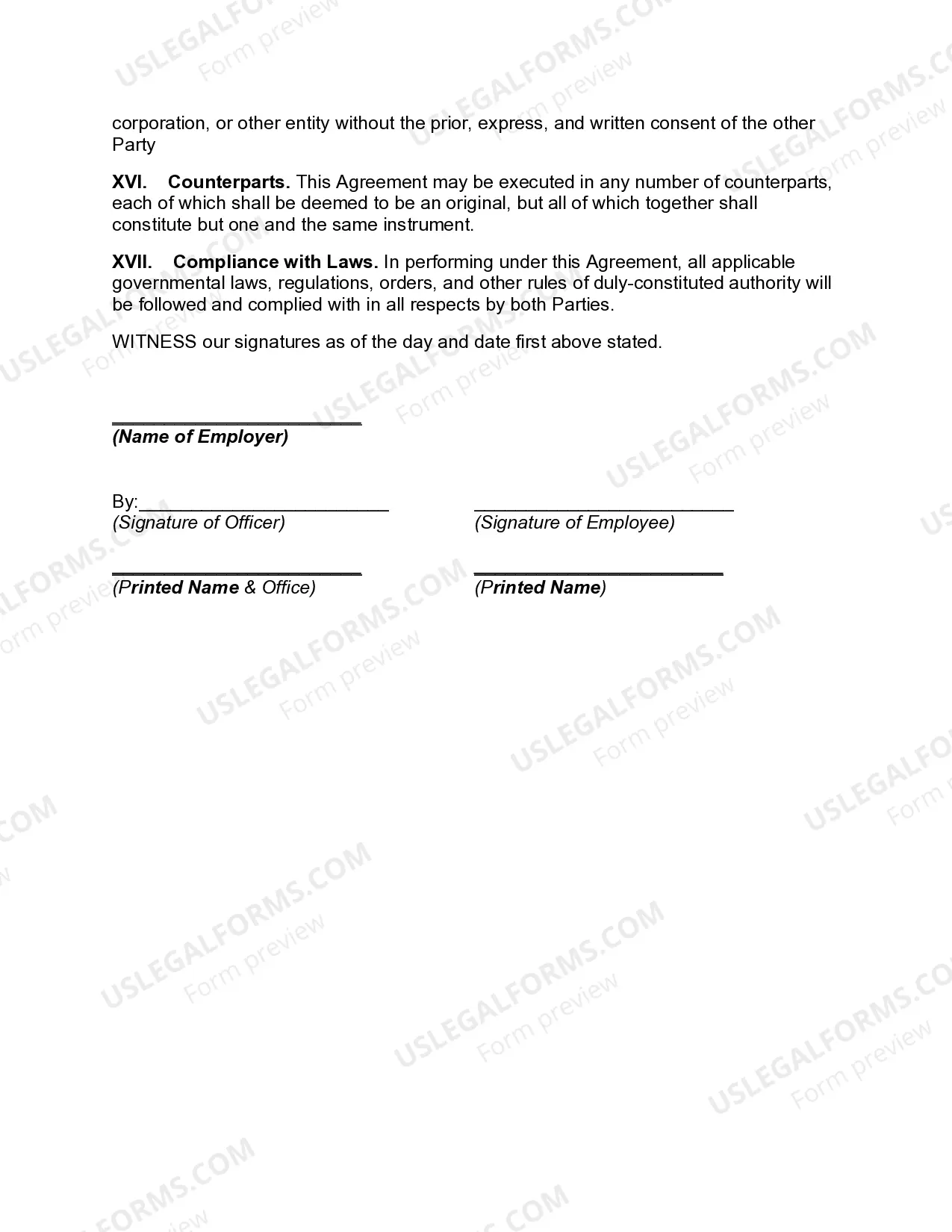
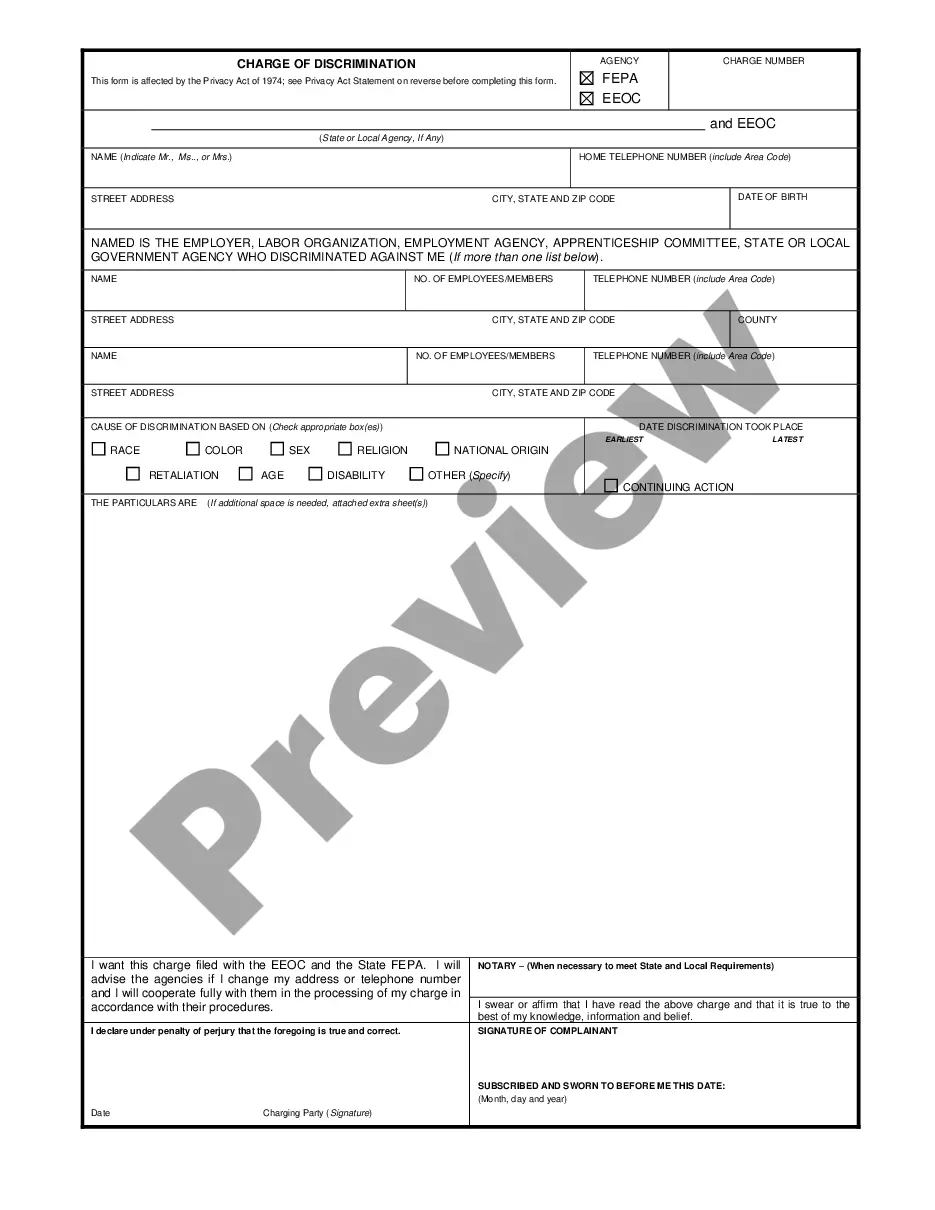
Harris Texas Settlement of Employment Discrimination Proceedings before the Equal Opportunities Employment Commission (EEOC)
Description
Get your form ready online
Our built-in tools help you complete, sign, share, and store your documents in one place.
Make edits, fill in missing information, and update formatting in US Legal Forms—just like you would in MS Word.
Download a copy, print it, send it by email, or mail it via USPS—whatever works best for your next step.
Sign and collect signatures with our SignNow integration. Send to multiple recipients, set reminders, and more. Go Premium to unlock E-Sign.
If this form requires notarization, complete it online through a secure video call—no need to meet a notary in person or wait for an appointment.
We protect your documents and personal data by following strict security and privacy standards.

Make edits, fill in missing information, and update formatting in US Legal Forms—just like you would in MS Word.

Download a copy, print it, send it by email, or mail it via USPS—whatever works best for your next step.

Sign and collect signatures with our SignNow integration. Send to multiple recipients, set reminders, and more. Go Premium to unlock E-Sign.

If this form requires notarization, complete it online through a secure video call—no need to meet a notary in person or wait for an appointment.

We protect your documents and personal data by following strict security and privacy standards.
Looking for another form?

How to fill out Settlement Of Employment Discrimination Proceedings Before The Equal Opportunities Employment Commission (EEOC)?
Preparing documents for business or personal requirements is always a significant obligation.
When drafting a contract, a public service application, or a power of attorney, it is crucial to consider all federal and state laws applicable to the particular region.
However, small counties and even municipalities also have legislative provisions that you must take into account.
Join the platform and easily obtain verified legal documents for any purpose with just a few clicks!
- All these factors complicate and prolong the process of generating a Harris Settlement of Employment Discrimination Proceedings before the Equal Opportunities without expert help.
- You can avoid unnecessary expenses on attorneys drafting your paperwork and create a legally acceptable Harris Settlement of Employment Discrimination Proceedings before the Equal Opportunities on your own, utilizing the US Legal Forms online library.
- This is the best virtual collection of state-specific legal templates that are professionally verified, ensuring their validity when selecting a sample for your locality.
- Previous subscribers only need to Log In to their accounts to obtain the required document.
- If you haven't subscribed yet, follow the step-by-step guide below to obtain the Harris Settlement of Employment Discrimination Proceedings before the Equal Opportunities.
- Browse the page you've opened to see if it contains the document you require.
- To facilitate this, utilize the form description and preview if these features are available.
Form popularity
FAQ
In terms of a typical amount for EEOC mediation settlements, an average out of court settlement is around $40,000. However, about ten percent of employment discrimination and wrongful termination cases result in a $1 million dollar settlement.
Only 2% of EEOC charges result in action. While a company may want to take the risk to represent itself in front of the EEOC, that 2% risk may lead to a substantial penalty and money judgment that can bankrupt a company.
Explanation: In the 2007 Supreme Court case of Ledbetter v. Goodyear Tire & Rubber Co., Inc., the Court said that discrimination charges must be filed within 180 days after the allegedly discriminatory pay decision.
A charge must be filed with EEOC within 180 days from the date of the alleged violation, in order to protect the charging party's rights. This 180-day filing deadline may be extended to 300 days if the charge also is covered by a state or local anti-discrimination law.
What to Expect When You File a Discrimination Case Step 1: First Try Complaining to Management. Step 2: The Equal Employment Opportunity Commission (EEOC) Step 3: EEOC Investigation and Determination. Step 4: Right-to-Sue Letter.
Settlement is an informal process. The goal of settlement is to reach an agreement that is satisfactory to all parties. There is no admission of liability. If the parties, including EEOC, reach a voluntary agreement, the charge will be dismissed.
The anti-discrimination laws give you a limited amount of time to file a charge of discrimination. In general, you need to file a charge within 180 calendar days from the day the discrimination took place.
The discrimination complaint process administered by S/OCR is an administrative process to resolve disputes alleging acts of employment discrimination prohibited by equal employment opportunity (EEO) laws and regulations.
According to EEOC data, the average out-of-court settlement for employment discrimination claims is about $40,000. Studies of verdicts have shown that about 10% of wrongful termination cases result in a verdict of $1 million or more. Of these, employees lost at least half of all cases.