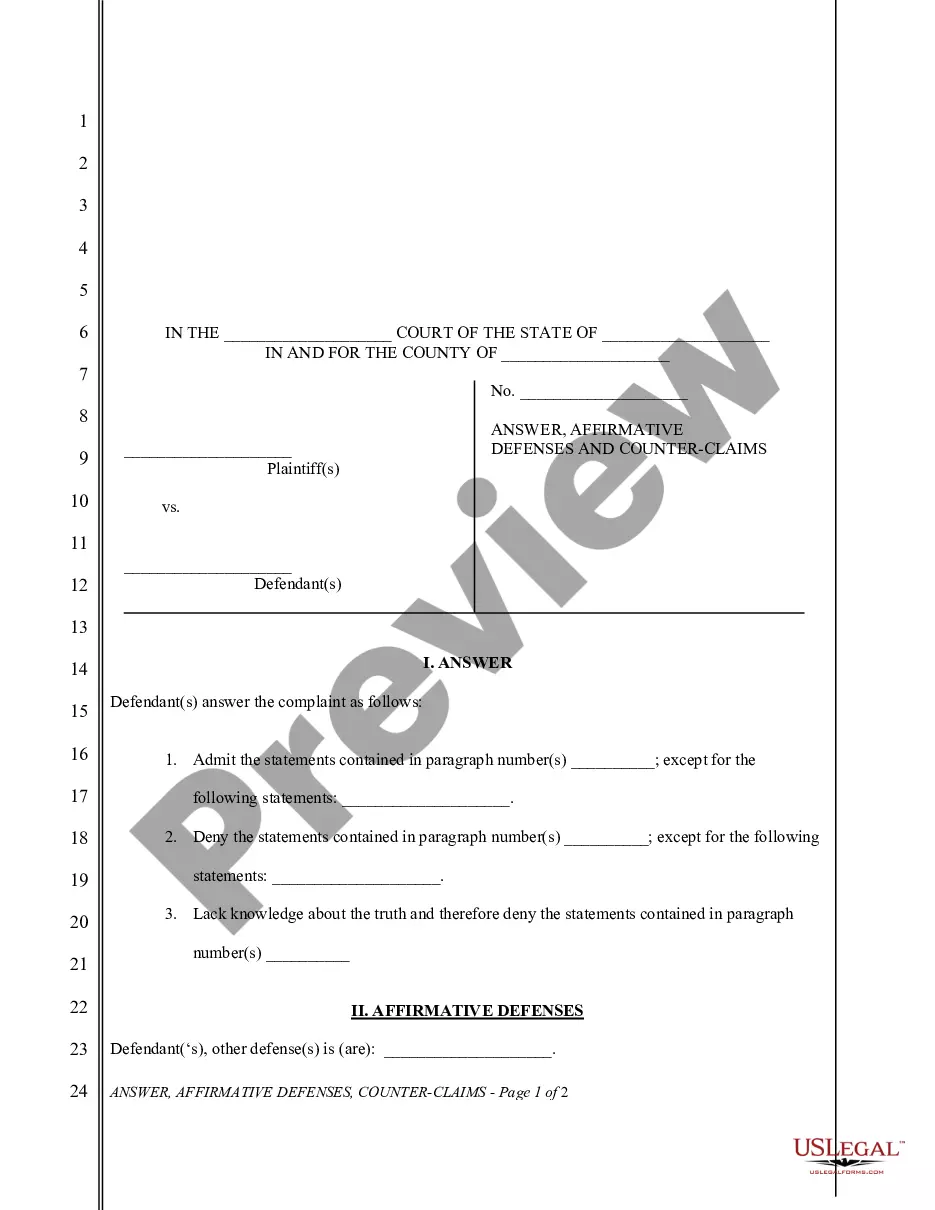
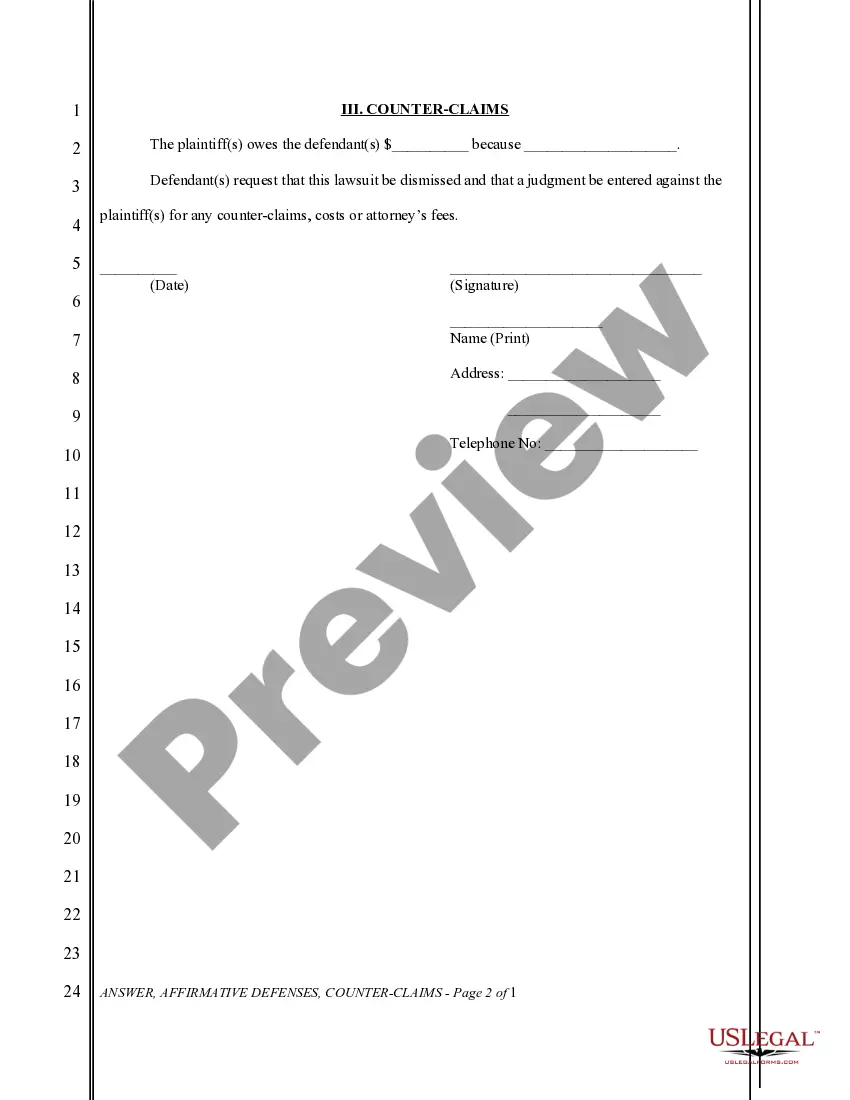
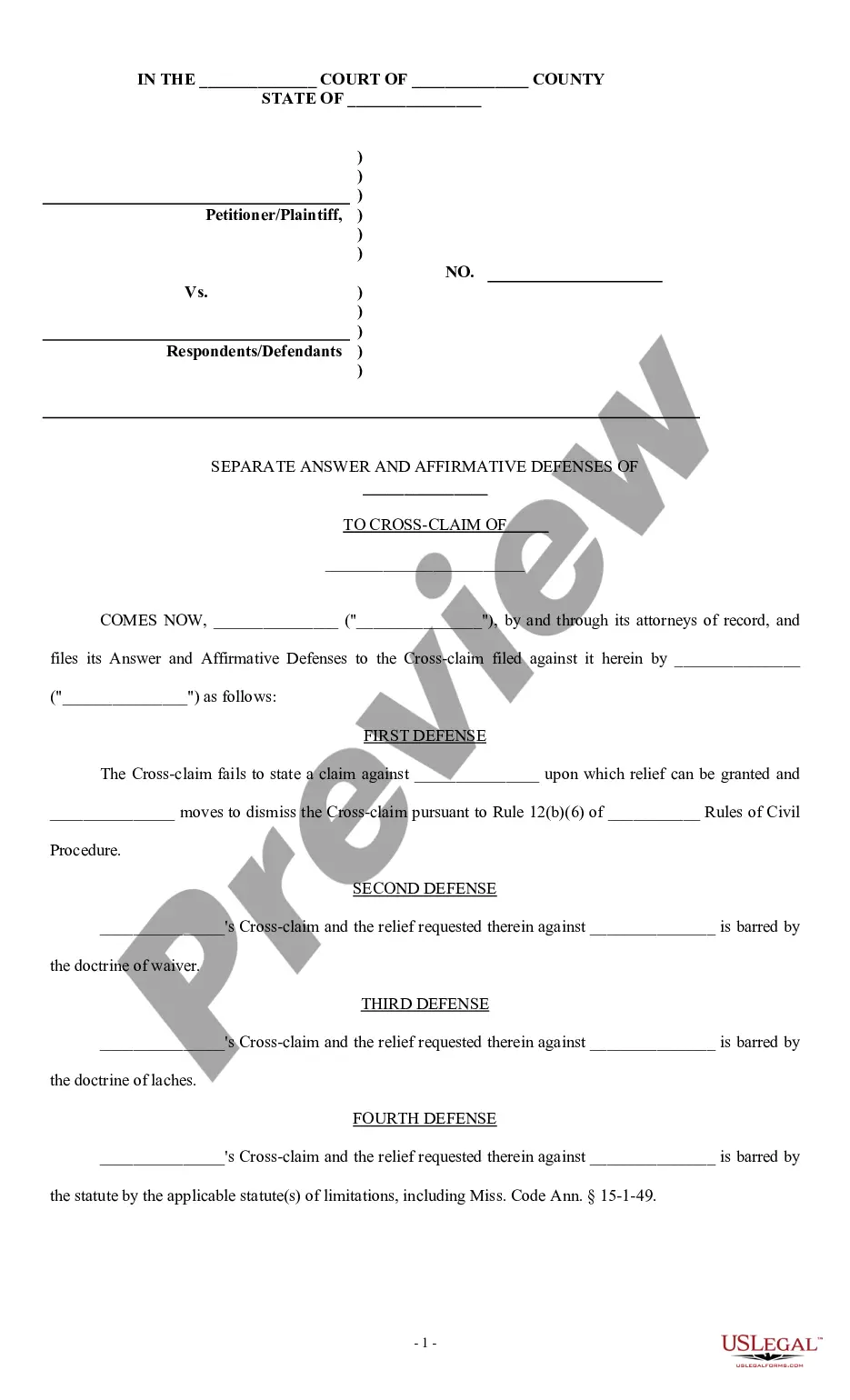
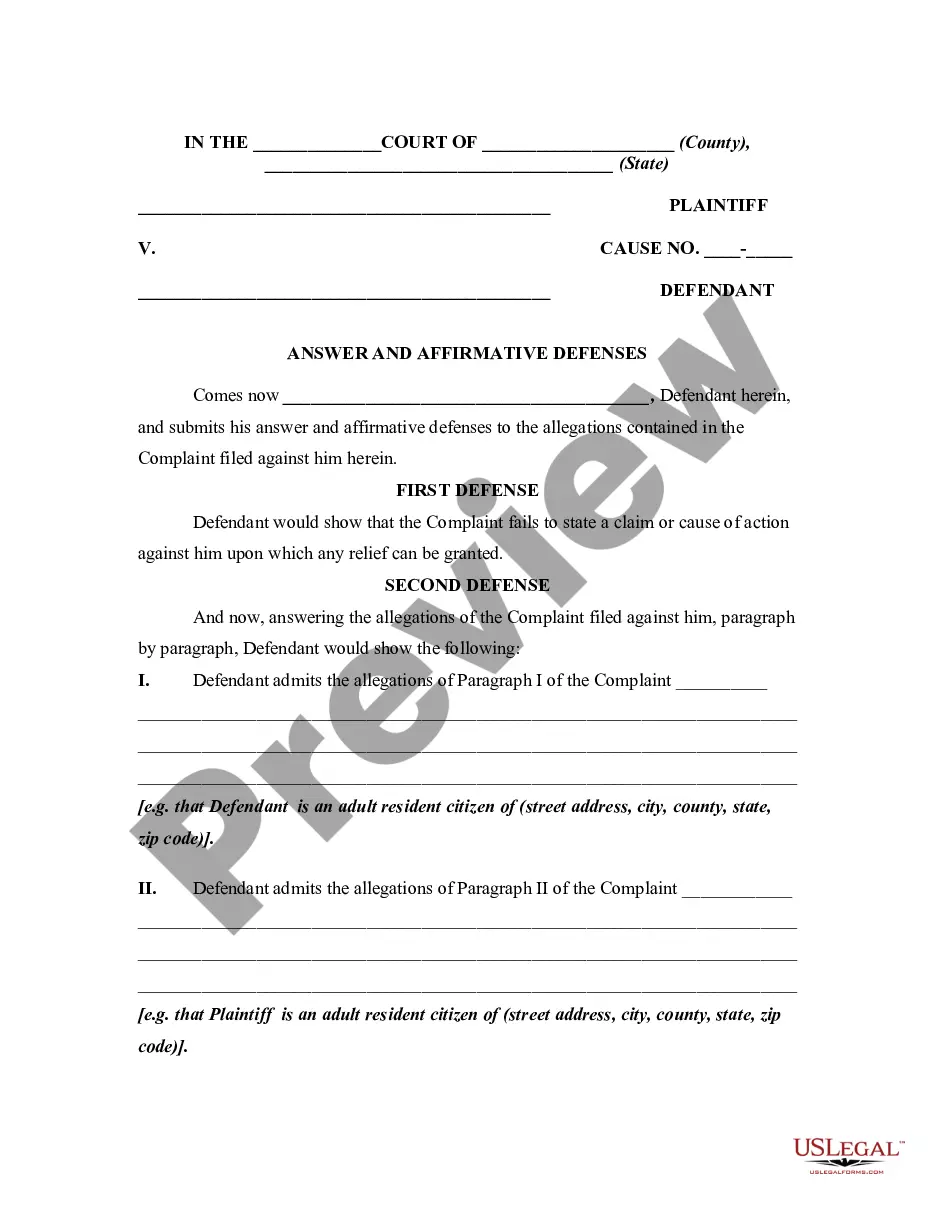
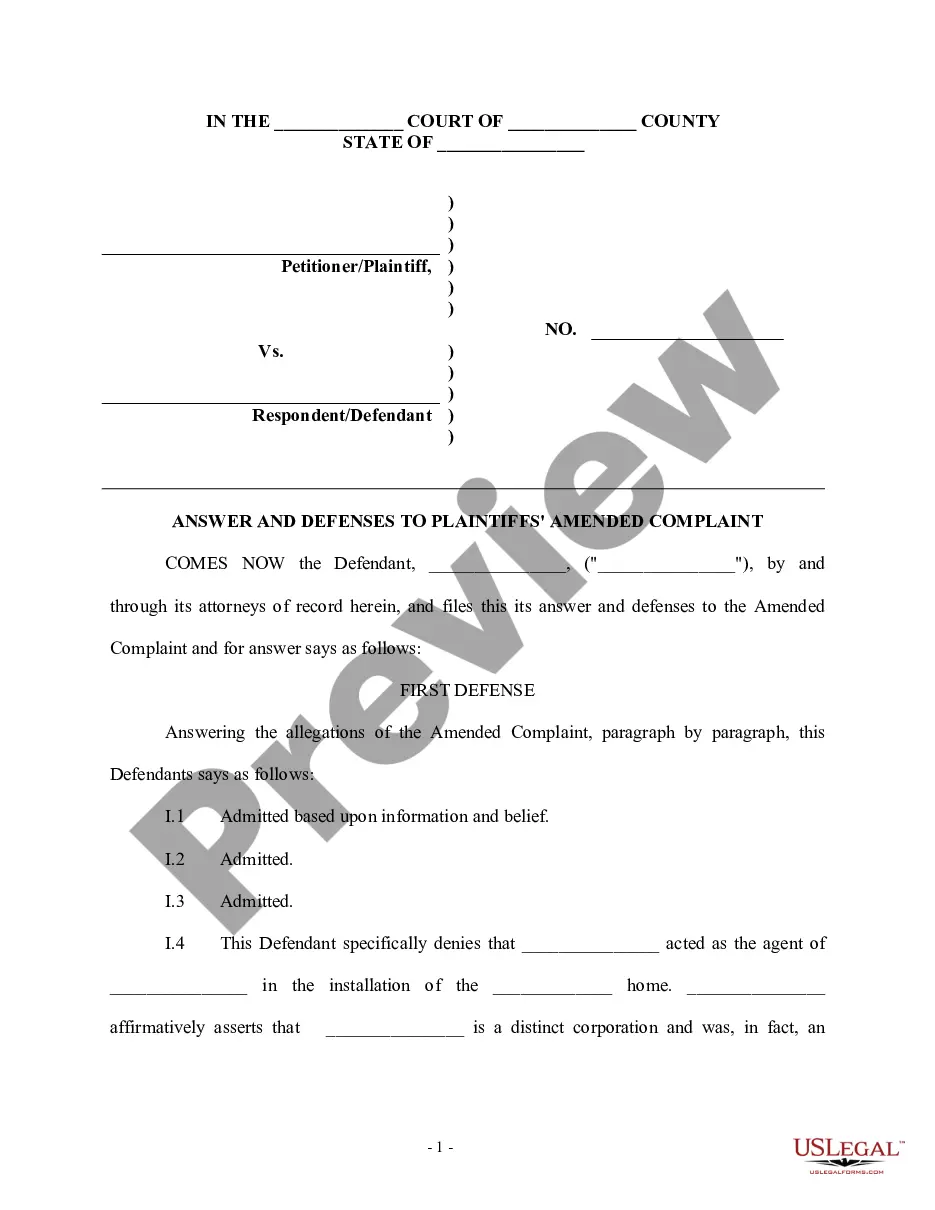
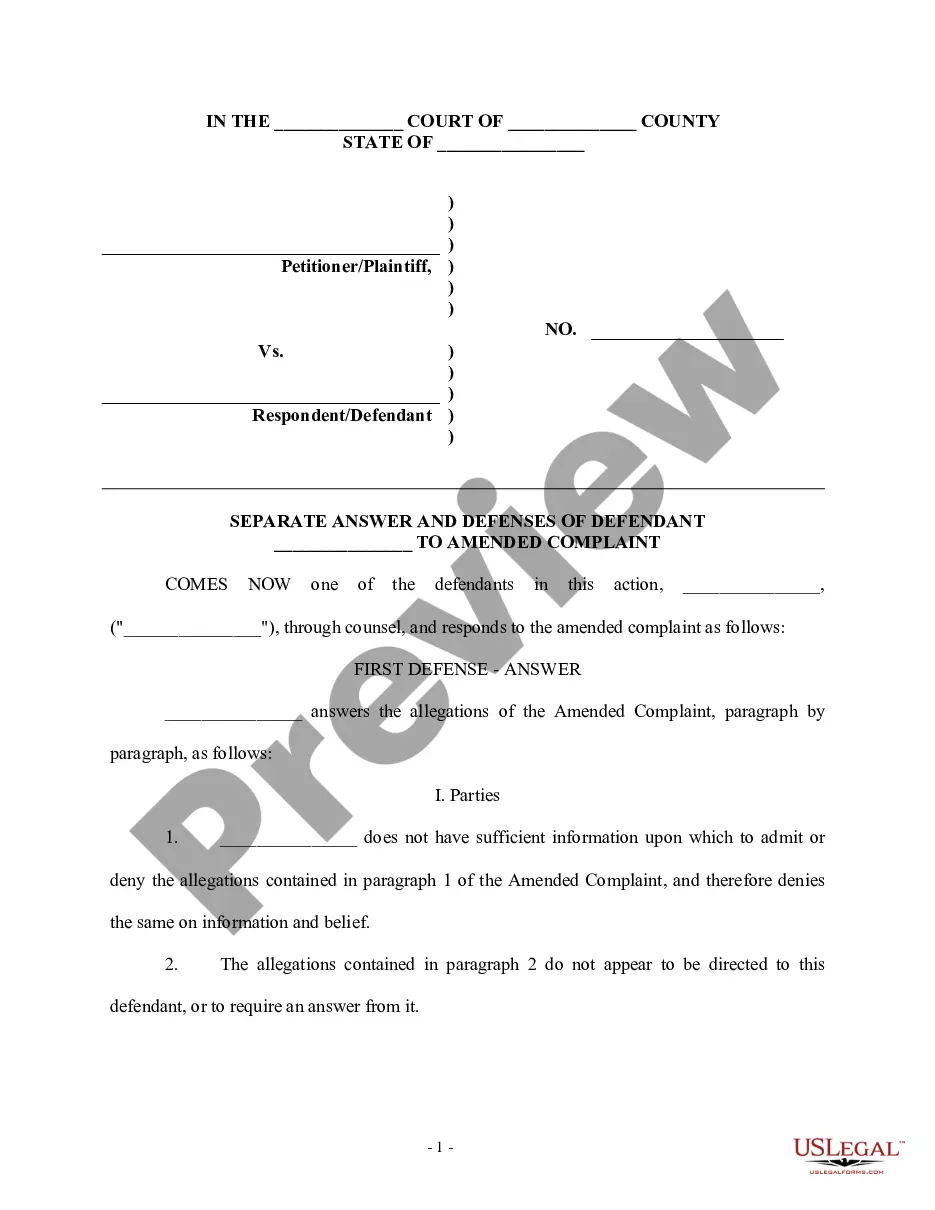
This form may be used to answer a civil complaint. Affirmative defenses may be asserted, along with a counterclaim. An affirmative defense is a type of defense in which the defendant seeks to avoid liability by introducing new evidence not addresses in the claims of the plaintiff's complaint. A counterclaim is made by the defendant to a civil proceeding, in a main action against the plaintiff or against the plaintiff and other people. This claim may be an attempt to offset or reduce the amount/implications of the plaintiff's original claim against the defendant, or it may be a different claim.
Counterclaims are either compulsory or permissive. If the counterclaim is permissive, it may be brought, but no rights are waived if it is not. If the counterclaim is mandatory, it must be brought in the current action or it is waived. Under the United States Federal Rules of Civil Procedure, a counterclaim is compulsory if it involves only the parties currently part of the suit, and is from the same transaction that the original suit is based on. Federal Rule of Civil Procedure 13(a).
Palm Beach Florida General Form of Civil Answer with Affirmative Defenses and Counterclaim
State:
Multi-State
Category:
County:
Palm Beach
Control #:
US-0999
Format:
Word;
Rich Text
517 downloads
Description
Free preview
Get your form ready online
Our built-in tools help you complete, sign, share, and store your documents in one place.
Built-in online Word editor
Make edits, fill in missing information, and update formatting in US Legal Forms—just like you would in MS Word.
Export easily
Download a copy, print it, send it by email, or mail it via USPS—whatever works best for your next step.
E-sign your document
Sign and collect signatures with our SignNow integration. Send to multiple recipients, set reminders, and more. Go Premium to unlock E-Sign.
Notarize online 24/7
If this form requires notarization, complete it online through a secure video call—no need to meet a notary in person or wait for an appointment.
Store your document securely
We protect your documents and personal data by following strict security and privacy standards.

Make edits, fill in missing information, and update formatting in US Legal Forms—just like you would in MS Word.

Download a copy, print it, send it by email, or mail it via USPS—whatever works best for your next step.

Sign and collect signatures with our SignNow integration. Send to multiple recipients, set reminders, and more. Go Premium to unlock E-Sign.

If this form requires notarization, complete it online through a secure video call—no need to meet a notary in person or wait for an appointment.

We protect your documents and personal data by following strict security and privacy standards.
Looking for another form?
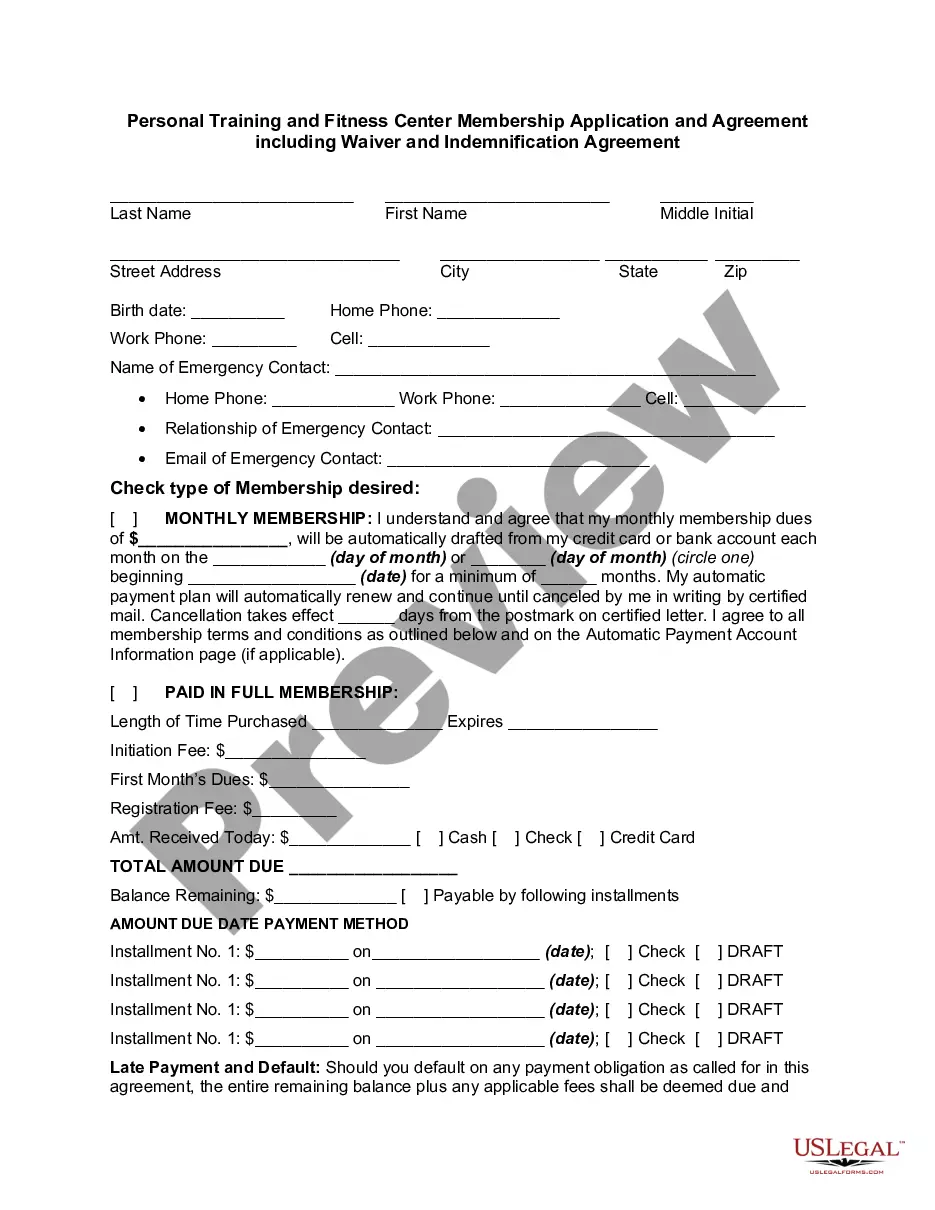
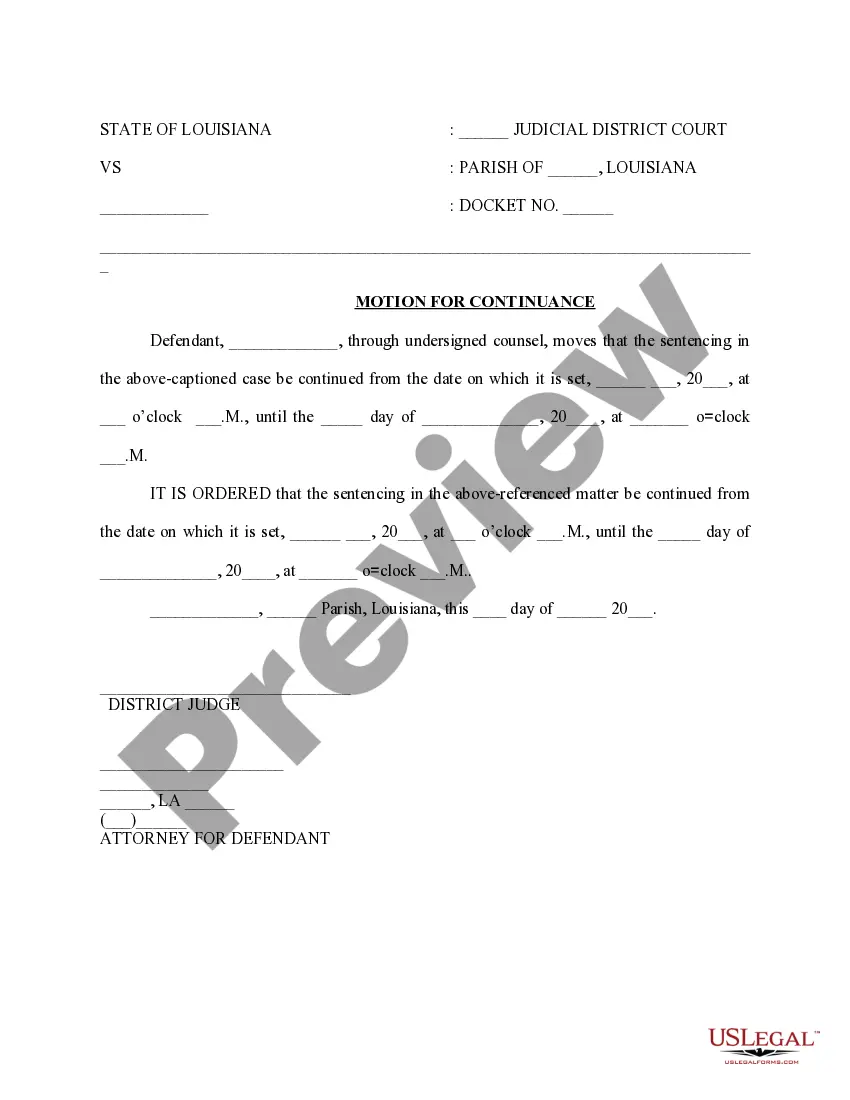
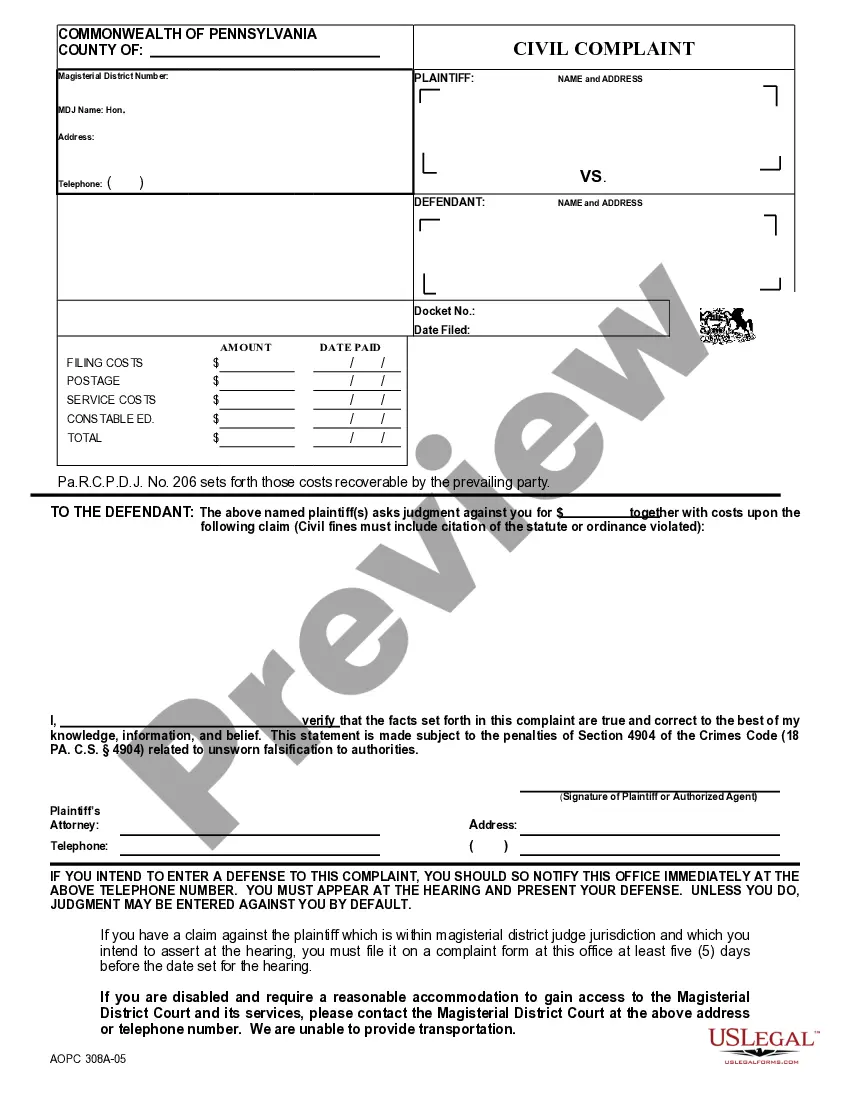
How to fill out General Form Of Civil Answer With Affirmative Defenses And Counterclaim?
Completing legal documents can be taxing.
Moreover, if you opt to enlist a legal expert to compose a business contract, documentation for ownership transfer, pre-nuptial agreement, divorce documents, or the Palm Beach General Form of Civil Answer with Affirmative Defenses and Counterclaim, it could be quite expensive. So, what is the most effective way to conserve time and funds while generating authentic documents that fully adhere to your state and local laws? US Legal Forms is a fantastic choice, whether you're looking for templates for personal or corporate purposes.
- US Legal Forms offers the largest online compilation of state-specific legal documents, equipping users with contemporary and professionally endorsed templates for any situation, all conveniently assembled in one location.
- Consequently, if you seek the most recent iteration of the Palm Beach General Form of Civil Answer with Affirmative Defenses and Counterclaim, you can swiftly locate it on our platform.
- Acquiring the documents requires minimal time.
- Users with existing accounts should confirm that their subscription is active, Log In, and select the template using the Download button.
- If you haven't registered yet, here's how to obtain the Palm Beach General Form of Civil Answer with Affirmative Defenses and Counterclaim.
- Browse the page to verify there is a template available for your region.
- Review the form description and utilize the Preview option, if provided, to ensure it is the right template for your needs.
- Don't fret if the document does not meet your specifications - search for the appropriate one in the header.
- Click Buy Now when you identify the needed template and select the most suitable subscription.
- Sign in or create an account to acquire your subscription.
- Process payment using a credit card or through PayPal.
- Select the document format for your Palm Beach General Form of Civil Answer with Affirmative Defenses and Counterclaim and save it.
Form popularity
FAQ
Asserting an Affirmative Defense: An Example Here's an example: In your jurisdiction, the affirmative defense of fraud has five elements, (1) a false representation; (2) about a material fact; (3) made with knowledge of its untruth; (4) with intent to deceive; and (5) defendant relied on the representation.
The plaintiff must serve an answer to a counterclaim within 20 days after service of the counterclaim. If a reply is required, the reply must be served within 20 days after service of the answer.
If a reply is required, the reply must be served within 20 days after service of the answer.
When must a defendant respond to the complaint? In Florida, unless a different time is prescribed by statute, a defendant must serve an answer within either: 20 days after service of original process and the initial pleading (typically a complaint). The date fixed in a notice by publication.
Under the Florida Rules of Civil Procedure, a party is not required to reply to the opposing party's affirmative defenses merely to deny them. In fact, under Rule 1.110(e) affirmative defense are automatically deemed as denied in the absence of a reply.
An affirmative defense must be raised (named) by the defendant in response to the plaintiff's liability claim. This can be done in the first pleading denying responsibility or later through amended pleading, but it must be asserted by the defendant in writing.
Rule 1.140(a)(1) provides twenty days to serve a reply if a reply is required. An avoidance is an allegation of additional facts intended to overcome an affirmative defense. Kitchen v. Kitchen, 404 So. 2d 203 (Fla.
Rule 1.110 states: In pleading to a preceding pleading a party shall set forth affirmatively accord and satisfaction, arbitration and award, assumption of risk, contributory negligence, discharge in bankruptcy, duress, estoppel, failure of consideration, fraud, illegality, injury by fellow servant, laches, license,
Failure to state a claim (officially called failure to state a cause of action) is an affirmative defense under Florida law that allows defendants to question the legal basis for the lawsuit. This defense is most likely to succeed when the plaintiff doesn't follow the state's pleading requirements.
A party shall plead in response to an amended pleading within 10 days after service of the amended pleading unless the court otherwise orders.