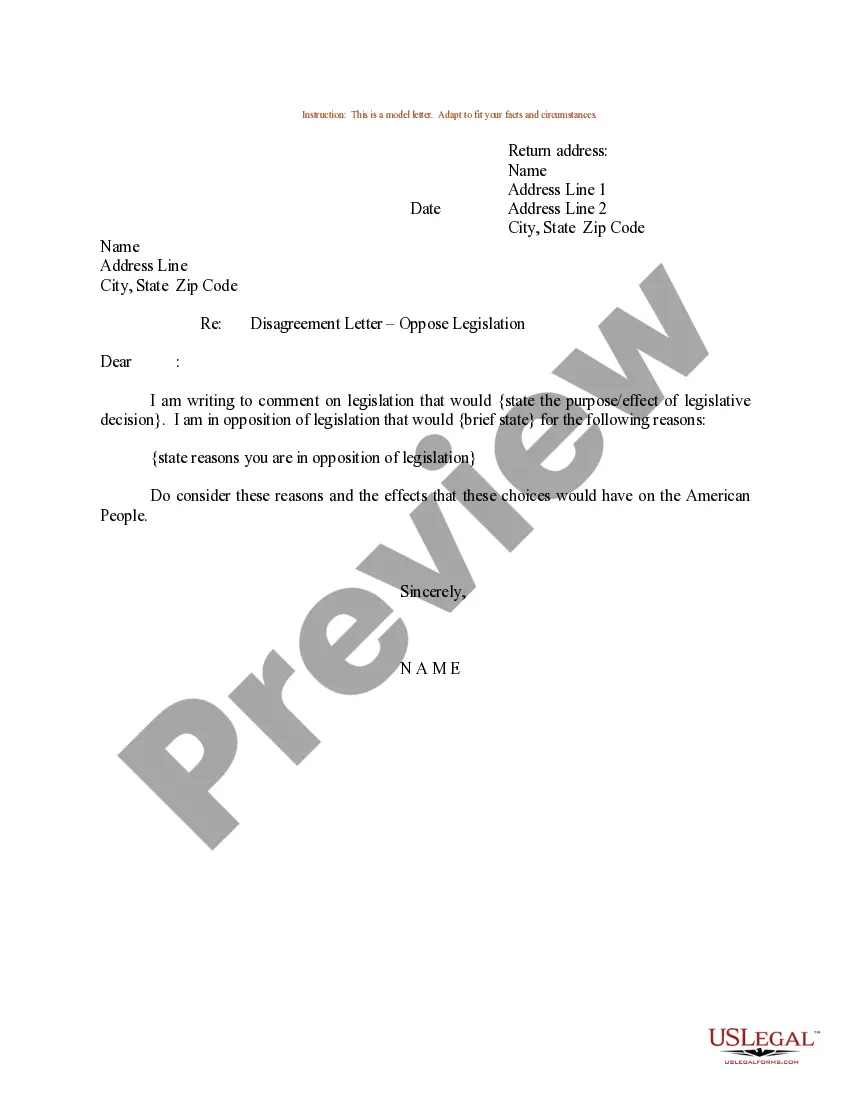
Riverside California Sample Letter for Opposition to Legislation
Description
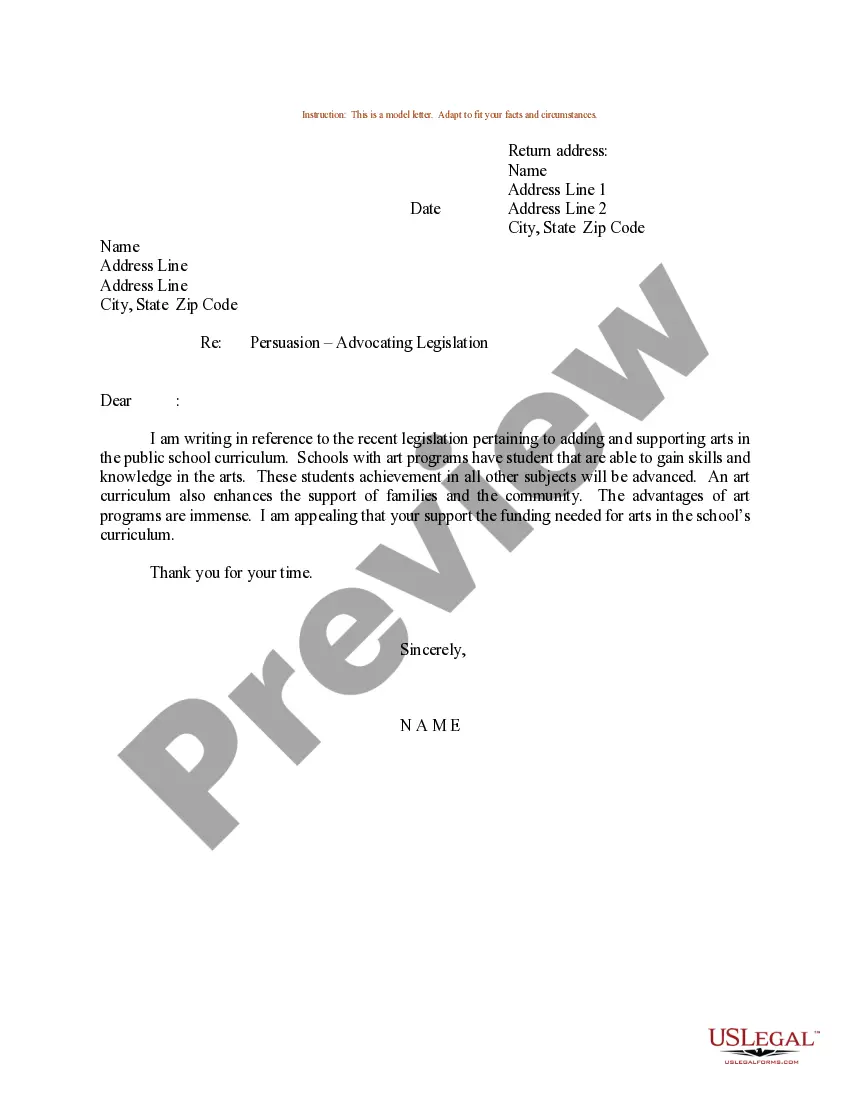
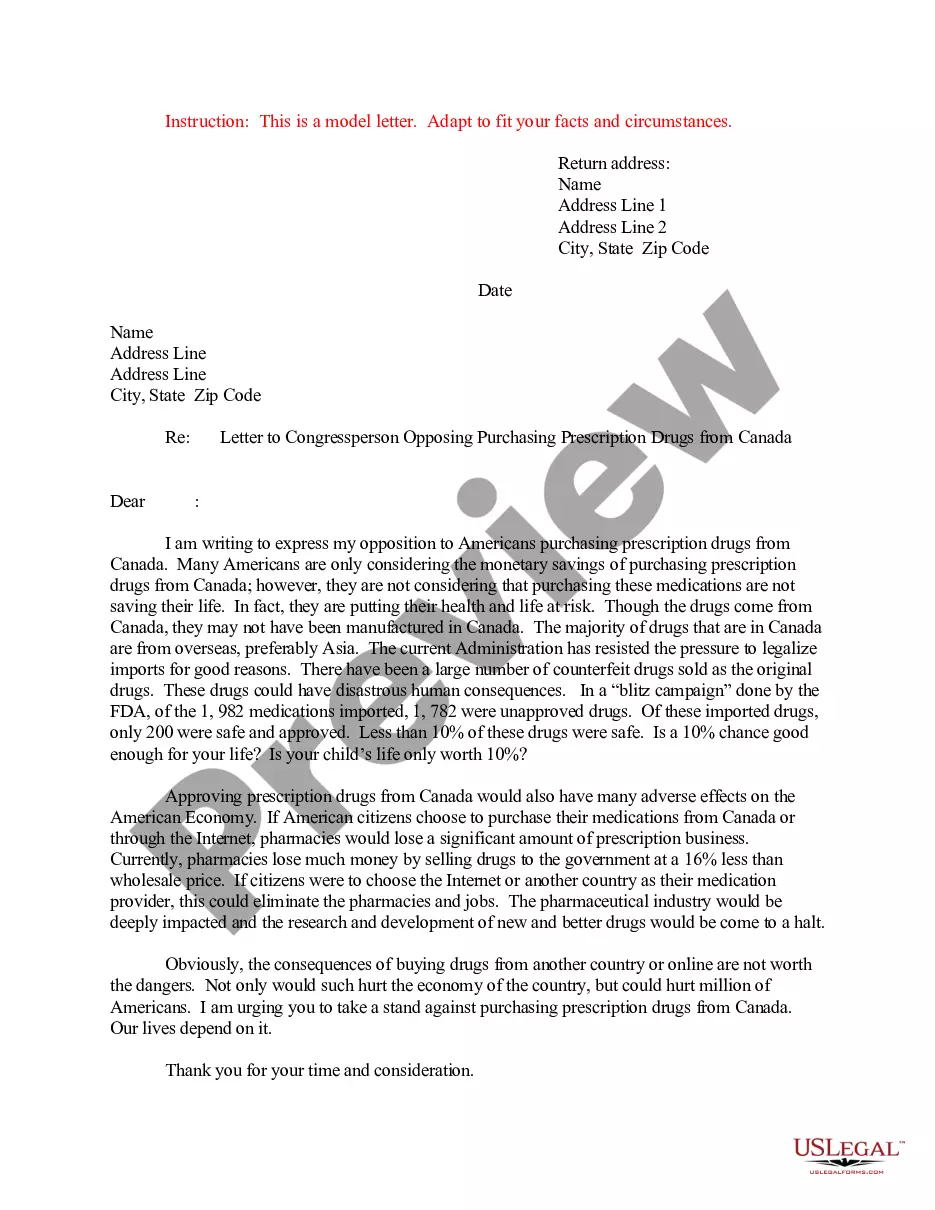
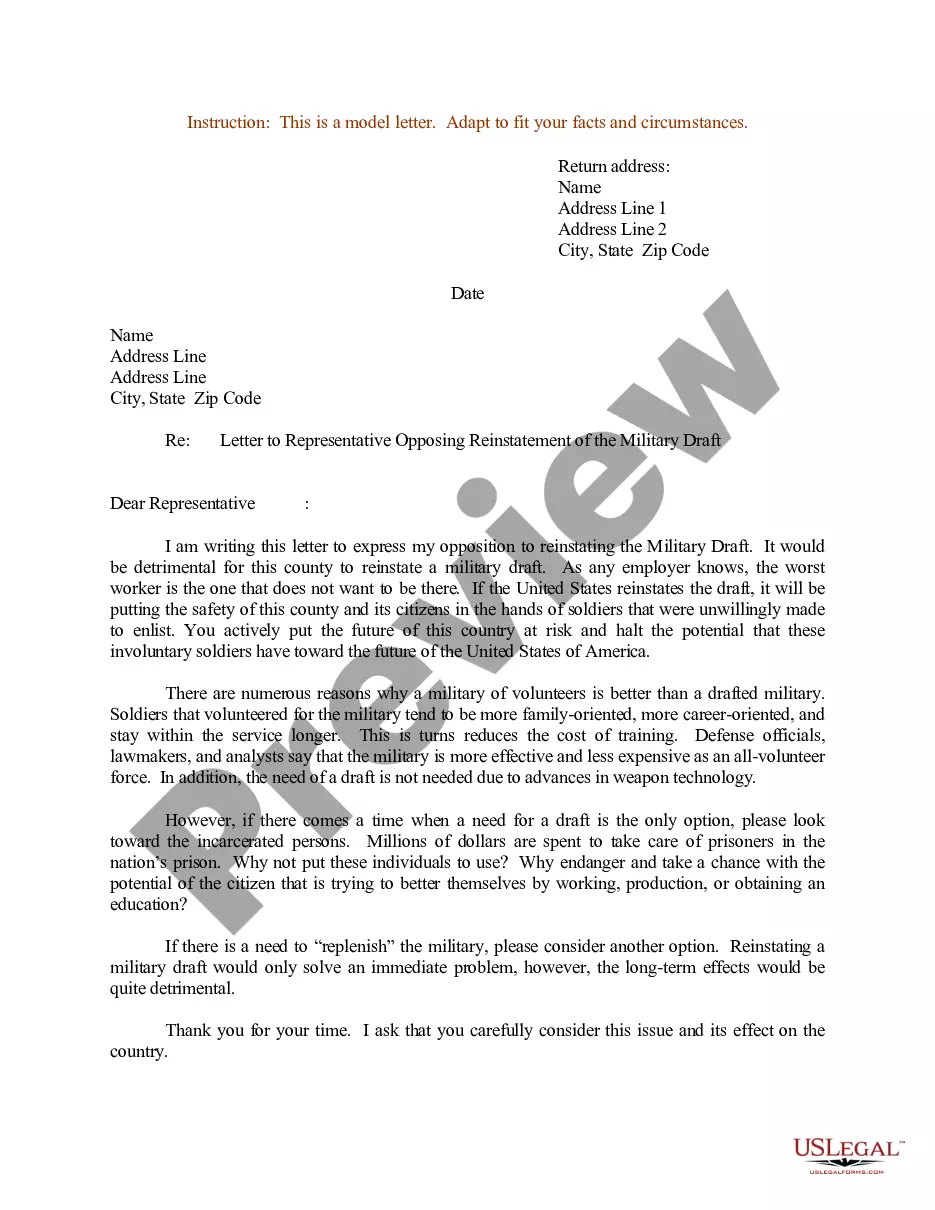
How to fill out Sample Letter For Opposition To Legislation?
Crafting paperwork, such as Riverside Sample Letter for Opposition to Legislation, to oversee your legal matters is a demanding and time-intensive endeavor.
Numerous circumstances necessitate a lawyer’s assistance, which also renders this undertaking costly.
Nonetheless, you can take your legal issues into your own hands and address them independently.
The onboarding procedure for new users is quite clear-cut! Here’s what you must do prior to obtaining Riverside Sample Letter for Opposition to Legislation: Ensure that your form aligns with your state/county since the rules for drafting legal documents can vary from one state to another.
- US Legal Forms is here to assist.
- Our site showcases over 85,000 legal documents tailored for various situations and life circumstances.
- We ensure each document complies with the statutes of each state, so you need not worry about possible legal compliance issues.
- If you’re already familiar with our offerings and possess a subscription with US, you understand how simple it is to obtain the Riverside Sample Letter for Opposition to Legislation template.
- Feel free to Log In to your account, download the form, and customize it to your needs.
- Have you misplaced your document? No problem. You can locate it in the My documents section in your account - available on both desktop and mobile.
Form popularity
FAQ
Use your personal or. business address. Address your. legislator properly. State your. relafionship to the. Be factual. Be personal. Request a response. Include your fitle. Concentrate on a. single issue. Be specific about. what you want. Keep your letter. to one page.
Explore this article Writing Your Legislator. Address your legislator by his or her official title. Identify your issue. Make a compelling argument. Anticipate opposition. Ask your legislature to take action.
Here are some important tips for your letter: Use letterhead. Verify the correct spelling of the legislator's name. Verify the correct title to use when addressing the legislator. Keep it short (one page maximum). Identify the issue. If the issue is a particular bill, verify the full name and bill number.
The salutation should be "Dear Representative Smith" or Dear Senator Smith" or "Dear Assemblyman Smith" depending on the office held. The address should read: Honorable Jim Smith, Address, City, State, Zip.
Here are some important tips for your letter: Use letterhead. Verify the correct spelling of the legislator's name. Verify the correct title to use when addressing the legislator. Keep it short (one page maximum). Identify the issue. If the issue is a particular bill, verify the full name and bill number.
Each letter should be: Direct. State your subject clearly in the email subject line or first sentence of the letter.Informative. Identify yourself as a constituent.Inquiring.Factual & Courteous.Constructive.Specific.Helpful.Appreciative.
Use Proper Salutation. The salutation should be "Dear Representative Smith" or Dear Senator Smith" or "Dear Assemblyman Smith" depending on the office held. The address should read: Honorable Jim Smith, Address, City, State, Zip.
How do you write letters to public officials? Open the letter in an official manner.Explain the purpose for your letter.Summarize your understanding of the issue/decision being considered.Explain your position on this issue.Describe what any changes will mean to you, and to others.
Date. Representative's Address. Salutation. Introduce yourself: your name, address and school to identify that you are a constituent. Why are you writing your Representative? Ask for a response. Thank your Representative for his/her time. Closing with your name.
Be sure to include your name and address on both your letter and envelope.) Dear (Assembly Member / Senator) (last name) Be courteous and informative in your communication. State the purpose of the letter in the opening sentence and if you are referring to a bill, include the bill number, author and topic.