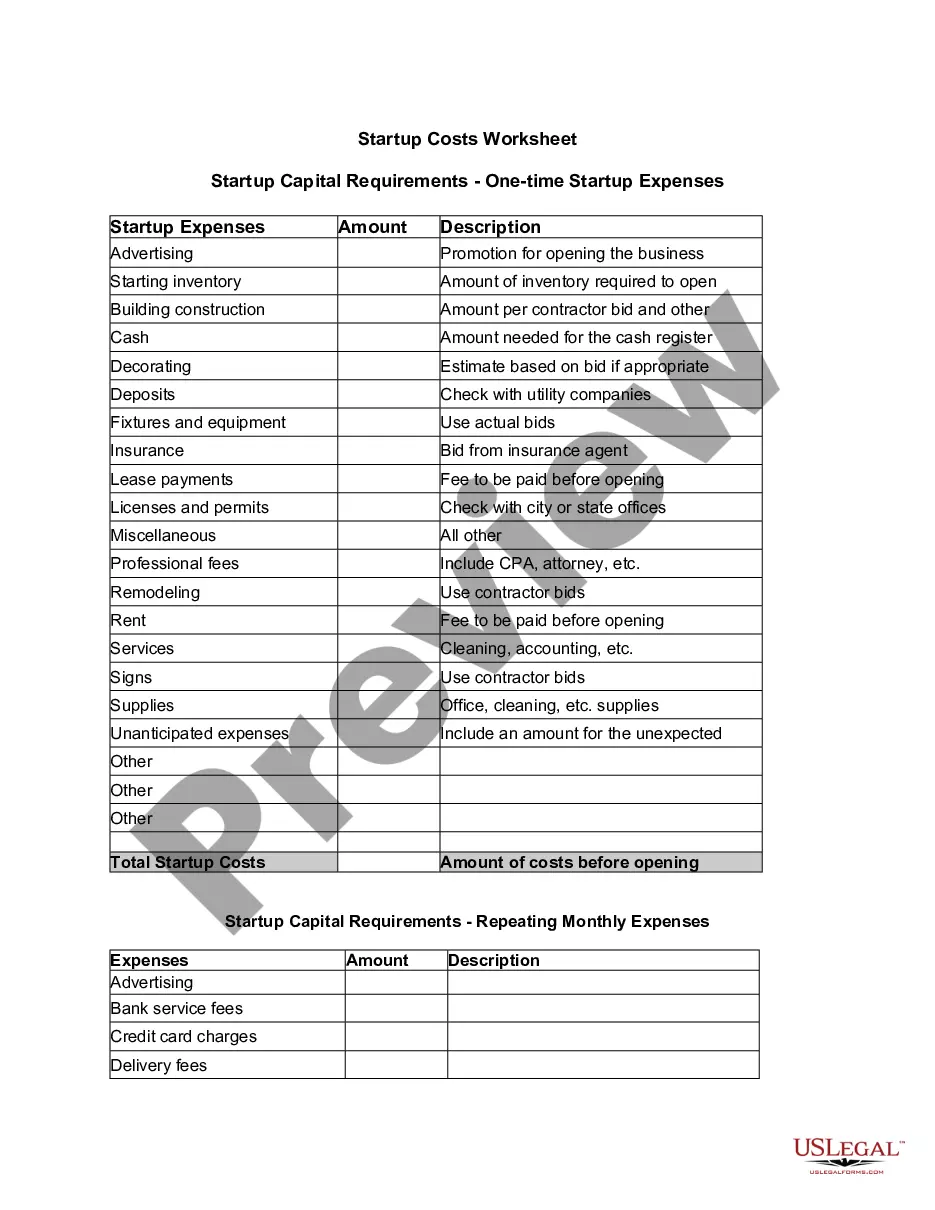
Palm Beach Florida Startup Costs Worksheet
Description
How to fill out Startup Costs Worksheet?
Preparing documentation for business or personal requirements is always a significant obligation.
When formulating a contract, a public service application, or a power of attorney, it is vital to account for all federal and state laws applicable to the specific region.
Nonetheless, smaller counties and even municipalities also have legislative processes that you should take into consideration.
Join the platform and easily acquire verified legal forms for any occurrence with just a few clicks!
- All these factors render it burdensome and time-consuming to create a Palm Beach Startup Costs Worksheet without expert assistance.
- You can save money on hiring lawyers to draft your documents and produce a legally valid Palm Beach Startup Costs Worksheet independently, utilizing the US Legal Forms online library.
- It is the largest online repository of state-specific legal templates that have been professionally validated, ensuring their legitimacy when selecting a template for your county.
- Formerly subscribed users only need to Log In to their accounts to retrieve the required form.
- If you do not yet have a subscription, adhere to the step-by-step instructions below to acquire the Palm Beach Startup Costs Worksheet.
- Scrutinize the page you’ve opened and confirm if it contains the document you need.
- To achieve this, utilize the form description and preview if these selections are accessible.
Form popularity
FAQ
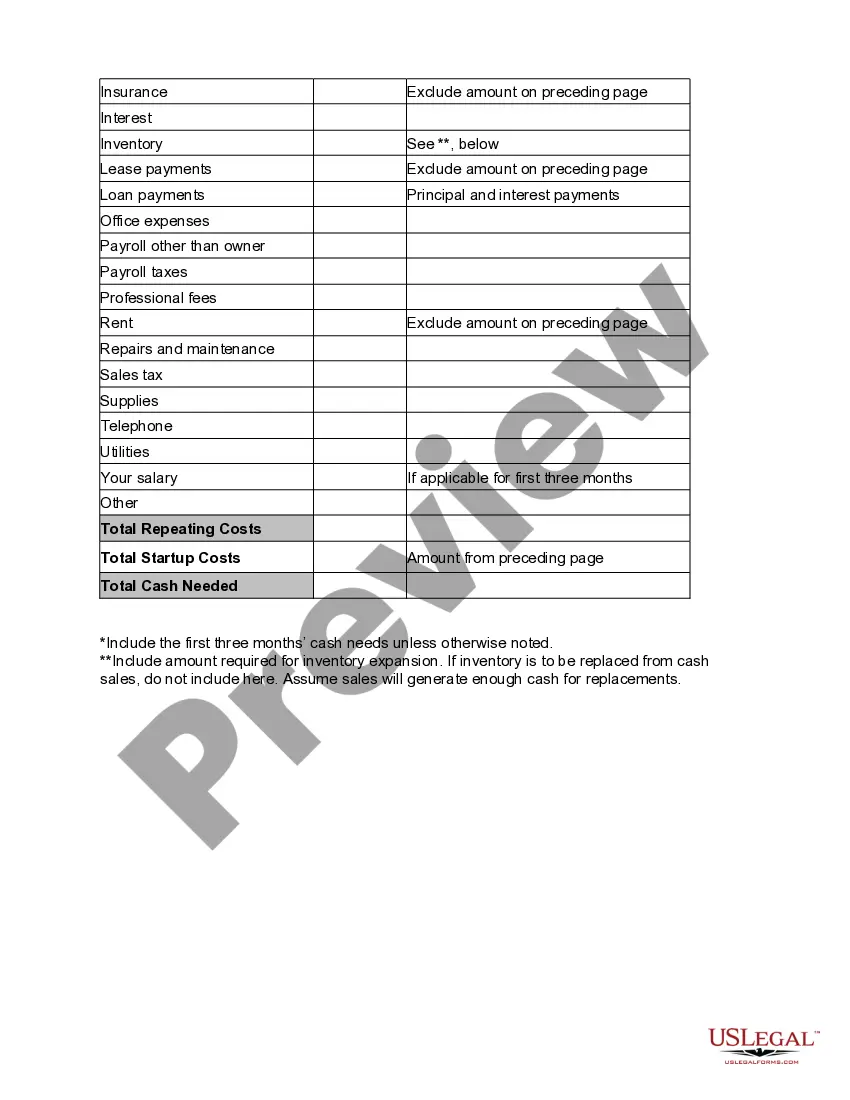
How to calculate startup costs Identify your expenses. Start by writing down the startup costs you've already incurred but don't stop there.Estimate your costs. Once you've developed a list of your business needs, note the average cost for each category.Do the math.Add a cushion.Put the numbers to work.
Under Generally Accepted Accounting Principles, you report startup costs as expenses incurred at the time you spend the money. Some of your initial expenses, such as buying equipment, are not classified as startup costs under GAAP and have to be capitalized, not expensed.
Startup costs do not include costs for interest, taxes, and research and experimentation (Sec. 195(c)(1)).
One-time expenses Necessary equipment like a cash registers, machinery, or vehicles. Incorporation fees. Permits and licenses, such as city, county, and state licensing, or those related to your specific industry. Computer or technology equipment. Down payment for your office or store. Initial business cards.
Here are some typical business startup costs to plan for: Equipment: $10,000 to $125,000. Incorporation fees: Under $300. Office space: $100 to $1,000 per employee per month. Inventory: 17% to 25% of your total budget. Marketing: Below 10% of your total budget (even 0%) Website: Around $40 per month.
How to calculate startup costs Identify your expenses. Start by writing down the startup costs you've already incurred but don't stop there.Estimate your costs. Once you've developed a list of your business needs, note the average cost for each category.Do the math.Add a cushion.Put the numbers to work.
Examples of startup costs include licensing and permits, insurance, office supplies, payroll, marketing costs, research expenses, and utilities.
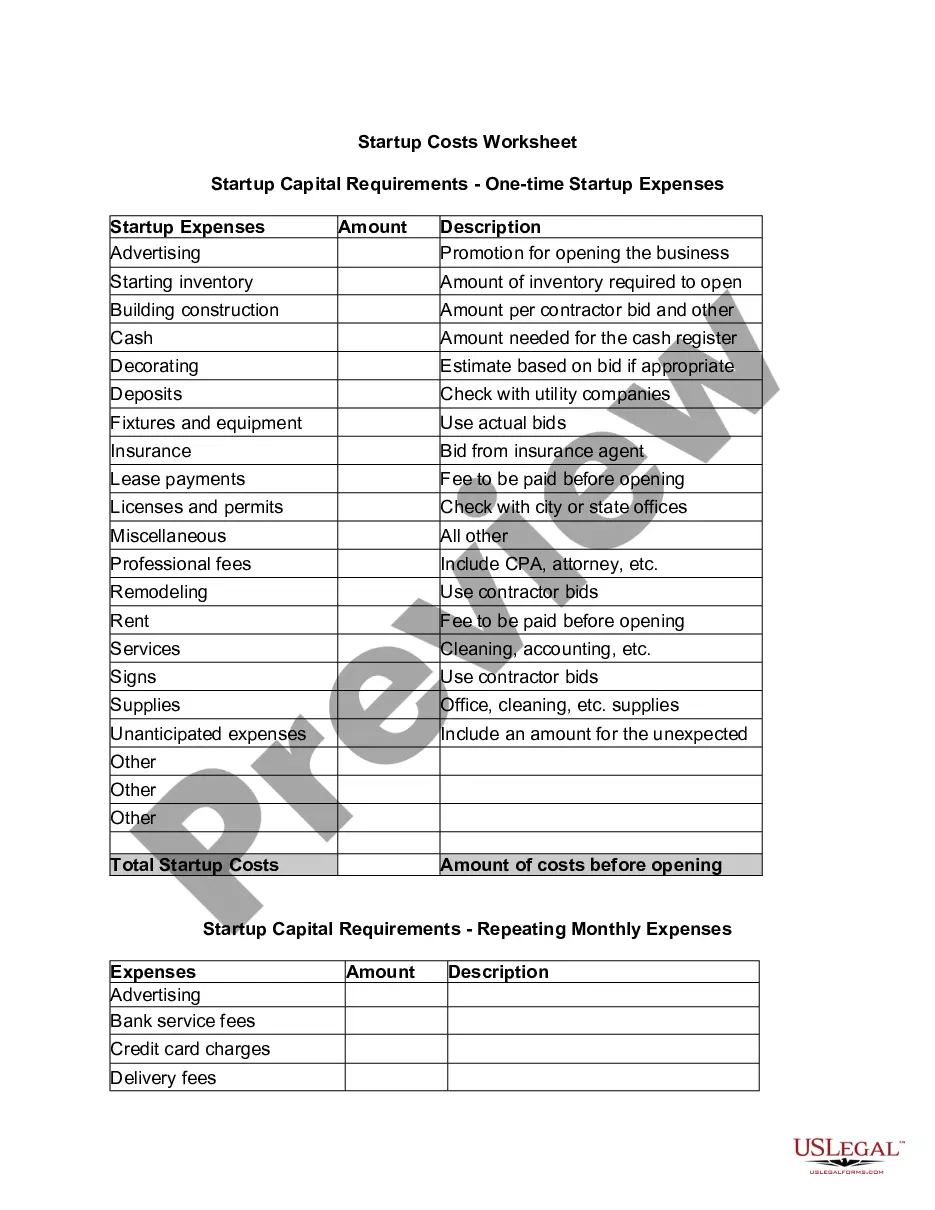
Your worksheet should list all the facilities costs, equipment, initial supplies and materials, advertising materials, and miscellaneous costs you need to open your business. Once you understand all of the cost categories involved, you can verify that your plan has captured all of the expenses needed to get started.
Examples of startup costs include licensing and permits, insurance, office supplies, payroll, marketing costs, research expenses, and utilities.
You can create a budget for your startup in seven simple steps: Determine all your essential one-time costs and capital expenditures. List all your fixed and variable monthly expenses. Estimate funding from investments, bank loans, and savings. Estimate your expected monthly revenue. Calculate a break-even point.