Minneapolis Minnesota Emergency Action Plan Checklist - EAP

State:
Multi-State
City:
Minneapolis
Control #:
US-03056BG
Format:
Word; 
Rich Text
Instant download

Description

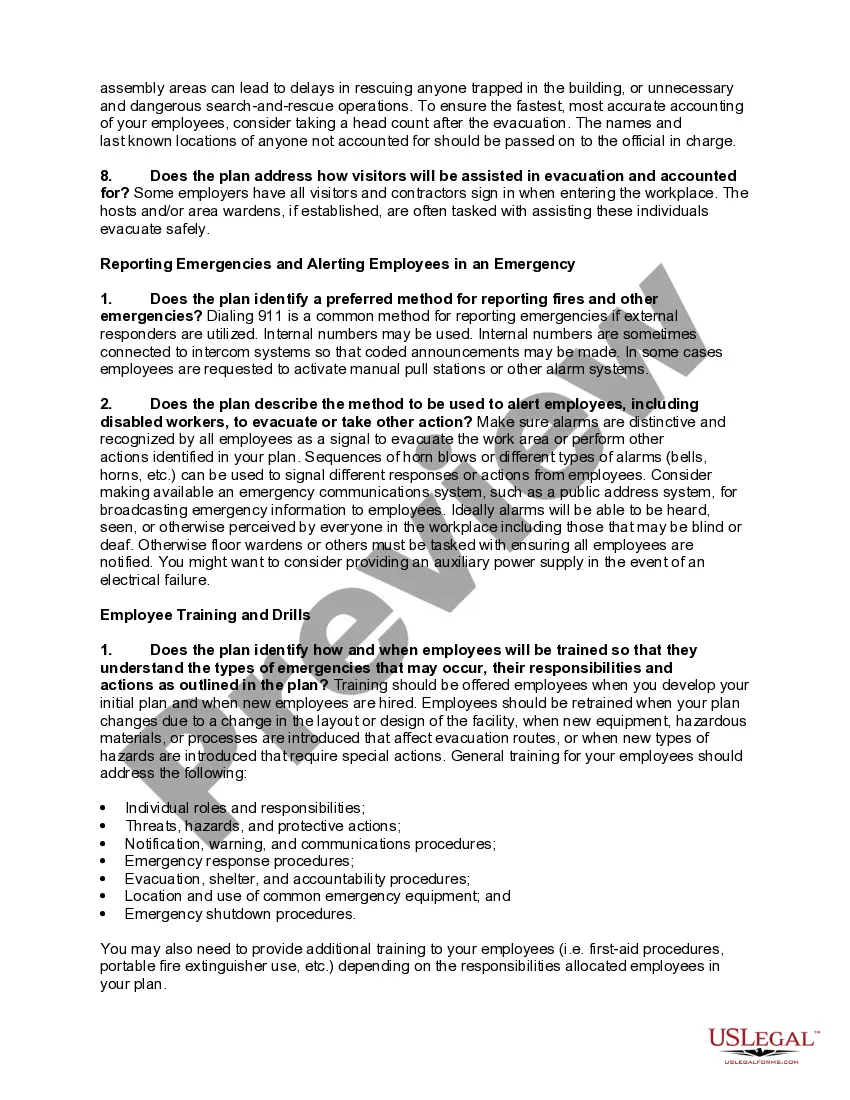
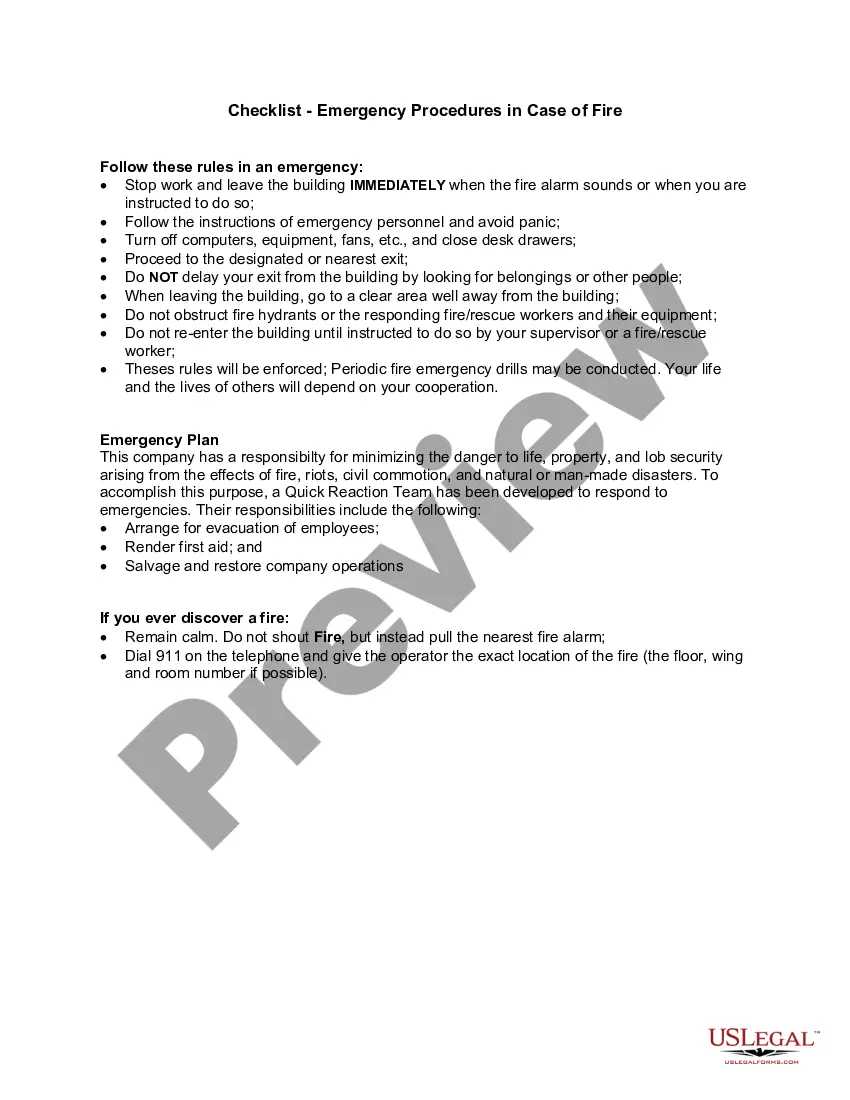
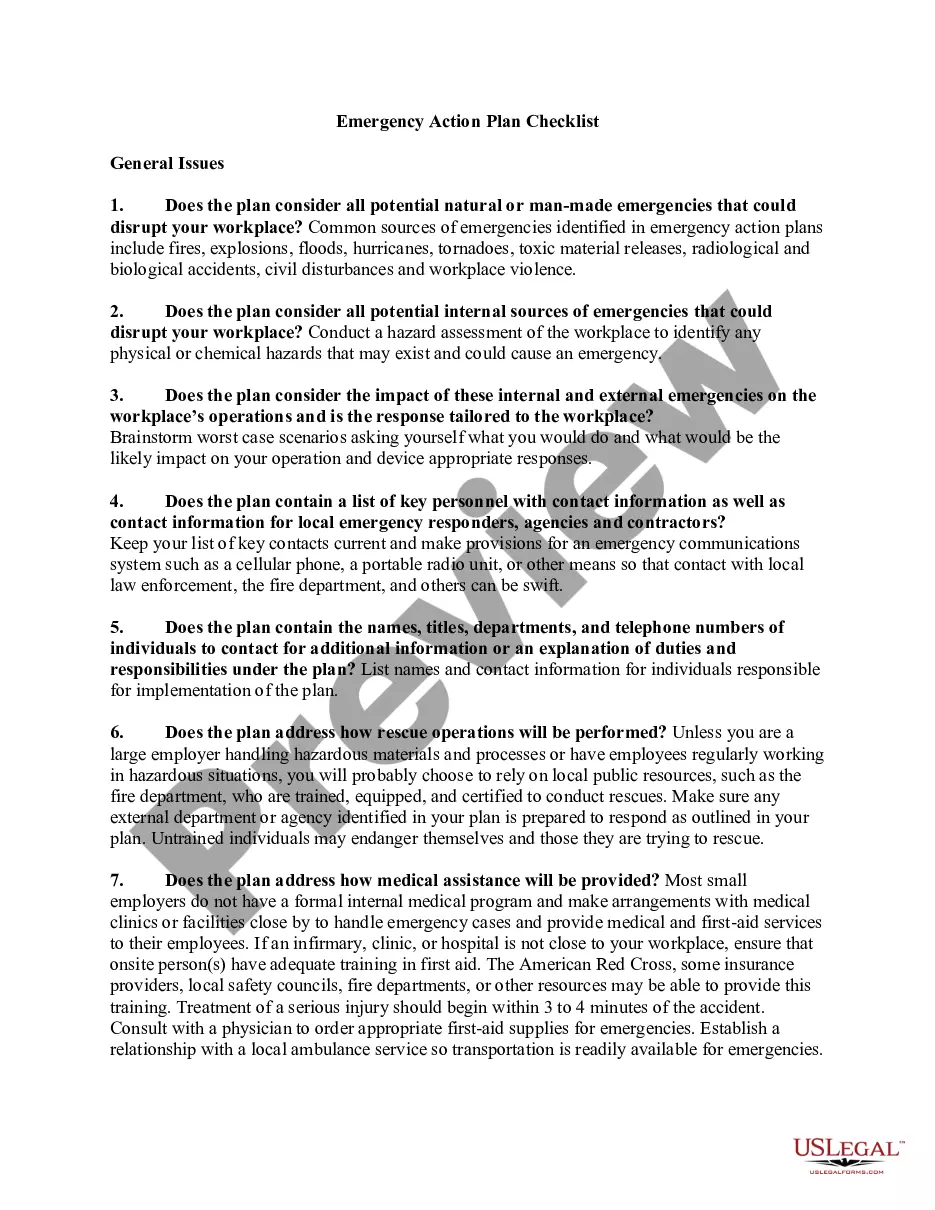
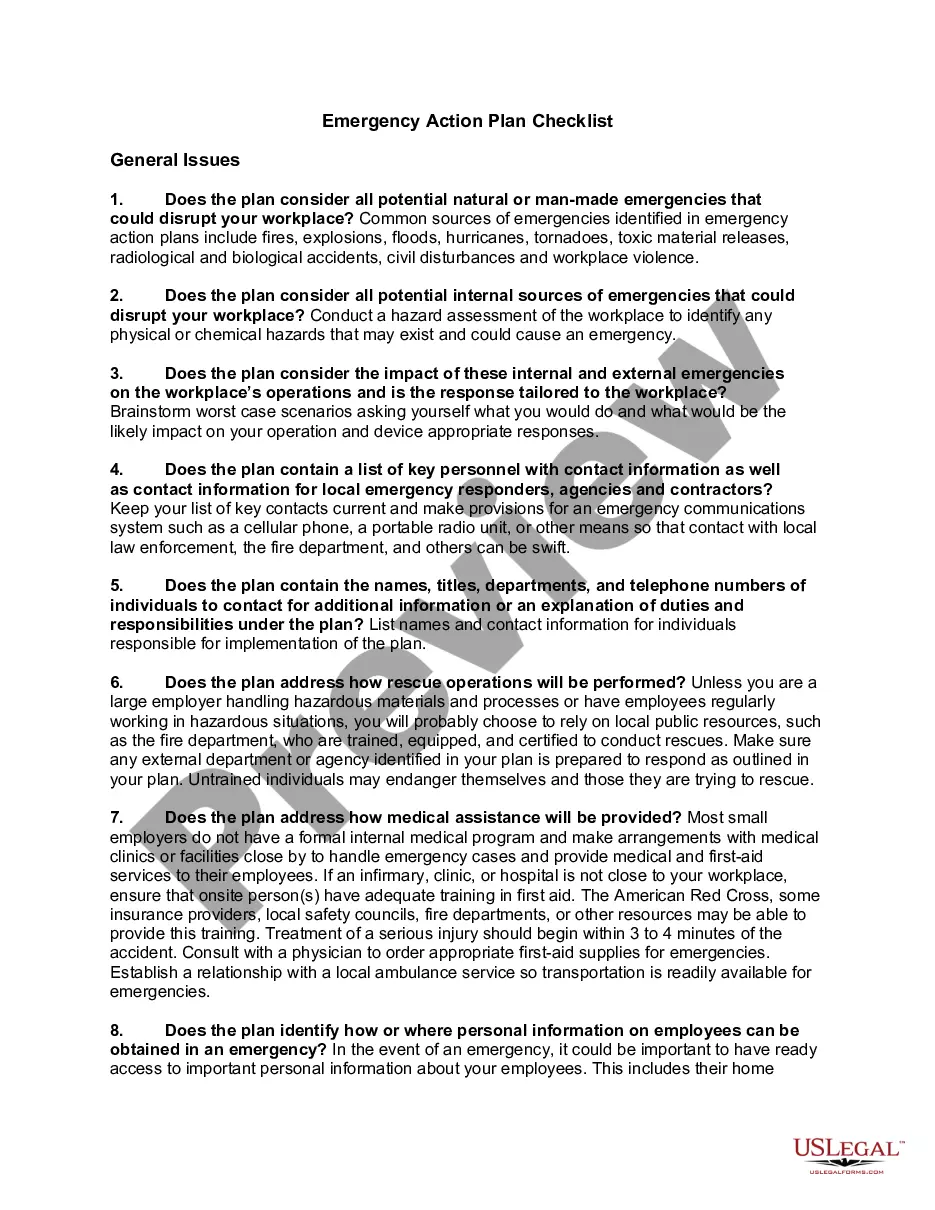
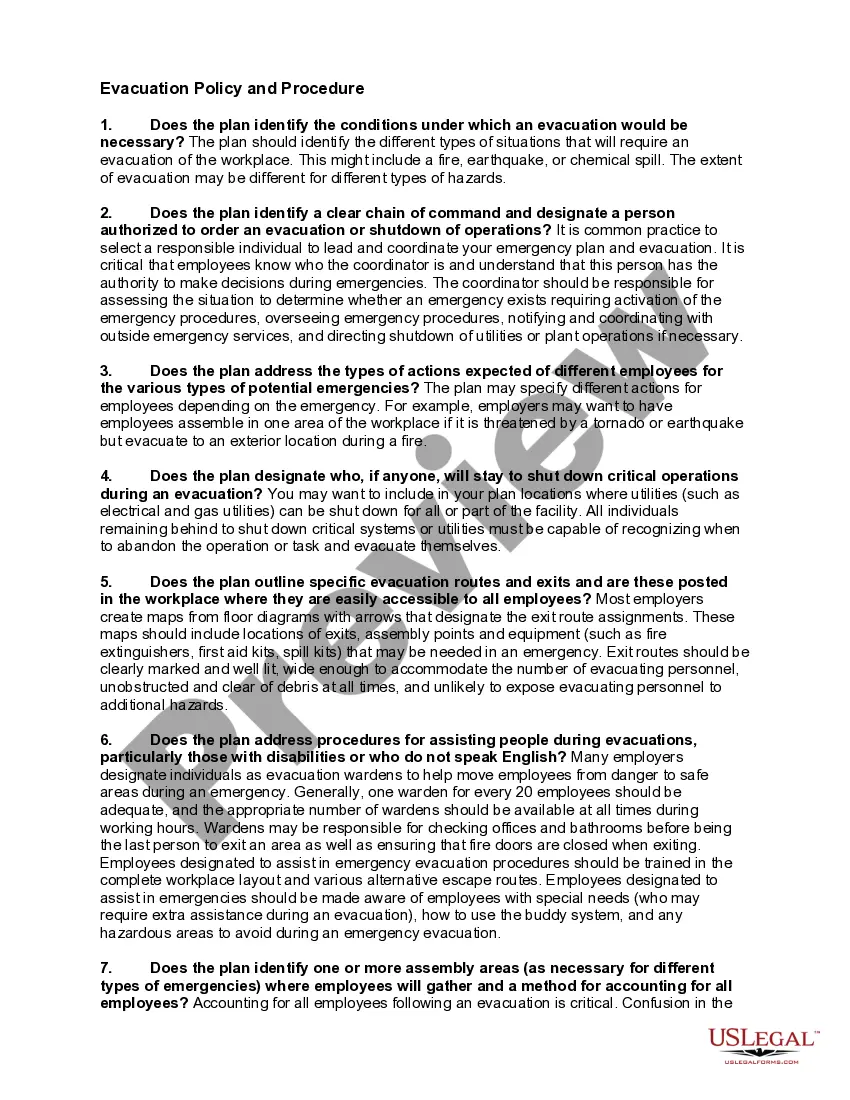
An emergency action plan (EAP) is a written document required by particular OSHA standards. The purpose of an EAP is to facilitate and organize employer and employee actions during workplace emergencies. Well developed emergency plans and proper employee training (such that employees understand their roles and responsibilities within the plan) will result in fewer and less severe employee injuries and less structural damage to the facility during emergencies. A poorly prepared plan, likely will lead to a disorganized evacuation or emergency response, resulting in confusion, injury, and property damage.


Putting together a comprehensive emergency action plan that deals with those issues specific to your worksite is not difficult. It involves taking what was learned from your workplace evaluation and describing how employees will respond to different types of emergencies, taking into account your specific worksite layout, structural features, and emergency systems. Most organizations find it beneficial to include a diverse group of representatives (management and employees) in this planning process and to meet frequently to review progress and allocate development tasks. The commitment and support of all employees is critical to the plan's success in the event of an emergency; ask for their help in establishing and implementing your emergency action plan. For smaller organizations, the plan does not need to be written and may be communicated orally if there are 10 or fewer employees.


At a minimum, the plan must include but is not limited to the following elements:

" Means of reporting fires and other emergencies;

" Evacuation procedures and emergency escape route assignments;

" Procedures to be followed by employees who remain to operate critical plant operations before they evacuate;

" Procedures to account for all employees after an emergency evacuation has been completed;

" Rescue and medical duties for those employees who are to perform them; and

" Names or job titles of persons who can be contacted for further information or explanation of duties under the plan.
Free preview
  • Preview Emergency Action Plan Checklist - EAP
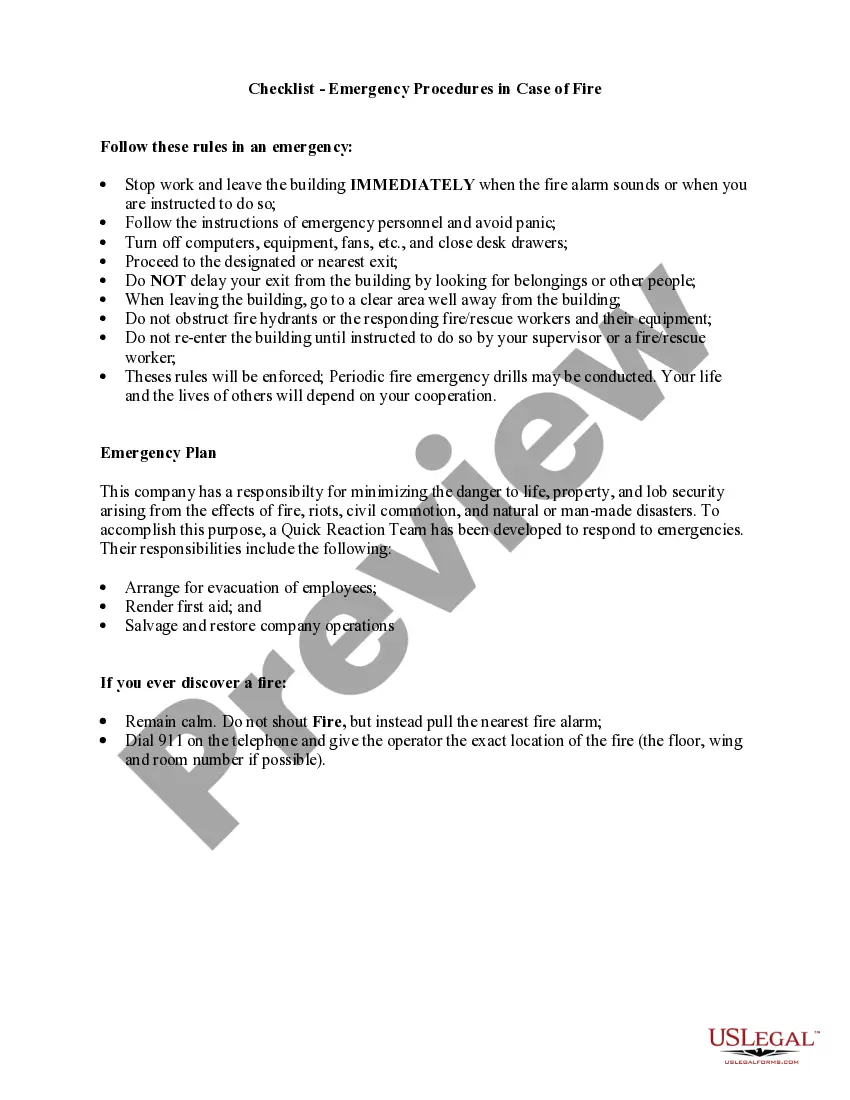
  • Preview Emergency Action Plan Checklist - EAP
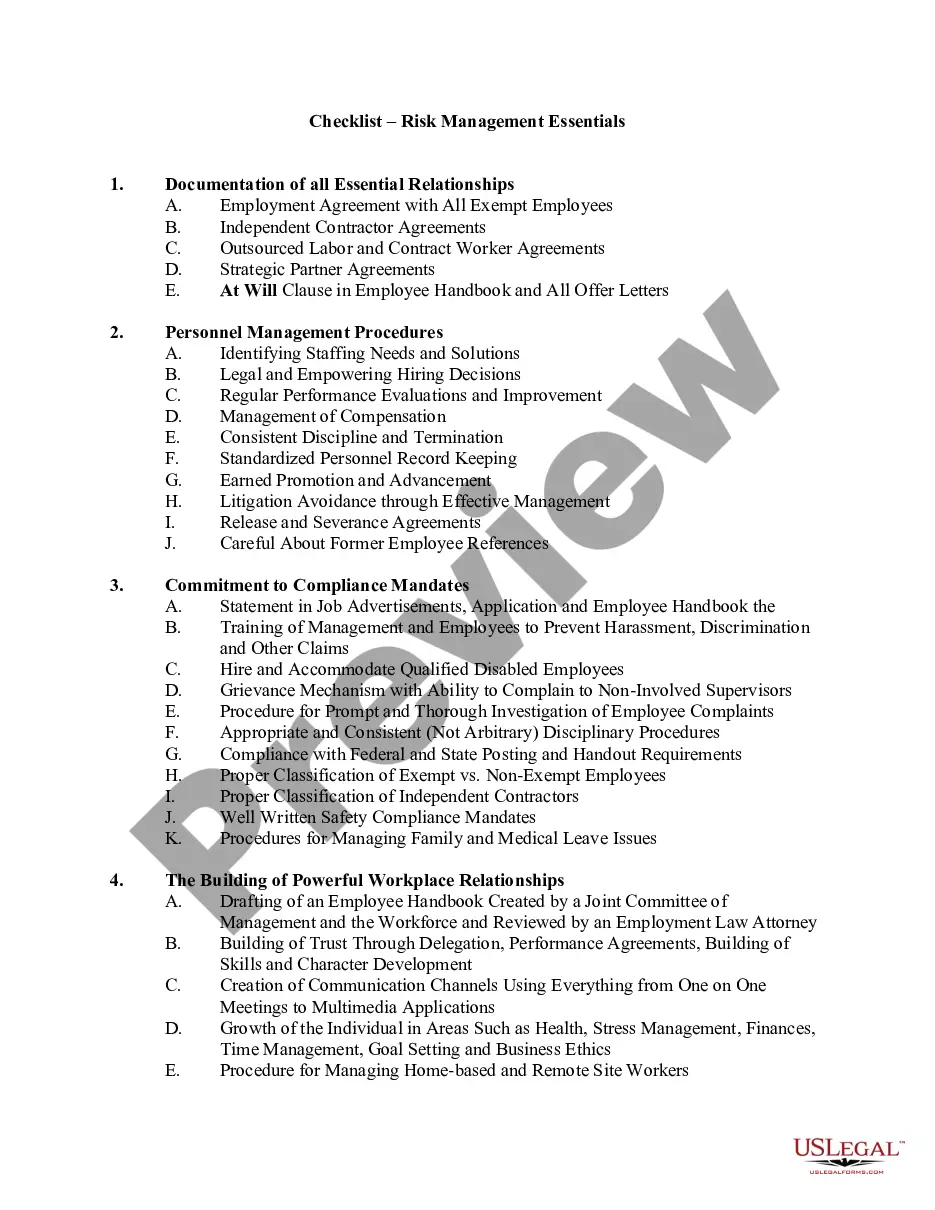
  • Preview Emergency Action Plan Checklist - EAP
  • Preview Emergency Action Plan Checklist - EAP

Form popularity

FAQ

Pro: Vibrant arts and culture scene. ... Con: Harsh winters. ... Pro: Abundant natural beauty. ... Con: Mosquitoes in summer. ... Pro: Great infrastructure. ... Con: Rural isolation. ... Pro: Thriving job market. ... Con: Traffic congestion in urban areas.

While living in Minneapolis, you can benefit from small-town vibes and big-city amenities. Although the cost of living is 3% higher than the state average, Minneapolis offers a budding economy, excellent and affordable healthcare, and 0% tax on clothing and shoes. Housing can also be very affordable!

Minnesota Minneapolis, officially the City of Minneapolis, is a city in and the county seat of Hennepin County, Minnesota, United States. With a population of 429,954, it is the state's most populous city as of the 2020 census. Minneapolis - Wikipedia wikipedia.org ? wiki ? Minneapolis wikipedia.org ? wiki ? Minneapolis

MINNEAPOLIS (WCCO) -- ing to a new survey, Minneapolis is increasingly among the world's most livable cities, even amid the COVID-19 pandemic. The Economist's Global Livability Index for 2021 listed the City of Lakes as the 36th most livable city in the world, up 19 spots since last year.

The cost of living in Minneapolis, MN is 2% lower than the state average and 6% lower than the national average. Minneapolis, MN housing is 13% cheaper than the U.S average, while utilities are about 6% less pricey.

When it comes to twin cities living, it can't be beat. In fact, you can easily expect a great quality of life in Minneapolis, with its endless supply of parks and outdoor activities, numerous gorgeous lakes, and mouthwatering food scene ? among many other things.

The cost of living in Minneapolis, MN is 2% lower than the state average and 6% lower than the national average. Minneapolis, MN housing is 13% cheaper than the U.S average, while utilities are about 6% less pricey.

Interesting Questions

Trusted and secure by over 3 million people of the world’s leading companies

Minneapolis Minnesota Emergency Action Plan Checklist - EAP