Columbus Ohio Emergency Action Plan Checklist - EAP

State:
Multi-State
City:
Columbus
Control #:
US-03056BG
Format:
Word; 
Rich Text
Instant download

Description

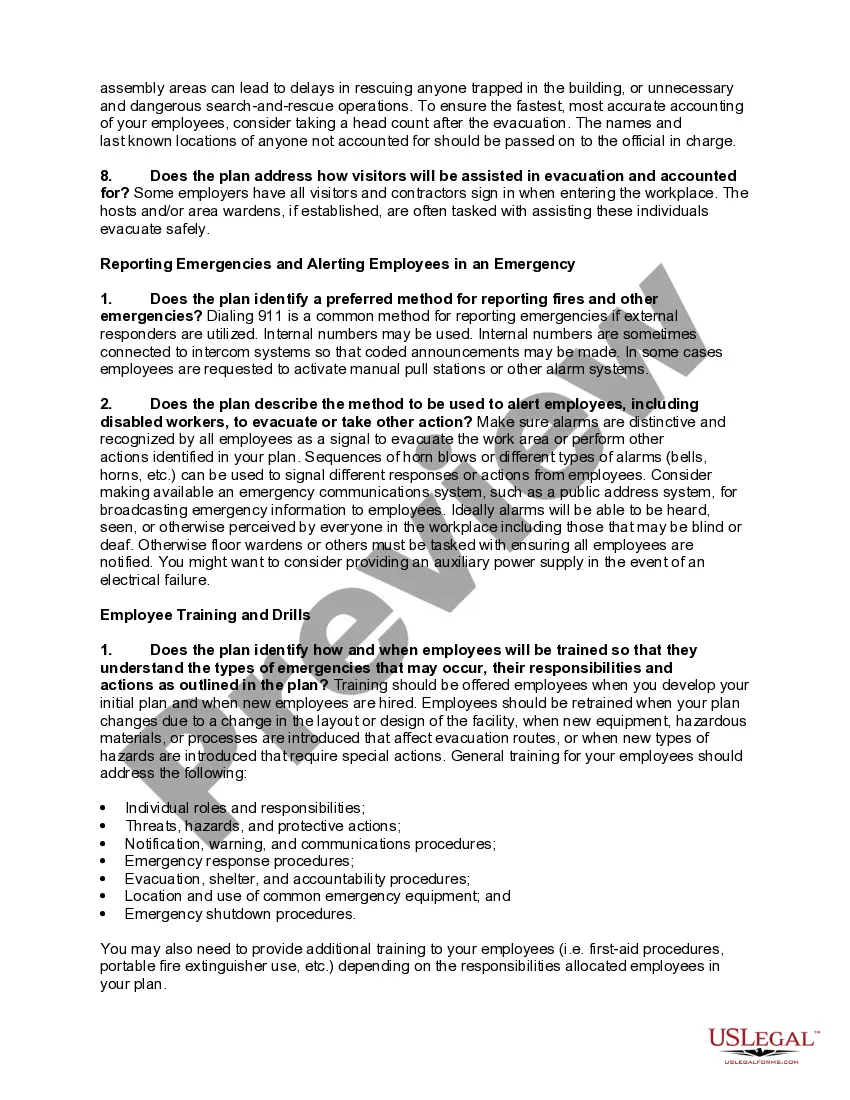
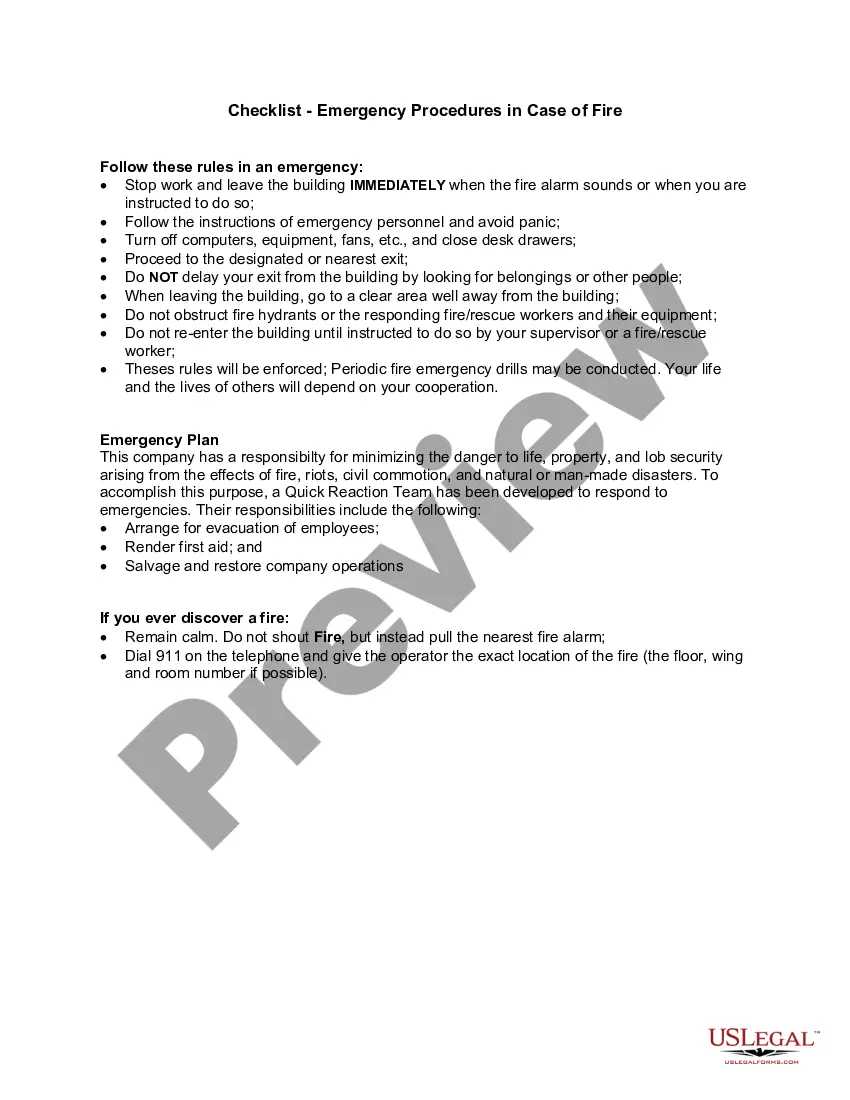
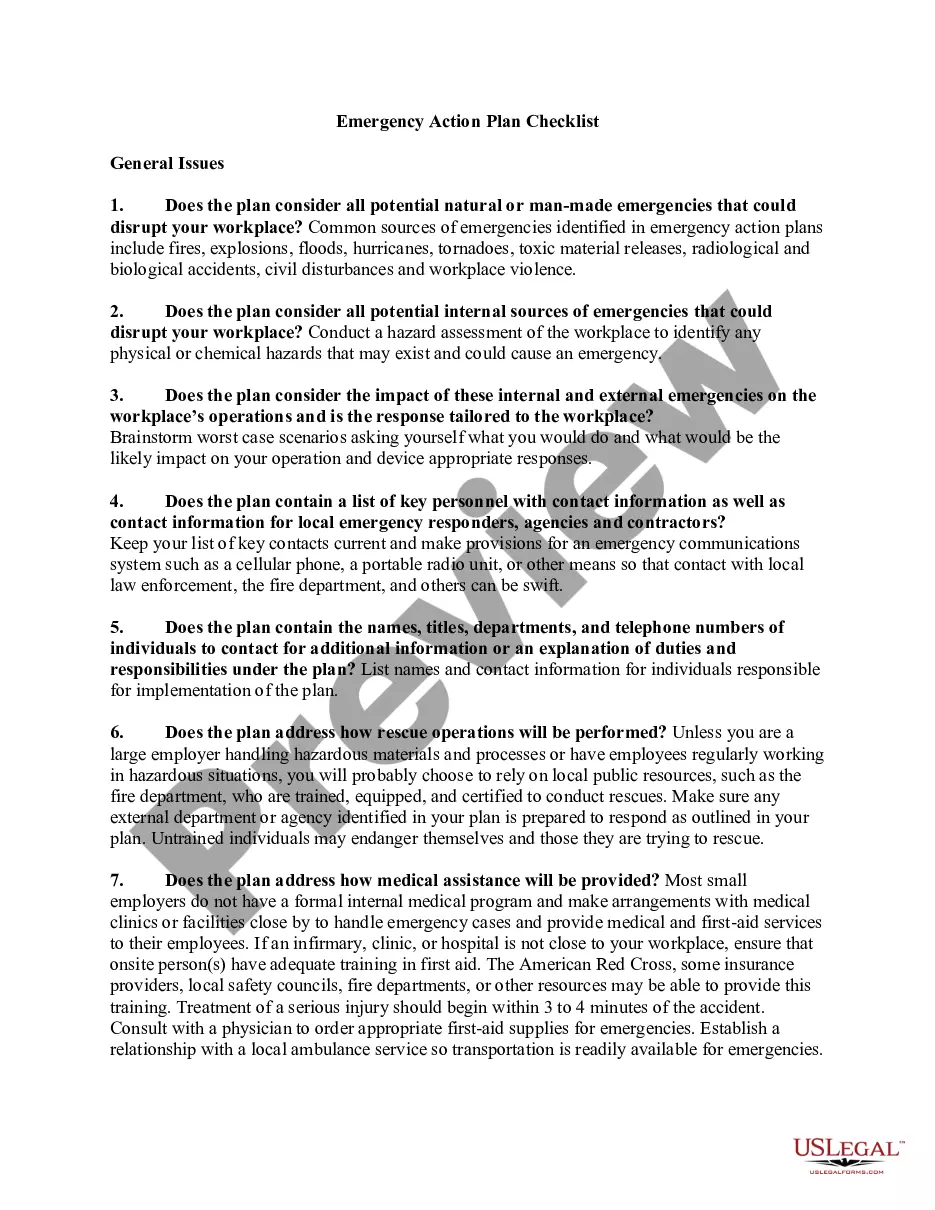
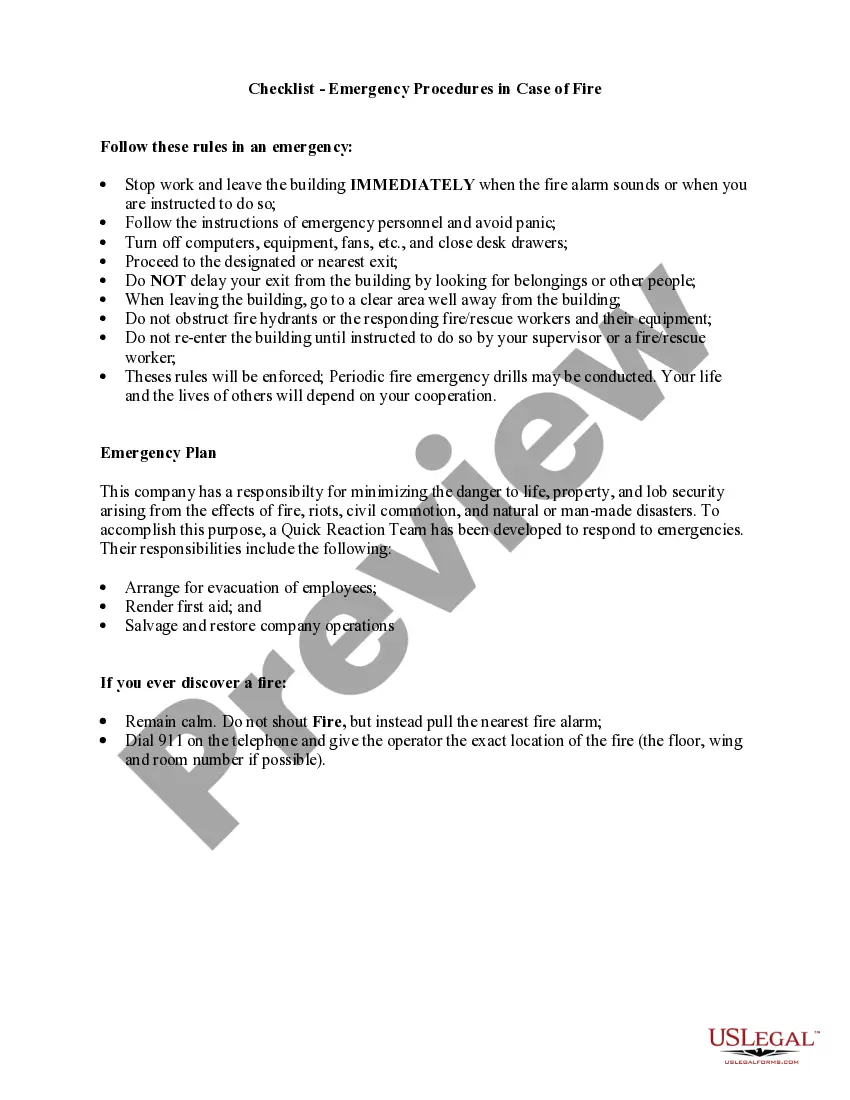
An emergency action plan (EAP) is a written document required by particular OSHA standards. The purpose of an EAP is to facilitate and organize employer and employee actions during workplace emergencies. Well developed emergency plans and proper employee training (such that employees understand their roles and responsibilities within the plan) will result in fewer and less severe employee injuries and less structural damage to the facility during emergencies. A poorly prepared plan, likely will lead to a disorganized evacuation or emergency response, resulting in confusion, injury, and property damage.


Putting together a comprehensive emergency action plan that deals with those issues specific to your worksite is not difficult. It involves taking what was learned from your workplace evaluation and describing how employees will respond to different types of emergencies, taking into account your specific worksite layout, structural features, and emergency systems. Most organizations find it beneficial to include a diverse group of representatives (management and employees) in this planning process and to meet frequently to review progress and allocate development tasks. The commitment and support of all employees is critical to the plan's success in the event of an emergency; ask for their help in establishing and implementing your emergency action plan. For smaller organizations, the plan does not need to be written and may be communicated orally if there are 10 or fewer employees.


At a minimum, the plan must include but is not limited to the following elements:

" Means of reporting fires and other emergencies;

" Evacuation procedures and emergency escape route assignments;

" Procedures to be followed by employees who remain to operate critical plant operations before they evacuate;

" Procedures to account for all employees after an emergency evacuation has been completed;

" Rescue and medical duties for those employees who are to perform them; and

" Names or job titles of persons who can be contacted for further information or explanation of duties under the plan.
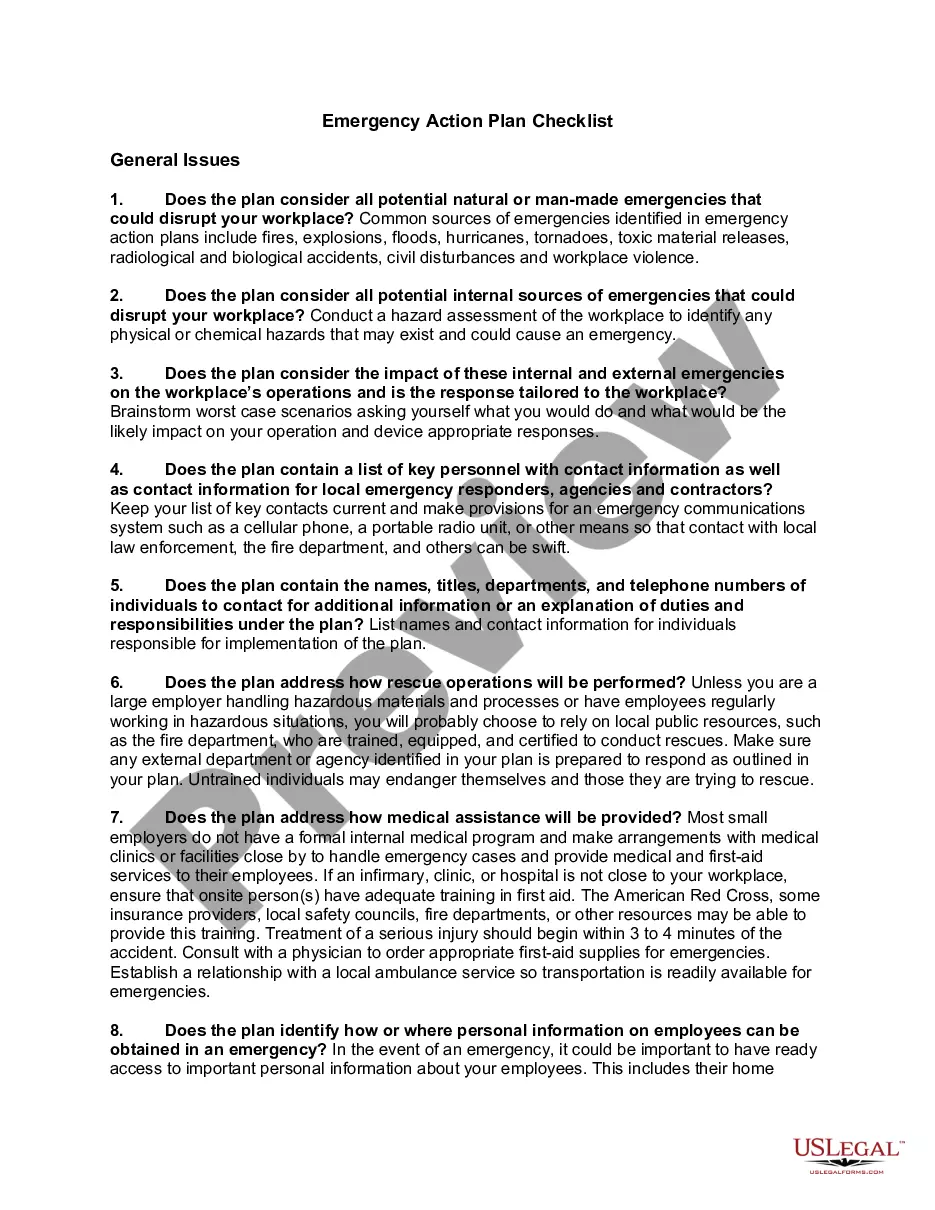
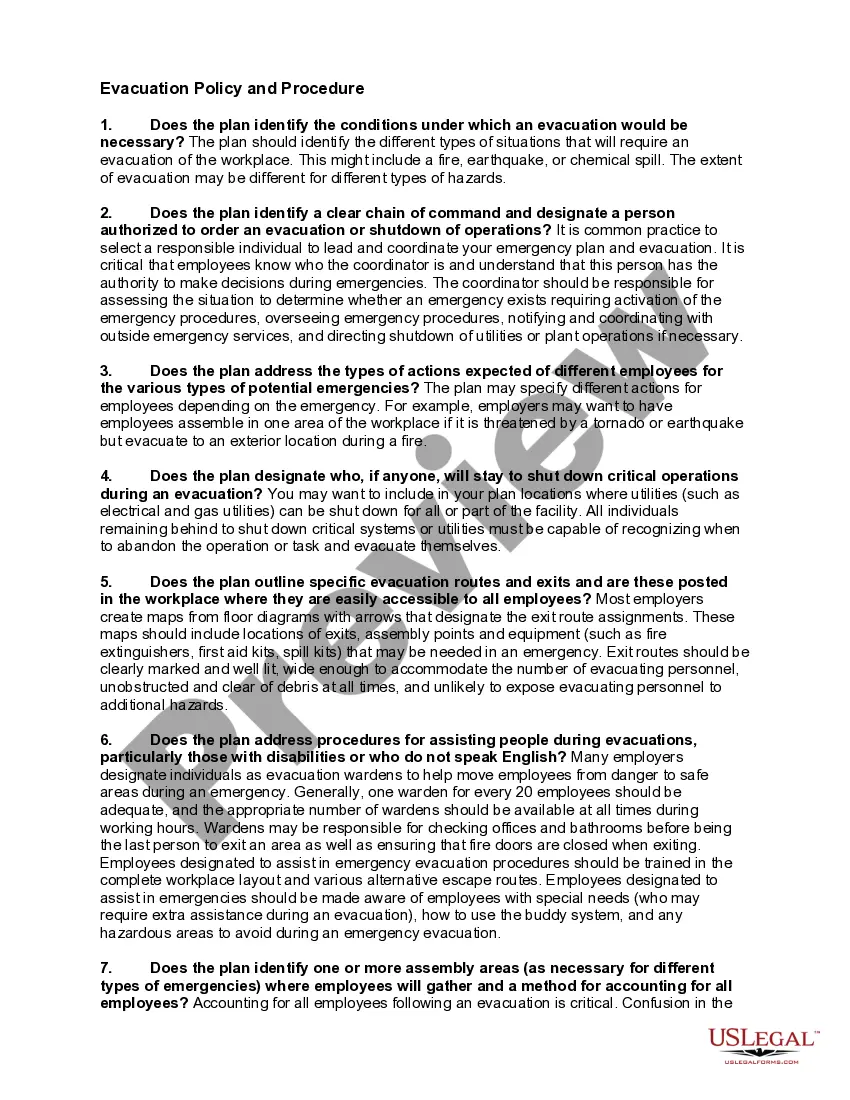
Free preview
  • Preview Emergency Action Plan Checklist - EAP
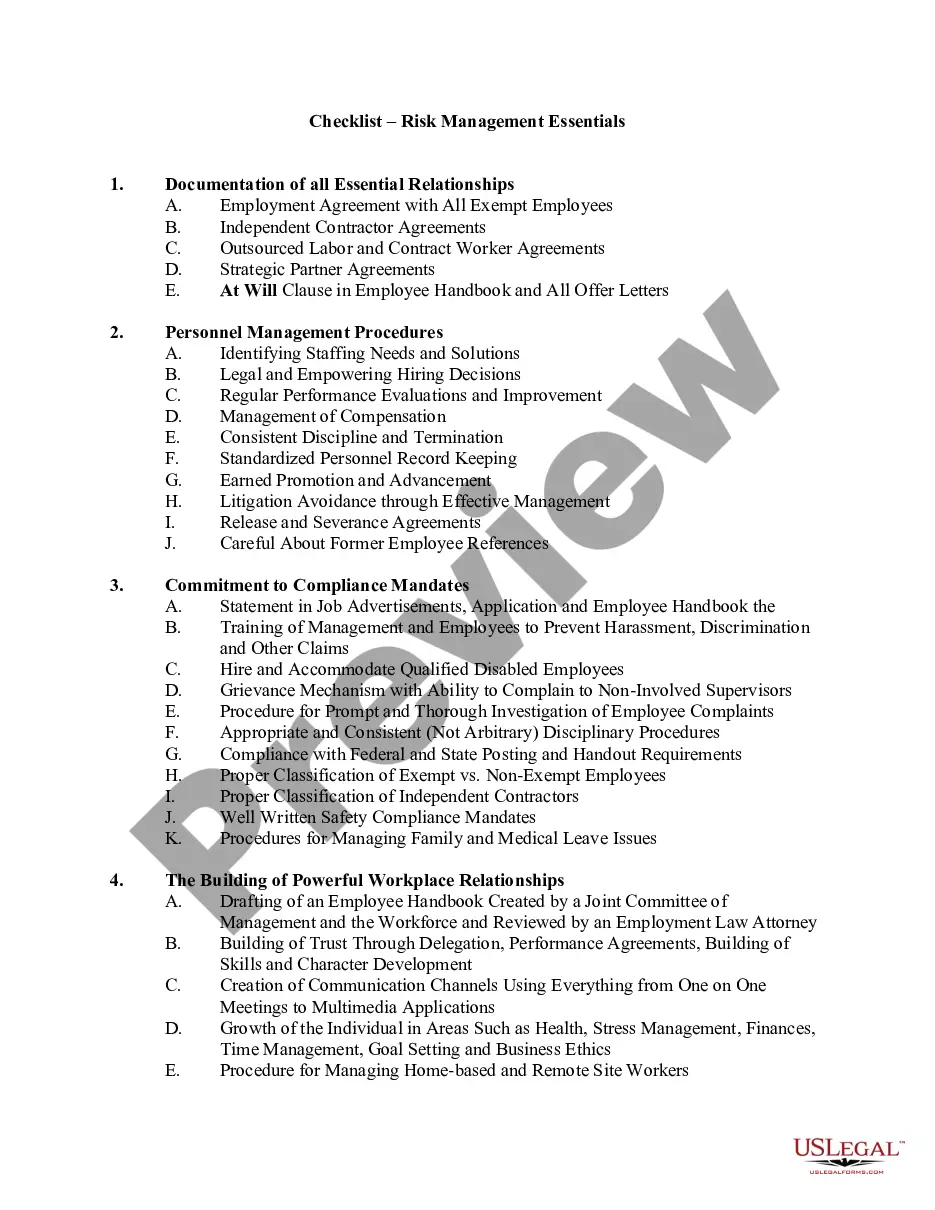
  • Preview Emergency Action Plan Checklist - EAP
  • Preview Emergency Action Plan Checklist - EAP
  • Preview Emergency Action Plan Checklist - EAP

Form popularity

FAQ

Ing to Ohio Instructions for Form IT 1040, ?Every Ohio resident and part year resident is subject to the Ohio Income tax.? Every full-year resident, part year resident and full year nonresident must file an Ohio tax return if they have income from Ohio sources.

Local income tax is usually based on where a taxpayer lives, but in some cases, taxpayers also owe local income tax based on where they perform work (for example, if they commute). You may have withholding obligations based on where your company does business or based on where your employees perform work.

Columbus residents pay a total of 2.5% in taxes on all income earned, regardless of whether it was earned in Columbus or another city.

In Ohio, you have an income tax obligation to both your employment city and your resident city. Your employer is required by law to withhold your work place city tax and if you have "fully withheld", you have no filing requirement with your work place city.

Municipalities may generally impose tax on on wages, salaries, and other compensation earned by residents and by nonresidents who work in the municipality. The tax also applies to the net profits of business attributable to activities in the municipality, and to the net profits from rental activities.

1. WHO SHOULD FILE THIS RETURN: a) All Ohio City residents 18 years of age and over, (except high school students) are required to regis- ter and report income with the Ohio City Tax Office. b) High School Students 18 years of age and under, working part time, do not have to register with the Ohio City Tax Office.

Cities that administer their own taxes on their own form: City of Akron. City of Canton. City of Carlisle. City of Cincinnati. City of Columbus. City of Dayton. City of Middletown. City of St. Marys.

Free to File. Easy to Use. Faster Refund.

Interesting Questions

Trusted and secure by over 3 million people of the world’s leading companies

Columbus Ohio Emergency Action Plan Checklist - EAP