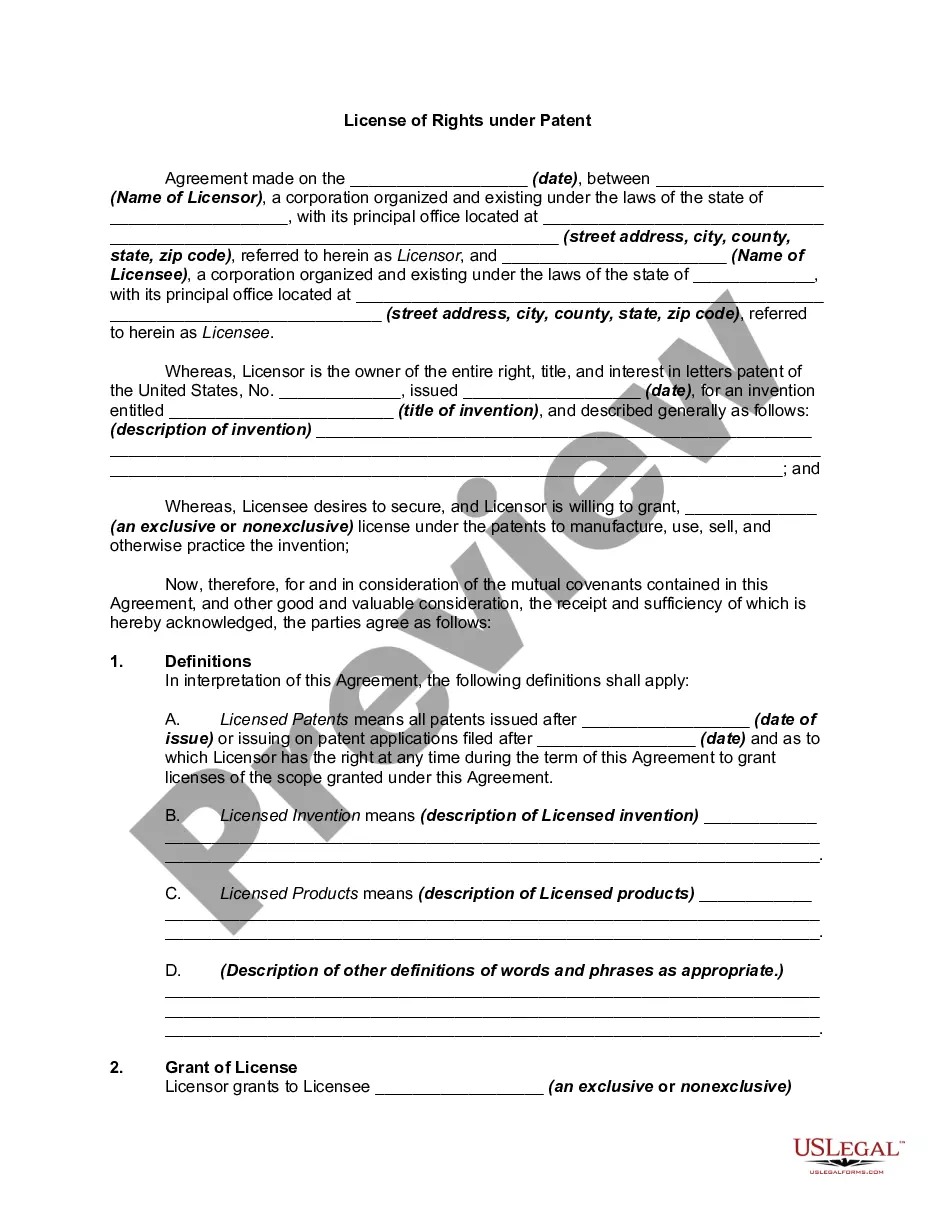
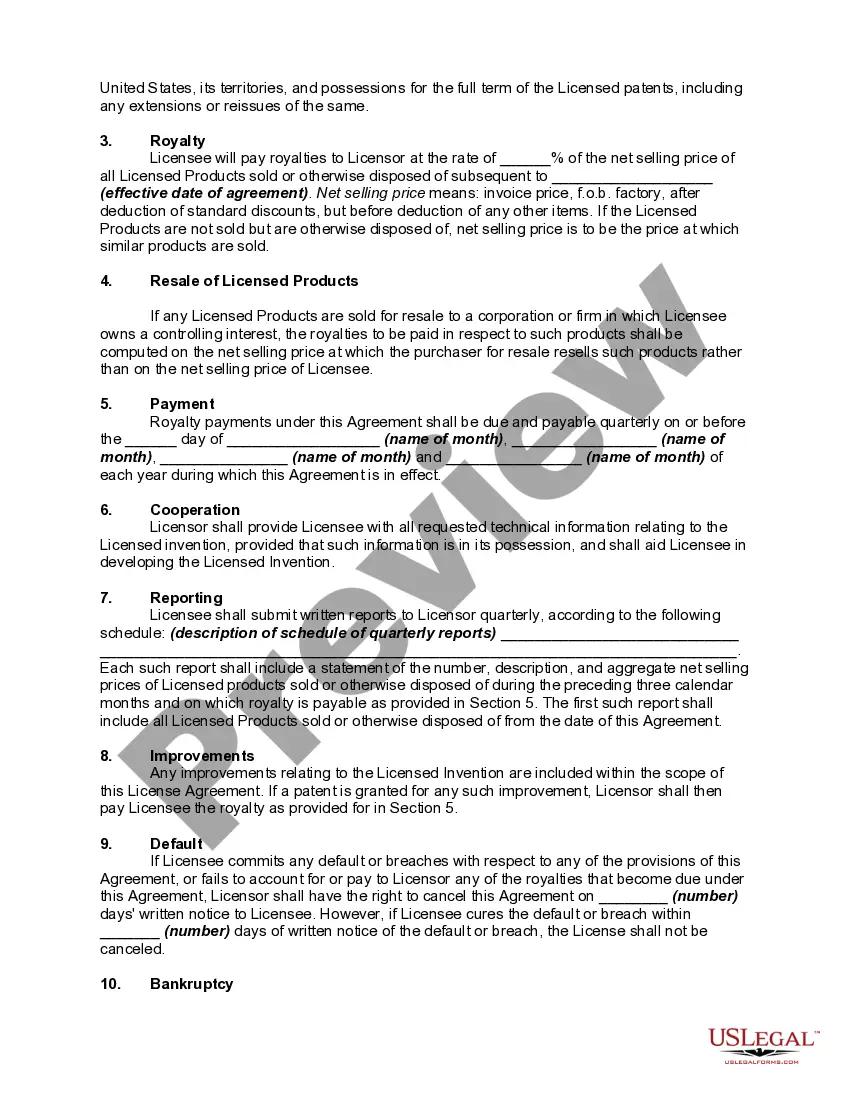
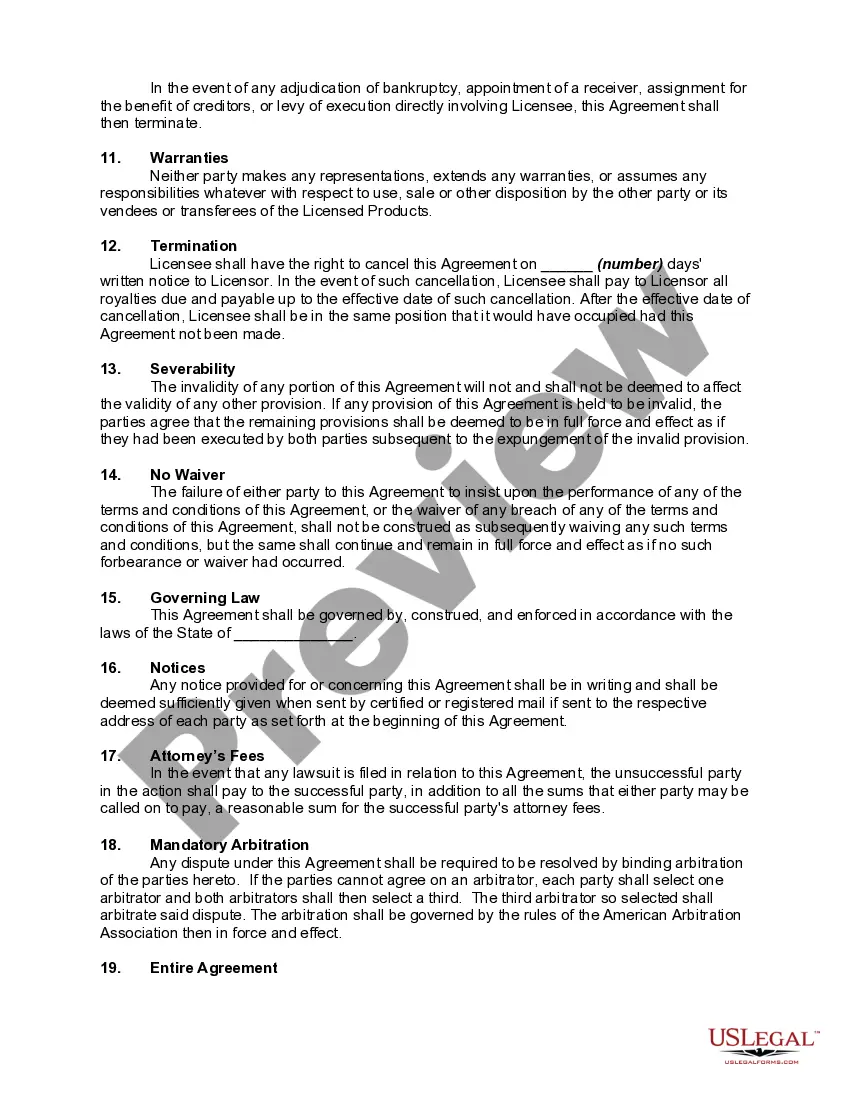
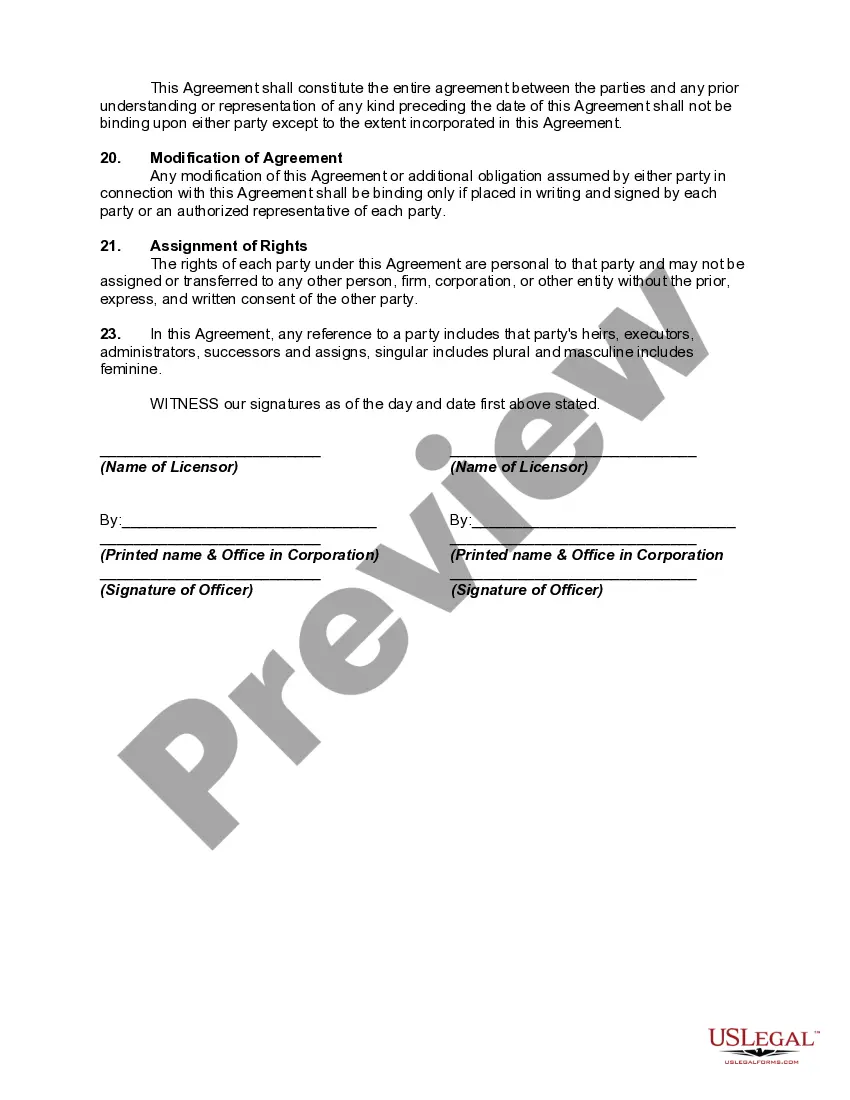
A license agreement is a legal contract between two parties, known as the licensor and the licensee. In a typical licensing agreement, the licensor grants the licensee the right to produce and sell goods, apply a brand name or trademark, or use patented technology owned by the licensor. In exchange, the licensee usually submits to a series of conditions regarding the use of the licensor's property and agrees to make payments known as royalties.
A patent for an invention is the grant of a property right to the inventor, issued by the federal agency charged with administering patent laws, the U.S. Patent and Trademark Office. The term of a new patent is 20 years from the date on which the application for the patent was filed in the United States or, in special cases, from the date an earlier related application was filed, subject to the payment of maintenance fees. US patent grants are effective only within the US, US territories, and US possessions.
Pima Arizona License of Rights under Patent
State:
Multi-State
County:
Pima
Control #:
US-02401BG
Format:
Word;
PDF;
Rich Text
50 downloads
Description
Free preview
Get your form ready online
Our built-in tools help you complete, sign, share, and store your documents in one place.
Built-in online Word editor
Make edits, fill in missing information, and update formatting in US Legal Forms—just like you would in MS Word.
Export easily
Download a copy, print it, send it by email, or mail it via USPS—whatever works best for your next step.
E-sign your document
Sign and collect signatures with our SignNow integration. Send to multiple recipients, set reminders, and more. Go Premium to unlock E-Sign.
Notarize online 24/7
If this form requires notarization, complete it online through a secure video call—no need to meet a notary in person or wait for an appointment.
Store your document securely
We protect your documents and personal data by following strict security and privacy standards.

Make edits, fill in missing information, and update formatting in US Legal Forms—just like you would in MS Word.

Download a copy, print it, send it by email, or mail it via USPS—whatever works best for your next step.

Sign and collect signatures with our SignNow integration. Send to multiple recipients, set reminders, and more. Go Premium to unlock E-Sign.

If this form requires notarization, complete it online through a secure video call—no need to meet a notary in person or wait for an appointment.

We protect your documents and personal data by following strict security and privacy standards.
Looking for another form?


How to fill out License Of Rights Under Patent?
If you are looking for a reliable legal document provider to secure the Pima License of Rights under Patent, search no more than US Legal Forms. Whether you wish to establish your LLC business or manage your asset allocation, we have you covered.
US Legal Forms is a reputable service offering legal forms to millions of clients since 1997.
You may choose to search for or browse the Pima License of Rights under Patent, either by a keyword or by the specific state/county the document is designed for.
After locating the desired form, you can Log In and download it or save it in the My documents section.
Don't have an account? Starting is easy! Simply find the Pima License of Rights under Patent template and review the form's preview and description (if available). If you feel comfortable with the template’s language, just click Buy now. Create an account and select a subscription plan. The template will be ready for download immediately after payment is completed. You can then complete the document.
- There's no need for extensive legal knowledge to find and download the necessary document.
- You can explore over 85,000 documents organized by state/county and circumstance.
- The intuitive interface, assortment of educational resources, and devoted support staff make it easy to obtain and fill out various paperwork.
Form popularity
FAQ
Typically, royalties are paid as a percentage of the product's gross sales. The typical percentage for royalty payments will be 3-5%.
You can file a patent application on behalf of yourself or your co-inventors. Alternatively, you can hire a registered patent agent or attorney to file your application for you. Patent applications require both legal and technical expertise and even small mistakes can dramatically compromise the value of the patent.
These five steps will help you plan out the patent process as you seek to protect your invention. Understand Your Invention. The first step in how to get a patent is to understand your invention.Research Your Invention.Choose the Type of Protection.Draft Your Patent Application.Wait for a Formal Response.
Licensing patents is the process where patent owners give a third-party permission to use their patent rights. The owner retains the title of the patent and still has ownership of the invention, but they license rights in exchange for monetary gain.
The Entrepreneurial Inventor Royalties often range from 2% to 10% of net revenues. Such inventors often choose to form a business and to manufacture and market the product themselves.
As an inventor, patent licensing can be a profitable practice. A licence on a patent-protected technology consists of a contract. The legal owner of the patent gives another party (the licensee) the right to exploit the technology in exchange for an upfront fixed fee or royalties.
Under federal patent law, you have the exclusive right to make, use or sell your patented invention throughout the United States and its territories. You also have the right to receive royalties from patent licensing agreements that give others permission to make, use or sell your invention.
A patent shall confer on its owner the following exclusive rights: (a) to prevent third parties not having his consent from the acts of: making, using, offering for sale, selling, or importing footnote for these purposes the product which is the subject matter of the patent; (b) where the subject matter of a patent
There are five key steps in learning how to license a patent for royalties. Step 1: Understand Your Market.Step 2: Find a Licensee.Step 3: Establish License Details.Step 4: Negotiate Your License.Step 5: Draft the License Agreement.
Let us look into the steps involved in a patent filing in India. Step 1: Conceiving your Invention.Step 2: Patent Search and Drafting.Step 3- Filing the Patent Application.Step 4- Publication of the Application.Step 5- Request for Examination.Step 6- Respond to the Objections.Step 7- Grant of Patent.