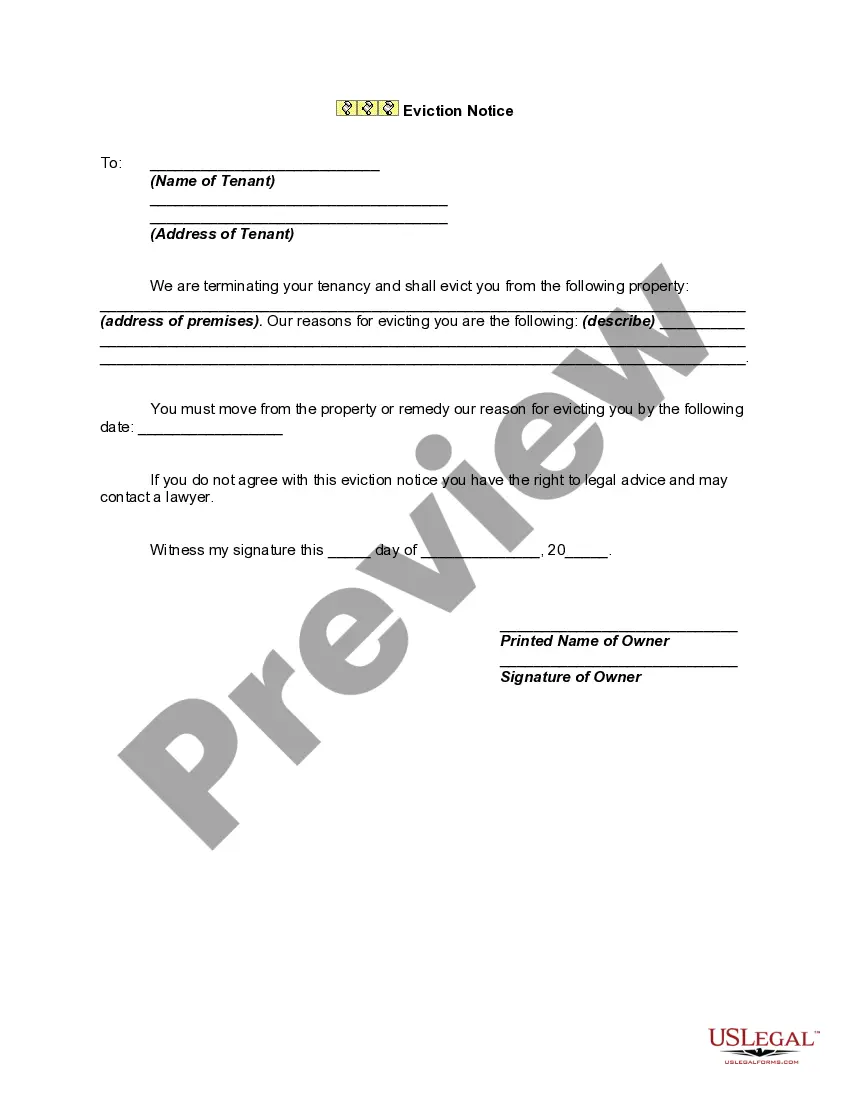
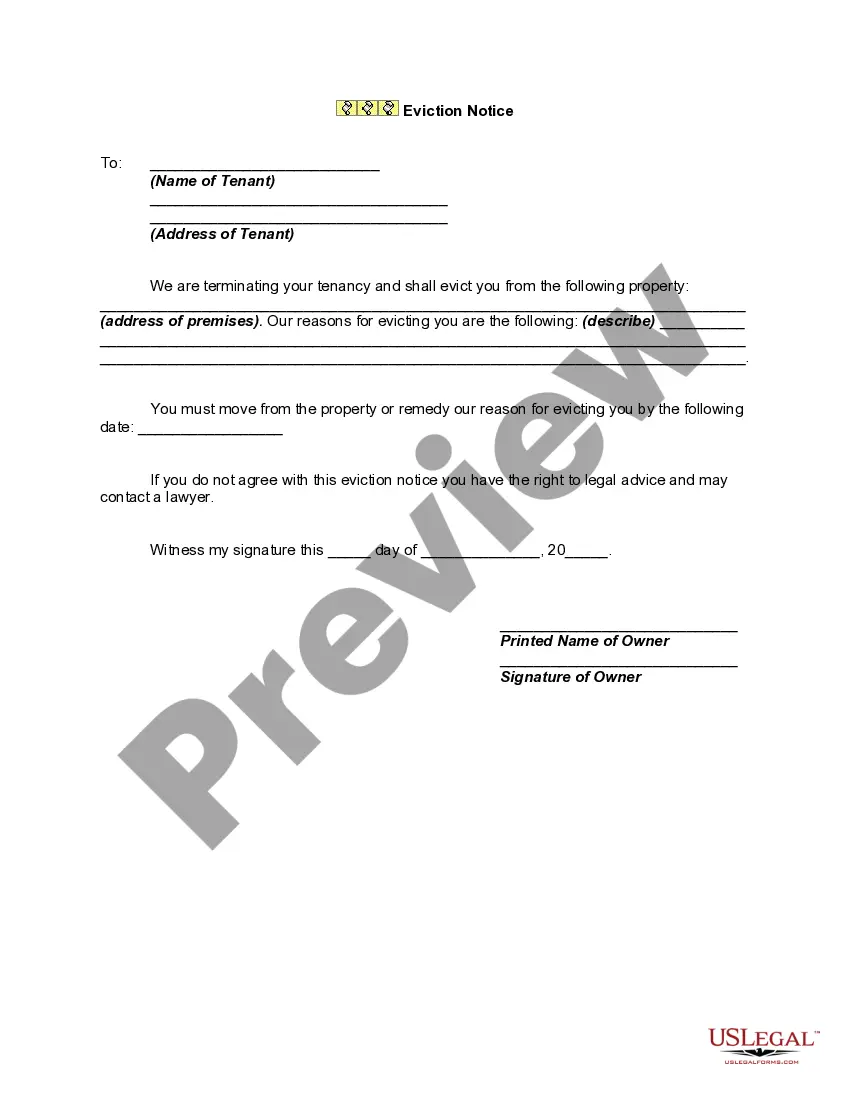
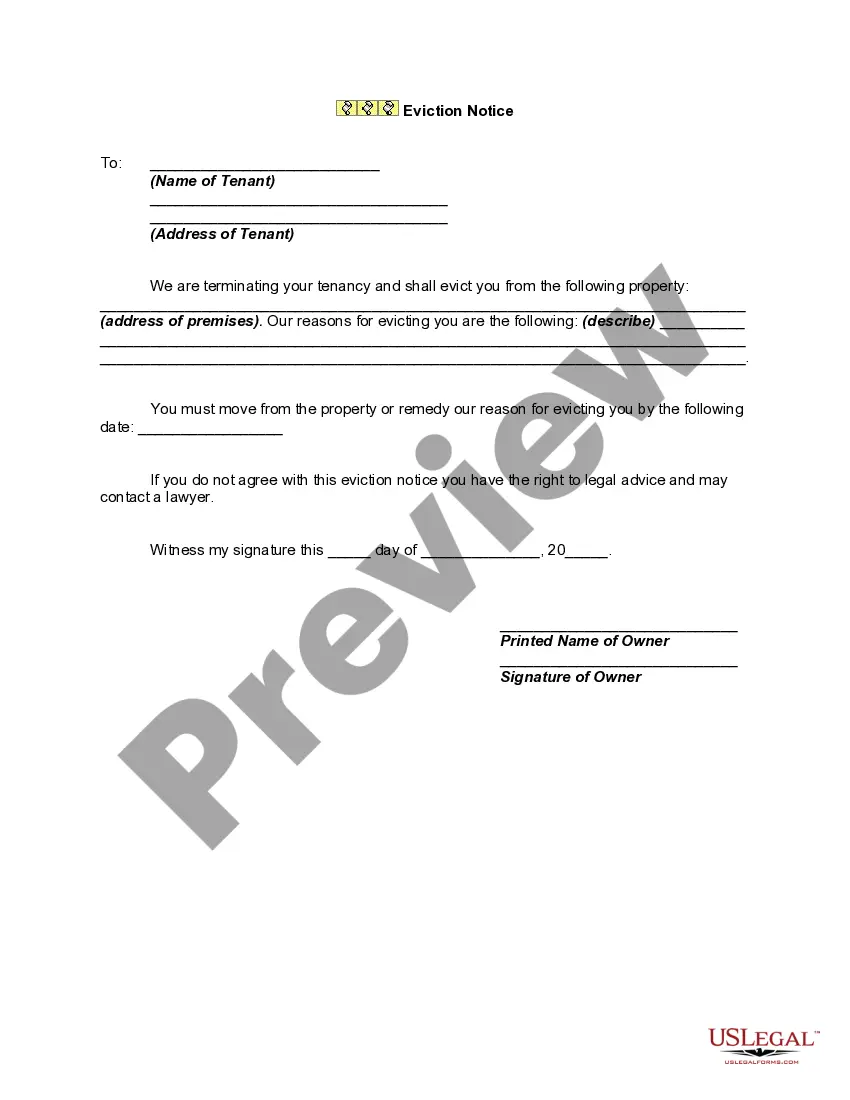
San Bernardino California Eviction Notice for Spouse
Description

Get your form ready online
Our built-in tools help you complete, sign, share, and store your documents in one place.
Make edits, fill in missing information, and update formatting in US Legal Forms—just like you would in MS Word.
Download a copy, print it, send it by email, or mail it via USPS—whatever works best for your next step.
Sign and collect signatures with our SignNow integration. Send to multiple recipients, set reminders, and more. Go Premium to unlock E-Sign.
If this form requires notarization, complete it online through a secure video call—no need to meet a notary in person or wait for an appointment.
We protect your documents and personal data by following strict security and privacy standards.

Make edits, fill in missing information, and update formatting in US Legal Forms—just like you would in MS Word.

Download a copy, print it, send it by email, or mail it via USPS—whatever works best for your next step.

Sign and collect signatures with our SignNow integration. Send to multiple recipients, set reminders, and more. Go Premium to unlock E-Sign.

If this form requires notarization, complete it online through a secure video call—no need to meet a notary in person or wait for an appointment.

We protect your documents and personal data by following strict security and privacy standards.
Looking for another form?
How to fill out Eviction Notice For Spouse?
A document process consistently accompanies any lawful action you undertake.
Launching a business, accepting or applying for a job offer, transferring assets, and numerous other life circumstances require you to prepare formal documentation that varies across the nation.
This is why having everything organized in one location is incredibly advantageous.
US Legal Forms is the largest online repository of current federal and state-specific legal documents.
This is the easiest and most reliable method to acquire legal documents. All templates provided by our library are expertly crafted and confirmed for compliance with local laws and regulations. Prepare your documents and manage your legal matters efficiently with US Legal Forms!
- Here, you can effortlessly find and obtain a document for any personal or commercial use applicable in your area, including the San Bernardino Eviction Notice for Spouse.
- Finding templates on the platform is unusually easy.
- If you already possess a subscription to our library, Log In to your account, search for the template using the search bar, and click Download to save it on your device.
- Subsequently, the San Bernardino Eviction Notice for Spouse will be accessible for additional use in the My documents section of your profile.
- If you are using US Legal Forms for the first time, adhere to this brief guide to obtain the San Bernardino Eviction Notice for Spouse.
- Ensure that you are on the correct page with your localized document.
- Use the Preview mode (if offered) and scroll through the sample.
- Examine the description (if present) to confirm the template satisfies your needs.
- Search for an alternative document via the search tab if the sample does not suit you.
Form popularity
FAQ
Even if you don't have a lease, a California landlord can't kick you to a curb without warning. If the landlord wants you gone, he's required to give you at least 30 days' notice on a month-to-month tenancy.
A relative who refuses to move, even after the agreement has expired or proper notification has been provided in advance of the move out date, may be evicted. In a month-to-month rental agreement or a weekly agreement, the landlord must provide the tenant with 30 days' notice to terminate the tenancy.
An unlawful detainer lawsuit is the court action that allows California landlords to evict and remove tenants who refuse to leave. The process for evicting relatives is the same as for evicting any other tenant, unless the tenant is a minor child, your spouse or shares ownership of the property.
Whether you are renting the property, the property is in your joint name or only one person's name. Either way, both parties have the right to be in the home and therefore cannot exclude the other person without a court order.
If you want a family member to leave your home, you must follow an eviction process similar to the one for a formal tenant. Gather documents relating to your home and the person you wish to evict.Give written notice to the family member, informing him or her that you wish them to leave.Wait out the notice period.
A relative move-in eviction is only permitted for certain close relatives of the owner, including a child, parent, grandparent, grandchild, sibling or the owner's spouse or spouses of such relations.
How to Evict a Tenant in California Make sure that you have legal grounds to evict the tenant.Serve tenant with an appropriate notice.Wait for the notice to expire.File all legal documents with the court.Serve the tenant with the proper legal documents.Wait for the tenant to respond to the lawsuit.
Give Notice. Give your relative notice that you want him to leave the property. If he's failed to pay rent, you must give him three days' notice.File an Eviction Suit. File an eviction suit with the magistrate court clerk in the county where the property is.Attend the Eviction Hearing. Attend the eviction hearing.
Any guest residing on the property for more than 14 days in a six-month period or spending more than 7 nights consecutively will be considered a tenant. Anyone living on the property must be listed and sign the lease agreement. The landlord may increase the rent at any time a new tenant is added to the lease.
You can only request a court date for an eviction hearing after you have completed the first 3 steps: Step 1: Give the tenant legal notice that you want to evict like the 3 Day Notice to Pay or Quit. Step 2: File your eviction lawsuit with the court & serve tenant. Step 3: The tenant files an Answer with the court.