Kansas City Missouri Model Adjustable Rate Note - Home Equity Conversion
Description

Form popularity
FAQ
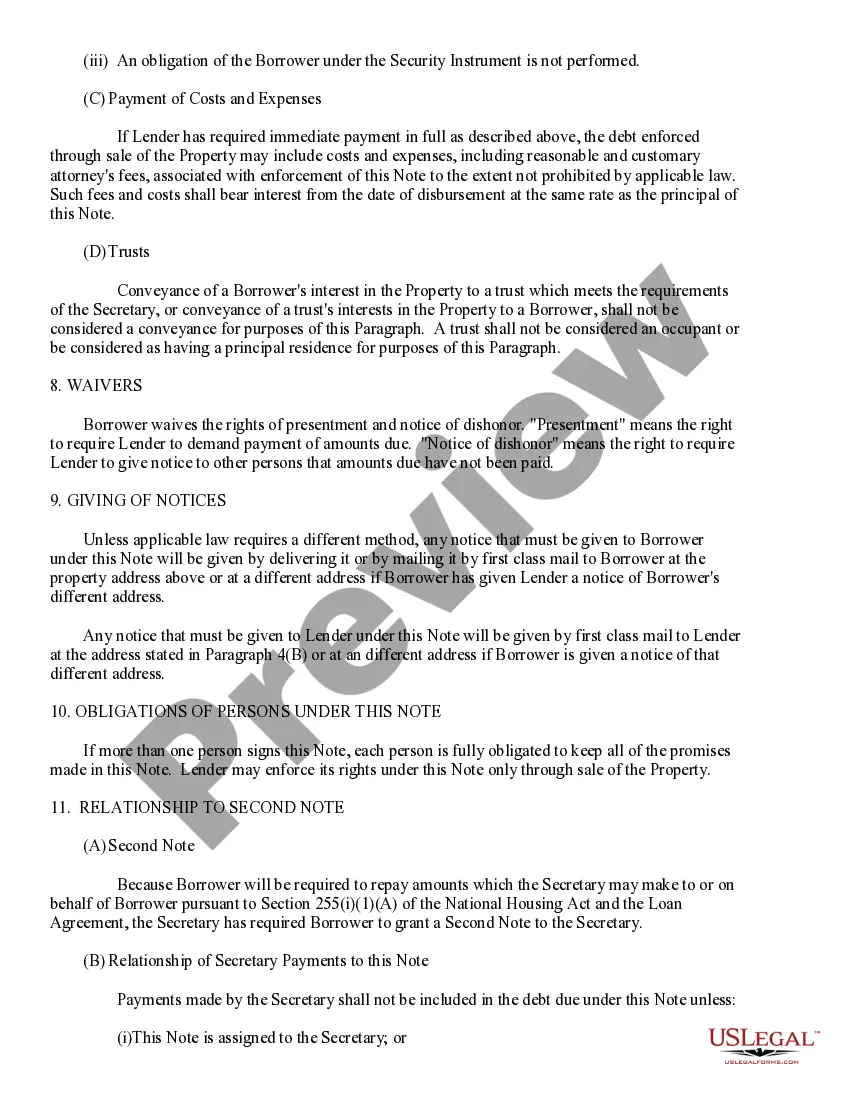
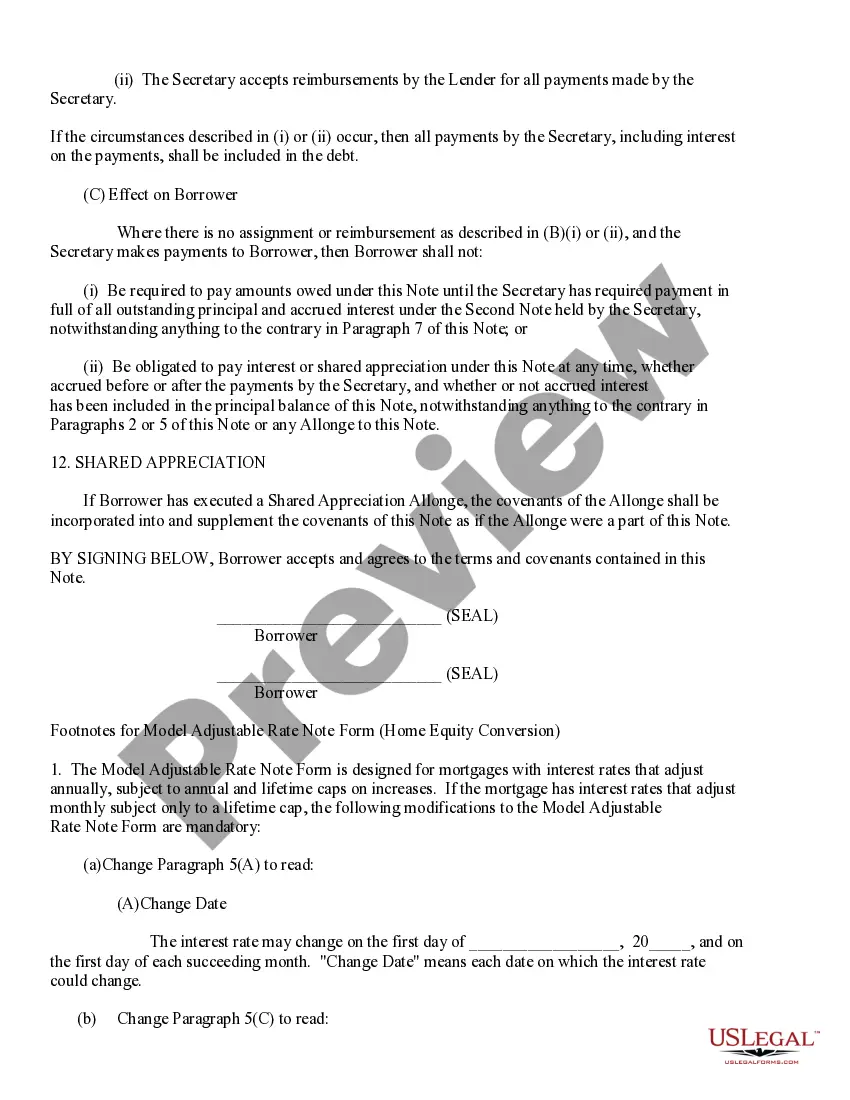
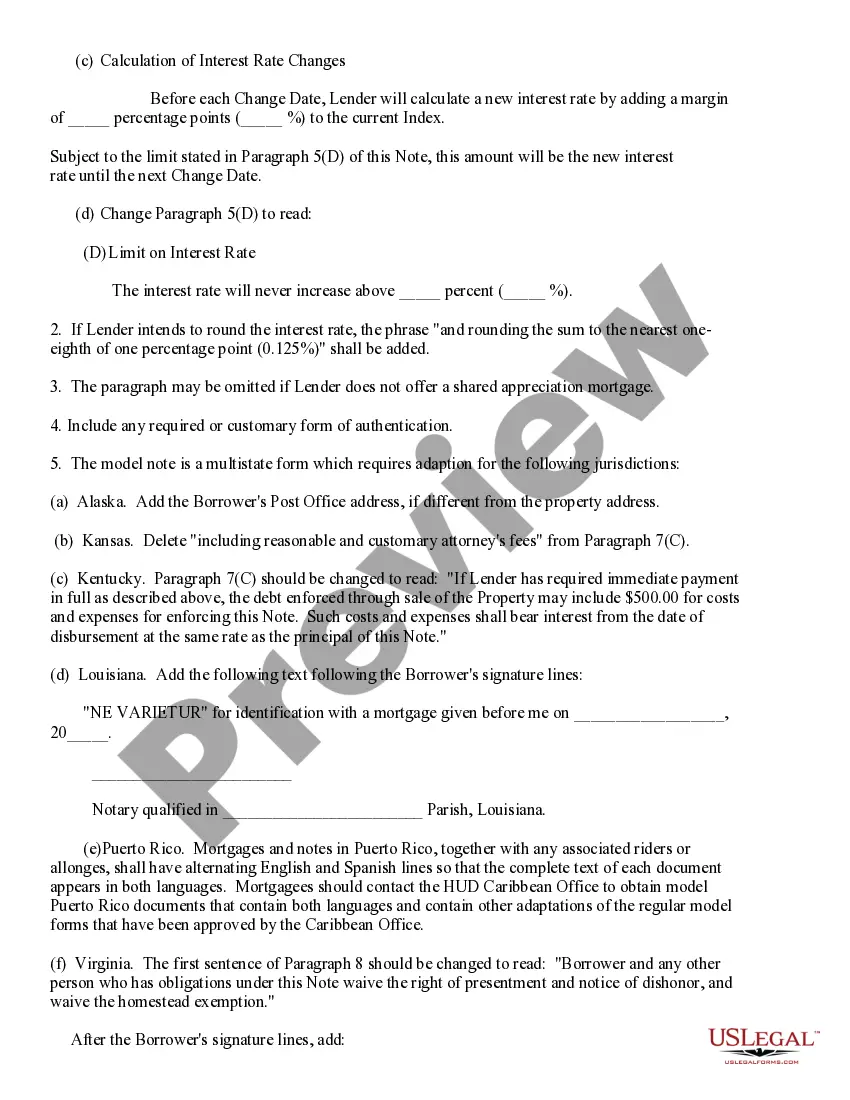
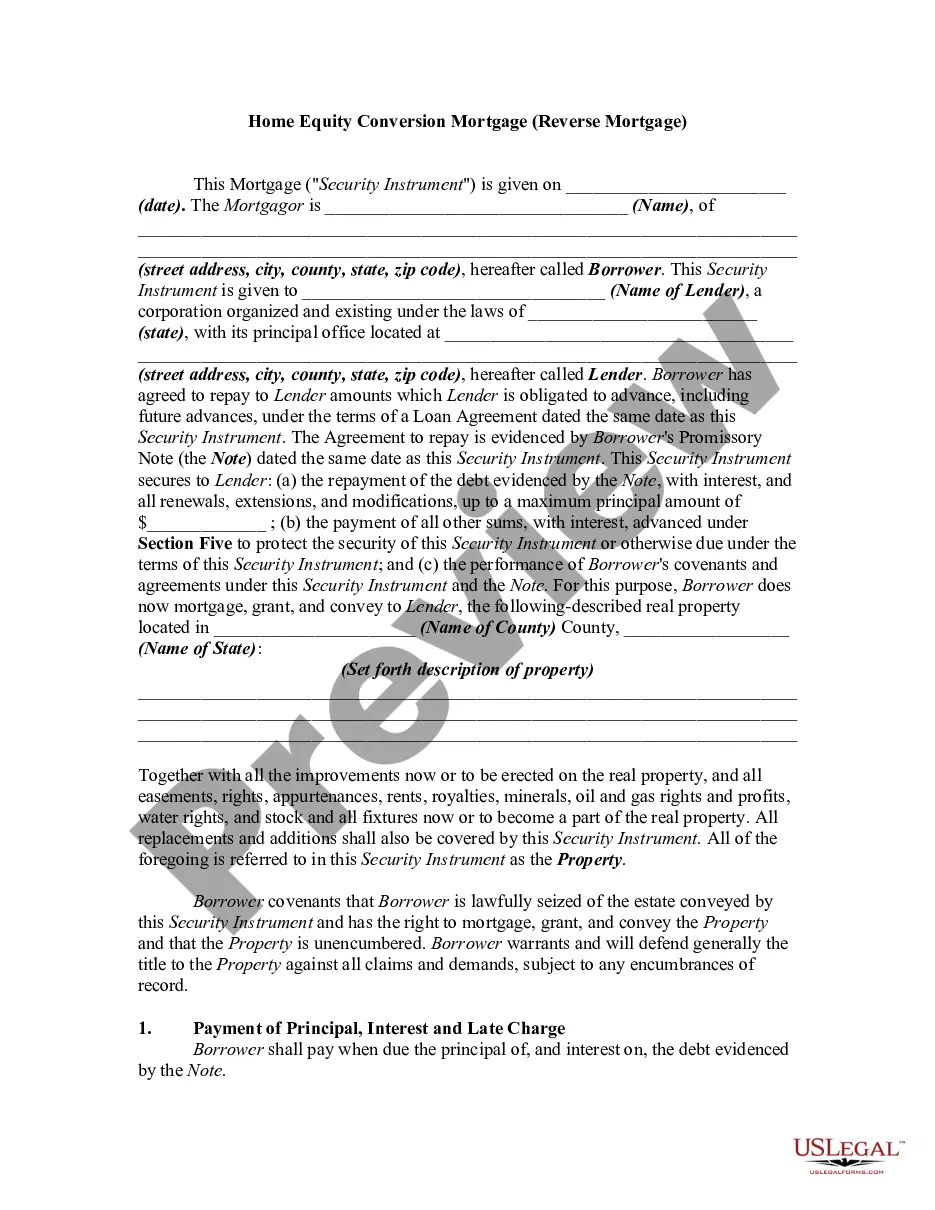
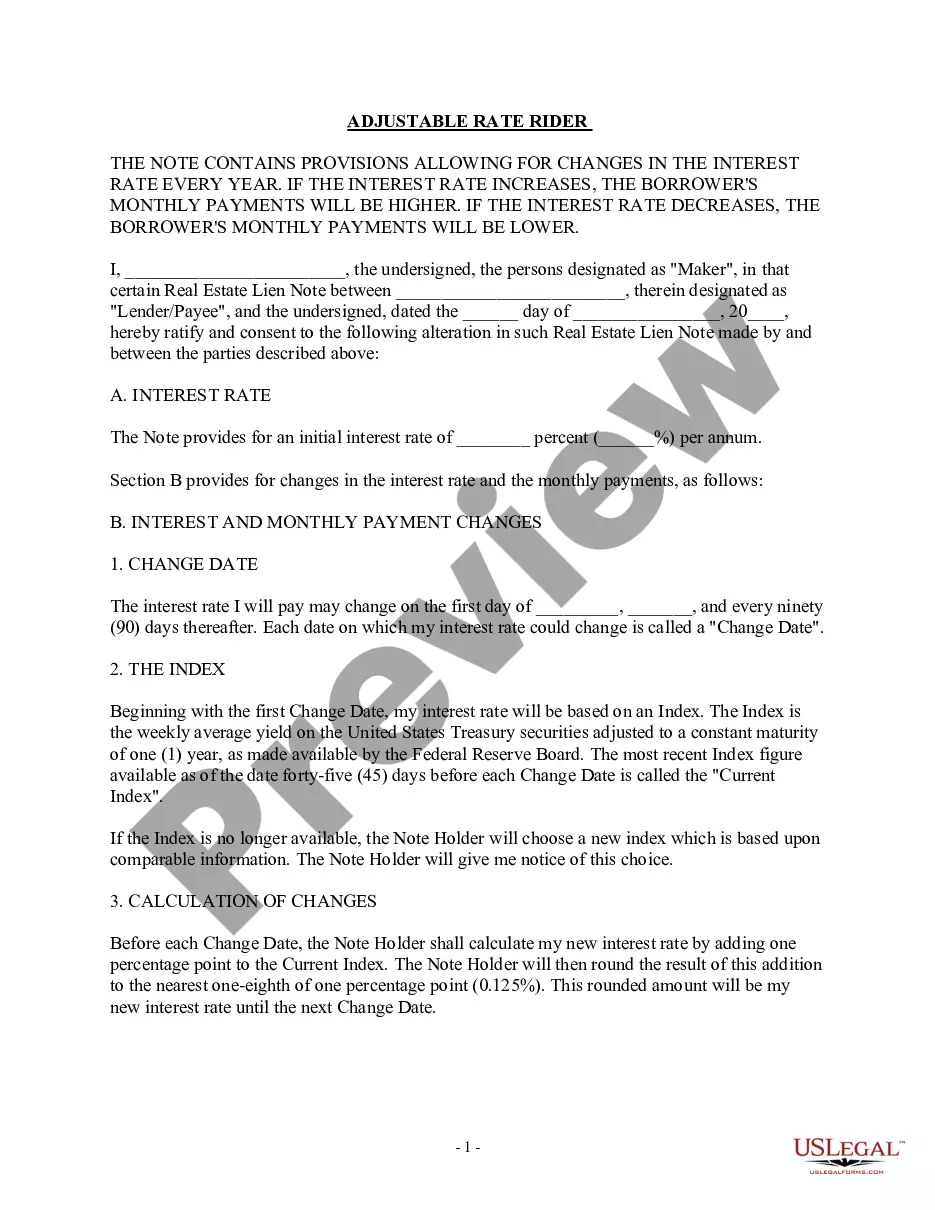
The conversion option for an Adjustable Rate Mortgage (ARM) allows you to switch to a fixed-rate mortgage under specified conditions. This option can provide stability in your monthly payments, especially if interest rates rise. For those considering the Kansas City Missouri Model Adjustable Rate Note - Home Equity Conversion, understanding this feature is crucial. It enables homeowners to lock in a rate that fits their long-term financial goals.
The downside of a Home Equity Conversion Mortgage (HECM) includes the potential depletion of your home equity over time. Since you are borrowing against your home, the amount you owe increases, which can reduce the inheritance for your heirs. Additionally, HECMs may come with fees that can impact your overall financial situation. Understanding the details of the Kansas City Missouri Model Adjustable Rate Note - Home Equity Conversion can provide clarity on this important decision.
A home equity conversion mortgage can be a good idea if you need to access funds for expenses like healthcare, home renovations, or daily living costs. It allows you to tap into your home equity without requiring monthly mortgage payments. However, it's important to understand the long-term implications, such as the effect on your estate. The Kansas City Missouri Model Adjustable Rate Note - Home Equity Conversion can provide a tailored solution that meets your financial needs.
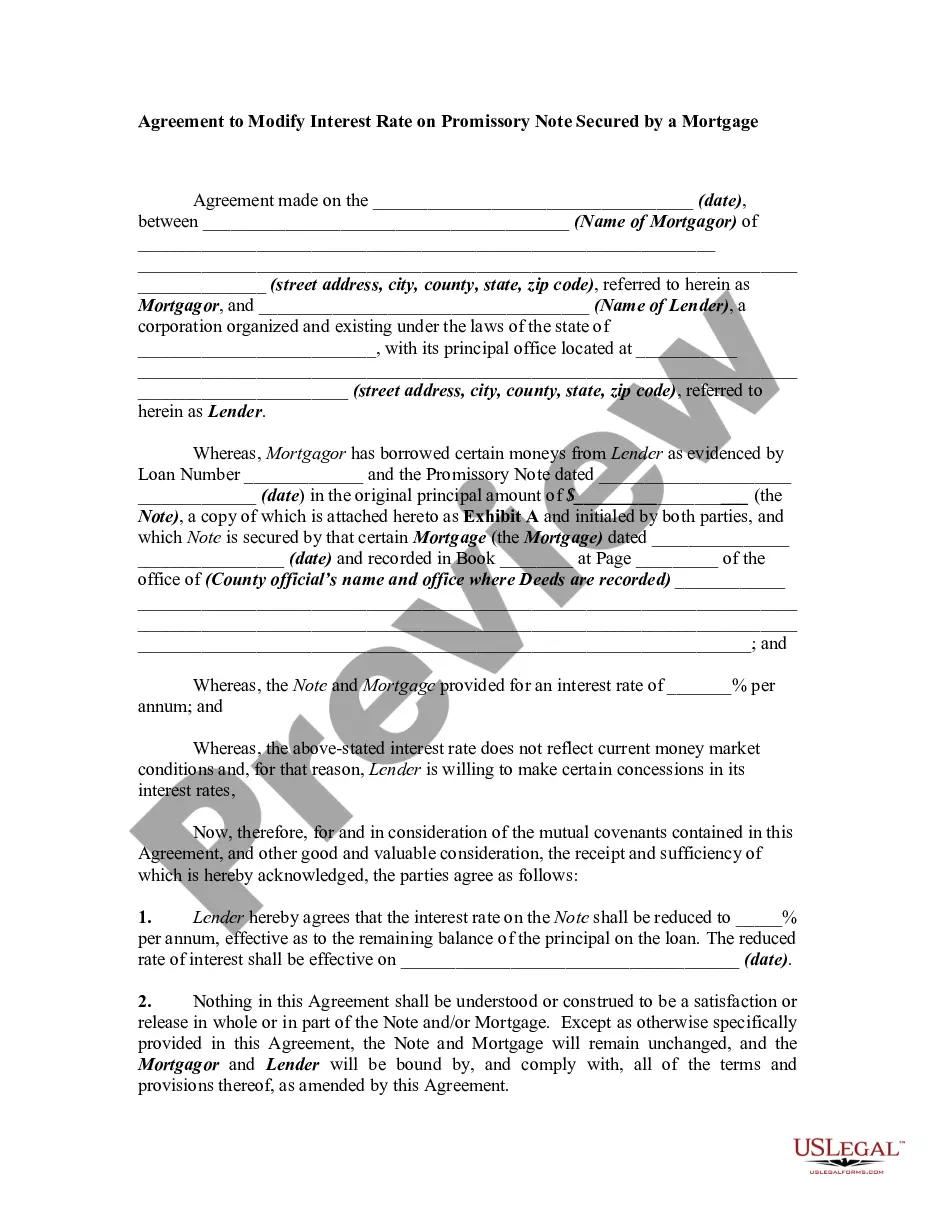
The primary downside of an adjustable-rate mortgage is the potential for increased monthly payments. As interest rates change, your payment can rise significantly, impacting your budget. This uncertainty can cause stress for homeowners, particularly if they rely on a fixed income. To better understand your options, consider the Kansas City Missouri Model Adjustable Rate Note - Home Equity Conversion.
With its rich history and thriving arts scene, Kansas City draws visitors to world-class museums like the Nelson-Atkins Museum of Art and the Negro Leagues Baseball Museum. The city's jazz heritage, showcased in lively venues along 18th and Vine, offers a unique musical experience.
The reality is that the city straddles the neighboring states of Missouri and Kansas due to a complicated history that has lasted nearly two centuries. Kansas City, Missouri (KCMO), and Kansas City, Kansas (KCK), are separately incorporated cities that come together to form the greater Kansas City Metropolitan area.
Walt Disney opened his first animation studio in Kansas City, Laugh-O-Gram studios, where he fed a small rodent that became the inspiration for Mickey Mouse. Hallmark, the largest greeting card maker in the world, began in KC in 1910 when Joyce C. Hall began selling postcards out of two shoeboxes at the local YMCA.
City founders derived the name from the Kansas, or Kaw, River which was named for the Kansa Indians. The state of Missouri then incorporated the area as the City of Kansas in 1853 and renamed it Kansas City in 1889. Why is there a Kansas City in both Kansas and Missouri? | KC History kchistory.org ? faq ? why-there-kansas-city-both-... kchistory.org ? faq ? why-there-kansas-city-both-...
Team History The Chiefs won three AFL championships in the 1960s, becoming the team with the most championships in the short-lived AFL. They also won their first Super Bowl when they defeated the Minnesota Vikings, 23-7, in 1970.
Fertile farmland is one of the state's top natural resources. The state's most abundant crop is wheat?no other U.S. state produces as much. In fact, Sumner County, Kansas, is sometimes called the Wheat Capital of the World!