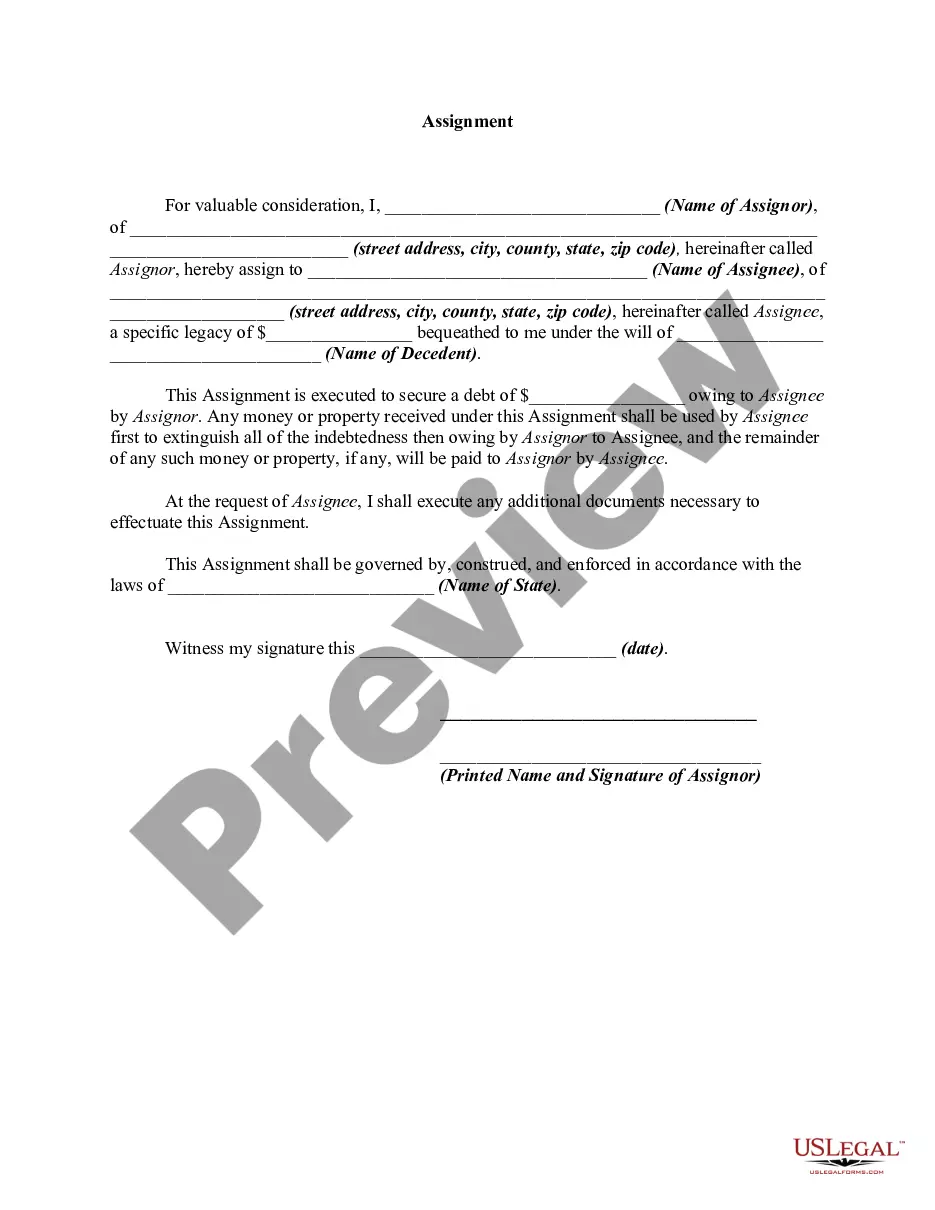
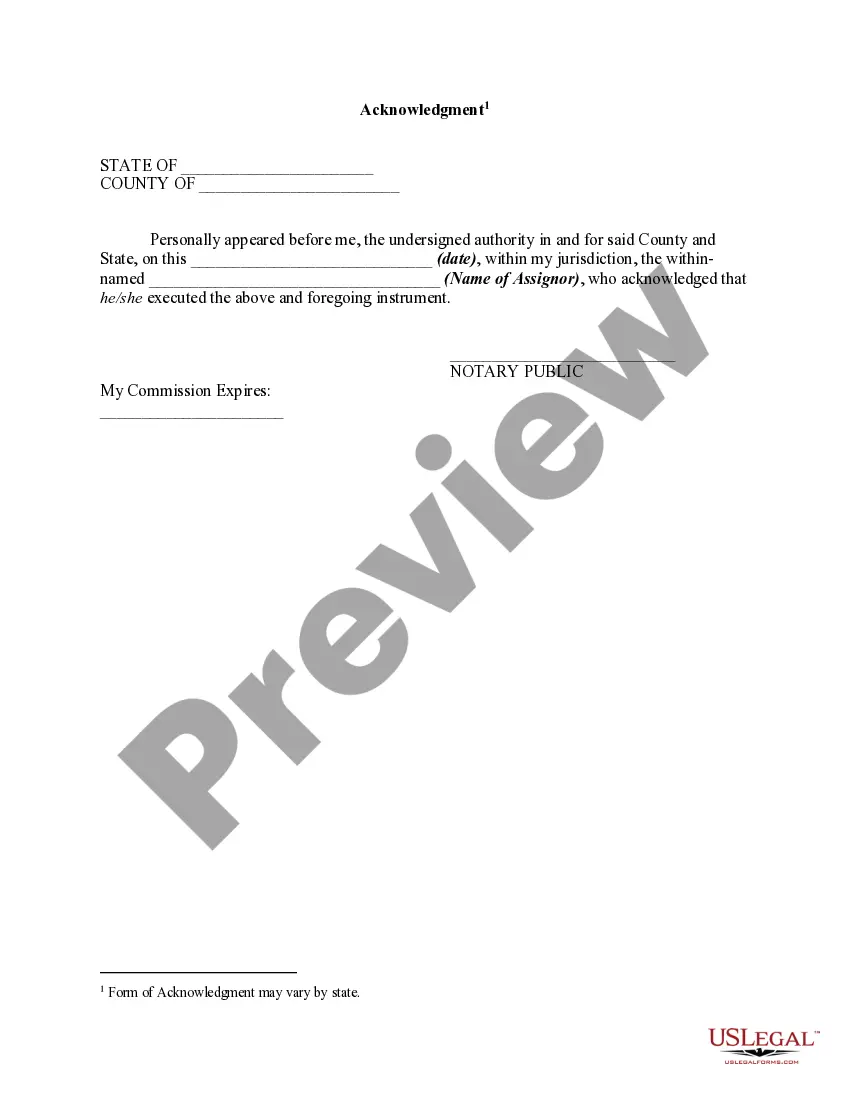
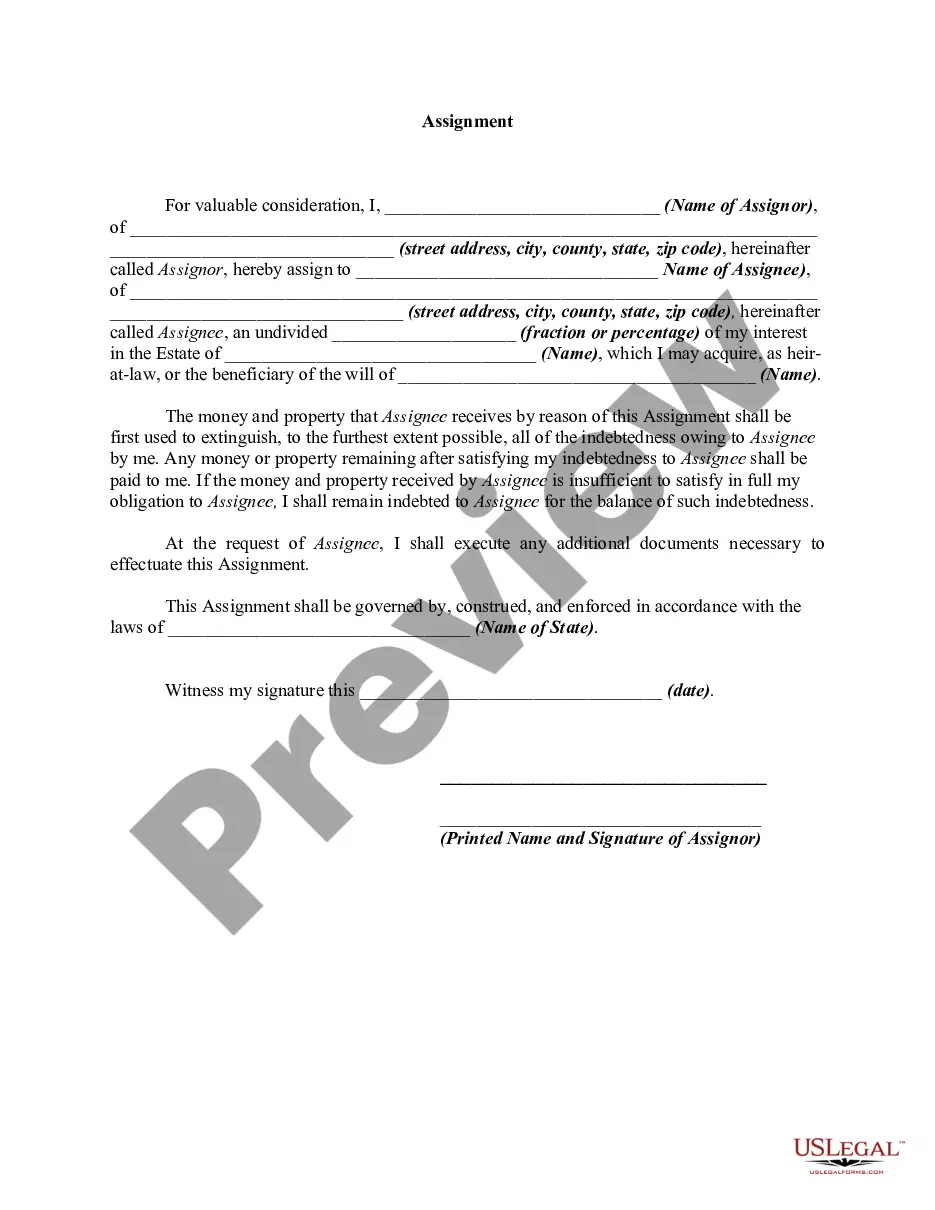
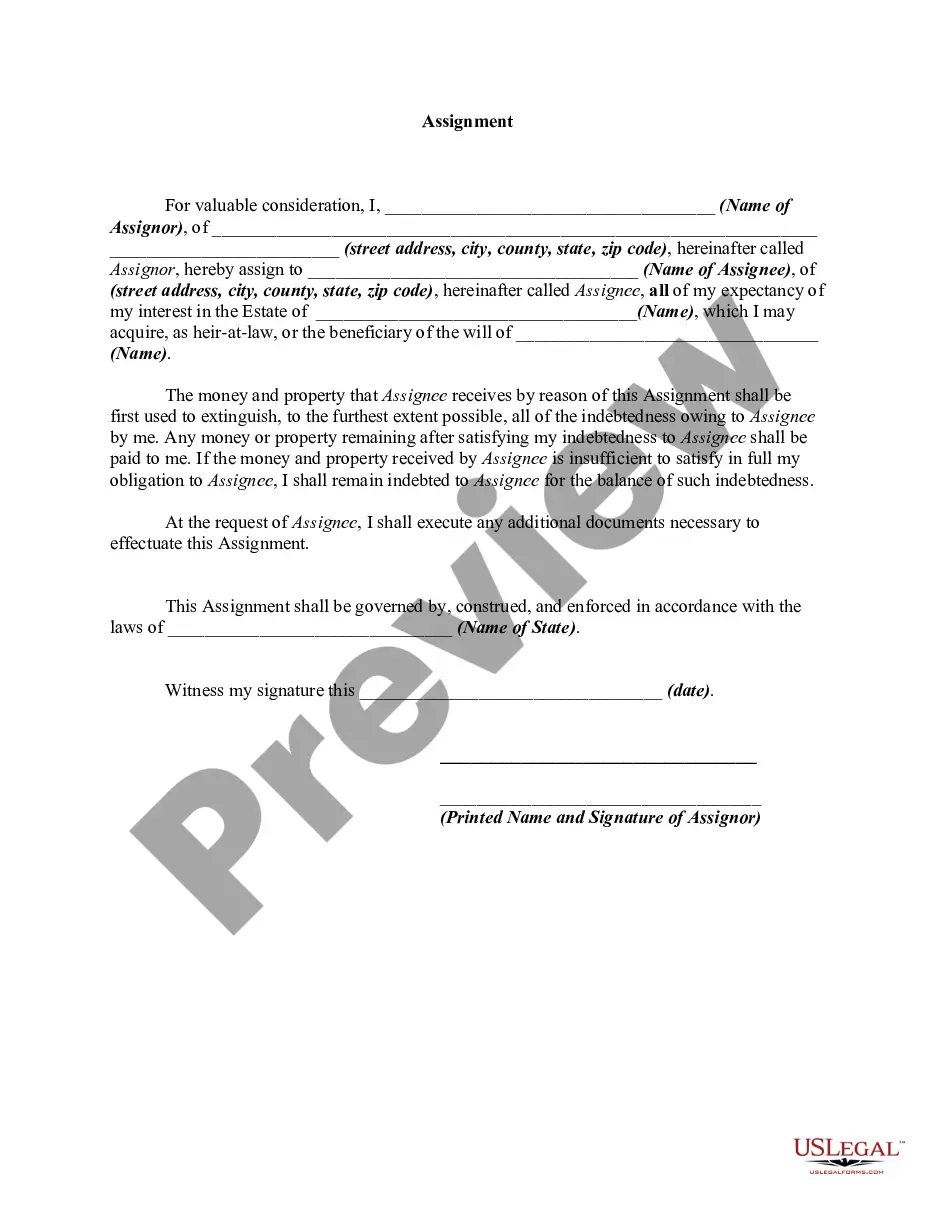
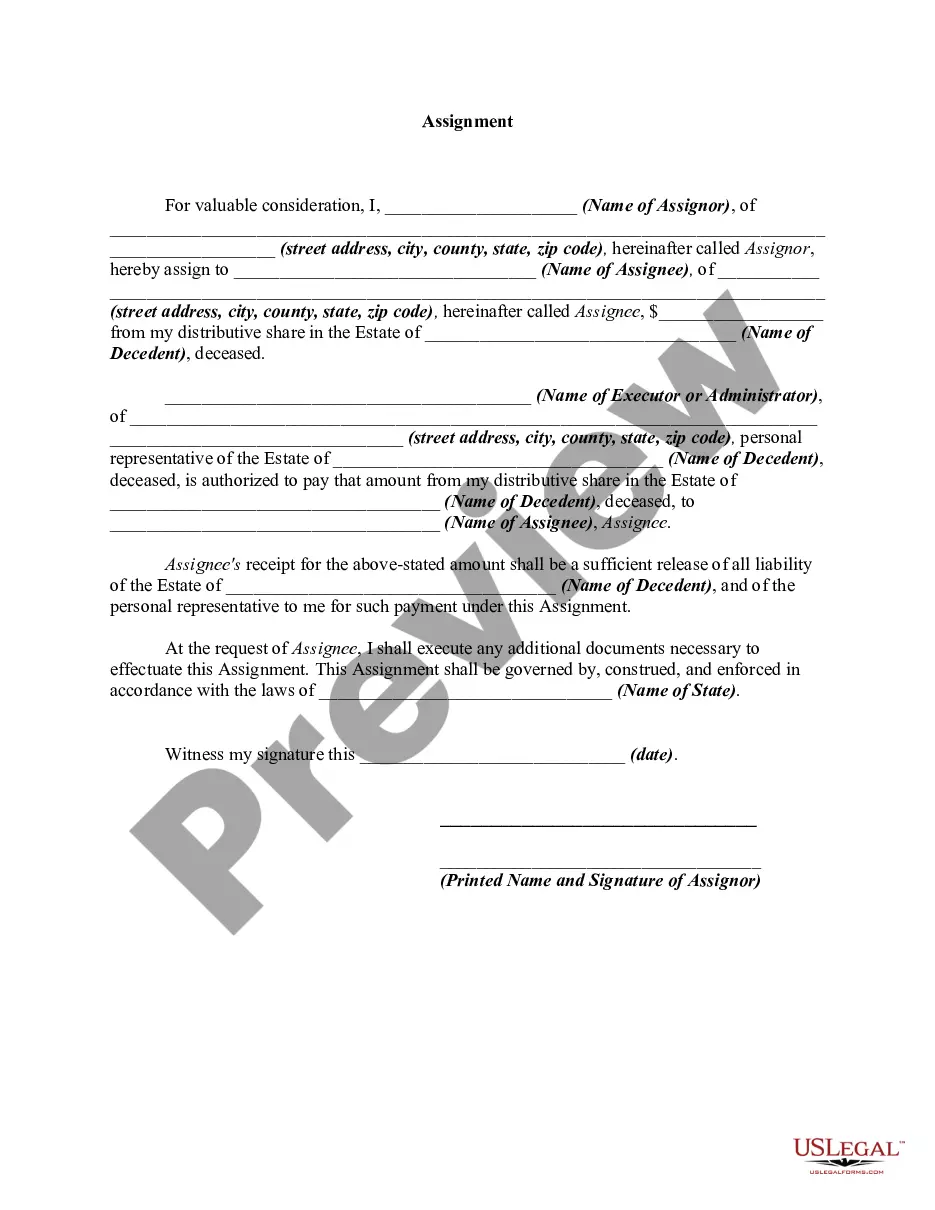
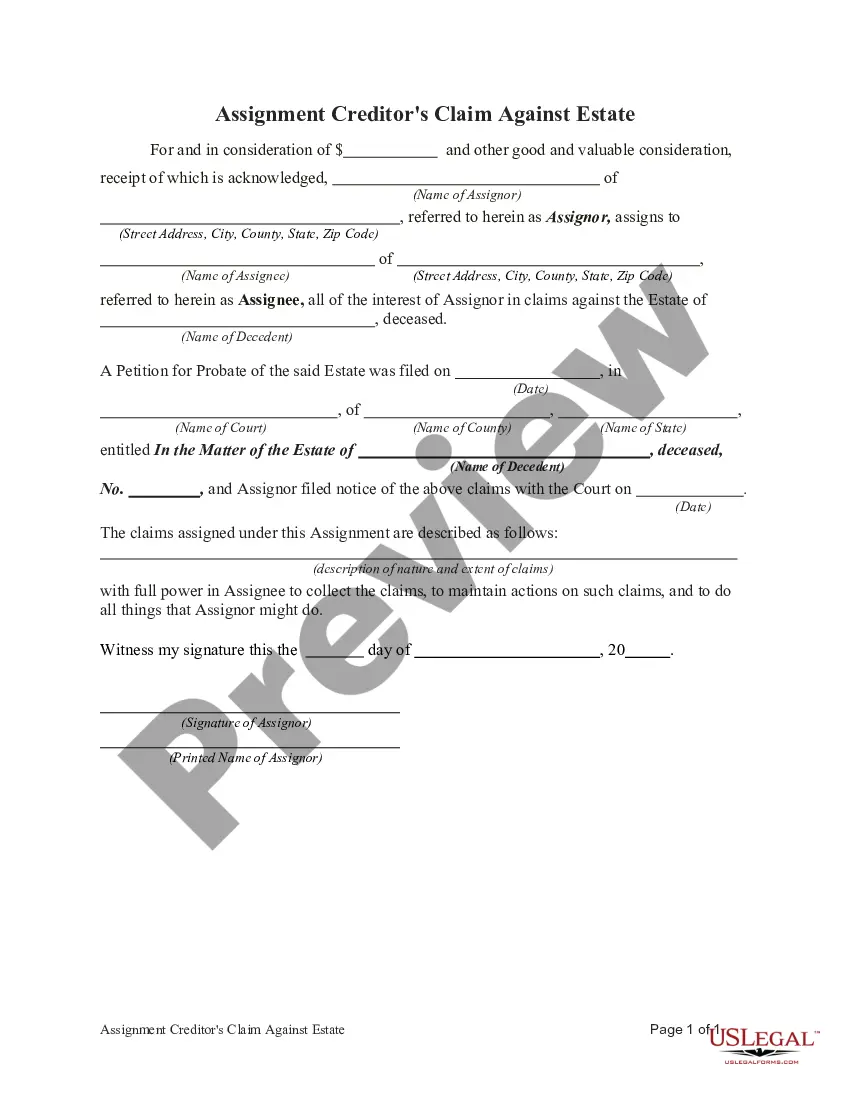
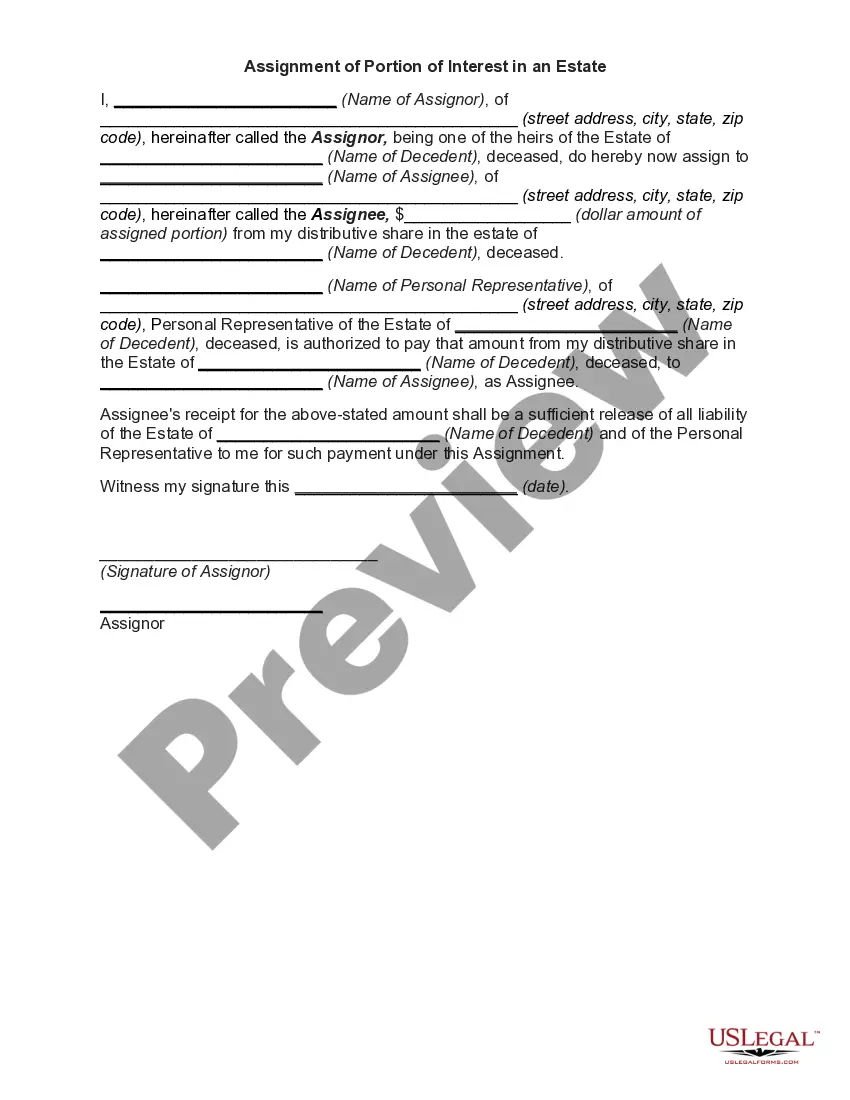
A Legacy is a gift of property or money under the terms of the will of a person who has died. This form is a generic example that may be referred to when preparing such a form for your particular state. It is for illustrative purposes only. Local laws should be consulted to determine any specific requirements for such a form in a particular jurisdiction.
Detroit Michigan Assignment of Legacy in Order to Pay Indebtedness
Category:
State:
Multi-State
City:
Detroit
Control #:
US-01756BG
Format:
Word;
Rich Text
Instant download
Description
Free preview

Form popularity
FAQ
Form PC 598, known as the 'Affidavit of Successor,' is used in Michigan to transfer property after someone passes away. This form allows successors to claim ownership without going through probate when certain conditions are met. For those pursuing a Detroit Michigan Assignment of Legacy in Order to Pay Indebtedness, completing this form correctly can simplify the transfer of assets and help manage debts efficiently.
In Michigan, the property transfer affidavit is typically filled out by the personal representative or executor of the estate. This form helps the state to assess property taxes accurately during the transition of ownership. If you are dealing with a Detroit Michigan Assignment of Legacy in Order to Pay Indebtedness, understanding who is responsible for this affidavit can help you navigate the estate administration process effectively.
Once an affidavit of heirship is filed in Michigan, it serves to establish the heirs of a deceased person. This document helps verify ownership of the decedent's property, facilitating the transfer process. If you are navigating the complexities of a Detroit Michigan Assignment of Legacy in Order to Pay Indebtedness, having this affidavit can streamline your responsibilities and ensure clarity among heirs.
In 2025, the small estate limit in Michigan will be set at $25,000 for individuals without a will. This limit allows families to settle the estate quickly without going through probate. For those considering a Detroit Michigan Assignment of Legacy in Order to Pay Indebtedness, understanding this limit is crucial for efficient estate management.
In Michigan, the dormancy period for unclaimed property is typically three years. After this period, the state may take control of the property, which can include financial assets and tax refunds. Knowing the implications of this dormancy period is important, especially in the context of the Detroit Michigan Assignment of Legacy in Order to Pay Indebtedness. For assistance in navigating unclaimed property, USLegalForms can provide valuable resources and guidance.
The $550 refund in Michigan pertains to a specific tax refund program designed to assist homeowners. If you qualify, you may receive this refund, which can help alleviate financial burdens. Understanding how this refund relates to the Detroit Michigan Assignment of Legacy in Order to Pay Indebtedness can be beneficial for managing your finances. USLegalForms offers detailed information on how to apply for this refund and utilize it effectively.
Paying someone else's property taxes can create a legal claim against that property. In Michigan, this may allow you to seek reimbursement or gain rights to the property under certain conditions. It's important to document the payment and seek advice on how this relates to the Detroit Michigan Assignment of Legacy in Order to Pay Indebtedness. Using platforms like USLegalForms can provide guidance on your next steps.
If someone else pays your property taxes in Michigan, they may gain certain rights to your property. This situation can lead to complications, especially regarding ownership and claims to the property. To protect your interests in a Detroit Michigan Assignment of Legacy in Order to Pay Indebtedness, it is crucial to understand your rights and obligations. Consider consulting resources like USLegalForms to navigate this process effectively.
In Michigan, the statute of limitations on debt after death generally follows the same six-year guideline. This means that creditors have six years from the date of the last payment or activity to take legal action against the deceased's estate. Understanding this is crucial when handling a Detroit Michigan Assignment of Legacy in Order to Pay Indebtedness. If you need assistance, consider using USLegalForms to navigate the complexities of estate management.
In Michigan, a debt typically becomes uncollectible after six years. This time frame starts from the date of the last payment or the last activity on the account. Therefore, if you are dealing with Detroit Michigan Assignment of Legacy in Order to Pay Indebtedness, it is essential to understand this timeline. If a debt exceeds this period, creditors may lose their ability to pursue legal action to collect it.