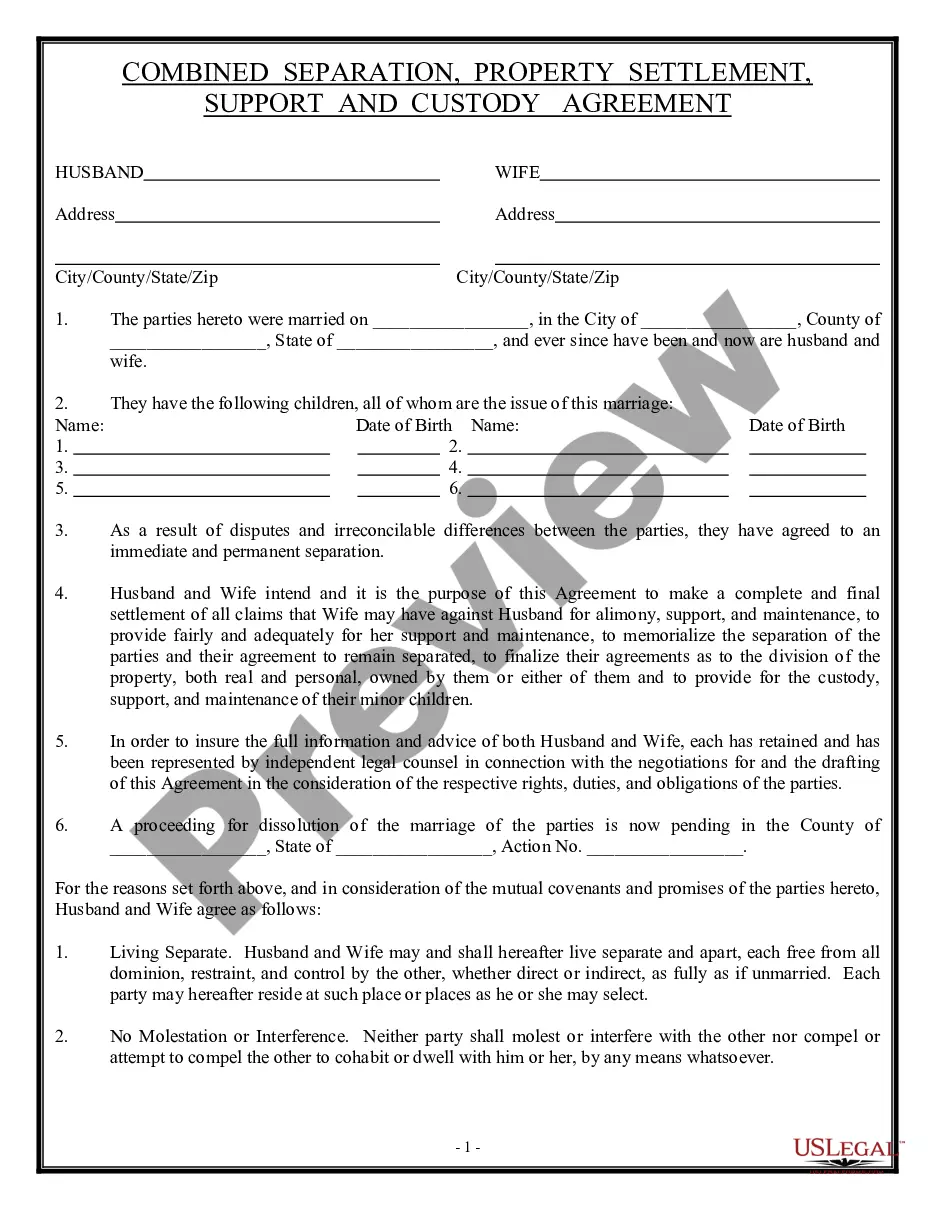
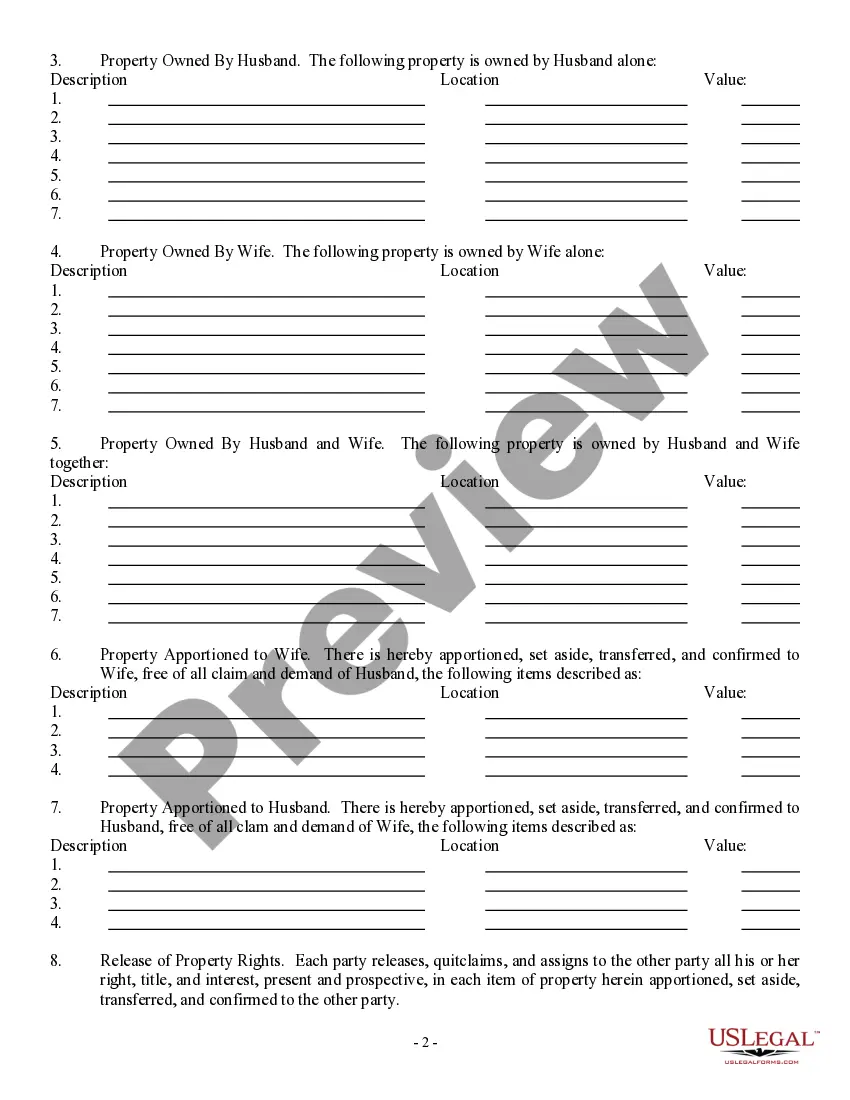
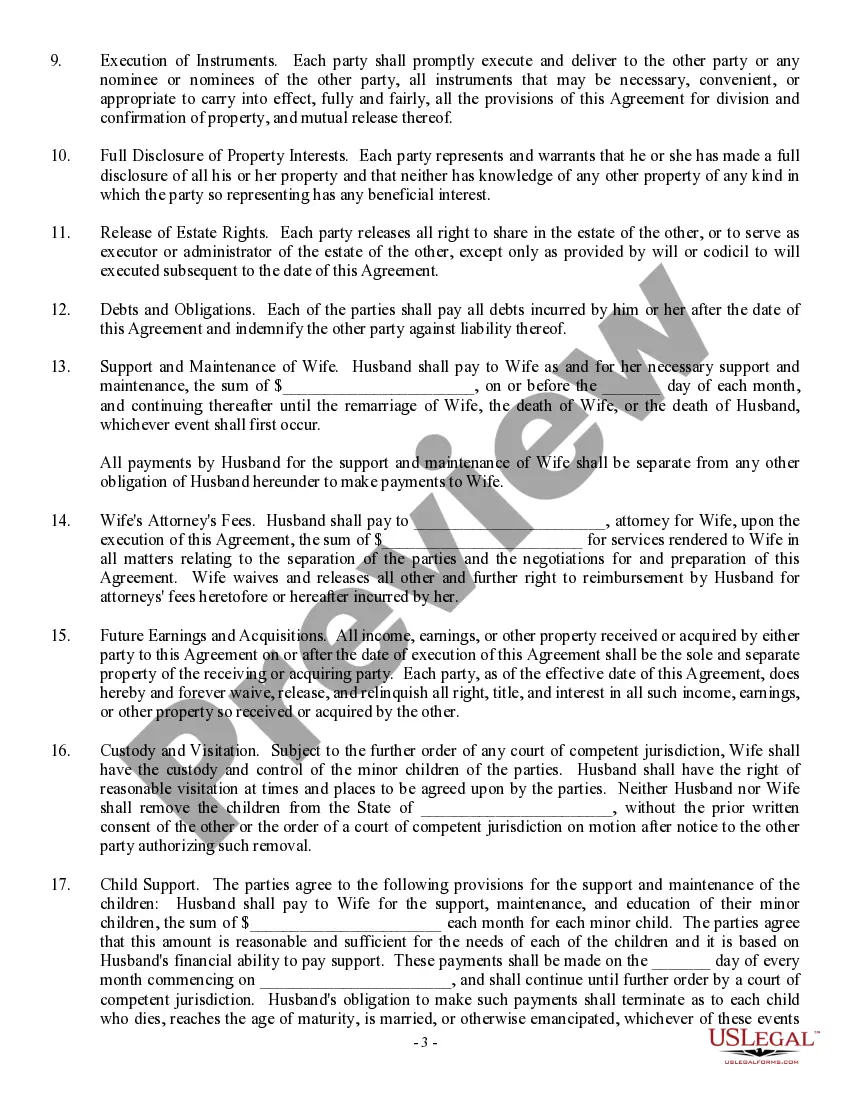
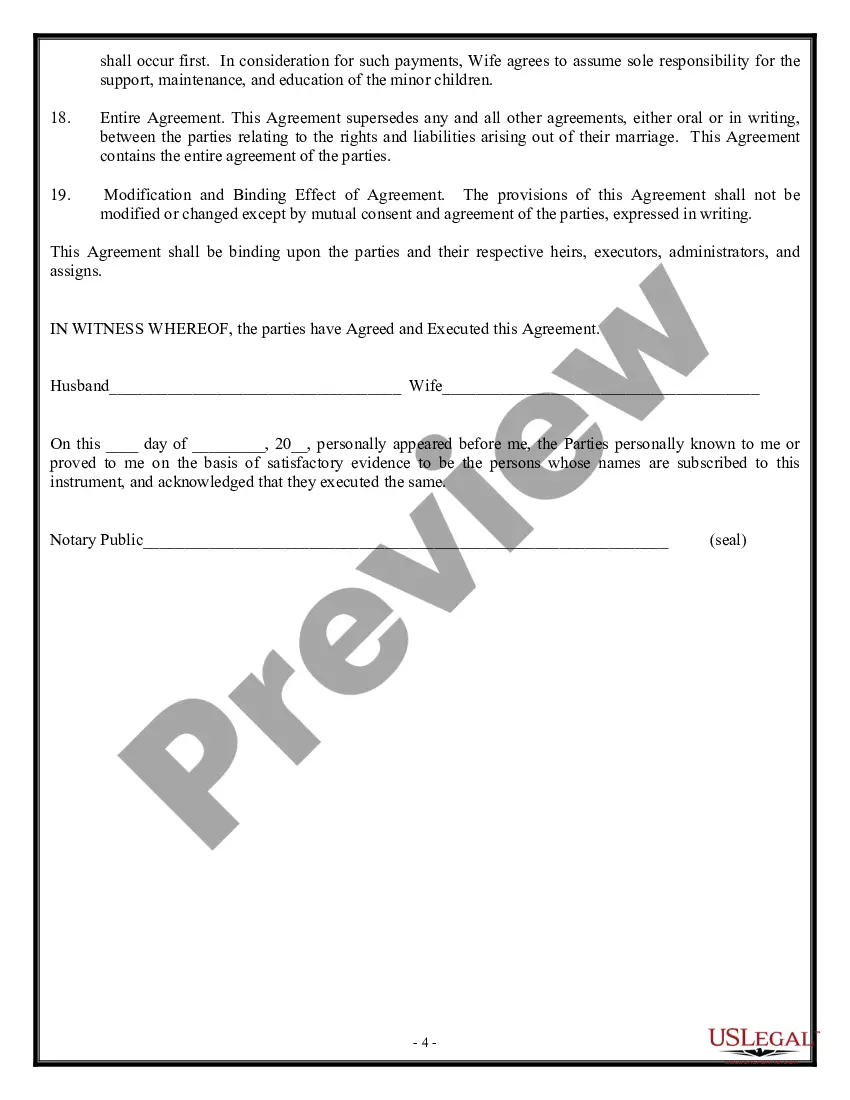
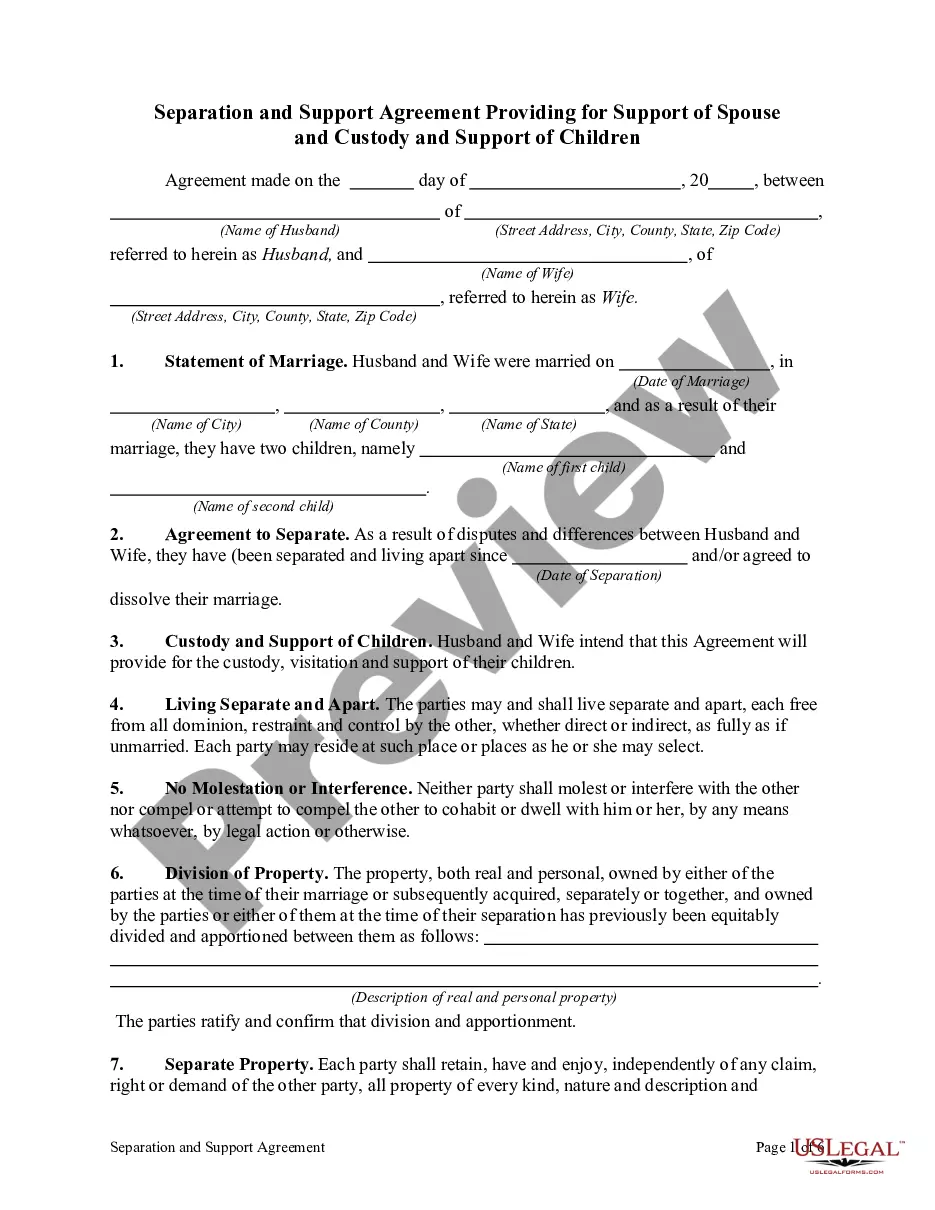
Miami-Dade Florida Separation Agreement, Property Settlement, Support and Custody Agreement
Description
Get your form ready online
Our built-in tools help you complete, sign, share, and store your documents in one place.
Make edits, fill in missing information, and update formatting in US Legal Forms—just like you would in MS Word.
Download a copy, print it, send it by email, or mail it via USPS—whatever works best for your next step.
Sign and collect signatures with our SignNow integration. Send to multiple recipients, set reminders, and more. Go Premium to unlock E-Sign.
If this form requires notarization, complete it online through a secure video call—no need to meet a notary in person or wait for an appointment.
We protect your documents and personal data by following strict security and privacy standards.

Make edits, fill in missing information, and update formatting in US Legal Forms—just like you would in MS Word.

Download a copy, print it, send it by email, or mail it via USPS—whatever works best for your next step.

Sign and collect signatures with our SignNow integration. Send to multiple recipients, set reminders, and more. Go Premium to unlock E-Sign.

If this form requires notarization, complete it online through a secure video call—no need to meet a notary in person or wait for an appointment.

We protect your documents and personal data by following strict security and privacy standards.
Looking for another form?




Form popularity
FAQ
Because there is no such thing as legal separation in Florida, agreements made during separation are not legally enforceable and do not bind the court during divorce.
A Separation and Property Division Agreement (also known as a settlement agreement) is a written agreement setting out how a couple's property is to be divided following their separation.
Under Florida Statute 61.09, a paying spouse may be required to pay alimony without getting divorced. Florida does not recognize legal separation; therefore, alimony may still be necessary if a couple is separated.
There are many factors to consider, including assets, incomes, living expenses, inflation, alimony, child support, taxes, retirement plans, investments, medical expenses and health insurance costs, and child-related expenses such as education.
Marital settlement agreements, also known as divorce settlement agreements, marital termination agreements, separation agreements, or stipulations of settlements, are written contracts between divorcing spouses of their responsibilities and rights after divorce. Once formed, both parties are legally bound to them.
A couple can decide how they will divide their relationship property if they ever split up. If they can agree on how they will divide the relationship property, then they can do this without having to follow the rules of the Property (Relationships) Act and without having to go to court.
How to Negotiate a Divorce Settlement with Your Spouse Focus On Interests Not Positions.Be Careful Of ?Hard Bargaining?Be Careful Not To Destroy The Relationship With The Other Side.Recognize The Other Side's Perceptions & Emotions.Take Control Of Your Own Emotions.
A Fair Share of Assets The longer you and your partner were married, the more likely it is that you have tons of intermingled marital assets that need to be separated and divided. If your marital assets include businesses, antiques, or real estate, ensure that you are getting a fair hand in the division.
(Cal. Fam. Code § 2550 (2022).) So unless your straying spouse?out of guilt?signs a divorce settlement agreement giving you more than half of the community property, adultery shouldn't be a factor in the property division in your California divorce.
An Illinois marital settlement agreement is a contract that lays out how a married couple intends to manage their child care responsibilities and divide marital property after a divorce.