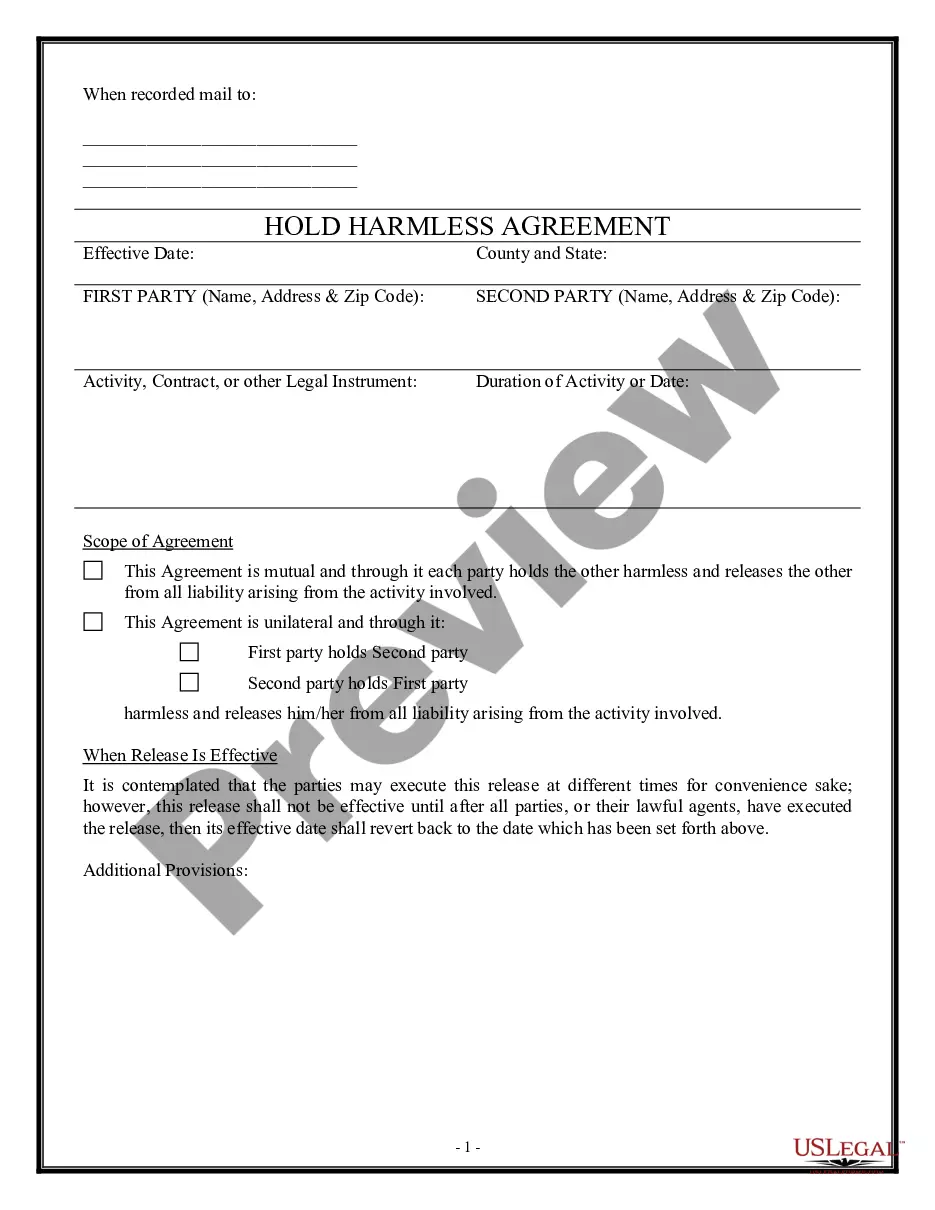
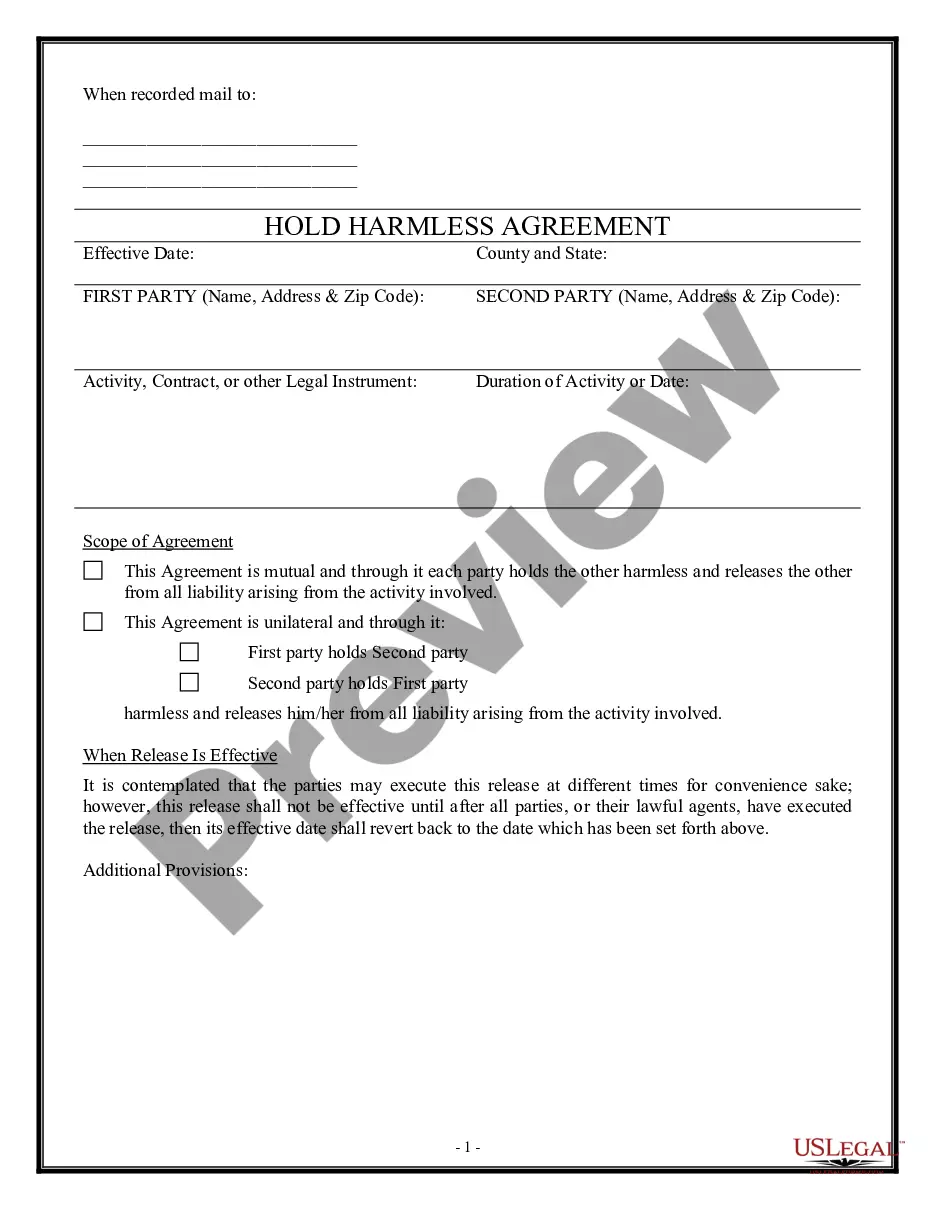
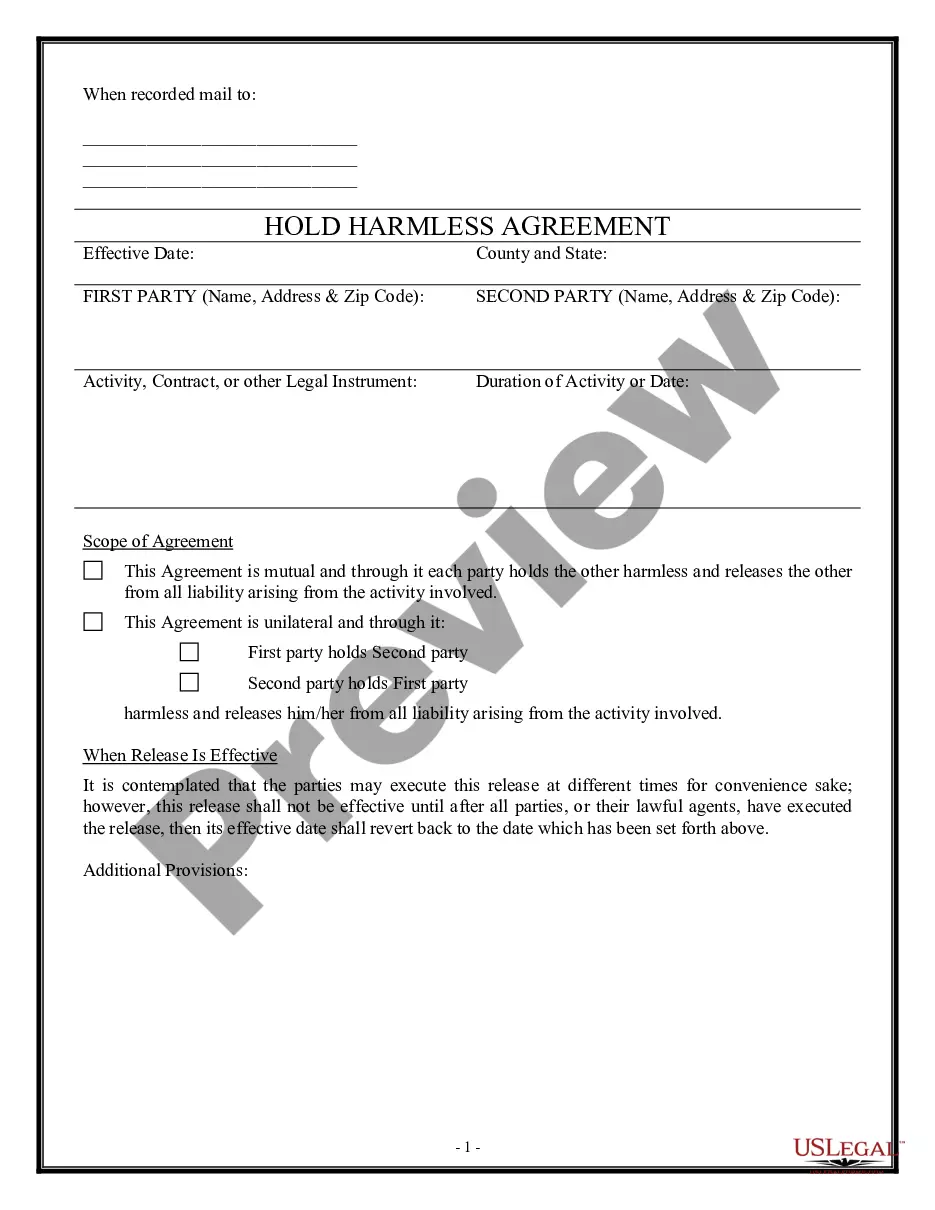
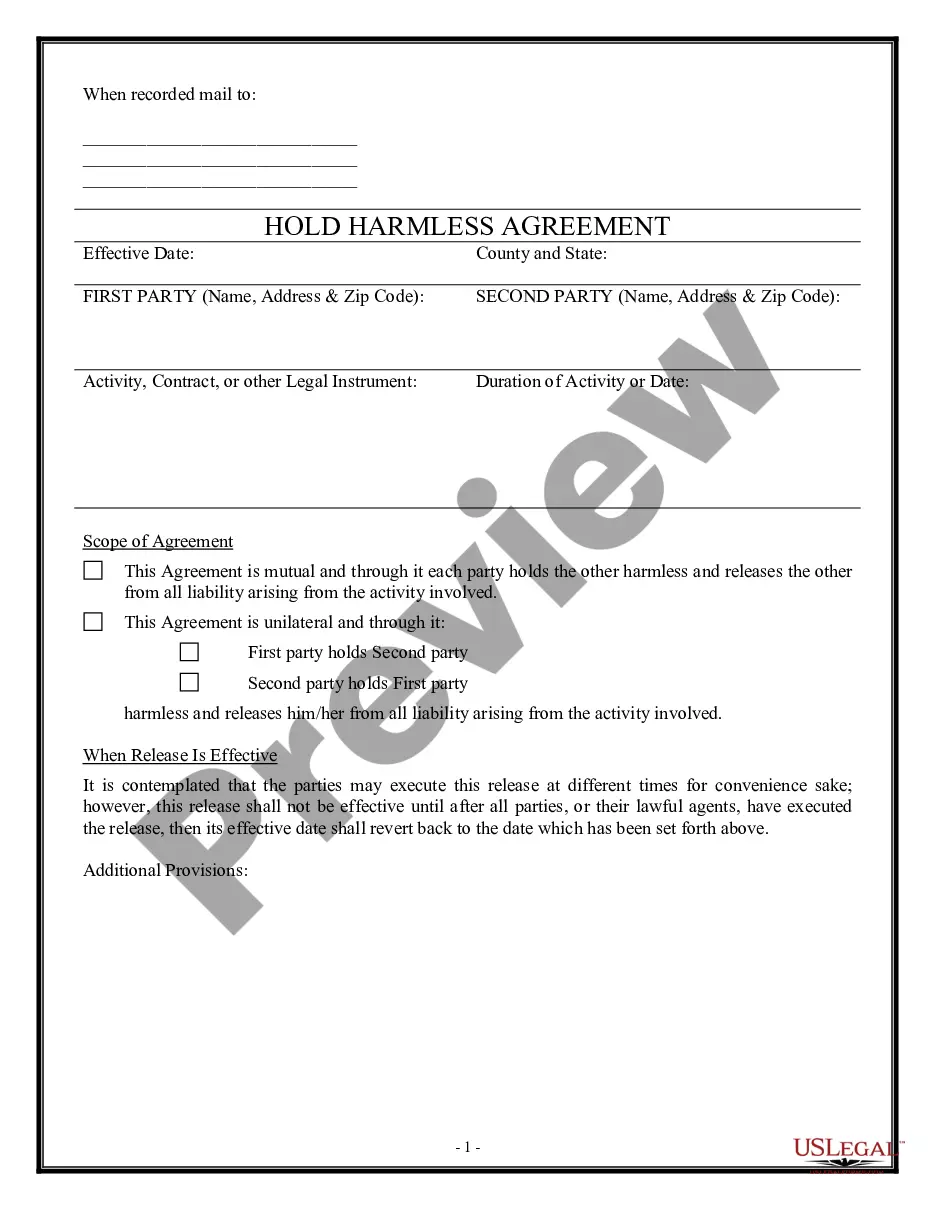
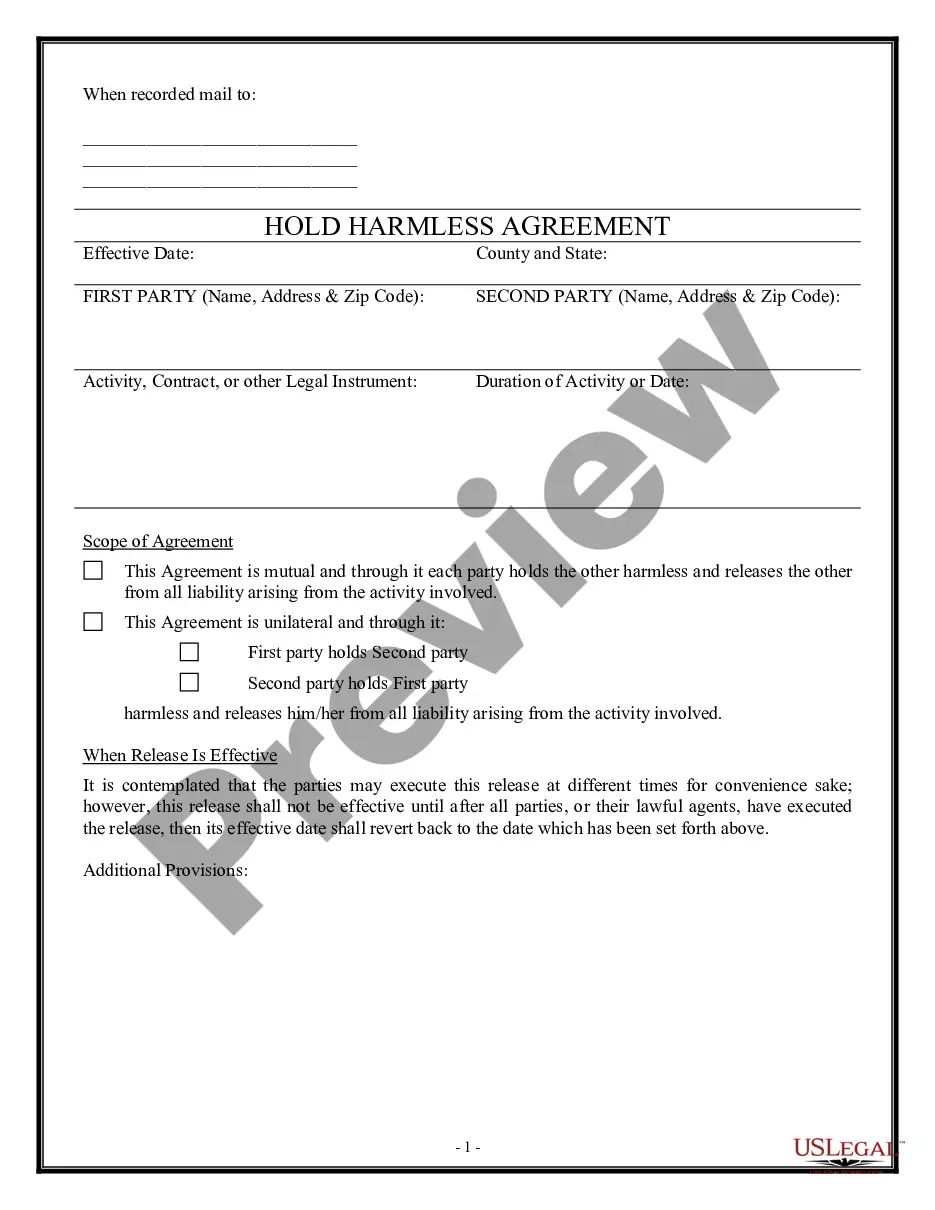
This form is a Hold Harmless Agreement. The form provides that the agreement is mutual and each party holds the other harmless and releases the other from all liability arising from the activity involved.
Indianapolis Indiana General Hold Harmless Agreement
Category:
State:
Multi-State
City:
Indianapolis
Control #:
US-01708-AZ
Format:
Word;
Rich Text
Instant download
Description
Free preview
Form popularity
FAQ
A general hold harmless agreement is a legal document that protects one party from any claims or damages arising from specific actions or events. This type of agreement is comprehensive and typically covers a broad range of liabilities. When you utilize an Indianapolis Indiana General Hold Harmless Agreement, you create a clear framework that outlines the responsibilities of each party, thus minimizing the risk of future legal disputes. USLegalForms offers customizable templates to help you draft this important document.
The three main types of hold harmless agreements include general hold harmless agreements, limited hold harmless agreements, and indemnity agreements. A general hold harmless agreement protects one party from all liabilities, while a limited agreement specifies particular activities or risks. An indemnity agreement goes a step further by requiring one party to compensate the other for losses or damages. Understanding these distinctions can help you choose the right Indianapolis Indiana General Hold Harmless Agreement for your needs.
Yes, you can write your own hold harmless agreement, but it is essential to ensure that it meets the legal requirements in your state. An Indianapolis Indiana General Hold Harmless Agreement should clearly outline the parties involved, the scope of the agreement, and any specific terms that may apply. If you are unsure or want to ensure compliance, consider using a platform like USLegalForms, which provides templates and guidance for creating legally sound agreements.
The primary purpose of a hold harmless agreement is to protect one party from legal liability for any claims or damages that may arise from a specific activity or situation. This type of agreement is particularly important in situations where risks are involved, such as events or construction projects. By using an Indianapolis Indiana General Hold Harmless Agreement, you ensure that all parties understand their responsibilities and liabilities, thereby reducing the potential for disputes.
In most cases, a hold harmless agreement does not need to be notarized to be legally enforceable. However, some situations may benefit from notarization to add an extra layer of authenticity. When using an Indianapolis Indiana General Hold Harmless Agreement, it is wise to check local laws or consult a legal professional to confirm specific requirements in your area.
To write a simple hold harmless agreement, start by identifying the parties involved and clearly state the purpose of the agreement. Next, outline the specific activities or situations for which one party agrees not to hold the other responsible. Utilizing a template for an Indianapolis Indiana General Hold Harmless Agreement from USLegalForms can help streamline this process and ensure accuracy.
Yes, you can create your own legally binding contract, including an Indianapolis Indiana General Hold Harmless Agreement. It is essential to include clear terms and conditions that outline the responsibilities and liabilities of each party. However, using a template from a reputable source, like USLegalForms, can simplify the process and ensure that you include all necessary legal elements.
A hold harmless statement typically includes language that protects one party from liability or legal claims arising from specific actions or events. For instance, a simple example of an Indianapolis Indiana General Hold Harmless Agreement might state that one party agrees not to hold the other responsible for any injuries or damages resulting from an event. This type of statement is crucial in contracts to clarify responsibilities and reduce legal risks. If you need a clear example or template, US Legal Forms offers reliable resources.
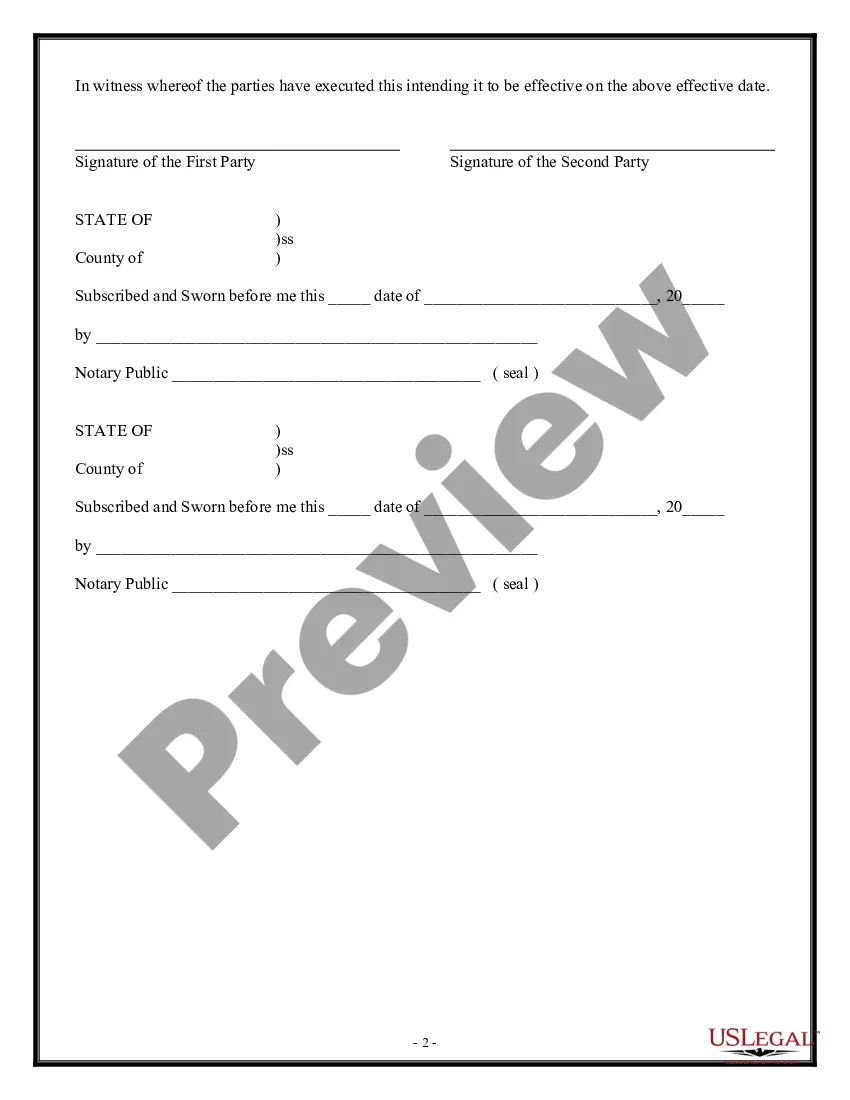
To complete an Indianapolis Indiana General Hold Harmless Agreement, start by clearly identifying the parties involved. Next, outline the specific activities or events covered by the agreement. It is essential to include language that releases one party from liability related to the specified activities. Finally, ensure both parties sign and date the document to make it legally binding. For a streamlined process, you can use the US Legal Forms platform, which offers templates specifically designed for Indiana agreements.