Aurora Colorado Revocable Trust for Property
Description
Form popularity
FAQ
The 5 year rule for trusts refers to the requirement that certain assets must be owned for at least five years before a Medicaid application to avoid penalties. In the context of an Aurora Colorado Revocable Trust for Property, this means if you transfer your house into the trust, it should be done with consideration of this five-year timeframe. Understanding this rule is crucial, as it can impact your eligibility for Medicaid benefits. Consulting with a legal expert can help navigate these complexities effectively.
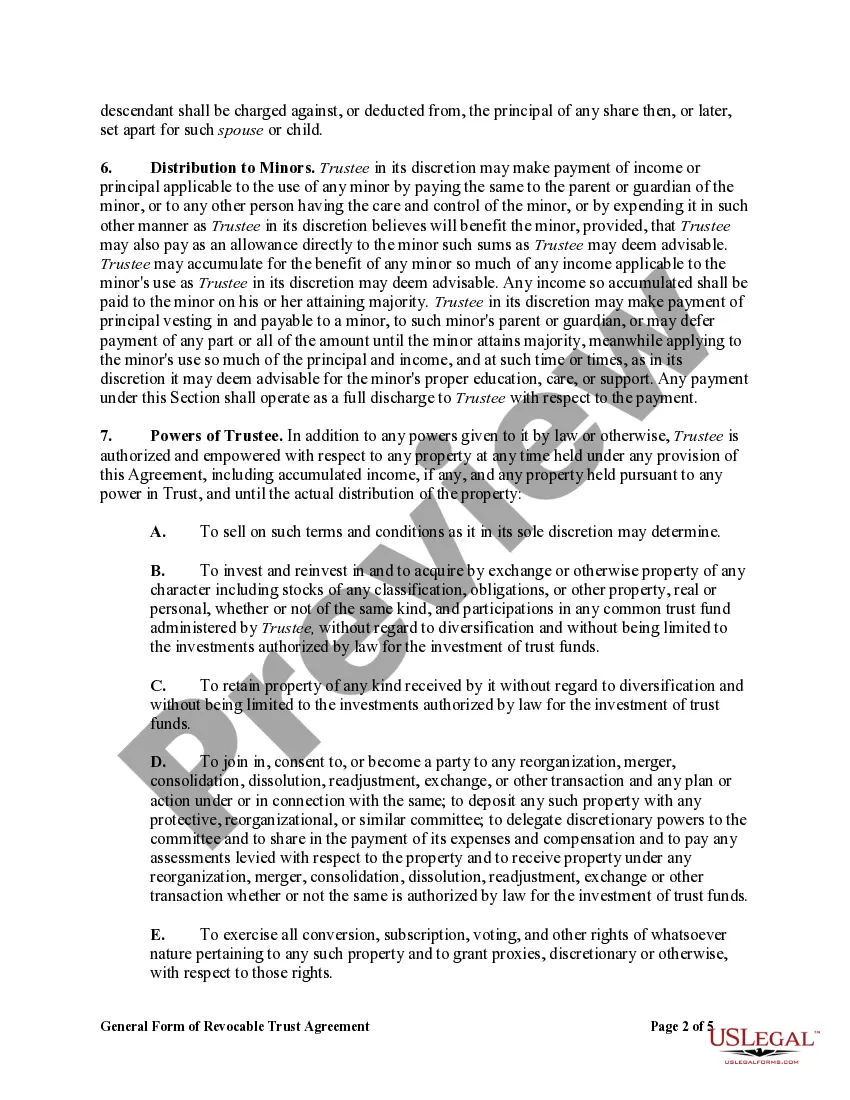
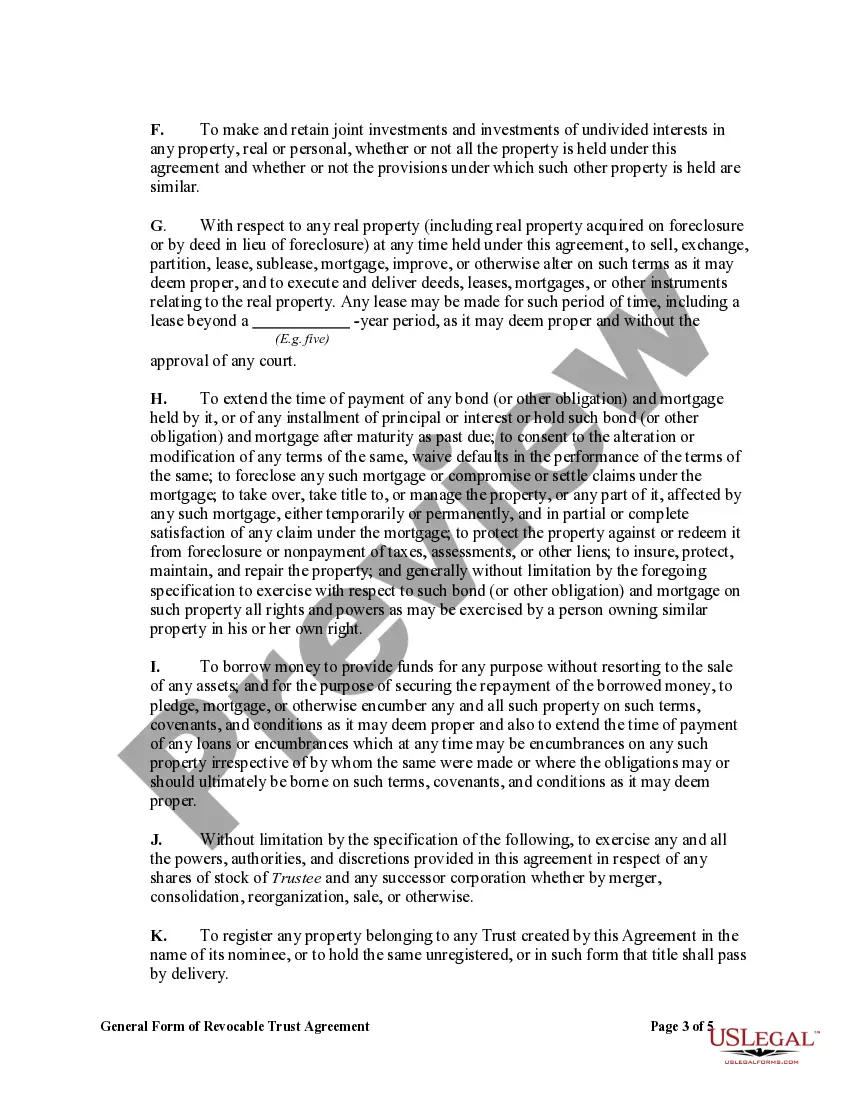
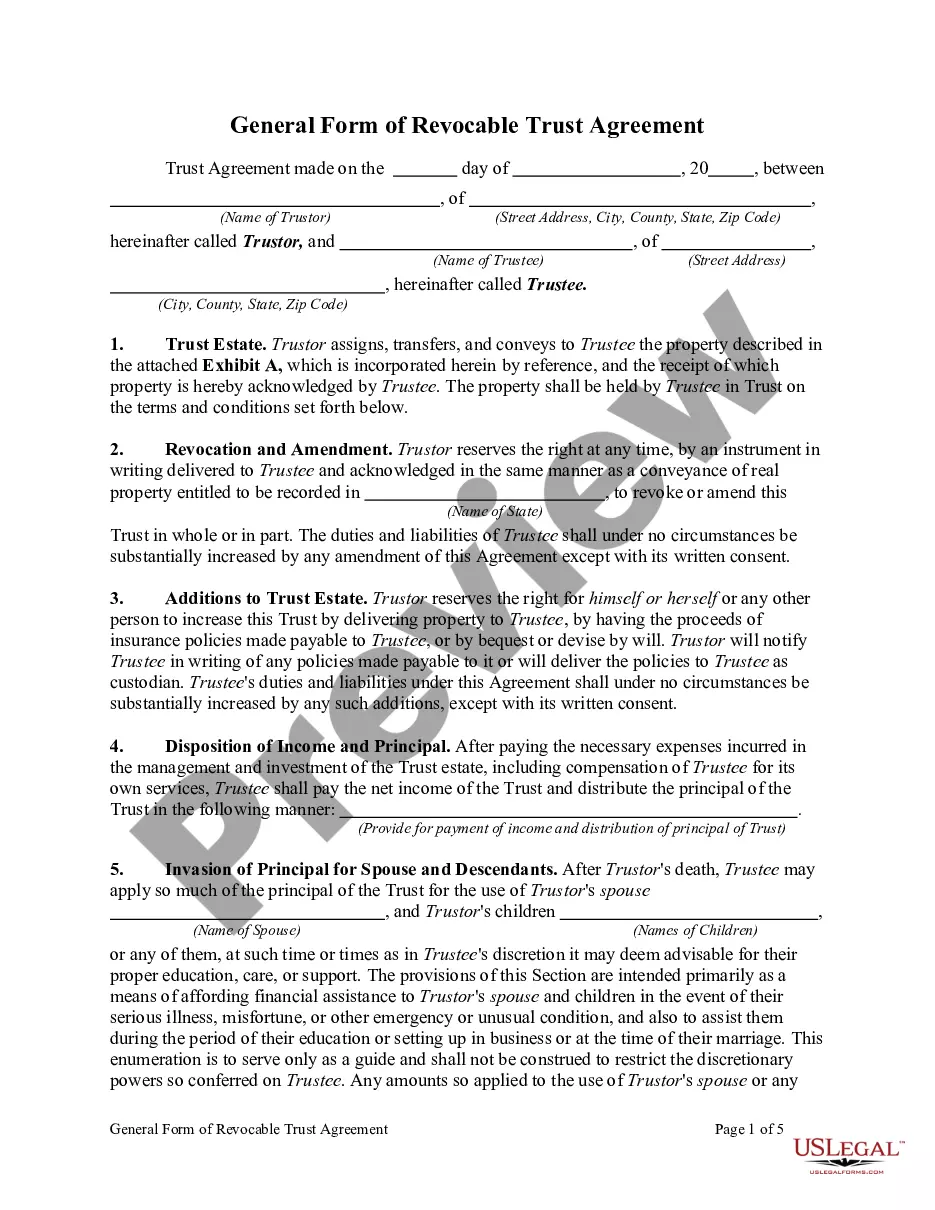
The main purpose of a revocable trust is to manage your assets during your lifetime and distribute them according to your wishes after your death. An Aurora Colorado Revocable Trust for Property allows you to maintain flexibility, as you can change the terms or dissolve the trust whenever you need. This arrangement also helps your beneficiaries avoid the lengthy probate process, giving them quick access to their inheritance. A well-structured Aurora Colorado Revocable Trust for Property serves as an essential component of a solid estate plan.
You should consider placing your house in an Aurora Colorado Revocable Trust for Property if you want to streamline the transfer of assets upon your death and avoid probate. This setup can also provide flexibility in managing your property while you are alive. Evaluate your personal financial goals and consult with a professional to determine if this legal structure suits you.
To put your house in an Aurora Colorado Revocable Trust for Property, you begin by drafting the trust agreement. Then, execute a new deed that transfers ownership from you to the trust. It's crucial to file this deed with your county clerk and maintain copies for your records, ensuring the trust's intentions align with your overall estate plan.
A significant downside of an Aurora Colorado Revocable Trust for Property is that it does not provide protection against creditors or lawsuits since you maintain control over the trust assets. Additionally, setting up a revocable trust may involve legal fees and requires careful management to keep it updated. If you're not organized, it can lead to confusion around your asset distribution during your lifetime and after.
To place property into an Aurora Colorado Revocable Trust for Property, you first need to create the trust document, naming yourself as the trustee. Next, you will transfer the property title into the trust by executing a new deed that names the trust as the owner. It's essential to keep accurate records to ensure the trust operates smoothly and meets your intentions.
One downside of a revocable trust is that it does not provide asset protection against creditors. Since you retain control over the assets in an Aurora Colorado Revocable Trust for Property, creditors can still reach these assets in case of claims. Additionally, establishing a trust involves certain costs and requires ongoing management. Therefore, it is important to weigh these factors when considering your estate planning options.
To put a house in a trust in Colorado, you first need to establish your Aurora Colorado Revocable Trust for Property. Once set up, you will complete a deed transferring the property into the trust's name. After signing the deed, it must be recorded at your local county clerk's office. This process ensures that the house is legally owned by the trust, providing benefits such as avoiding probate in the future.
Yes, you can create your own trust in Colorado. By using forms and resources available online, you can establish an Aurora Colorado Revocable Trust for Property on your own. However, while it is possible, seeking professional guidance ensures that your trust complies with local laws and fulfills your intentions effectively. It is often beneficial to explore the resources on platforms like uslegalforms to streamline this process.
The 2 year rule for trusts relates to the period during which assets transferred to a revocable trust may be challenged by creditors. Specifically, if you create an Aurora Colorado Revocable Trust for Property and transfer assets to it, creditors have a limited time to contest the transfer. Following this period, the trust becomes much more resilient against claims. Understanding this rule is essential for effective estate planning.