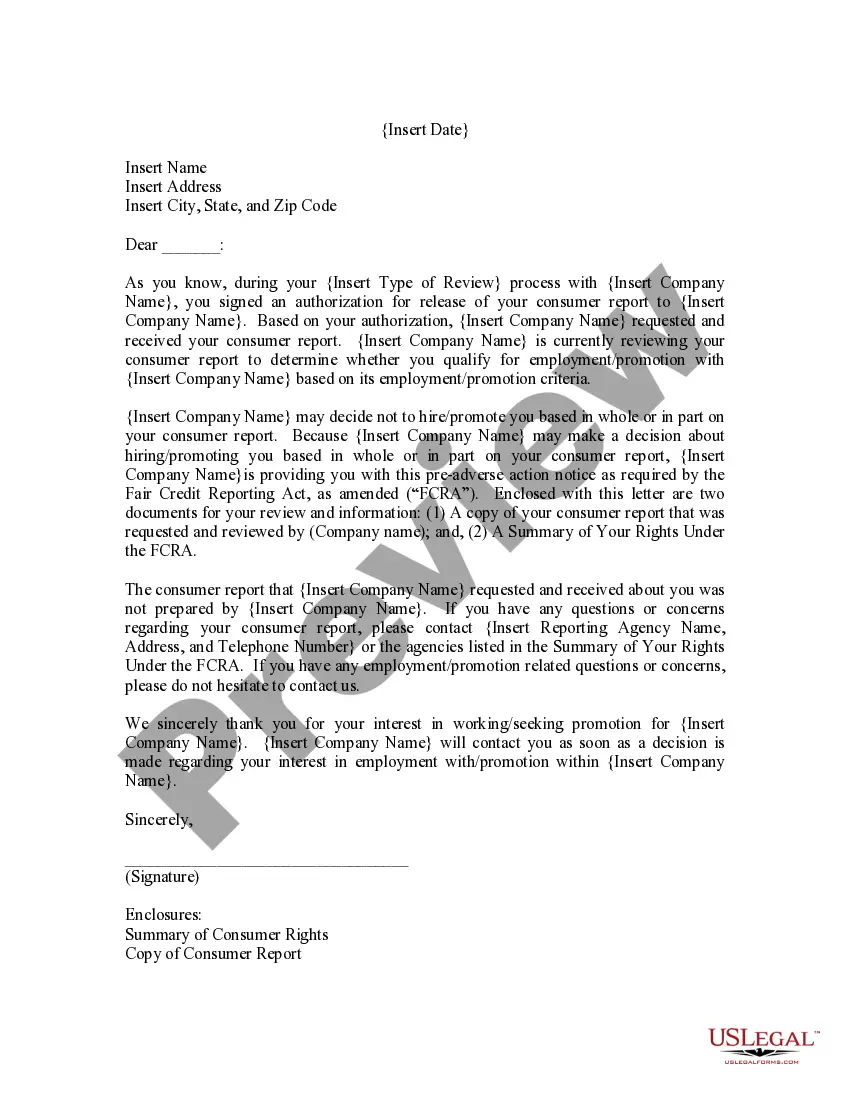
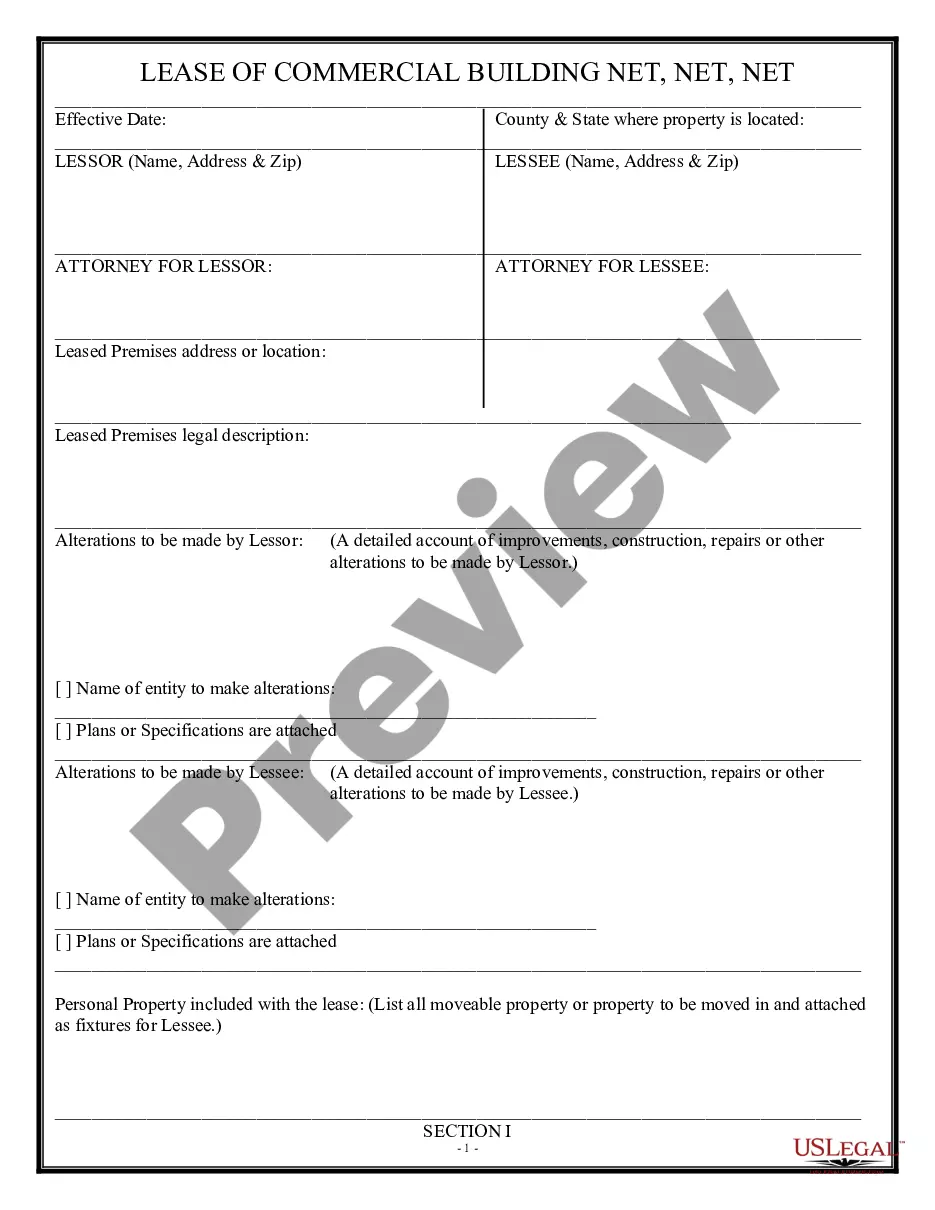
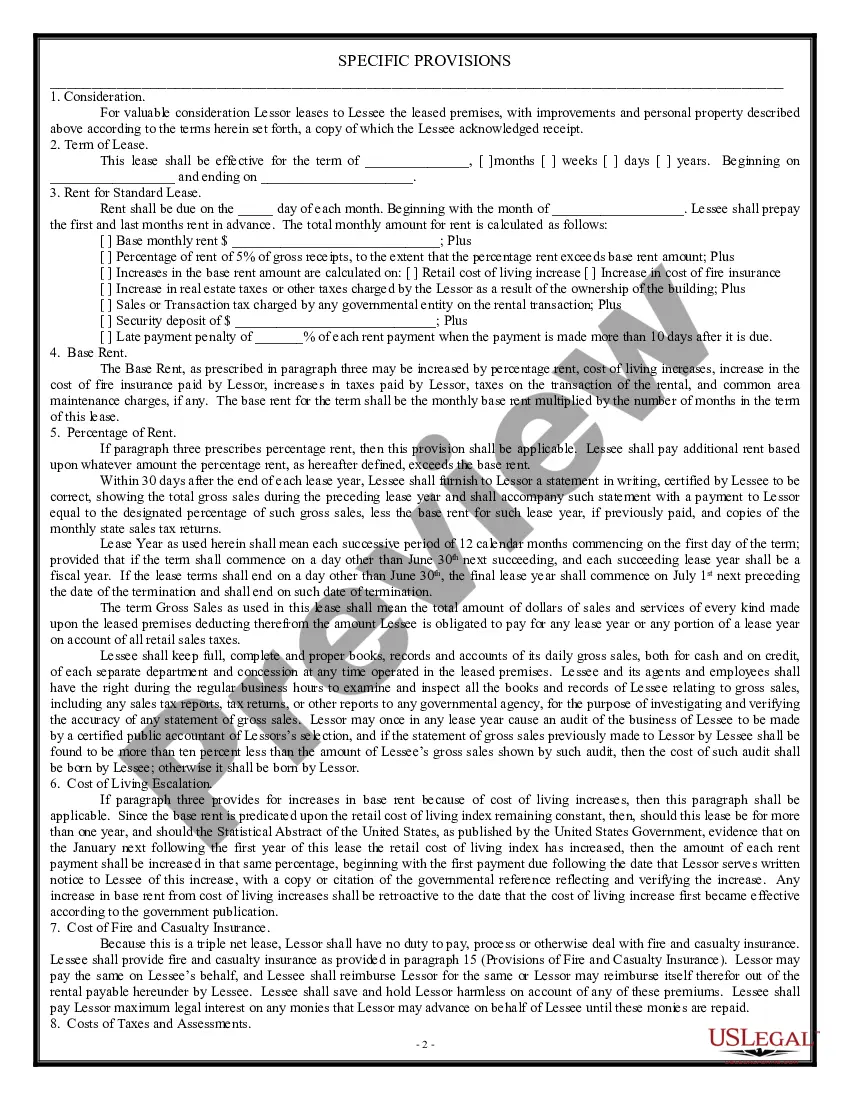
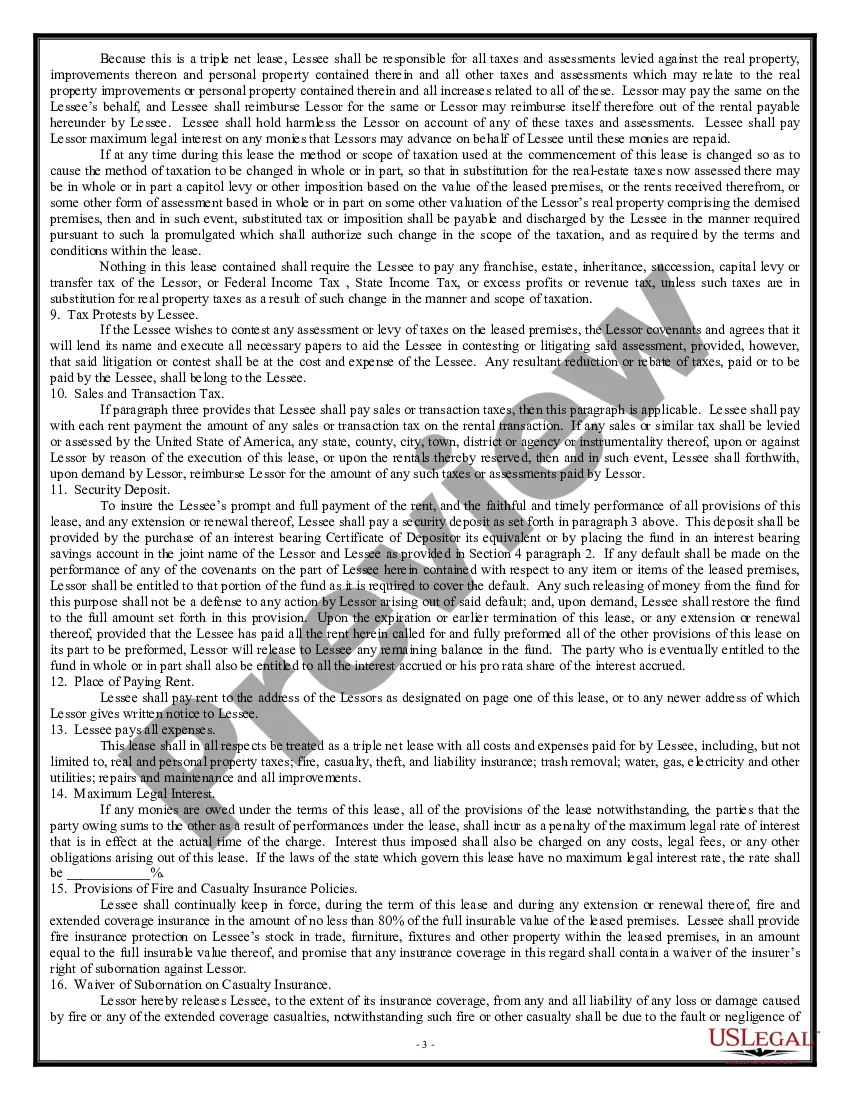
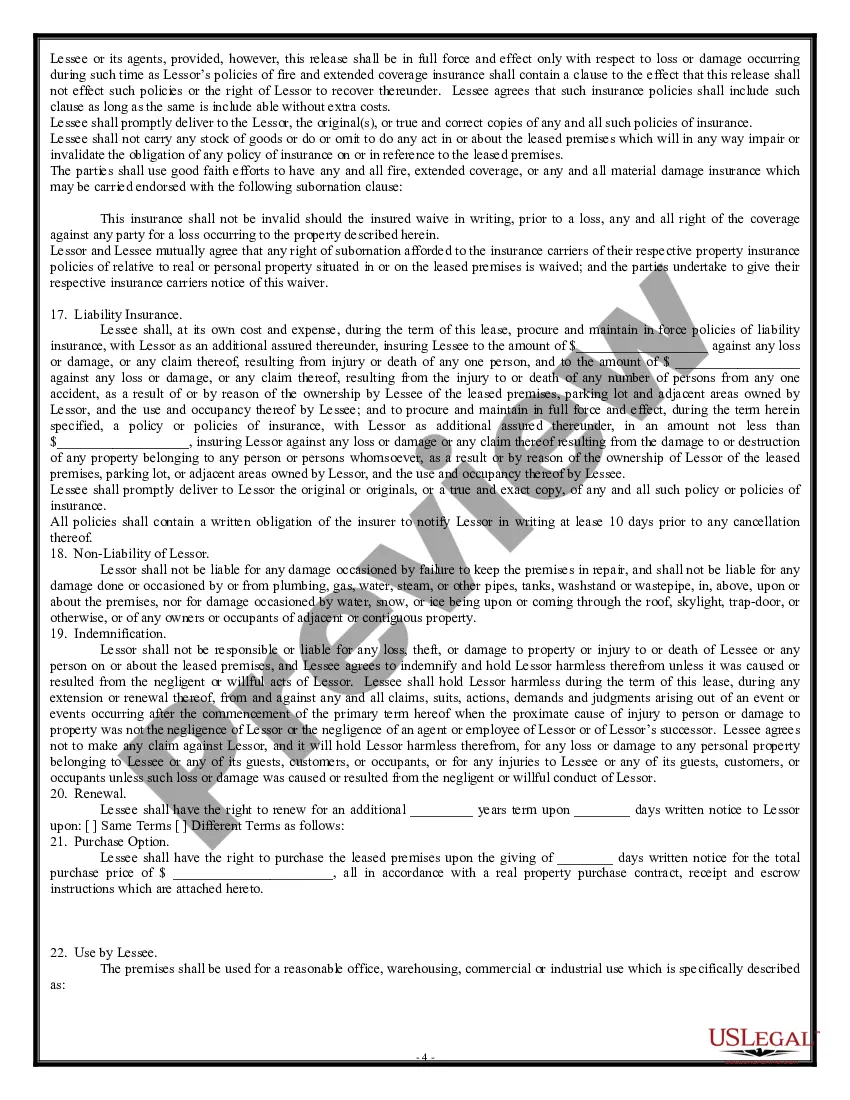
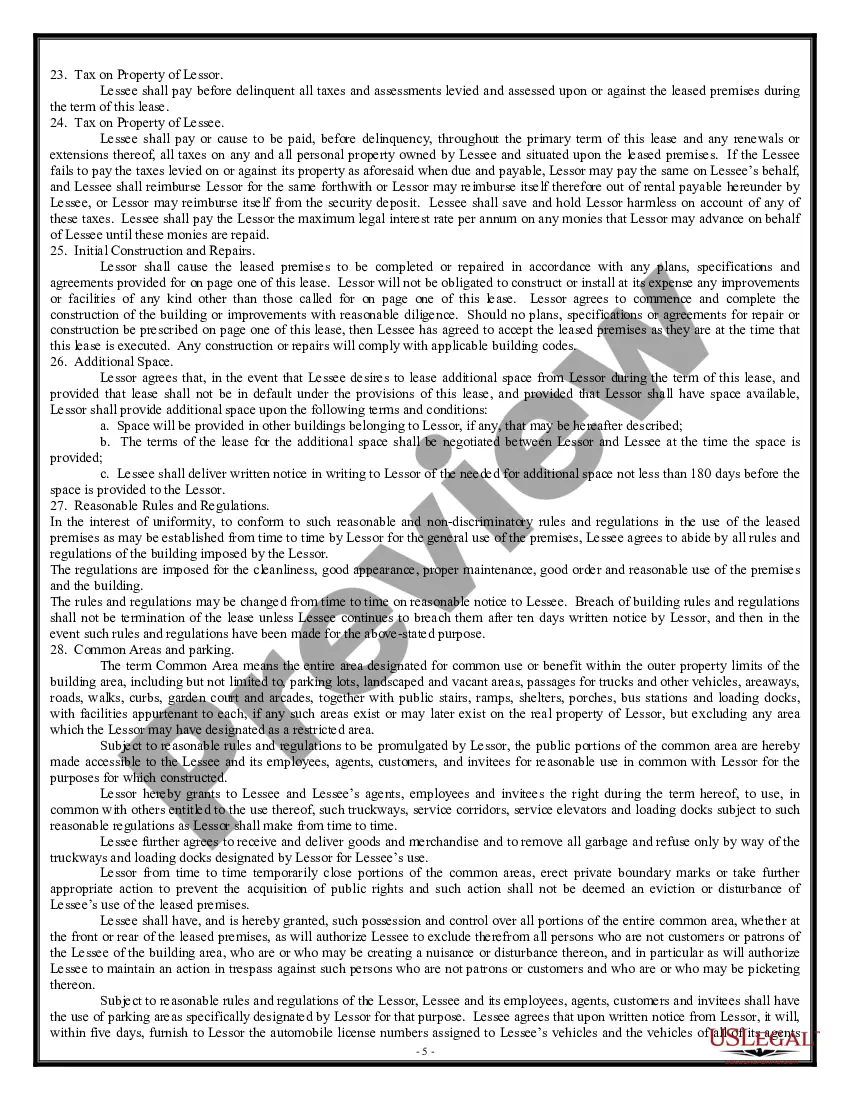
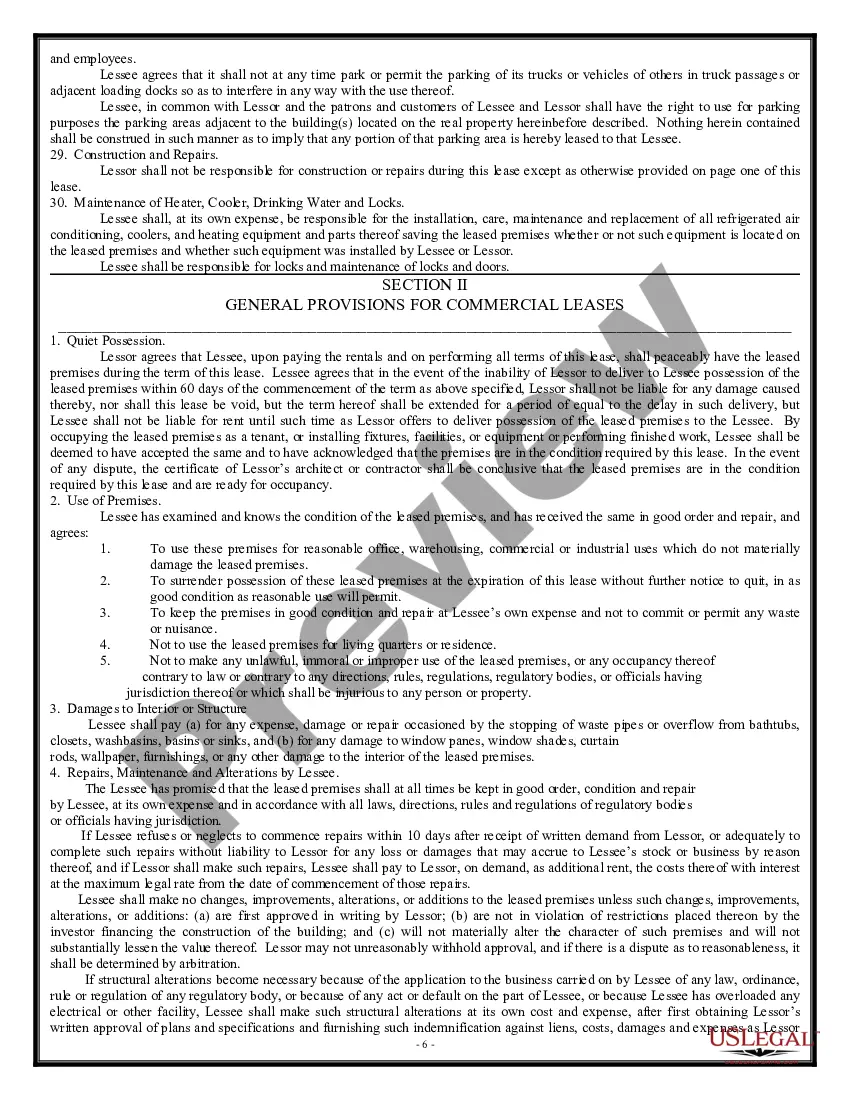
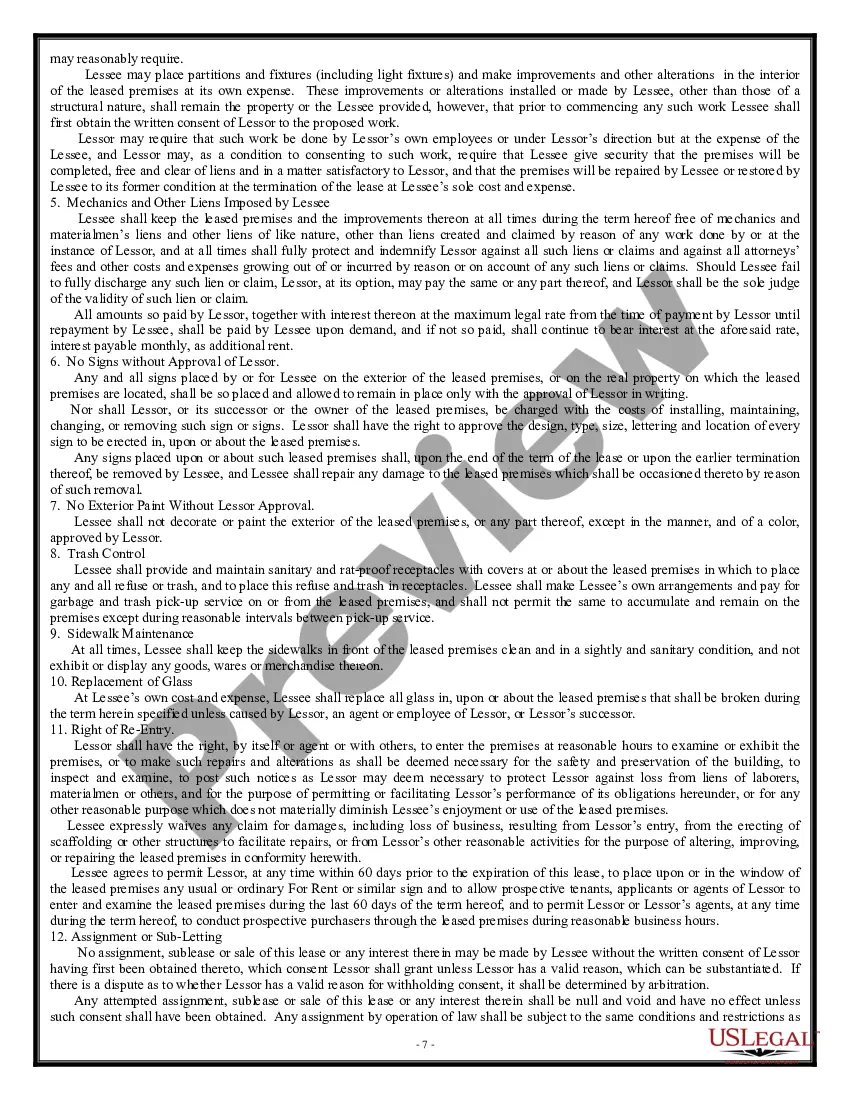
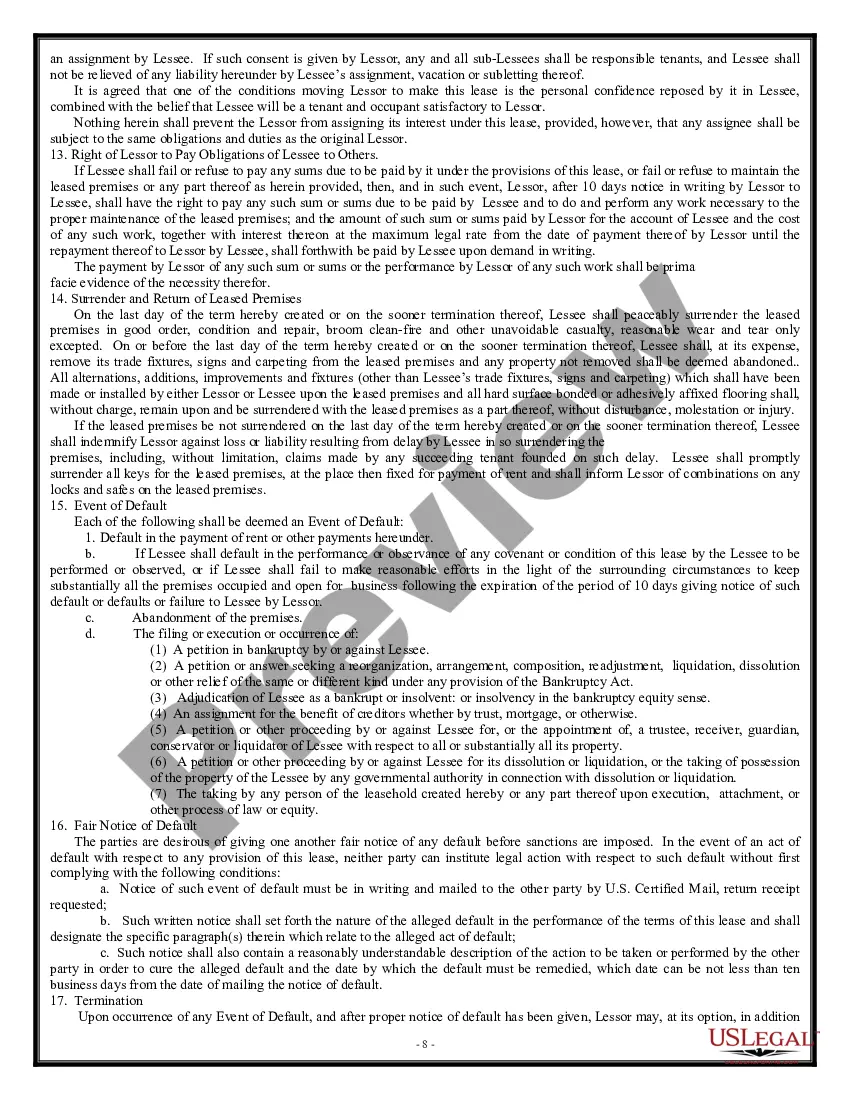
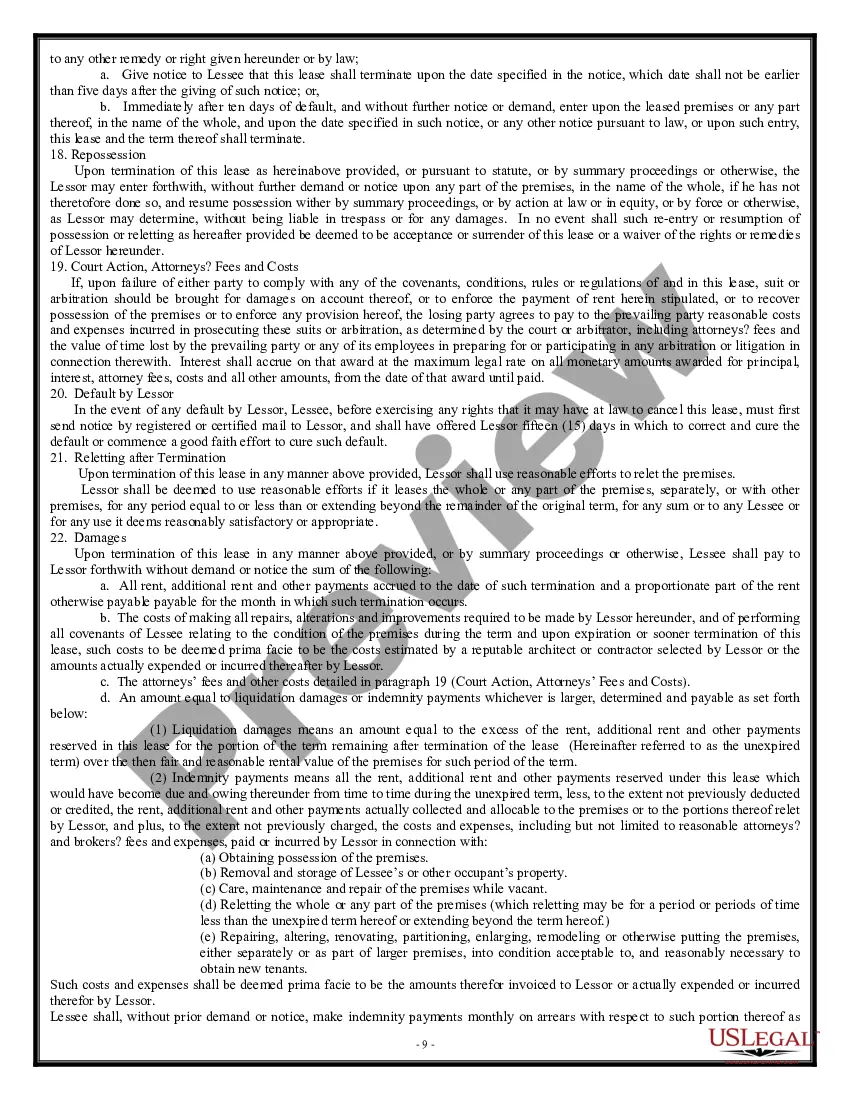
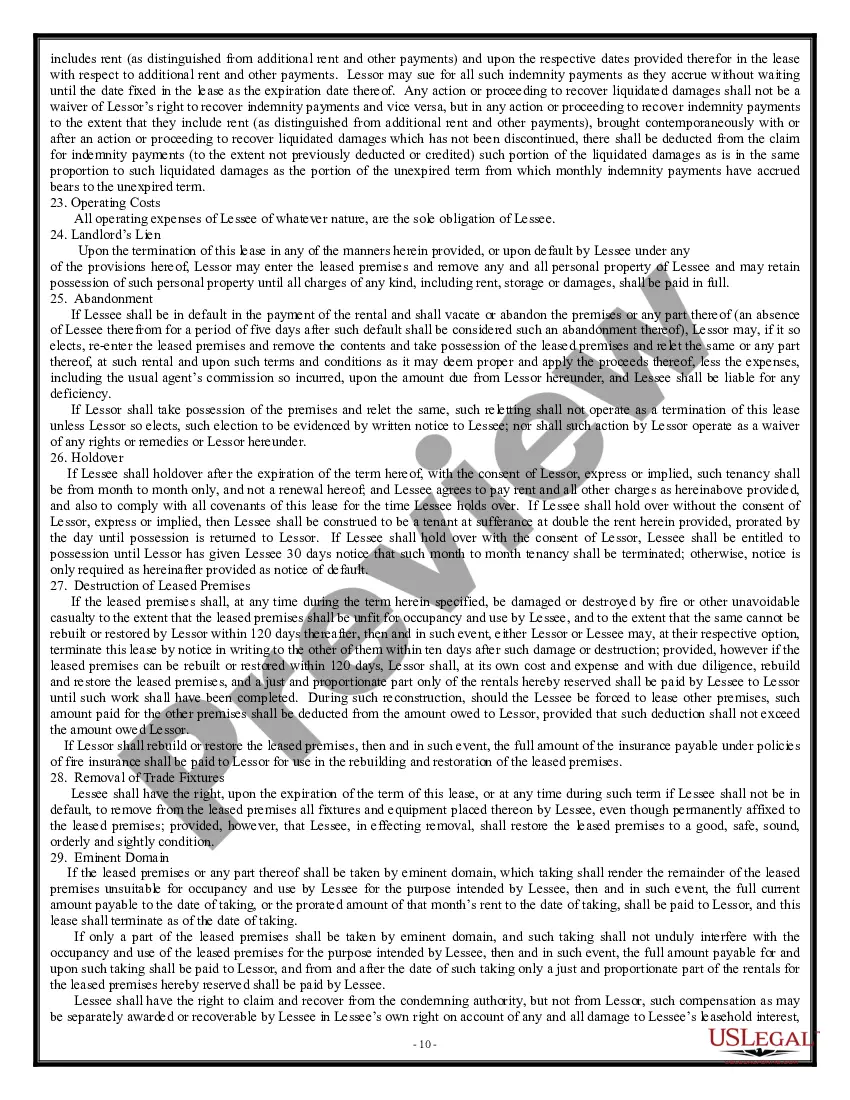
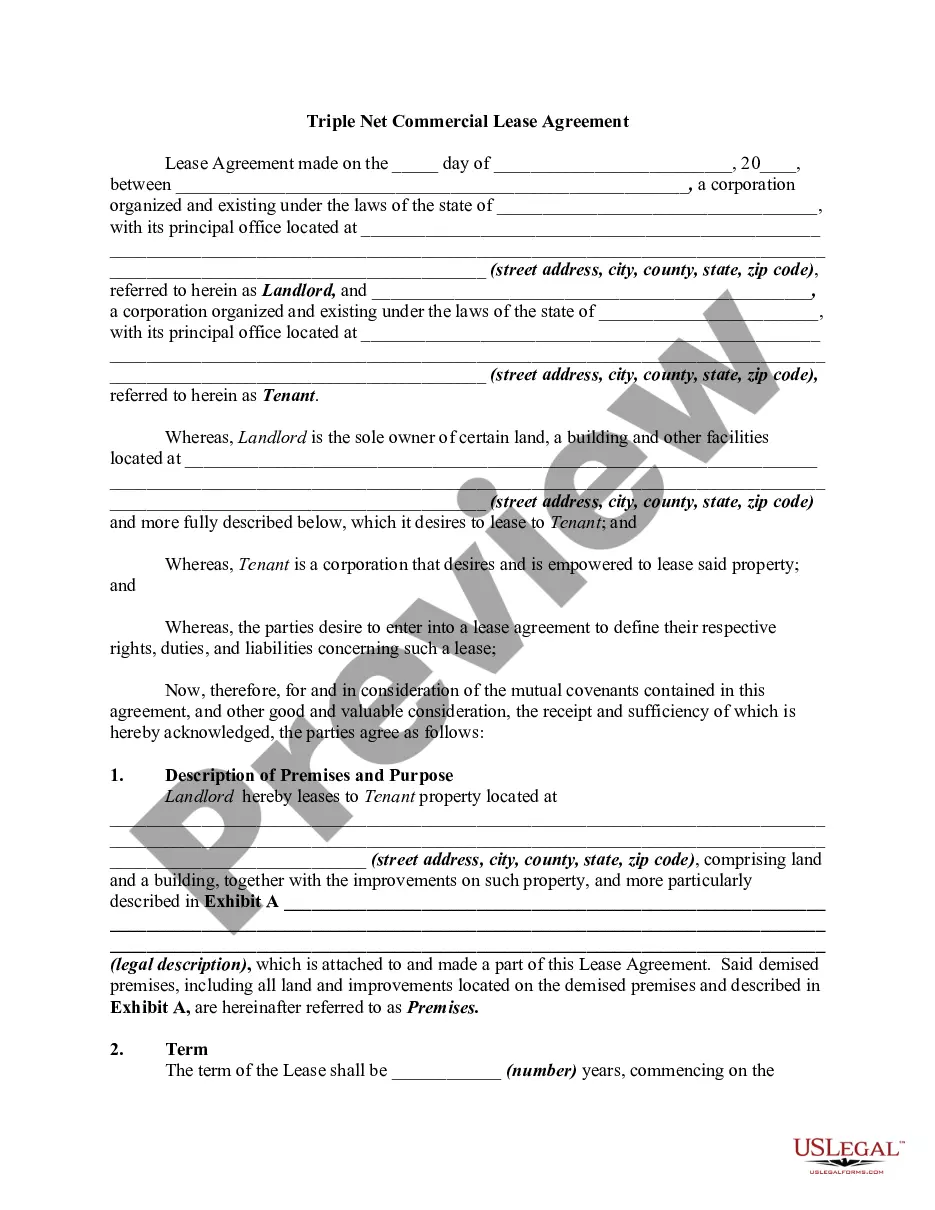
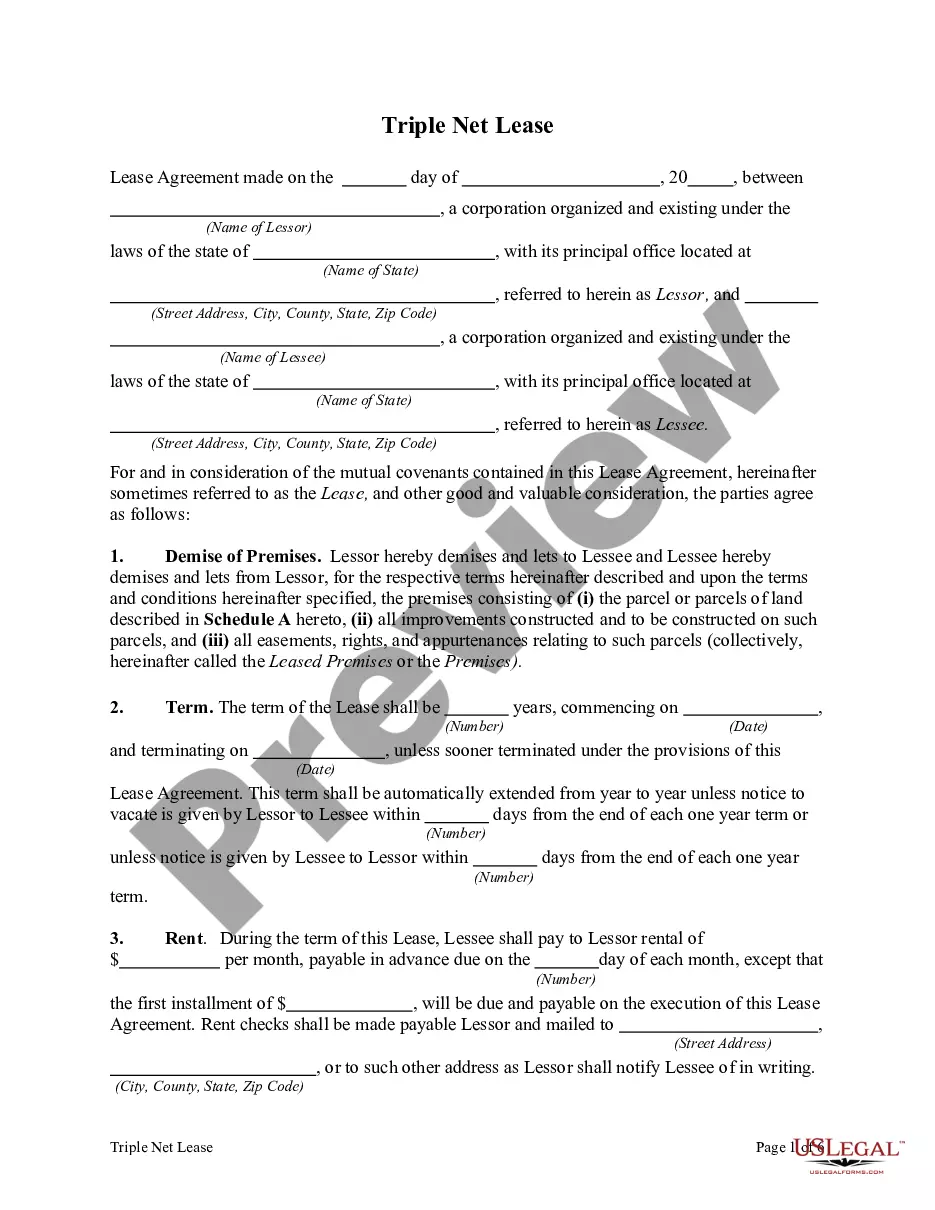
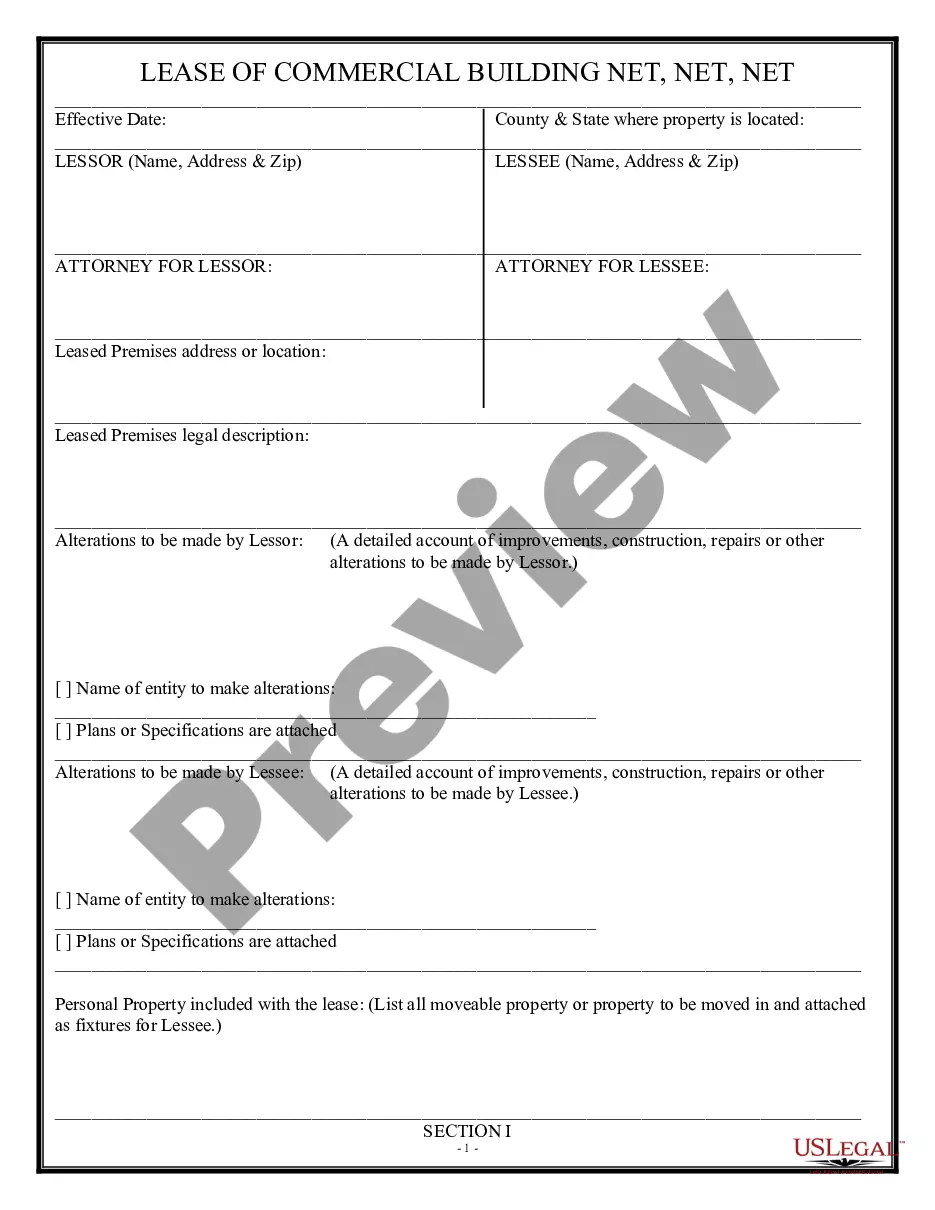
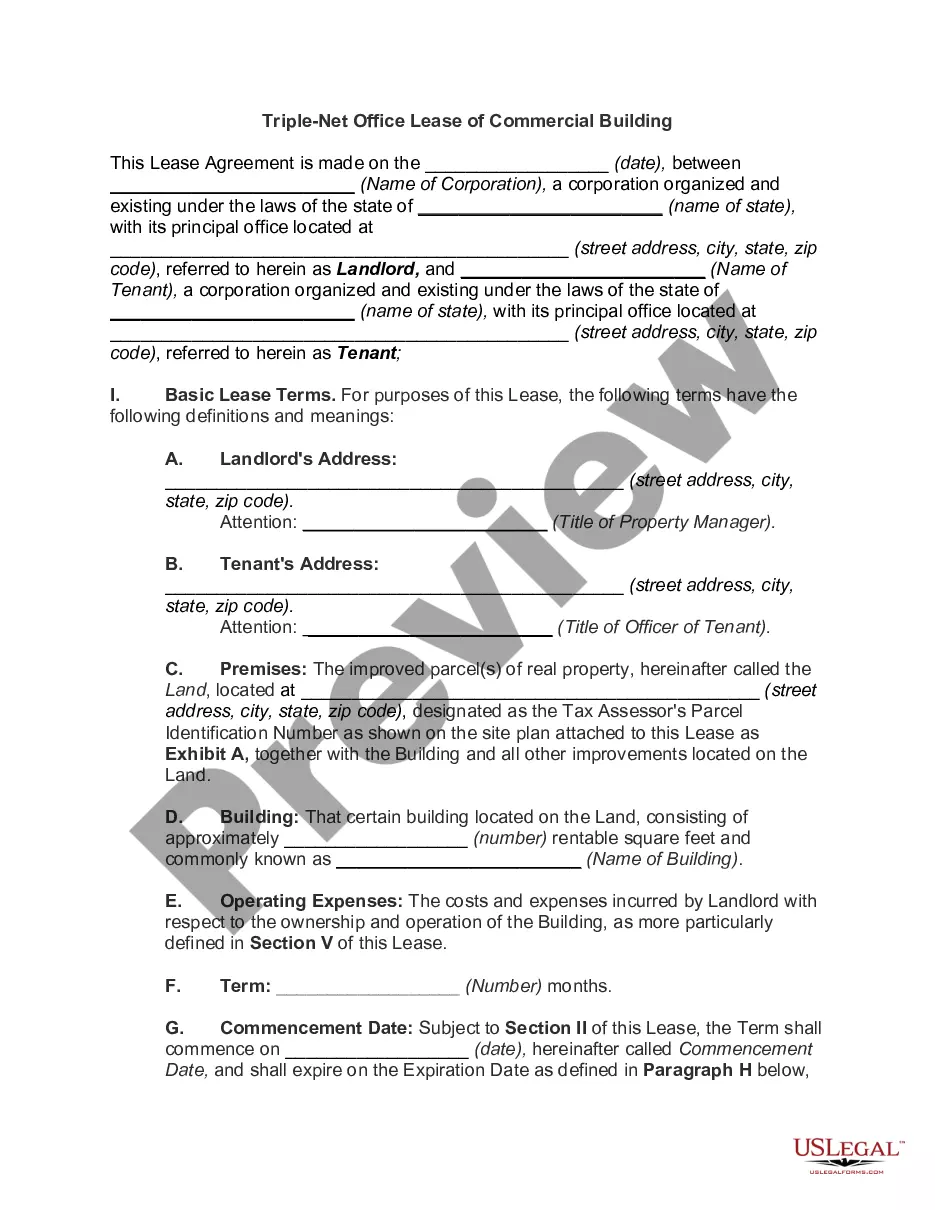
This form is for the lease of a commercial building. The document also provides that this lease will in all respects be treated as a triple net lease with all costs and expenses paid for by the lessee, including, but not limited to, real and personal property taxes; fire, casualty, theft, and liability insurance; trash removal; water, gas, electricity and other utilities; repairs and maintenance and all improvements.
Minneapolis Minnesota Space, Net, Net, Net - Triple Net Lease
State:
Multi-State
City:
Minneapolis
Control #:
US-01668-AZ
Format:
Word;
Rich Text
Instant download
Description
Free preview

Form popularity
FAQ
To report a triple net lease on your tax return, you will first need to determine your rental income and expenses associated with the Minneapolis Minnesota Space, Net, Net, Net - Triple Net Lease. Include the total rent received as income, and then list deductible expenses such as property taxes, insurance, and maintenance costs. It's crucial to maintain accurate records, as they will support your claims on your tax return. If you need assistance, consider using US Legal Forms to ensure you have the correct documentation and forms to facilitate this process.
The downside of a triple net lease lies primarily in the financial risks that fall on the tenant. If maintenance costs rise unexpectedly or a property experiences significant wear, the tenant absorbs these expenses. This can lead to unforeseen financial strain, especially in Minneapolis Minnesota Space, Net, Net, Net - Triple Net Lease scenarios. Therefore, it is vital for tenants to conduct thorough due diligence before agreeing to such leases.
Triple net leases are structured by dividing costs associated with the property among the tenant and landlord. Generally, the tenant is responsible for paying rent plus three main costs: property taxes, insurance, and maintenance. This arrangement creates a predictable revenue stream for the landlord, while tenants appreciate the clarity of their financial obligations. In the realm of Minneapolis Minnesota Space, Net, Net, Net - Triple Net Lease, stakeholders benefit from standardized processes that streamline operations.
Investing in a Minneapolis Minnesota Space, Net, Net, Net - Triple Net Lease can be a smart decision for many investors. These leases transfer much of the financial responsibility to tenants, typically covering property taxes, insurance, and maintenance costs. Consequently, this arrangement often results in lower management obligations for investors, making it an appealing choice. Moreover, with the right property and location, a triple net lease can provide a steady income stream, enhancing your investment portfolio.
Pro: Vibrant arts and culture scene. ... Con: Harsh winters. ... Pro: Abundant natural beauty. ... Con: Mosquitoes in summer. ... Pro: Great infrastructure. ... Con: Rural isolation. ... Pro: Thriving job market. ... Con: Traffic congestion in urban areas.
While living in Minneapolis, you can benefit from small-town vibes and big-city amenities. Although the cost of living is 3% higher than the state average, Minneapolis offers a budding economy, excellent and affordable healthcare, and 0% tax on clothing and shoes. Housing can also be very affordable!
Minnesota Minneapolis, officially the City of Minneapolis, is a city in and the county seat of Hennepin County, Minnesota, United States. With a population of 429,954, it is the state's most populous city as of the 2020 census. Minneapolis - Wikipedia wikipedia.org ? wiki ? Minneapolis wikipedia.org ? wiki ? Minneapolis
MINNEAPOLIS (WCCO) -- ing to a new survey, Minneapolis is increasingly among the world's most livable cities, even amid the COVID-19 pandemic. The Economist's Global Livability Index for 2021 listed the City of Lakes as the 36th most livable city in the world, up 19 spots since last year.
The cost of living in Minneapolis, MN is 2% lower than the state average and 6% lower than the national average. Minneapolis, MN housing is 13% cheaper than the U.S average, while utilities are about 6% less pricey.
When it comes to twin cities living, it can't be beat. In fact, you can easily expect a great quality of life in Minneapolis, with its endless supply of parks and outdoor activities, numerous gorgeous lakes, and mouthwatering food scene ? among many other things.