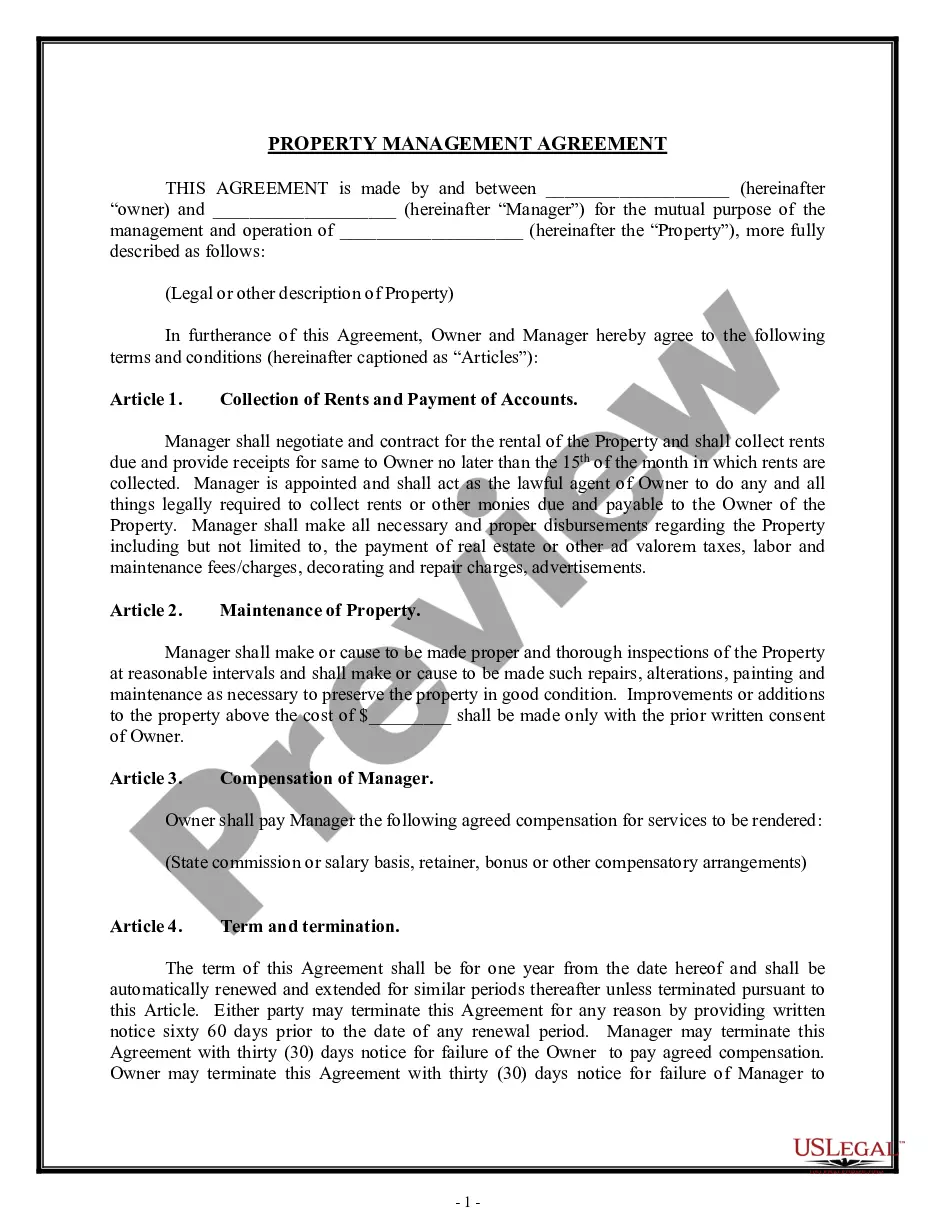
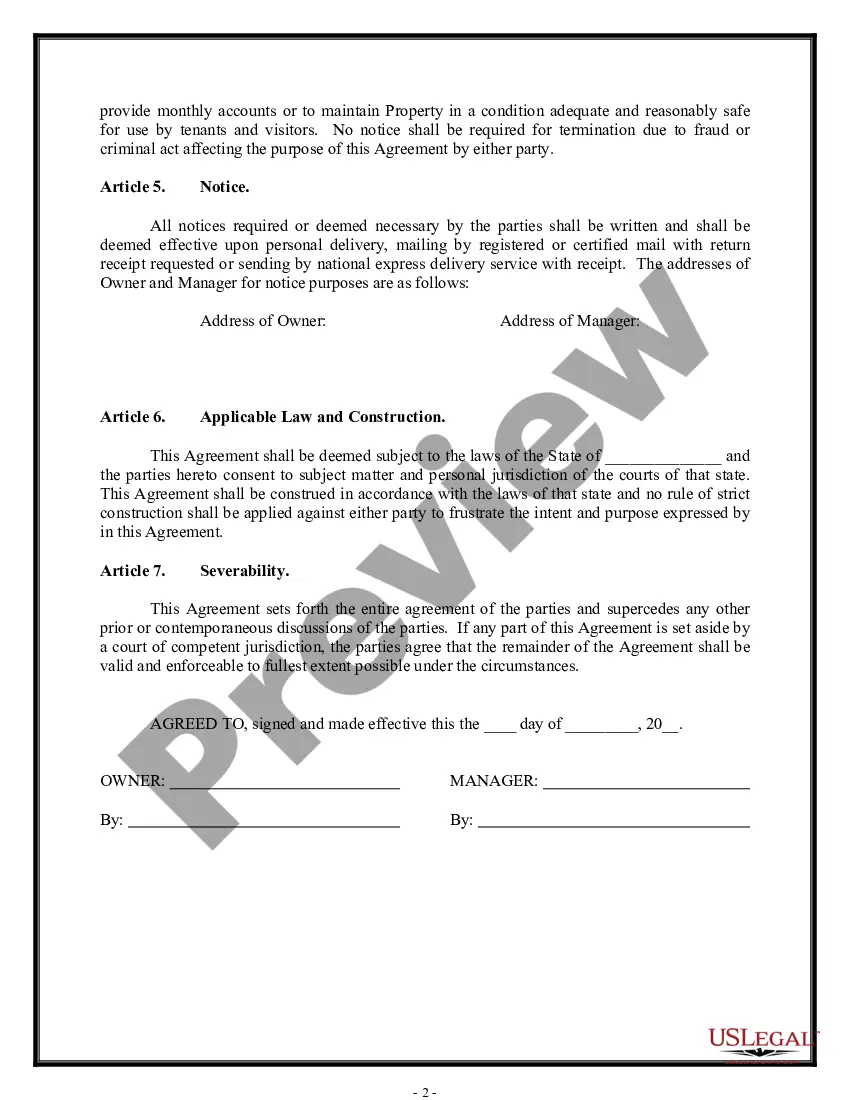
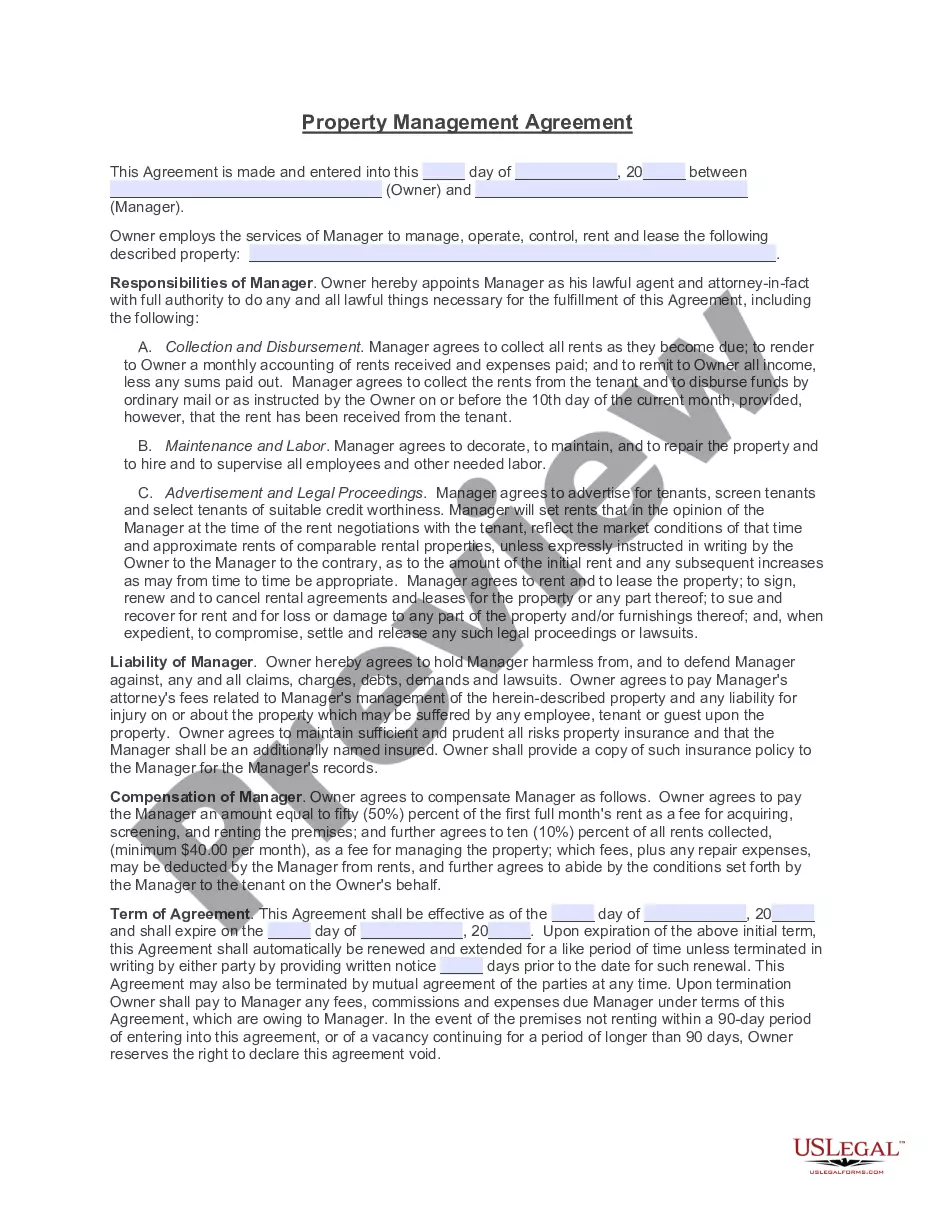
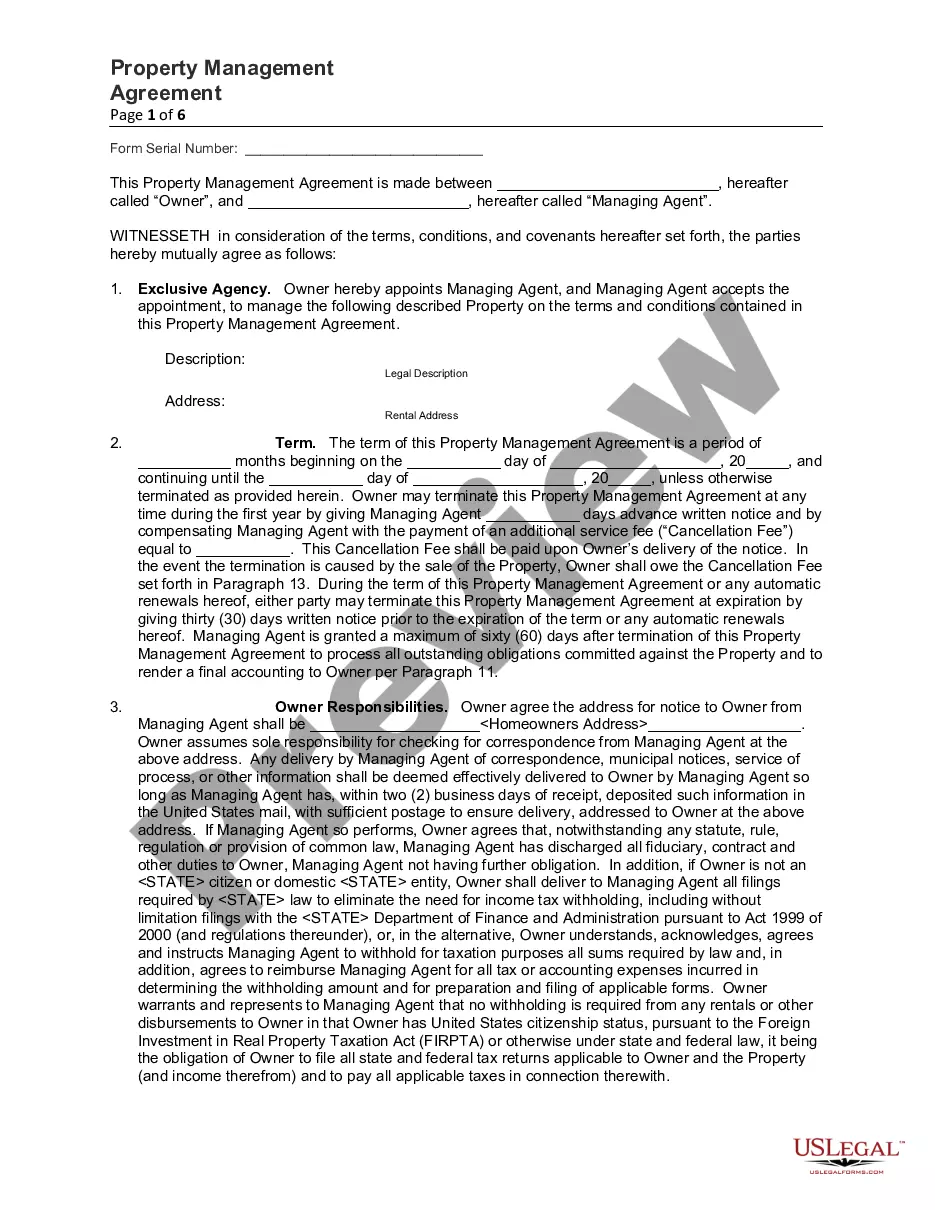
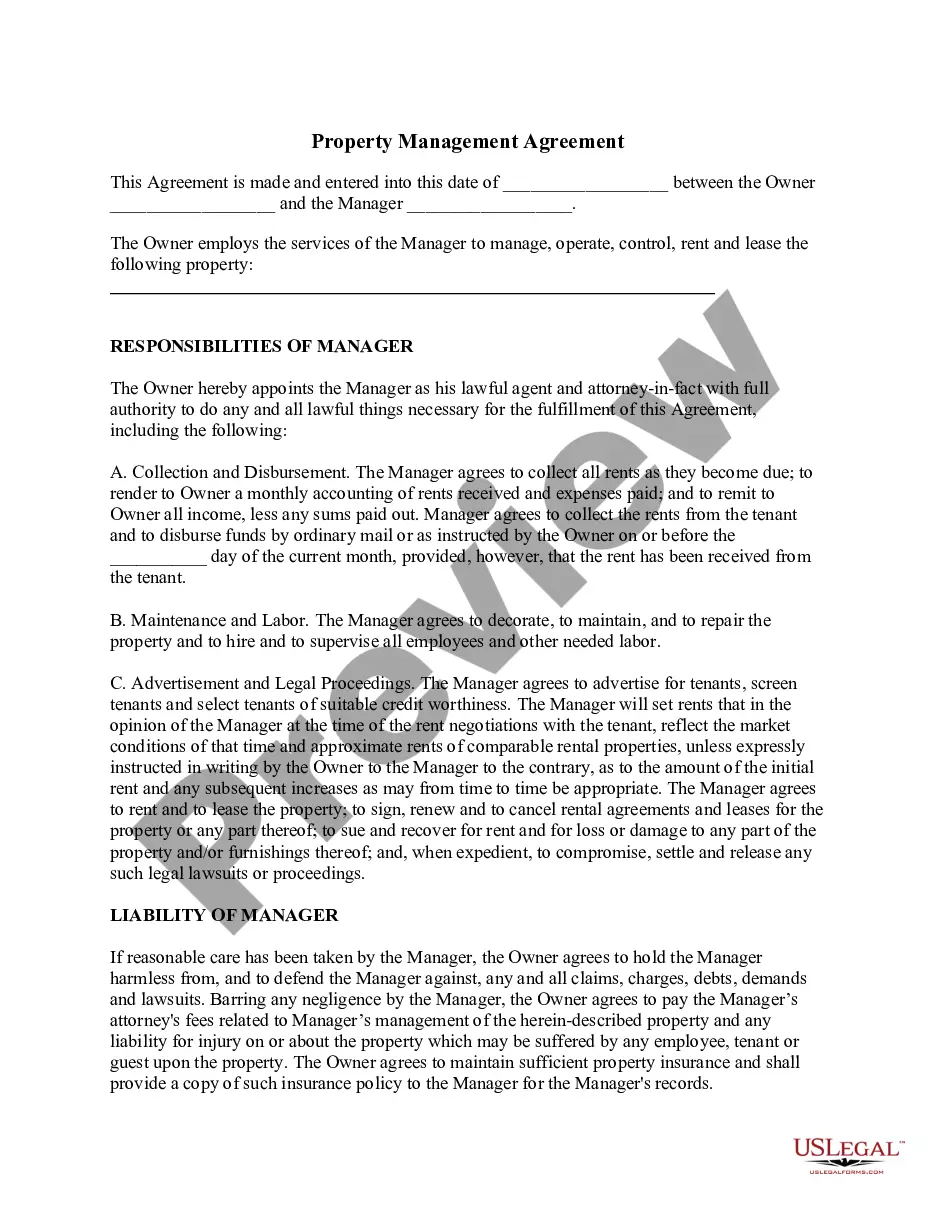
This agreement is made between an owner and a manager for the mutual purpose of the management and operation of a certain piece of property. Provisions within the document include: collection of rents and payment of accounts, maintenance of property, compensation of manager, and severability.
Minneapolis Minnesota Property Management Agreement
Category:
State:
Multi-State
City:
Minneapolis
Control #:
US-01640
Format:
Word;
Rich Text
Instant download
Description
Free preview



Form popularity
FAQ
The 5 P's of property management are property, people, processes, policies, and performance. Each of these P's plays a significant role in creating a successful Minneapolis Minnesota Property Management Agreement. By addressing these areas, property owners can efficiently manage relationships, streamline operations, and enhance overall property performance.
A management agreement should include property details, a breakdown of services provided, and specific responsibilities of both parties in the Minneapolis Minnesota Property Management Agreement. Other crucial components are fees, maintenance procedures, and procedures for dispute resolution. Ensuring all these details are laid out can significantly reduce misunderstandings between property owners and managers.
The seven essential elements of a contract include offer, acceptance, consideration, capacity, legality, mutual assent, and intention to create a legal relationship. Each element plays a vital role in forming a valid Minneapolis Minnesota Property Management Agreement. Understanding these components can help you create an enforceable agreement that clearly establishes expectations.
To write a solid property management contract, start by outlining the roles and responsibilities explicitly in the Minneapolis Minnesota Property Management Agreement. Use clear language to describe the services provided, payment structures, and duration of the management. Consulting templates from reliable sources like uslegalforms can also help you create a comprehensive contract that meets legal standards.
An effective Minneapolis Minnesota Property Management Agreement should include essential elements such as payment terms, property maintenance stipulations, and communication protocols. These details help ensure a clear understanding between property owners and managers. Incorporating specifics about the termination of the agreement also protects both parties in case of changes.
A Minneapolis Minnesota Property Management Agreement should contain the responsibilities of the property manager, the scope of services, and the duration of the agreement. These elements clarify the roles and expectations for both parties. Additionally, including management fees ensures transparency in costs, making it easier for everyone involved to manage finances.
In Minnesota, property management fees typically range from 8% to 12% of the monthly rent. This percentage often includes various services, such as tenant placement, maintenance coordination, and rent collection, ensuring a seamless experience for property owners. When you consider entering into a Minneapolis Minnesota Property Management Agreement, it is essential to understand what is included in these fees, as some companies may offer additional services at a lower base rate. Using platforms like US Legal Forms can help you create a clear and comprehensive agreement that outlines management fees and services, protecting both your interests and those of your tenants.
Yes, in Minnesota, a property manager requires a license to engage in property management activities. This license ensures that property managers operate within legal and ethical guidelines. When creating or reviewing a Minneapolis Minnesota Property Management Agreement, it is crucial to verify that the property manager holds the appropriate licenses. This practice protects both property owners and tenants.
In Minnesota, a contract becomes legally binding when it meets several requirements, including mutual consent, consideration, and a lawful purpose. Both parties must agree to the terms outlined in the Minneapolis Minnesota Property Management Agreement and intend to create legal obligations. It’s essential that the contract be clear and specific. This ensures that all parties understand their rights and responsibilities.
Typically, a Minneapolis Minnesota Property Management Agreement lasts for one year, but terms can vary based on the owner's preferences and the property manager's policies. Some agreements might feature automatic renewals or options for shorter terms, depending on the specific arrangement. To ensure a successful partnership, both parties should clearly understand the duration and any conditions for termination or renewal.