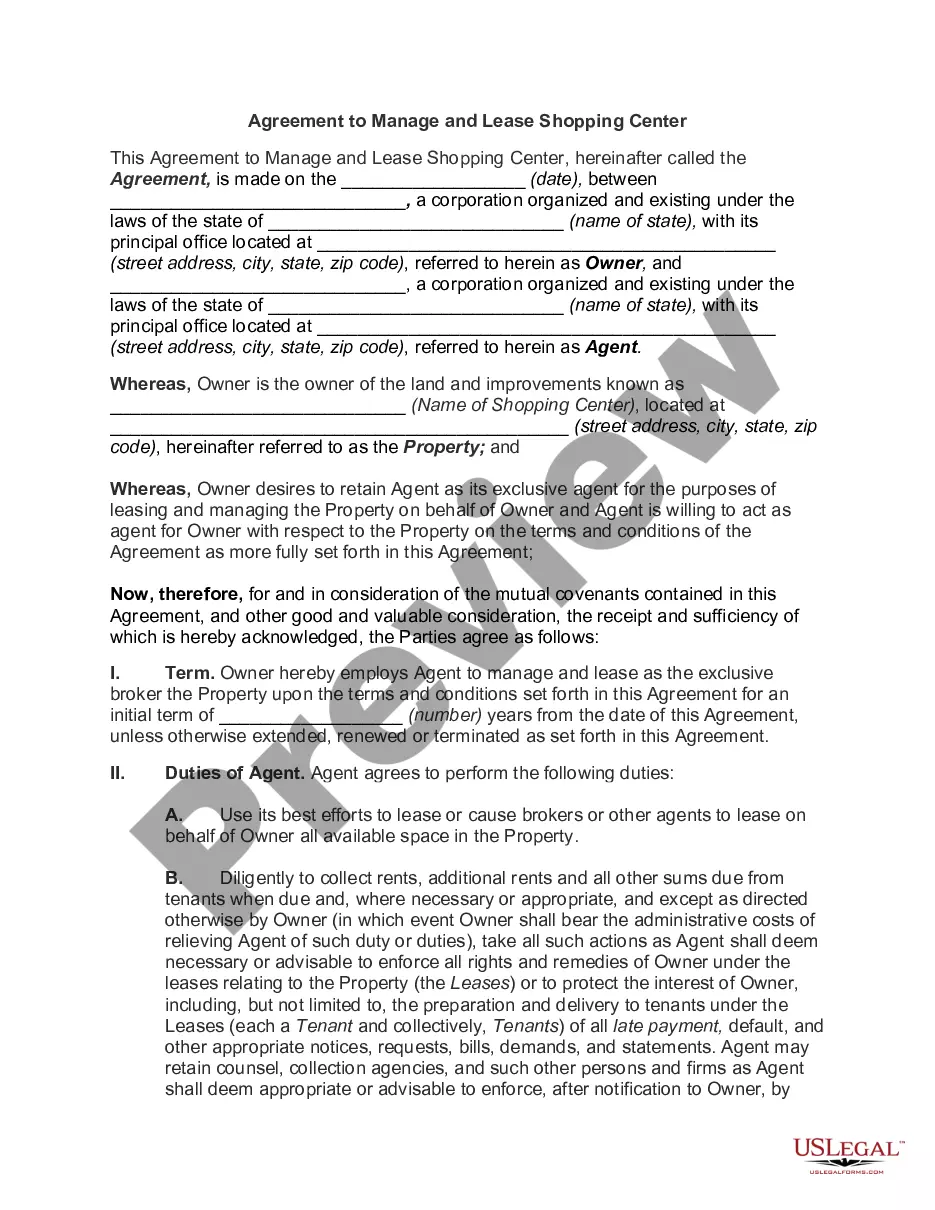
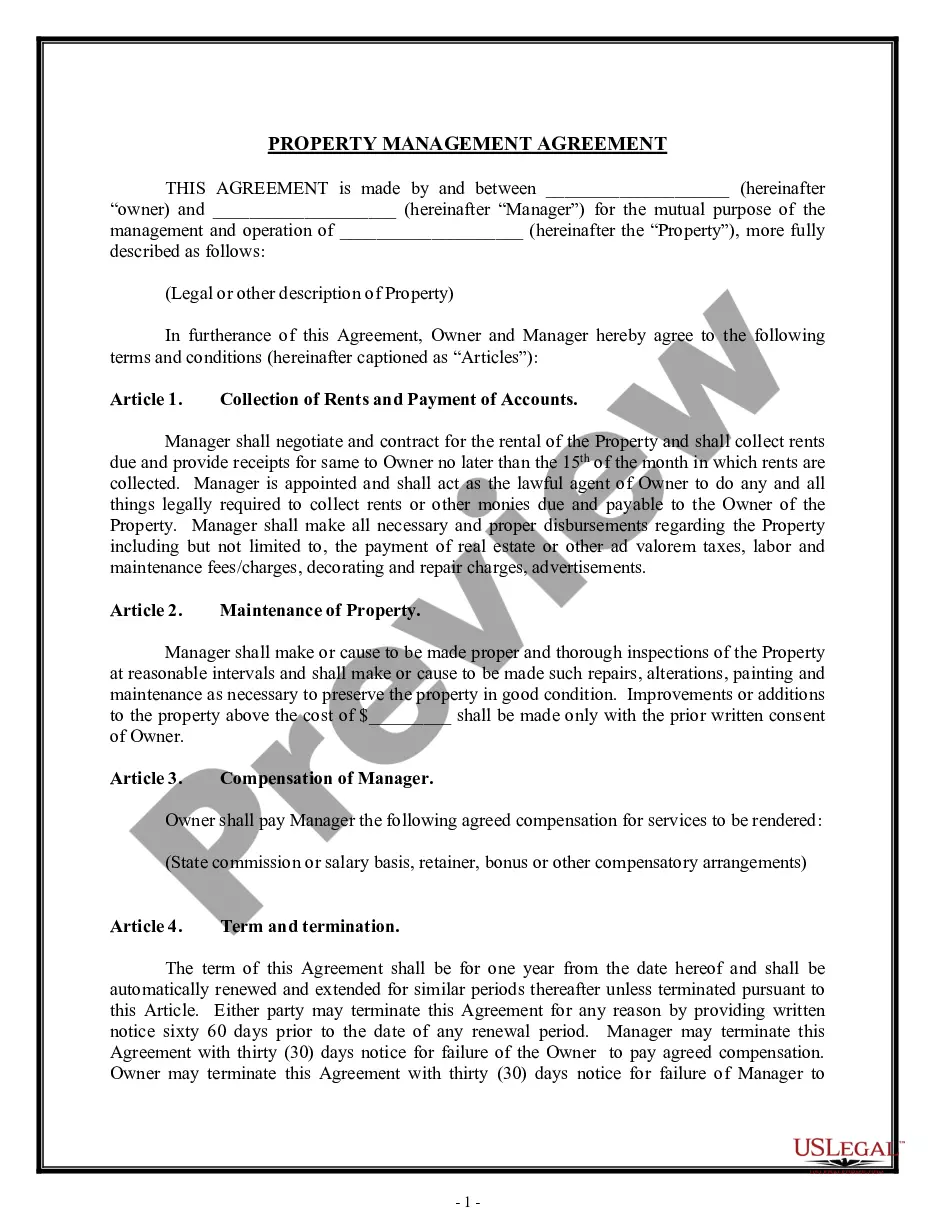
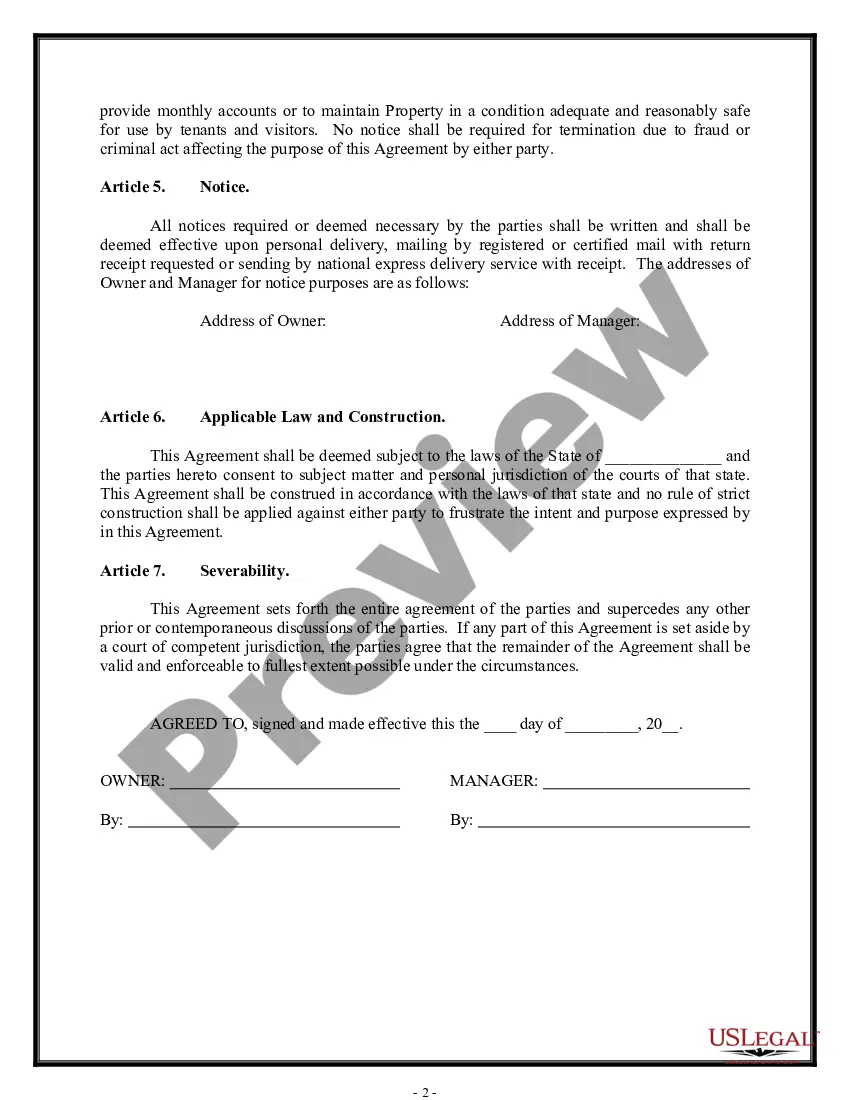
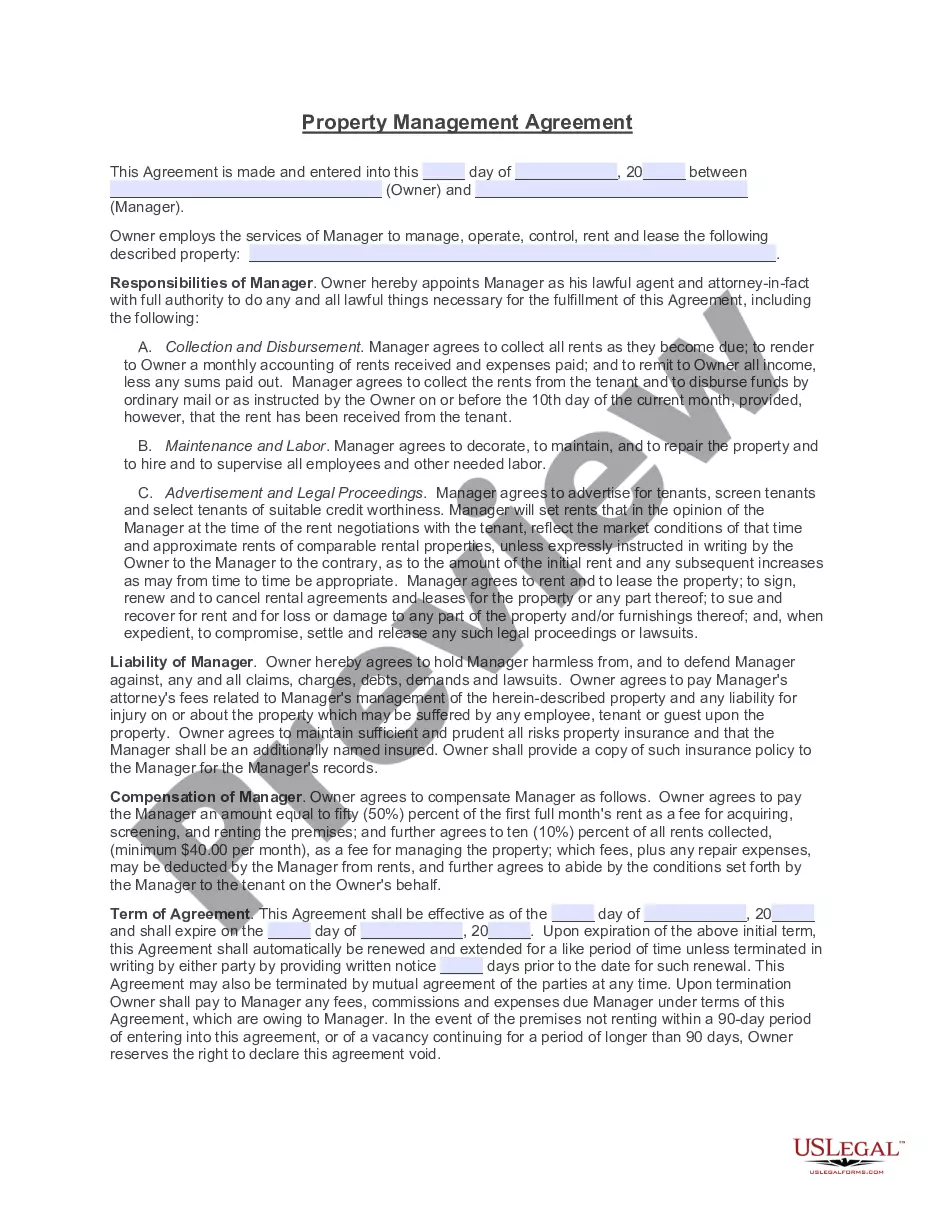
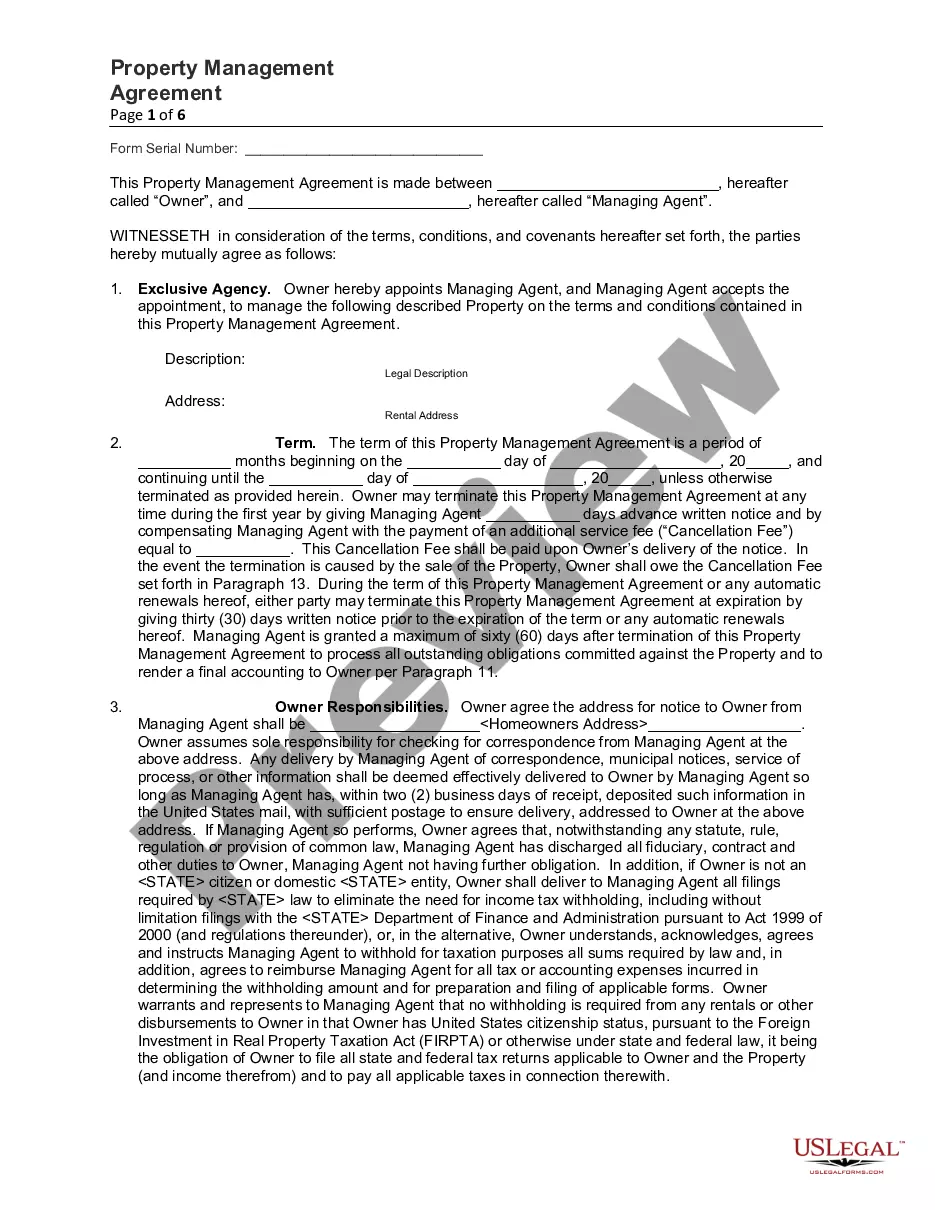
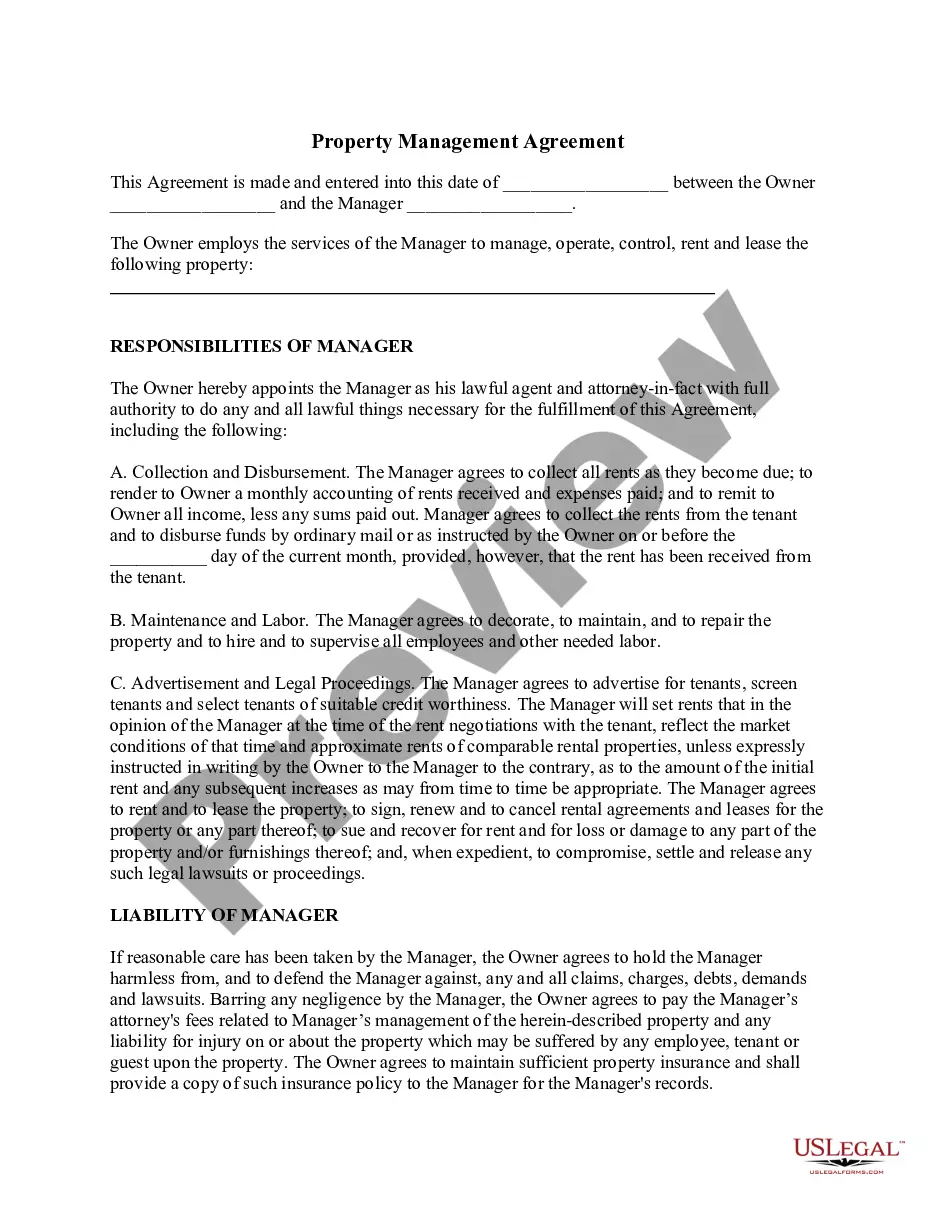
This agreement is made between an owner and a manager for the mutual purpose of the management and operation of a certain piece of property. Provisions within the document include: collection of rents and payment of accounts, maintenance of property, compensation of manager, and severability.
Cincinnati Ohio Property Management Agreement
Category:
State:
Multi-State
City:
Cincinnati
Control #:
US-01640
Format:
Word;
Rich Text
Instant download
Description
Free preview







Form popularity
FAQ
To write a property management contract, start by outlining the property details, management responsibilities, and payment terms in a clear format. Next, personalize the agreement to reflect specific needs and expectations for your Cincinnati Ohio Property Management Agreement. Utilizing platforms like US Legal Forms can simplify this process, providing templates and legal guidance tailored to your needs.
The seven essential elements of a contract include offer, acceptance, consideration, capacity, legality, intention to create a legal relationship, and certainty. Each of these components plays a vital role in forming a valid Cincinnati Ohio Property Management Agreement. Ensuring that all elements are present protects the interests of both the property owner and the management entity.
In a Cincinnati Ohio Property Management Agreement, it is crucial to include a detailed description of property management duties, payment terms, and conditions for reporting and accounting. Furthermore, clear communication protocols between the property owner and manager should be established to foster an effective working relationship. This level of detail helps in smooth property operations.
Three essential components of a Cincinnati Ohio Property Management Agreement are the term of the agreement, the method for terminating the agreement, and details regarding maintenance responsibilities. Including these aspects helps protect both parties and clarifies expectations. A well-defined agreement can significantly enhance the management process.
In Ohio, a non-licensed property manager can perform a variety of tasks, such as coordinating maintenance, collecting rent, and handling tenant communications. However, they must refrain from performing activities that require a license, such as negotiating leases on behalf of property owners. Having a well-crafted Cincinnati Ohio Property Management Agreement helps clarify roles and responsibilities, ensuring everyone understands their limitations. For easy access to templates, check out US Legal Forms, which provides practical solutions tailored to your needs.
To become a property manager in Ohio, you typically need a strong understanding of real estate laws and practices. While a license is not required for managing residential properties, having knowledge of the Cincinnati Ohio Property Management Agreement will enhance your capability to create sound contracts. Additionally, experience in tenant relations and property maintenance can greatly benefit your role. Utilize resources like US Legal Forms for guidance and templates to improve your management skills.
Several states do not require a property management license, allowing individuals to manage properties without formal education or certification. For example, Ohio allows property owners to manage their own properties without a license, but the same does not apply to commercial properties. It’s crucial to have a well-drafted Cincinnati Ohio Property Management Agreement to navigate the complexities of these arrangements. Consider using US Legal Forms to find templates that suit your needs.
In Ohio, a lease agreement does not require notarization to be valid. However, having a Cincinnati Ohio Property Management Agreement notarized can provide additional legal protection and help ensure that all parties understand their commitments. It's always a good idea to keep a written record of any agreements for reference, especially for longer leases. You can use platforms like US Legal Forms to create certified lease agreements.
structured Cincinnati Ohio Property Management Agreement should include details such as the management fees, the services provided, and the responsibilities of each party. Including terms related to property maintenance, tenant relations, and legal compliance is vital for clarity. A thorough agreement helps prevent misunderstandings and fosters a successful property management experience.
A typical Cincinnati Ohio Property Management Agreement often ranges from one to three years. This timeframe allows both the property owner and the management team to establish a solid working relationship. Flexibility is important, so discussing exit clauses or renewal options within the agreement is beneficial.