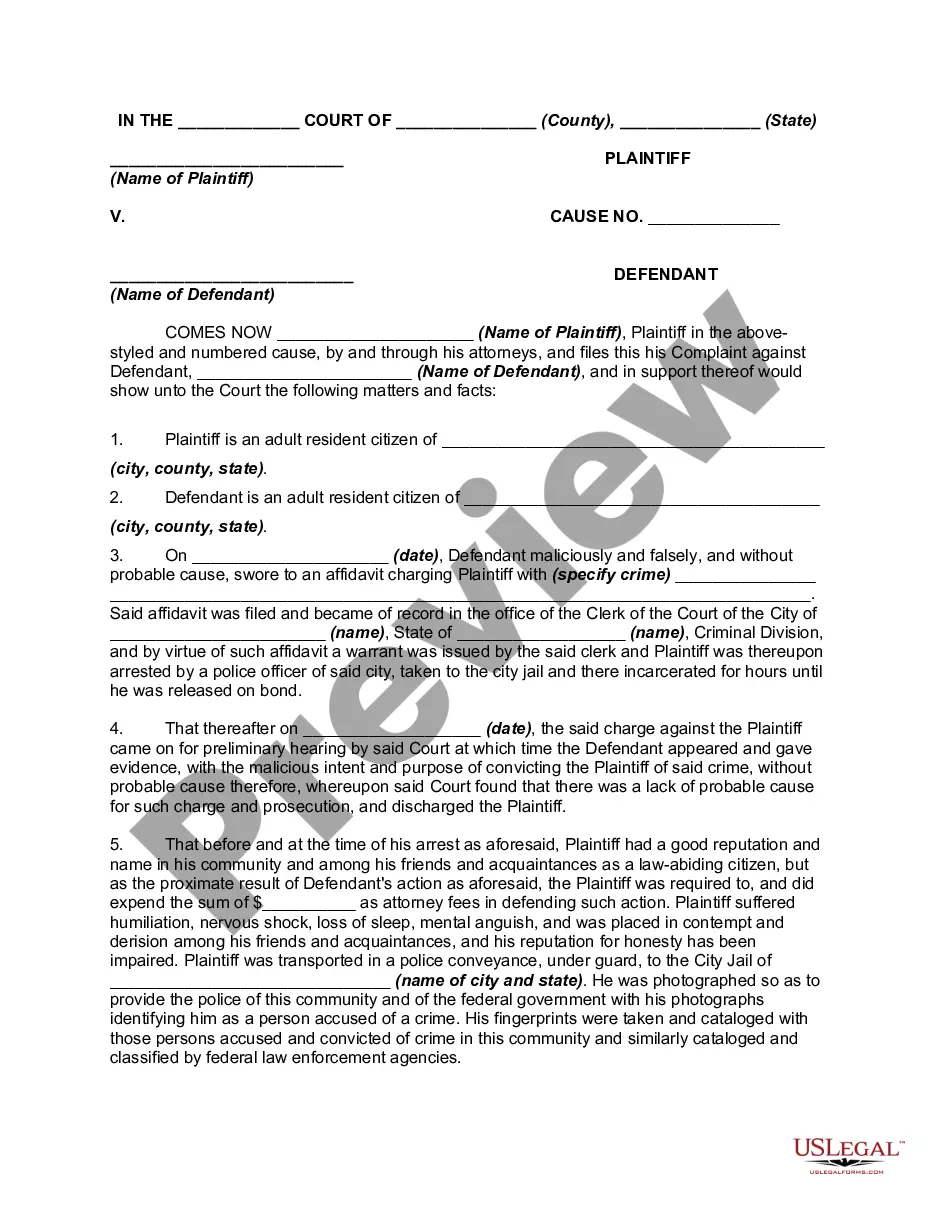
Columbus Ohio Complaint for Malicious Prosecution, False Imprisonment, Abuse of Process
Description



Form popularity
FAQ
In Ohio, a defendant typically has 28 days to respond to a complaint after being served. This is crucial, especially for serious claims such as a Columbus Ohio Complaint for Malicious Prosecution, False Imprisonment, or Abuse of Process, where timely responses can impact the case outcome. If the defendant fails to respond within this timeline, the court may grant a default judgment in favor of the plaintiff. For assistance in understanding your rights and obligations, consider exploring resources on the US Legal Forms platform, which can provide valuable insights.
To file a complaint with the Ohio Attorney General, you need to visit their official website and locate the 'Consumer Complaint' section. You can fill out the online form or download the paper form to submit via mail. Ensure you provide detailed information about your situation, particularly if it involves a Columbus Ohio Complaint for Malicious Prosecution, False Imprisonment, or Abuse of Process. If you require guidance, consider using the US Legal Forms platform, which offers resources to help you navigate this process.
Winning a false imprisonment lawsuit in a Columbus Ohio Complaint for Malicious Prosecution, False Imprisonment, Abuse of Process requires clear proof that your freedom was unlawfully restrained. You'll need to show there was no legal justification for the detention and that the imprisonment was intentional. Strong evidence and effective legal representation can enhance your chances of success. Legal platforms like USLegalForms can provide the necessary forms and guidance to streamline this process.
To prove vindictive prosecution in your Columbus Ohio Complaint for Malicious Prosecution, you need to establish that the prosecution was motivated by a desire to retaliate against the defendant. Evidence can include any direct or circumstantial facts that illustrate a pattern of retaliatory behavior. Gathering documentation and communications can bolster your claim significantly. It's wise to seek legal counsel to navigate this intricate area of law.
Proving malicious intent in a Columbus Ohio Complaint for Malicious Prosecution can be challenging. You must show that the defendant acted with a desire to harm or with willful disregard for the plaintiff's rights. This often requires you to present evidence of the defendant's motivations or prior actions. Engaging a legal professional can assist you in building a compelling case to unveil the intent behind their actions.
The elements of malicious prosecution in Ohio include the initiation of a prior legal action without probable cause, malice, and successful termination of that action in favor of the plaintiff. It's crucial to gather all details surrounding the original prosecution to support your Columbus Ohio Complaint for Malicious Prosecution. Understanding these elements can lead to a more successful case outcome. Documentation and witness testimony can play pivotal roles.
To prove malicious prosecution in a Columbus Ohio Complaint for Malicious Prosecution, you must establish four key elements. These include the prior unsuccessful legal action, lack of probable cause, the absence of legal justification, and that the defendant acted with malicious intent. Collecting solid evidence and legal documentation will greatly enhance your case. Consulting with a legal expert can guide you through this complex process.
In a Columbus Ohio Complaint for Malicious Prosecution, the burden of proof lies with the plaintiff. The plaintiff must show that there was no probable cause for the initial prosecution. This means you need to demonstrate that the prior legal action lacked sufficient legal grounds. Higher standards apply in this context to prevent spurious lawsuits.