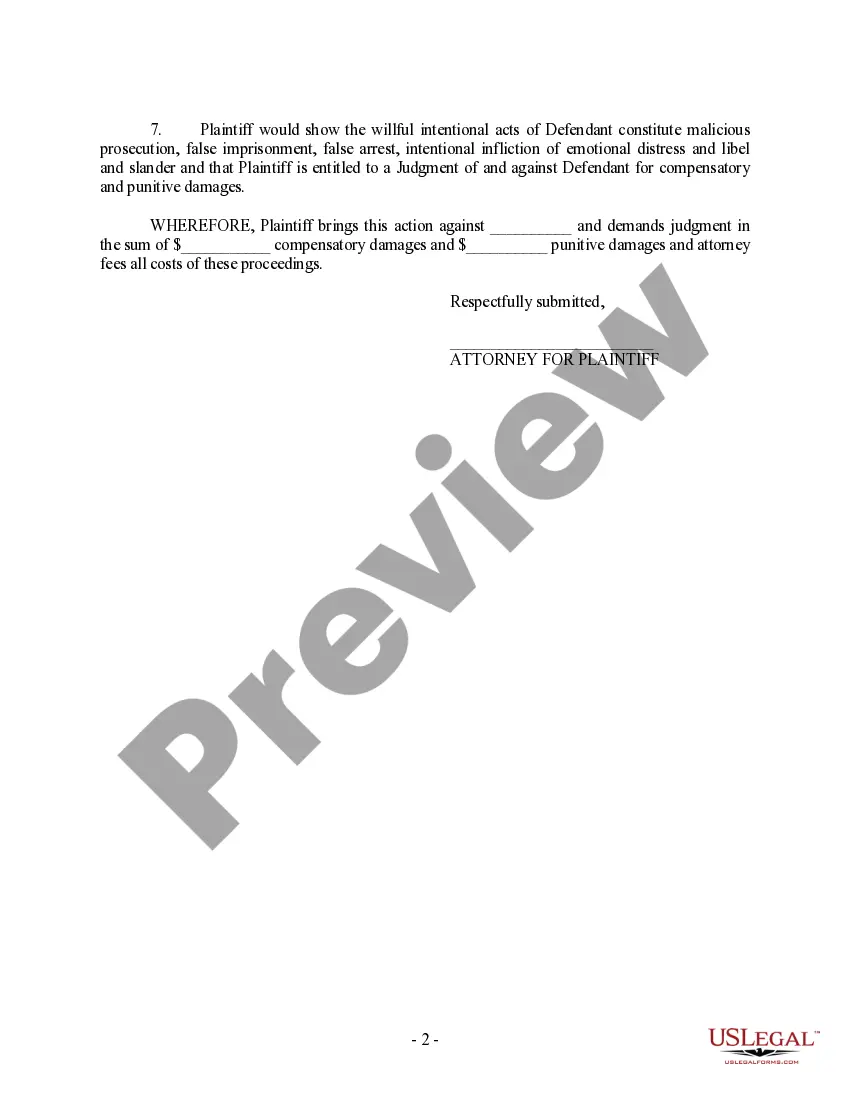
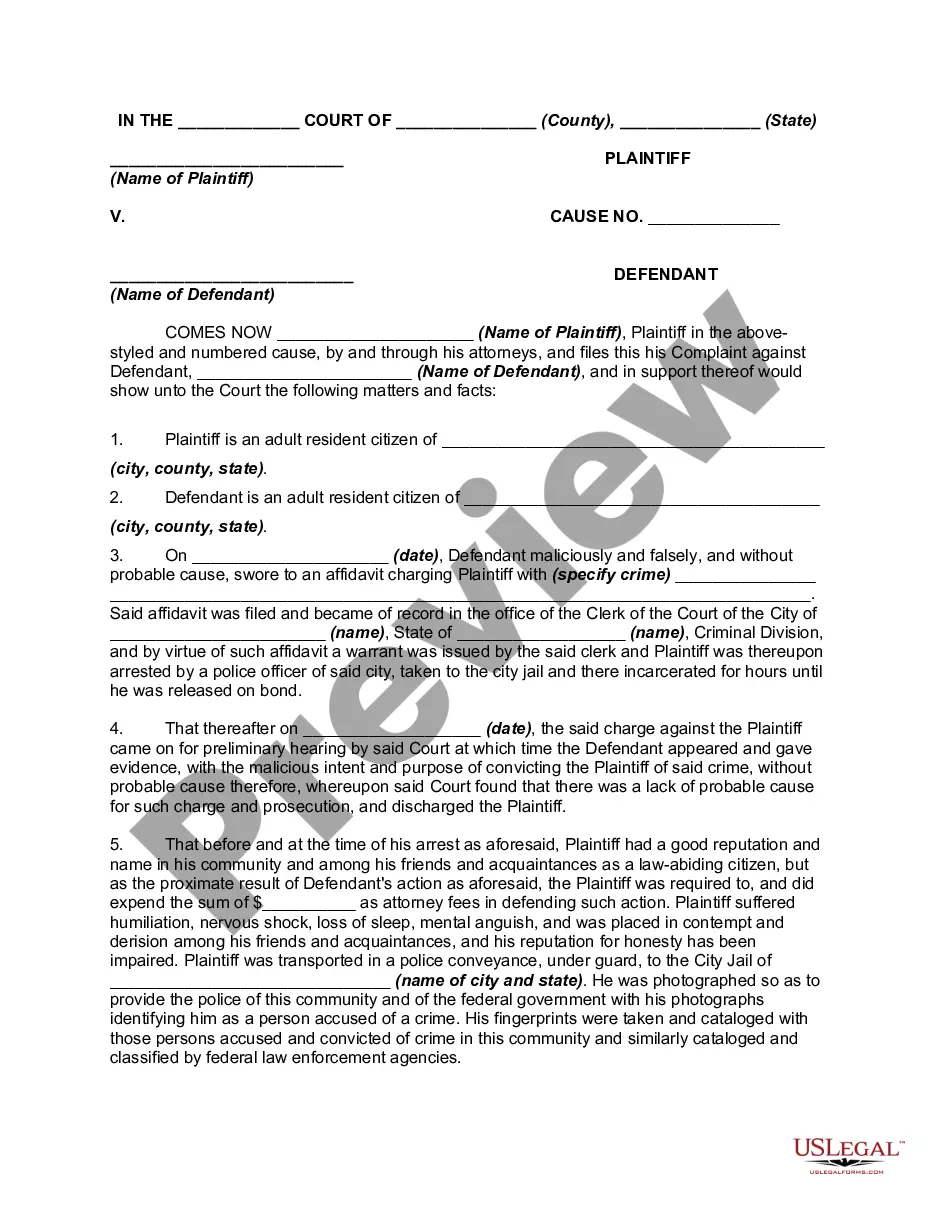
Omaha Nebraska Complaint for malicious prosecution
Description



Form popularity
FAQ
To prove malicious prosecution in Nebraska, several key factors must be established. You need to demonstrate that a legal action was initiated without probable cause, that it was conducted maliciously, and that the action concluded in your favor. Gathering evidence and understanding these elements is crucial, so using platforms like USLegalForms can help you compile the necessary documentation to support your Omaha Nebraska Complaint for malicious prosecution.
Nebraska law 75-362 pertains to various aspects of regulatory measures and enforcement related to the legal profession. This law aims to protect consumers while ensuring that legal practitioners adhere to the established standards of conduct. Familiarizing yourself with this law can be important if you are considering filing an Omaha Nebraska Complaint for malicious prosecution, as it outlines the framework within which legal actions should occur.
The Romeo and Juliet rule in Nebraska allows for certain legal protections for young individuals involved in mutually consensual sexual relationships. This rule addresses cases where one partner is slightly older than the age of consent. By understanding this rule, individuals can navigate potential legal situations more effectively, especially in relation to an Omaha Nebraska Complaint for malicious prosecution that may arise from misunderstandings in these cases.
To file a complaint against an attorney in Nebraska, you must submit your concerns to the Nebraska Supreme Court's Counsel for Discipline. This process requires you to provide detailed information about the attorney's misconduct. If your complaint involves malicious prosecution, referencing an Omaha Nebraska Complaint for malicious prosecution can clarify the situation and assist in your case.
The Nebraska Attorney General acts as the chief legal officer for the state, providing legal services and advice to state agencies. This office also represents the state in legal disputes and enforces state laws. If you need guidance regarding an Omaha Nebraska Complaint for malicious prosecution, the Attorney General's office may offer valuable resources.
The punishment for malicious prosecution in Nebraska primarily revolves around civil liability rather than criminal sanctions. Victims can seek compensation for damages incurred due to wrongful prosecution. Filing an Omaha Nebraska Complaint for malicious prosecution can bring attention to your situation, allowing you to pursue justice.
Malicious prosecution in Nebraska occurs when a person initiates a legal proceeding without probable cause, intending to harass or harm another person. In these cases, the victim may seek damages and file an Omaha Nebraska Complaint for malicious prosecution. It is essential to understand that proving malicious prosecution requires clear evidence of wrongful intent and lack of legal basis.
The district attorney for Douglas County, Nebraska, plays a crucial role in prosecuting criminal cases in the area. As of now, the current district attorney is Don Kleine. If you are facing legal issues related to an Omaha Nebraska Complaint for malicious prosecution, knowing the district attorney's office can be vital for your case.
The clean slate law in Nebraska allows individuals with certain criminal records to have those records sealed or removed under specific conditions. This law aims to help people reintegrate into society without the burden of past mistakes. If you are dealing with an Omaha Nebraska Complaint for malicious prosecution, understanding how this law can benefit you might empower your situation. Consider utilizing USLegalForms to navigate the process effectively.
Yes, you can sue for emotional distress in Nebraska under certain circumstances. Typically, this requires proving that the defendant's actions were intentional or reckless and caused significant emotional harm. If your situation involves an Omaha Nebraska Complaint for malicious prosecution, it may be wise to explore all legal avenues available to you. Consulting with legal experts through platforms like USLegalForms can guide you in pursuing a claim.
