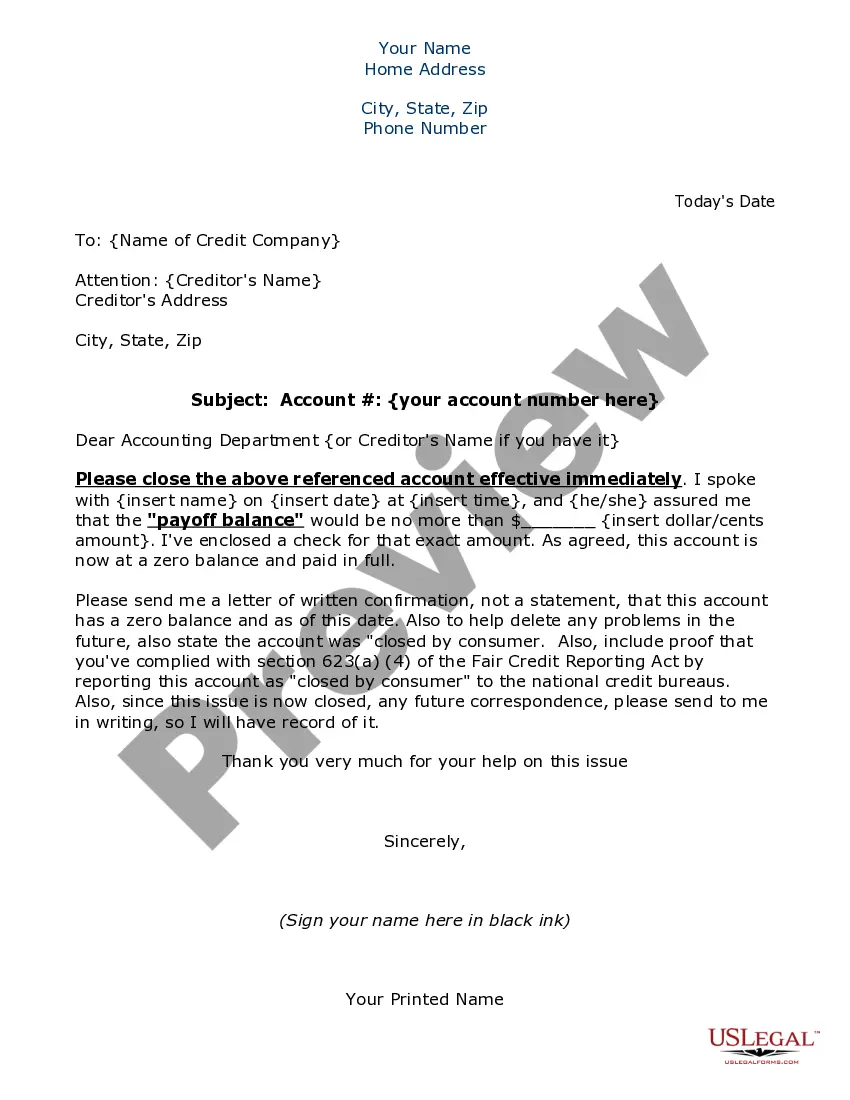
Memphis Tennessee Complaint for malicious prosecution
Description



Form popularity
FAQ
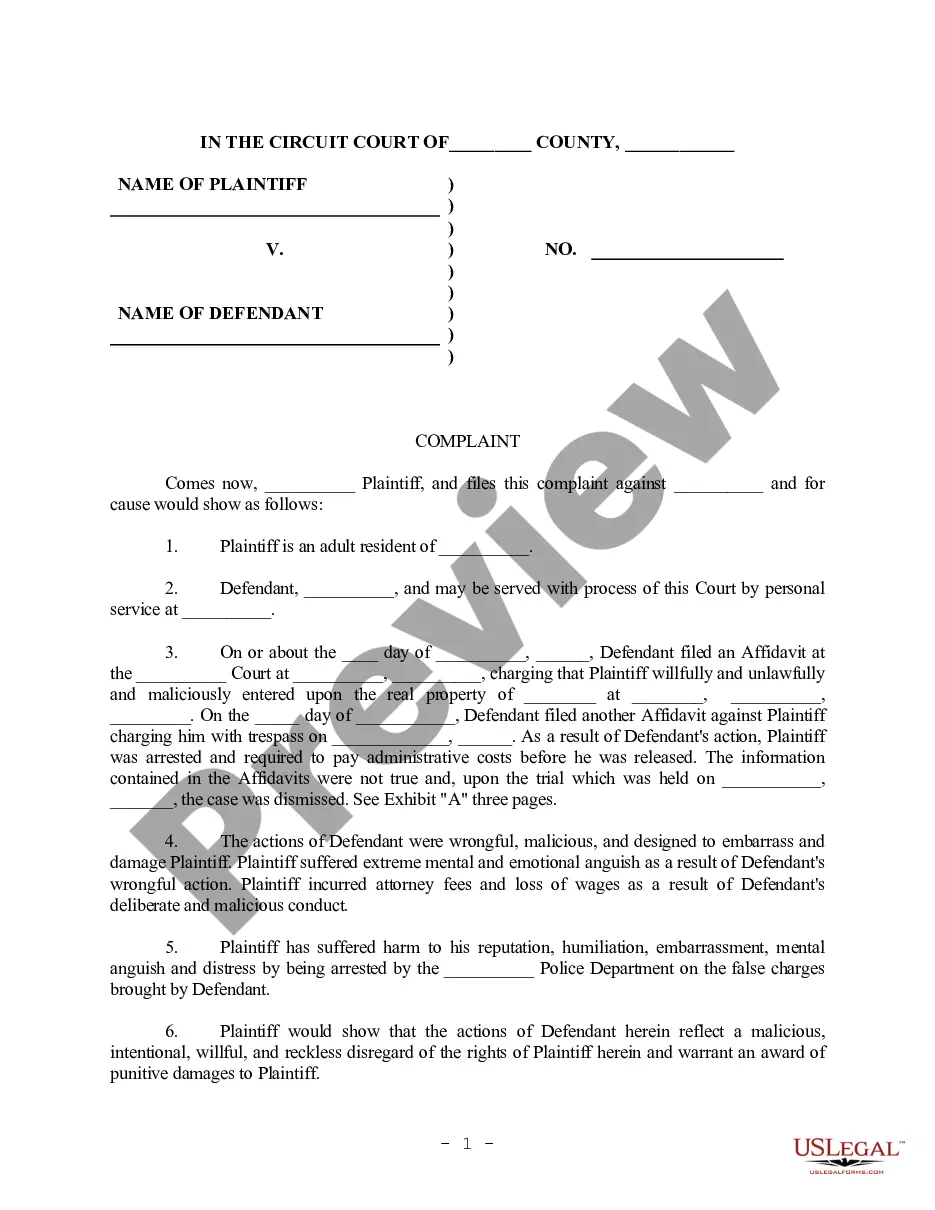
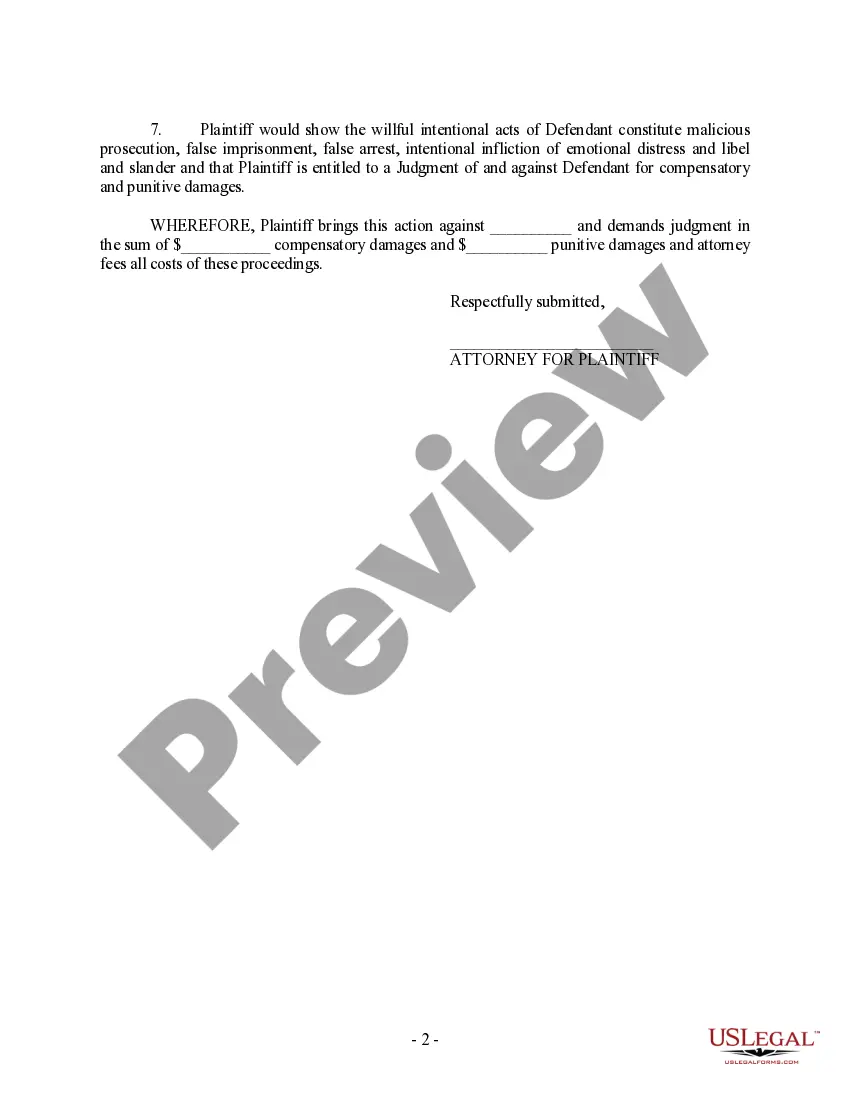
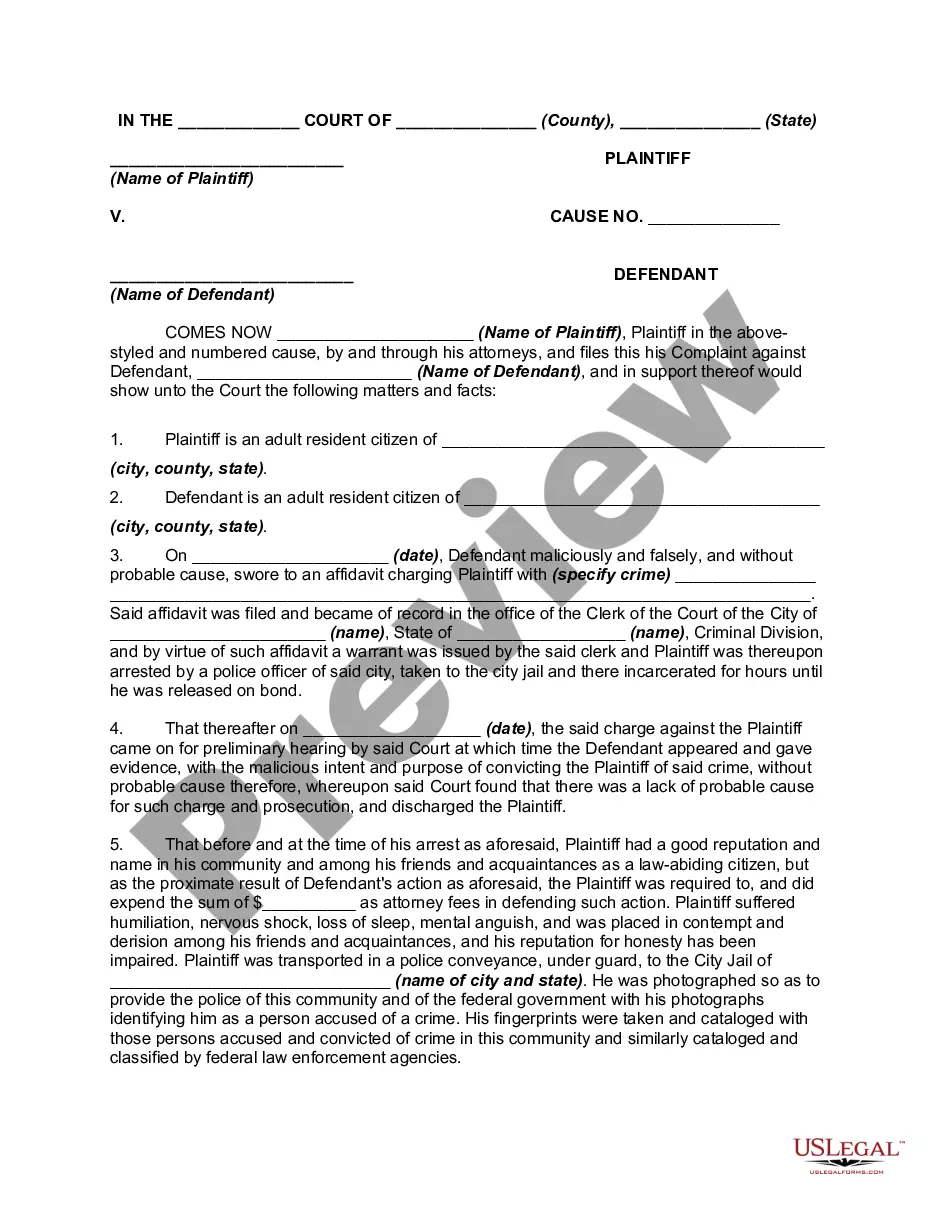
In Tennessee, the burden of proof in a malicious prosecution case lies with the plaintiff. You must provide sufficient evidence to establish all necessary elements of your claim. Crafting a well-supported Memphis Tennessee Complaint for malicious prosecution will strengthen your argument and meet the required threshold for proving your case.
Proving malicious intent can be challenging, as it requires evidence that the accused acted with a wrongful purpose. Typically, this involves demonstrating a lack of concern for legal rights or knowing the conduct was unjustifiable. When preparing your Memphis Tennessee Complaint for malicious prosecution, focusing on communication records or witness testimonies can enhance your case.
To prove malicious prosecution, you must clearly show that the initial case was initiated without probable cause, ended in your favor, and demonstrated the opposing party's malice. Additionally, documenting the harm or damages you experienced as a result of the malicious action is crucial. Utilizing resources on the uslegalforms platform can help you structure your Memphis Tennessee Complaint for malicious prosecution effectively.
Proving vindictive prosecution requires establishing that the prosecution was motivated by malice or retaliation. You need to gather evidence showing that the prosecutor’s actions were not based on a legitimate reason but rather were punitive in nature. When you present your Memphis Tennessee Complaint for malicious prosecution, it's essential to highlight any relevant patterns or motivations that suggest vindictiveness.
To succeed in a malicious prosecution claim in Tennessee, you must demonstrate four key elements. First, there must be a prior legal proceeding initiated without probable cause. Second, that proceeding must have concluded in your favor. Third, you need to show malice from the opposing party. Lastly, demonstrate that you suffered damages due to the unfounded prosecution when filing your Memphis Tennessee Complaint for malicious prosecution.
In Tennessee, the amount you can sue for malicious prosecution varies based on your specific case details. Typically, it includes compensation for damages like emotional distress, lost income, or legal fees incurred. When filing a Memphis Tennessee Complaint for malicious prosecution, you should consult with an attorney to evaluate the potential damages based on your situation.
Dealing with malicious prosecution begins with understanding your rights. You should gather all relevant information and documents related to your case. Filing a Memphis Tennessee Complaint for malicious prosecution can help you seek justice and obtain compensation for damages. It may also be beneficial to consult with a legal expert who can guide you through the process and provide the necessary support.
Judicial misconduct can significantly impact cases, including a Memphis Tennessee Complaint for malicious prosecution. Four common types include bias, where a judge shows favoritism; failing to follow legal procedures; making decisions based on personal interests; and engaging in ex parte communications, where the judge communicates with one party without the other present. Understanding these forms of misconduct can help you articulate your grievances more effectively.
To file a Memphis Tennessee Complaint for malicious prosecution, you need to gather specific pieces of evidence. Start with documents that show the original case was not based on legitimate claims. Additionally, collect any evidence that demonstrates your innocence or that the lawsuit was filed without probable cause. Witness statements or expert testimonies can also strengthen your claim.