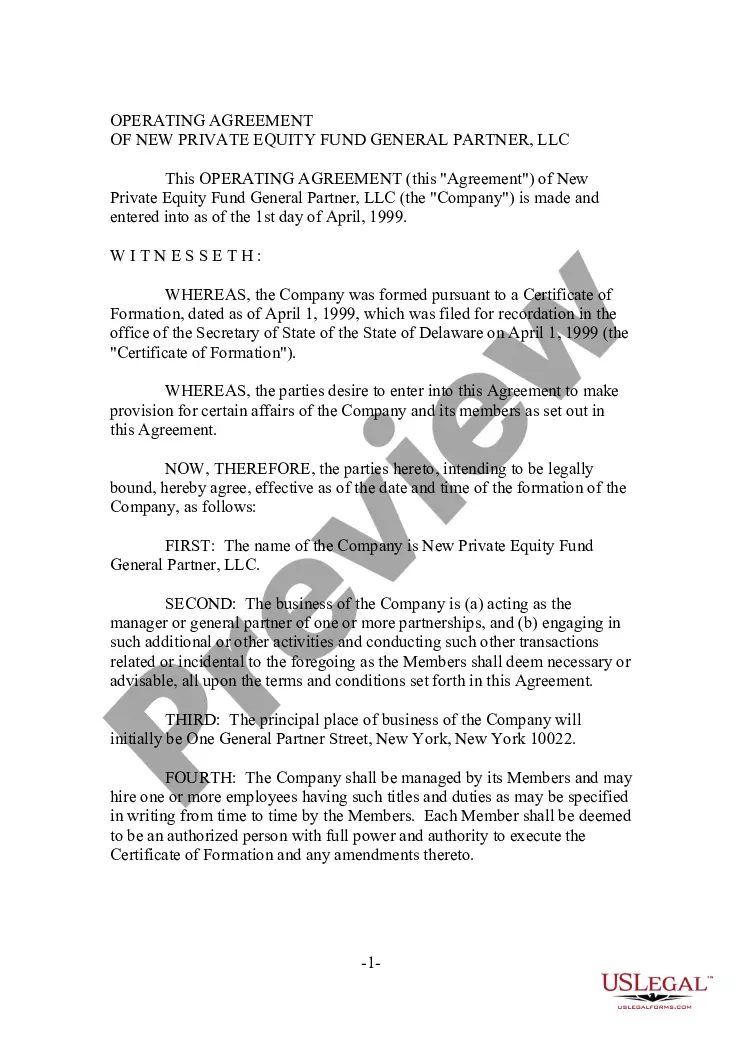
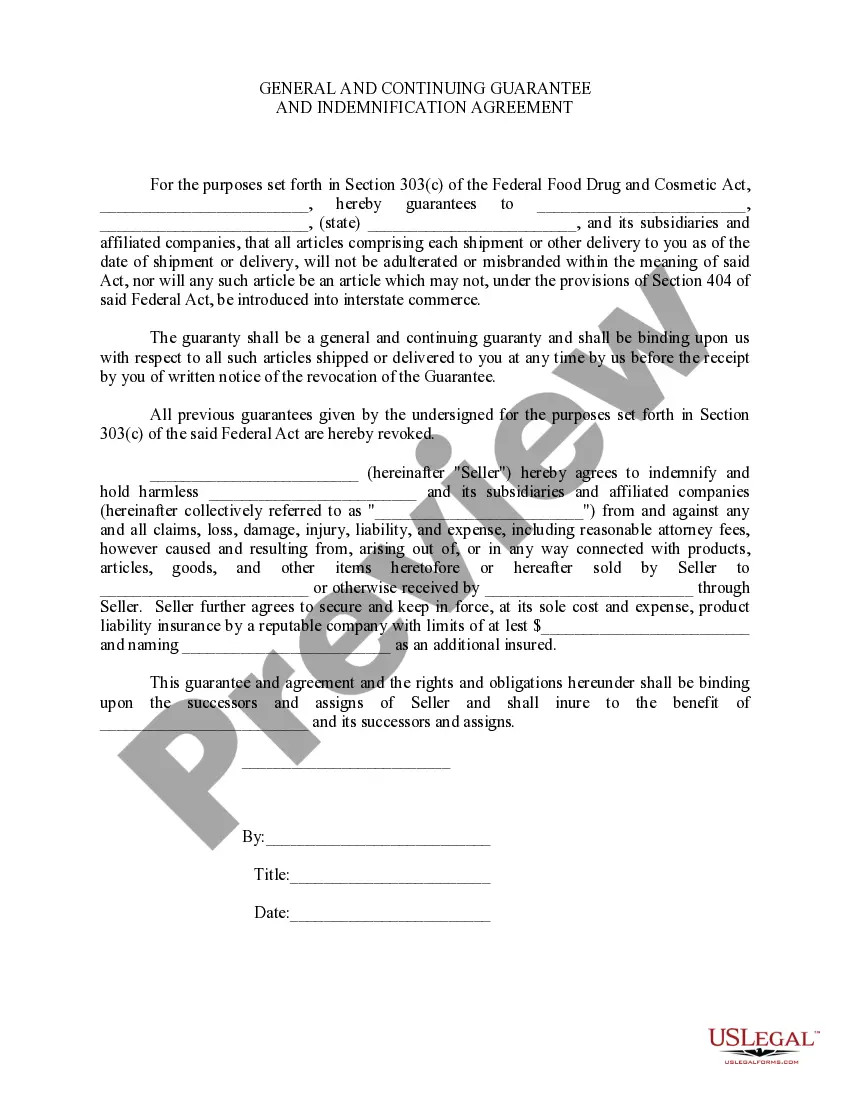
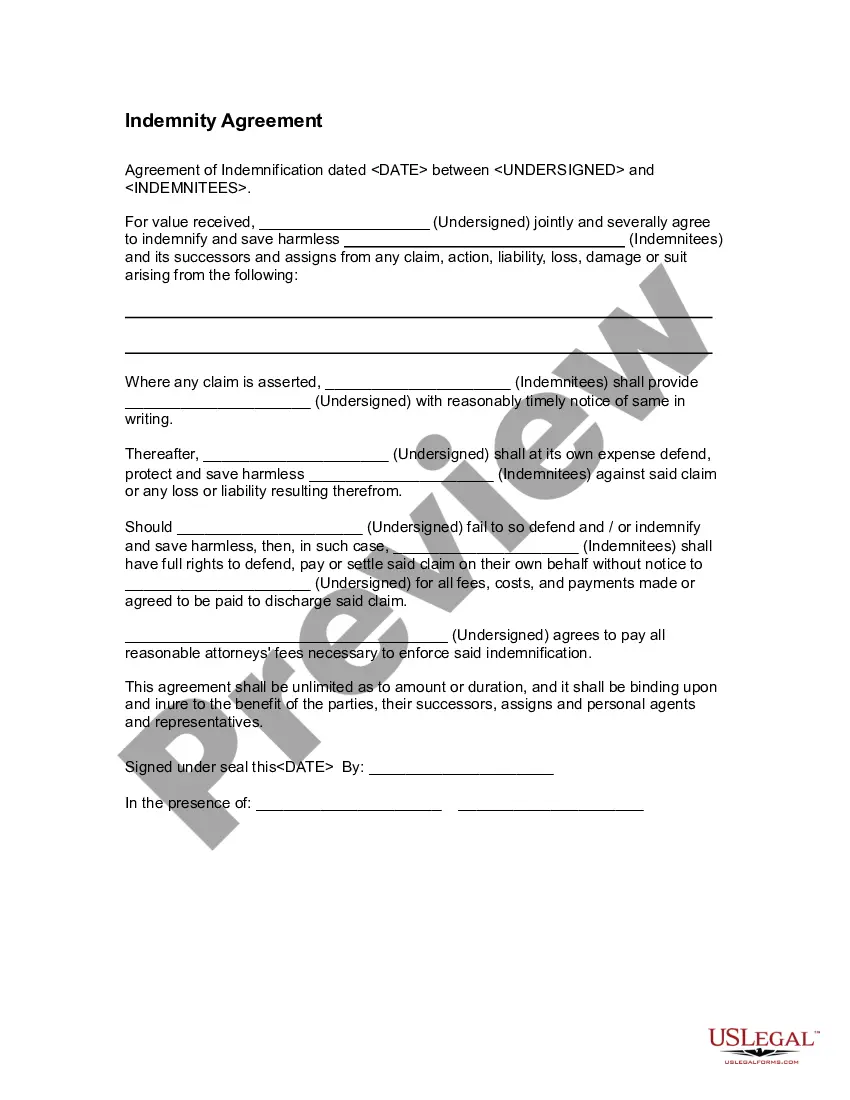
This form states that the guaranty shall be a general and continuing guaranty and shall be binding with respect to all such articles shipped or delivered at any time before the receipt of written notice of the revocation of the guarantee.
Austin Texas General and Continuing Guaranty and Indemnification Agreement
Category:
State:
Multi-State
City:
Austin
Control #:
US-01617
Format:
Word;
Rich Text
Instant download
Description
Form popularity
FAQ
A guarantor clause typically specifies the conditions under which a guarantor will be held responsible. For instance, an Austin Texas General and Continuing Guaranty and Indemnification Agreement may include a clause stating that the guarantor is liable for all obligations of the principal, regardless of insolvency. This clause is crucial as it provides lenders or service providers with assurance that they can rely on the guarantor for consistency in payments and obligations.
Continuing guarantees often include agreements where a guarantor agrees to cover a borrower’s obligations over an extended period. For example, a landlord might require a continuing guarantee from a parent to ensure rent payments for a student leasing an apartment. In the context of an Austin Texas General and Continuing Guaranty and Indemnification Agreement, this ensures consistent support for financial commitments, safeguarding the interests of the lender or landlord.
An Austin Texas General and Continuing Guaranty and Indemnification Agreement serves as a powerful tool to protect lenders and businesses. This legal document outlines the obligations of a guarantor to fulfill the borrower's financial responsibilities. By signing this agreement, the guarantor agrees to cover any debts or defaults that may arise, ensuring financial security for both parties. Understanding this agreement can help individuals navigate complex financial arrangements and safeguard their interests.
A continuing guarantee in a contract refers to an assurance made by a guarantor that remains valid for multiple transactions or obligations without needing renewal. In the context of an Austin Texas General and Continuing Guaranty and Indemnification Agreement, it allows the creditor to rely on the guarantor for future transactions, creating a consistent assurance of fulfillment. This arrangement supports smoother business dealings and strengthens relationships by fostering trust between the parties involved.
A continuing guaranty agreement is a financial contract that remains in effect until canceled by the guarantor or fulfilled by the primary party. This type of agreement, particularly the Austin Texas General and Continuing Guaranty and Indemnification Agreement, ensures that responsibilities are upheld over time, providing ongoing security for creditors. It typically outlines the specific terms under which the guarantor will be liable, ensuring all parties understand their commitments.
A continuing letter of guarantee is a binding document that assures a creditor of payment or performance from a guarantor. In the context of an Austin Texas General and Continuing Guaranty and Indemnification Agreement, it safeguards the creditor's interests by continuing to hold the guarantor accountable until all obligations are fulfilled. This kind of agreement offers a layer of security in lending or contractual situations, ensuring that financial responsibilities are met.
Enforcing a guarantee or indemnity involves confirming that the conditions outlined in the Austin Texas General and Continuing Guaranty and Indemnification Agreement have been met. If the primary party defaults, you may initiate legal action against the guarantor. Collecting all relevant documentation, including the agreement itself, will support your case. Consulting a legal expert can provide guidance on the specific steps to take in your jurisdiction.
To enforce a guaranty, first ensure the agreement is valid and properly executed. You may need to provide evidence that the primary obligation was not fulfilled, which typically involves reviewing the terms of the Austin Texas General and Continuing Guaranty and Indemnification Agreement. Next, you can contact an attorney to explore legal avenues such as filing a claim in court. Having a clear record of communication and obligations helps streamline this process.