Seattle Washington Petition for Forfeiture
Description







Form popularity
FAQ
Tuition forfeiture at the University of Washington refers to the policy where students may lose a portion of their prepaid tuition if they withdraw from classes after a designated date. This aspect is crucial to consider if you are thinking about a Seattle Washington Petition for Forfeiture. Being aware of the forfeiture policy can help you make informed decisions about your enrollment. For more guidance, platforms like uslegalforms can provide detailed insights and resources.
The tuition exemption program at the University of Washington helps eligible students reduce their tuition costs. This program supports those who are pursuing a full course load and meeting specific criteria. If you're considering a Seattle Washington Petition for Forfeiture, understanding tuition exemptions can be valuable. It may impact your financial planning as you navigate your educational journey.
Forfeiture cases can be classified into three main types: administrative, civil, and criminal forfeiture. Administrative forfeiture allows governmental agencies to seize property without court involvement, often used in minor cases. Civil forfeiture involves court proceedings initiated by the government, while criminal forfeiture occurs as part of a criminal conviction. A thorough understanding of these types is essential when exploring options for a Seattle Washington Petition for Forfeiture.
Forfeiture proceedings generally fall into two categories: civil and criminal. In civil forfeiture, the government seeks to reclaim property connected to illegal activity without necessarily charging the owner with a crime. Conversely, criminal forfeiture requires the owner to be convicted of a crime connected to the property. Understanding these distinctions is crucial when considering filing a Seattle Washington Petition for Forfeiture.
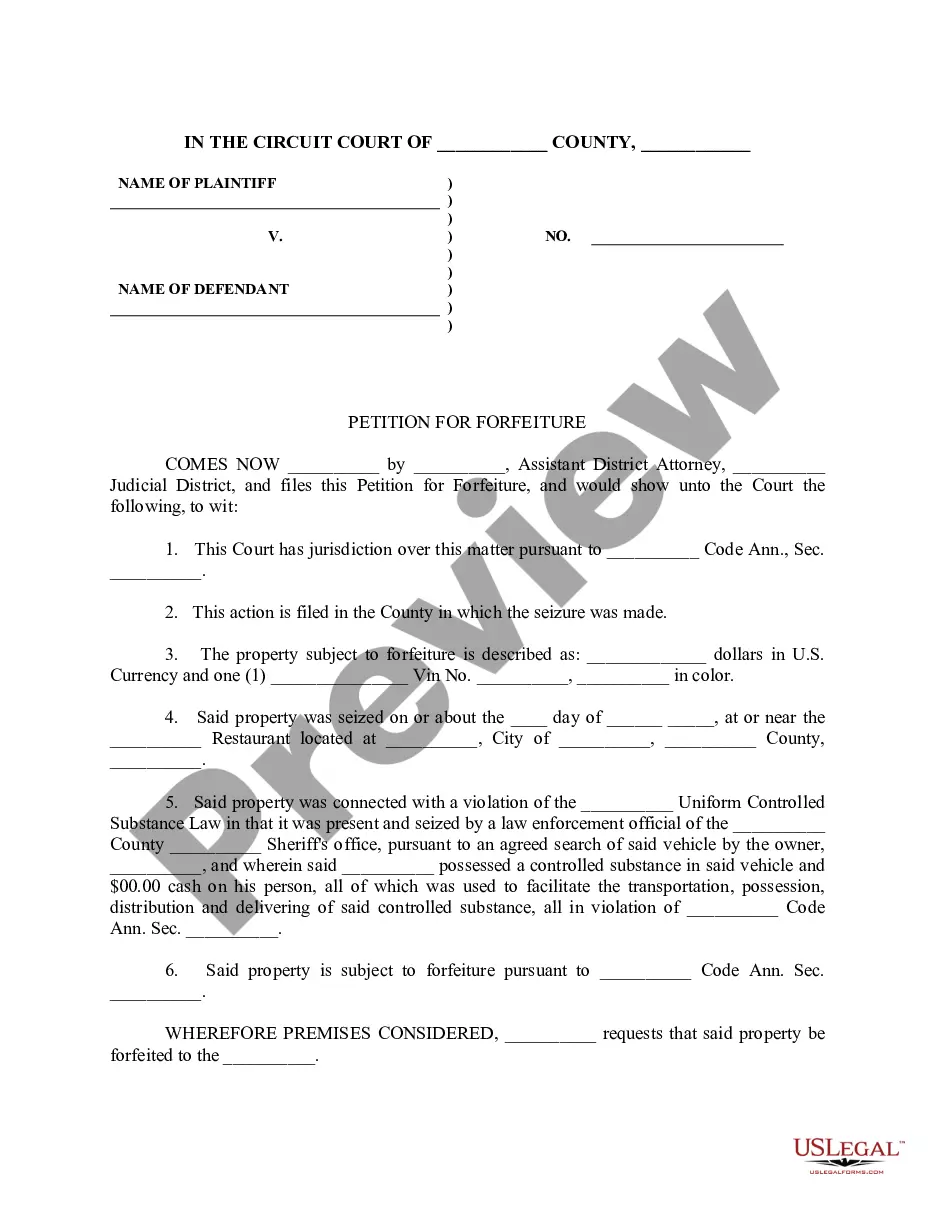
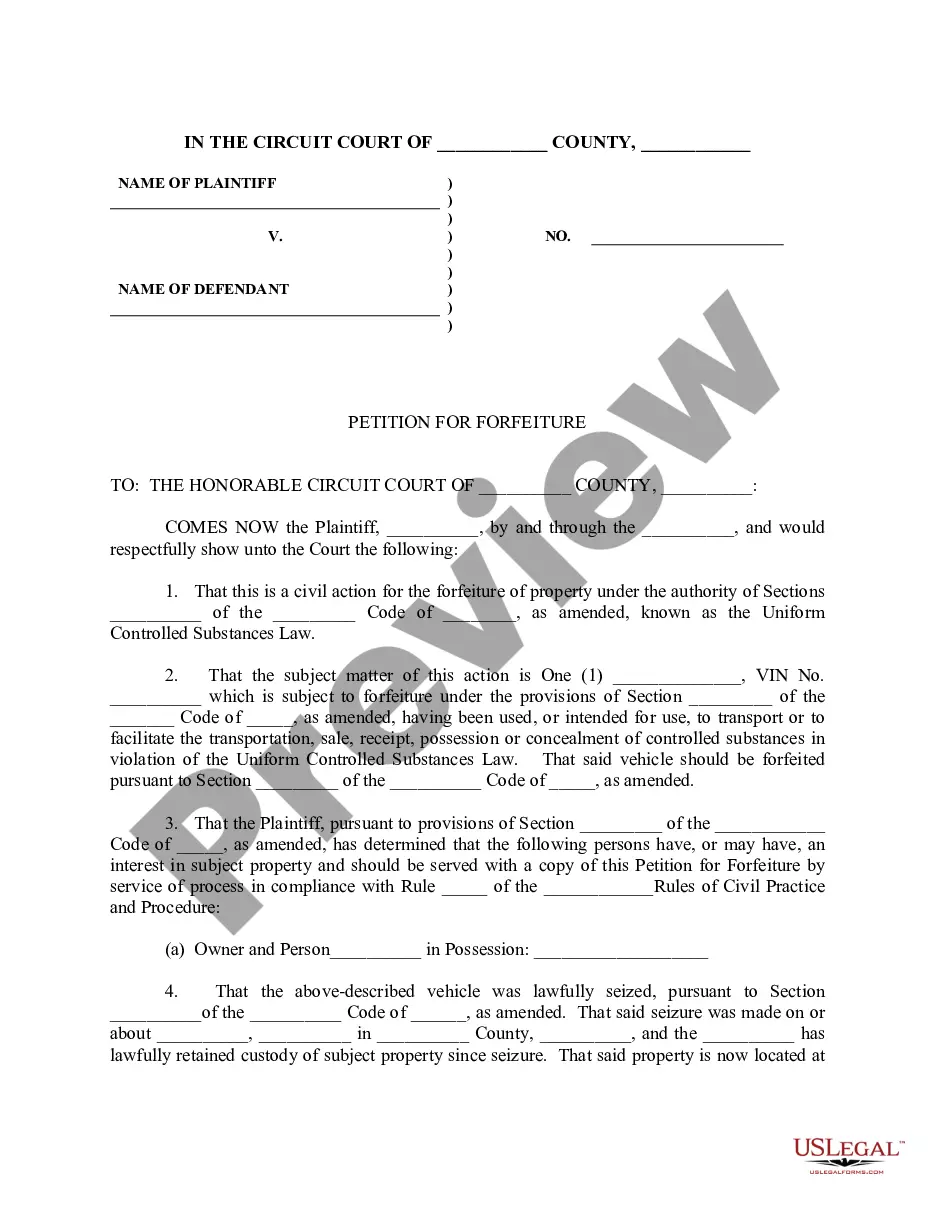
In Seattle, Washington, any individual or entity with a legal interest in the property can file a Petition for Forfeiture. This includes property owners, lienholders, or even individuals who believe they have a rightful claim. The process typically involves submitting a formal petition to the court, detailing the reasons for the claim. Utilizing platforms like US Legal Forms can simplify this process by providing the necessary forms and guidance.
As of now, civil forfeiture is not entirely illegal in any state, but there are varying levels of restrictions. Some states have implemented stricter laws to limit the use of civil forfeiture. It's crucial to stay informed about your state's regulations and consider a Seattle Washington Petition for Forfeiture if you encounter related issues. Being proactive can help you address potential legal challenges effectively.
Civil asset forfeiture in Washington State involves the government seizing assets without necessarily charging the owner with a crime. This means that properties may be taken if they are thought to be linked to illegal activities. If you are affected by such a situation, a Seattle Washington Petition for Forfeiture may offer a pathway to recover your property. Taking the right steps can help ensure your rights are protected.
Tuition forfeiture at UW Seattle refers to the loss of tuition fees when a student withdraws from courses after a certain deadline. This policy can lead to significant financial losses if not understood correctly. If you are facing tuition issues, consider seeking help through a Seattle Washington Petition for Forfeiture for clarity. It's essential to be informed about your financial obligations regarding education.
Yes, civil forfeiture is legal in Washington state. It allows law enforcement to seize assets believed to be connected to criminal activity. However, individuals can challenge these seizures by filing a Seattle Washington Petition for Forfeiture. Understanding your rights in these situations is vital.