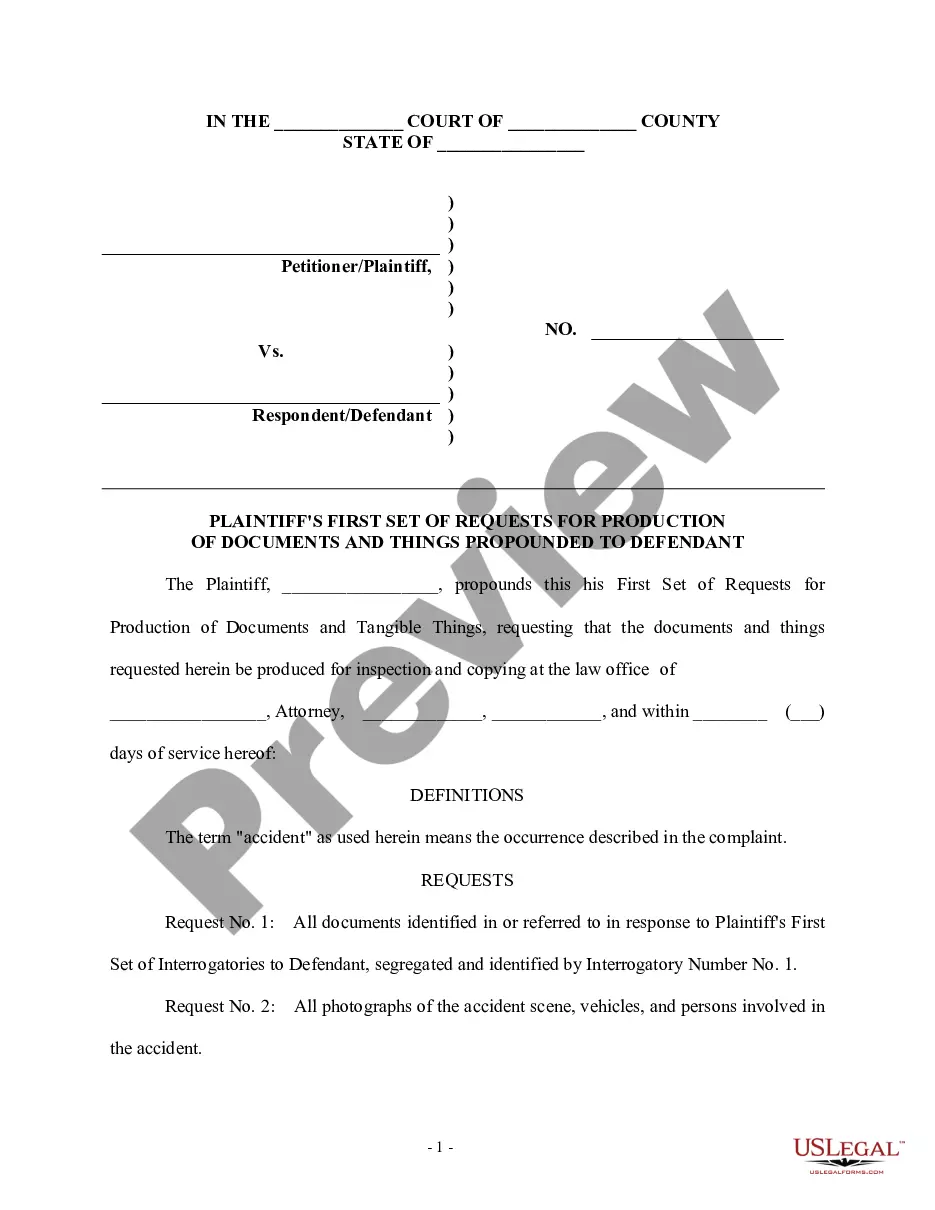
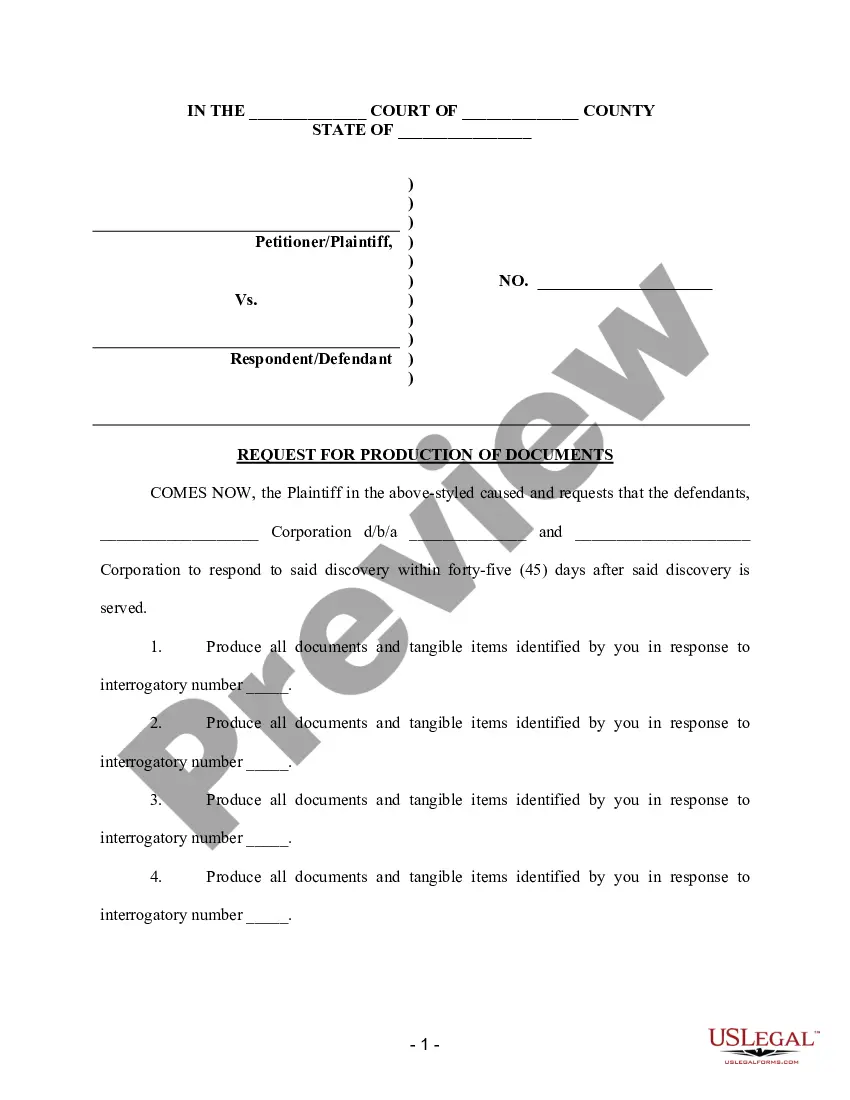
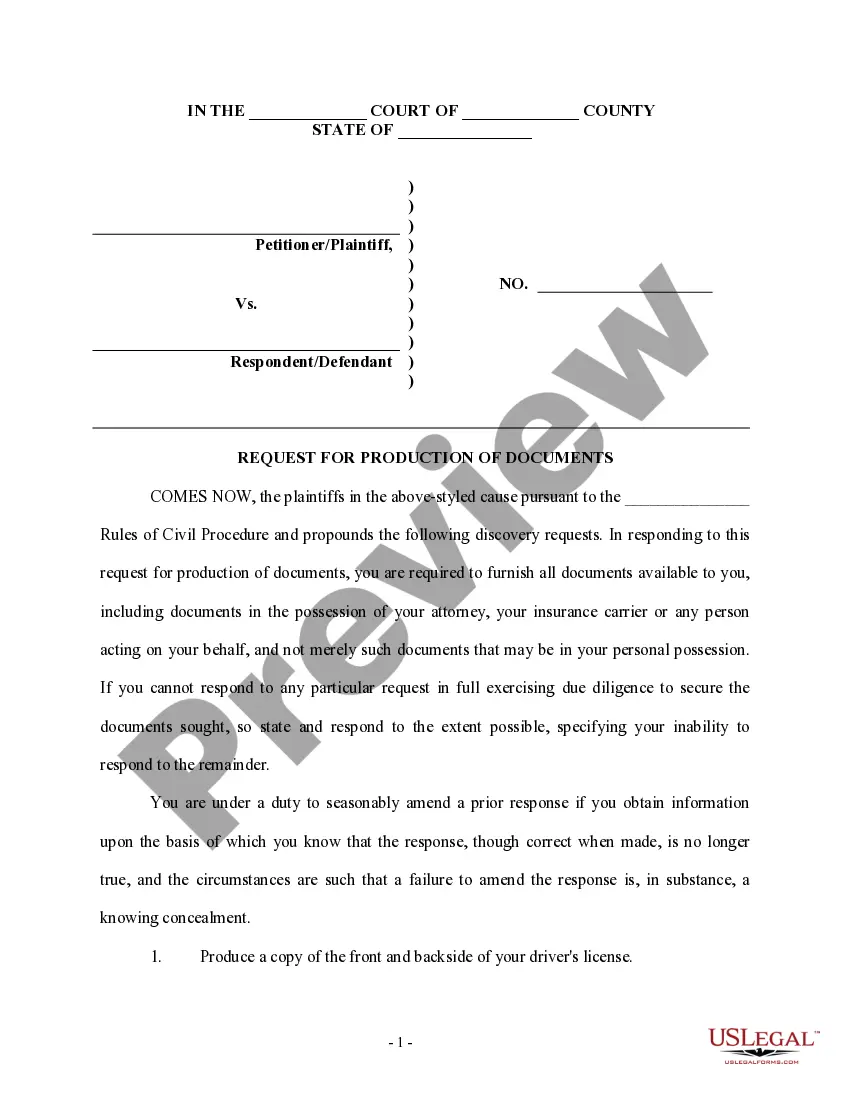
Raleigh North Carolina Requests for Production of Documents and Things
Description



Form popularity
FAQ
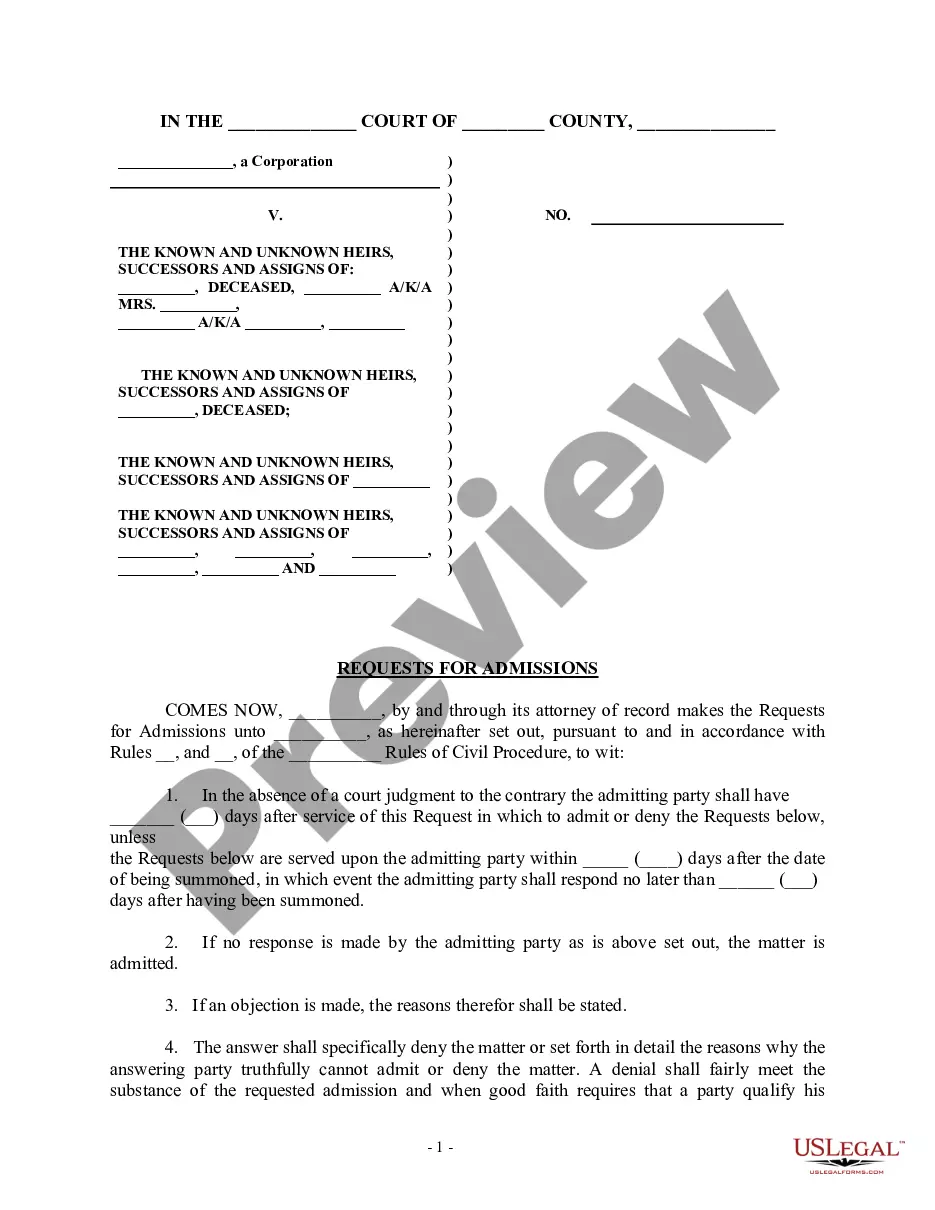
When drafting a Request for Production of documents, consider asking for documents that are critical to your case, such as contracts, emails, financial records, or meeting notes. Clearly specify the types of documents and the time frame you need to create a focused request. Crafting precise requests will aid in gathering the necessary evidence for your Raleigh North Carolina case.
When responding to a request for information, begin by reviewing the specifics of the request. Provide accurate, clear, and detailed information that directly addresses the queries. It is also wise to seek assistance if you feel overwhelmed, and platforms like US Legal Forms can help streamline your responses.
A party requested to produce documents in Raleigh, North Carolina, must respond in writing. The response should state whether the requested documents will be produced, and if not, provide clear objection reasons. Timeliness in your response is crucial to comply with the legal process and ensure efficient litigation.
No, you do not have to answer all discovery questions, including Requests for Production of documents, if they are irrelevant or privileged. However, it is essential to understand the scope of the request and respond to the appropriate inquiries. If you're unsure, consulting a lawyer can guide you through the process and help protect your rights.
Rule 37 of the NC Rules of Civil Procedure refers to failures to make disclosures or cooperate in discovery, including Requests for Production of documents. This rule outlines potential sanctions for non-compliance, emphasizing the importance of adhering to discovery obligations. Understanding Rule 37 helps ensure you respond appropriately to Requests for Production of documents in Raleigh, North Carolina.
An example response to a Request for Production of documents may include a statement acknowledging the request, followed by a list of documents you are producing. For instance, you could say, 'In response to your request, I am providing the following documents: contract copies, invoices, and correspondence dated from January to March 2023.' Clarity and organization are key to an effective response.
To answer a Request for Production of documents in Raleigh North Carolina, you should carefully review the request. Identify which documents are within your possession or control, and ensure you provide the requested documents in a timely manner. Remember to object to any requests that are overly broad or irrelevant, and consider seeking legal advice if needed.
Examples of production of documents include financial records, correspondence between parties, maintenance logs, and any other materials that provide insights into the case. These items are often essential in establishing facts and supporting arguments in the courtroom. In the context of Raleigh North Carolina Requests for Production of Documents and Things, identifying and requesting these examples can aid in developing a robust case. Our platform at uslegalforms streamlines the process, making it easier for you to create effective requests.
The Rule 34 process outlines the procedure for making requests for production of documents in civil litigation. It allows a party to obtain documents that are relevant to the case from the opposing party. Understanding this process is crucial when working with Raleigh North Carolina Requests for Production of Documents and Things, as it helps you align your requests with legal standards. Proper application of Rule 34 can lead to a smoother discovery process and better case outcomes.
When drafting a request for production, consider asking for all relevant documents that support your case. This includes emails, contracts, photos, or any other tangible evidence that pertains to the facts of your dispute. By specifying what you need, you ensure clarity and relevance in the Raleigh North Carolina Requests for Production of Documents and Things. Utilizing a well-structured request can significantly enhance your legal strategy.