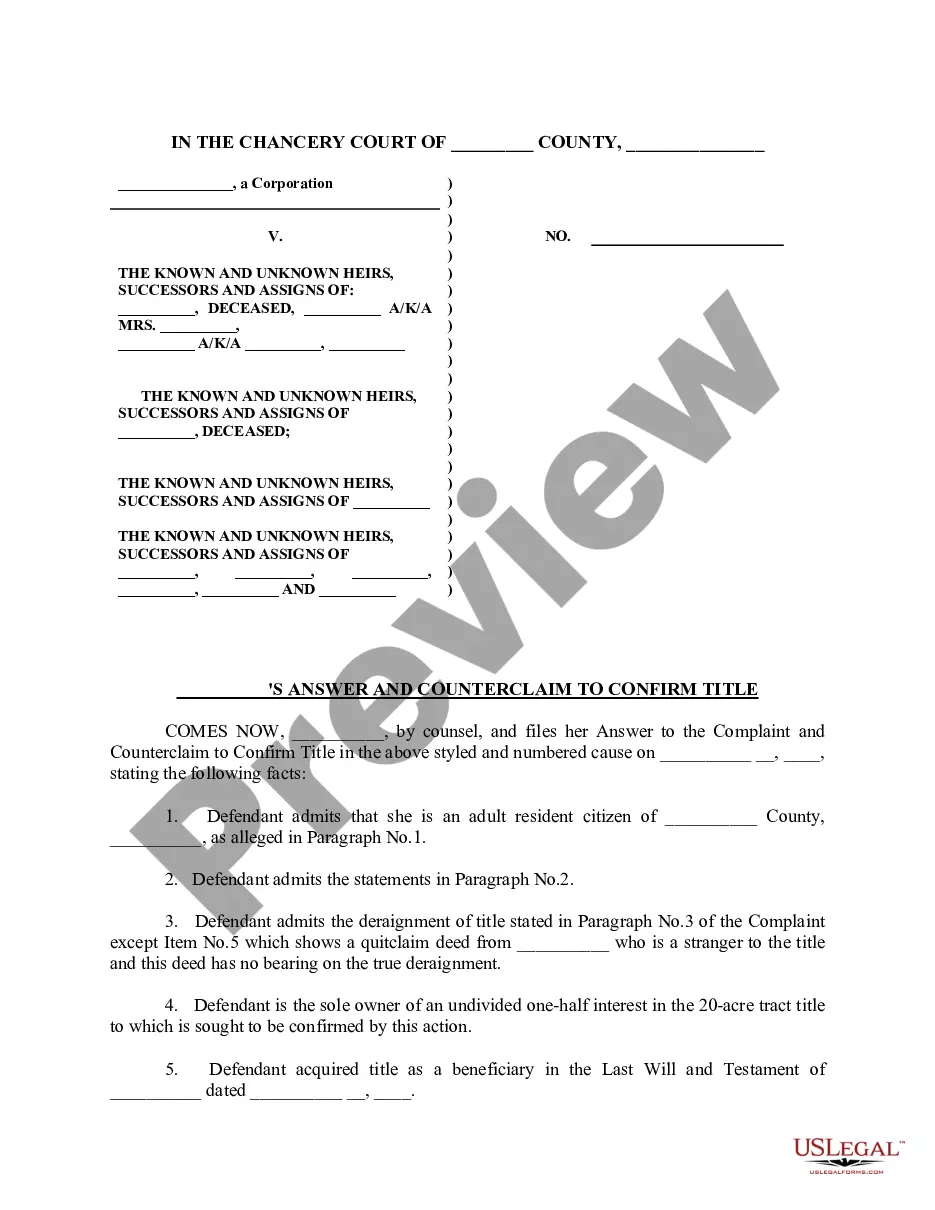
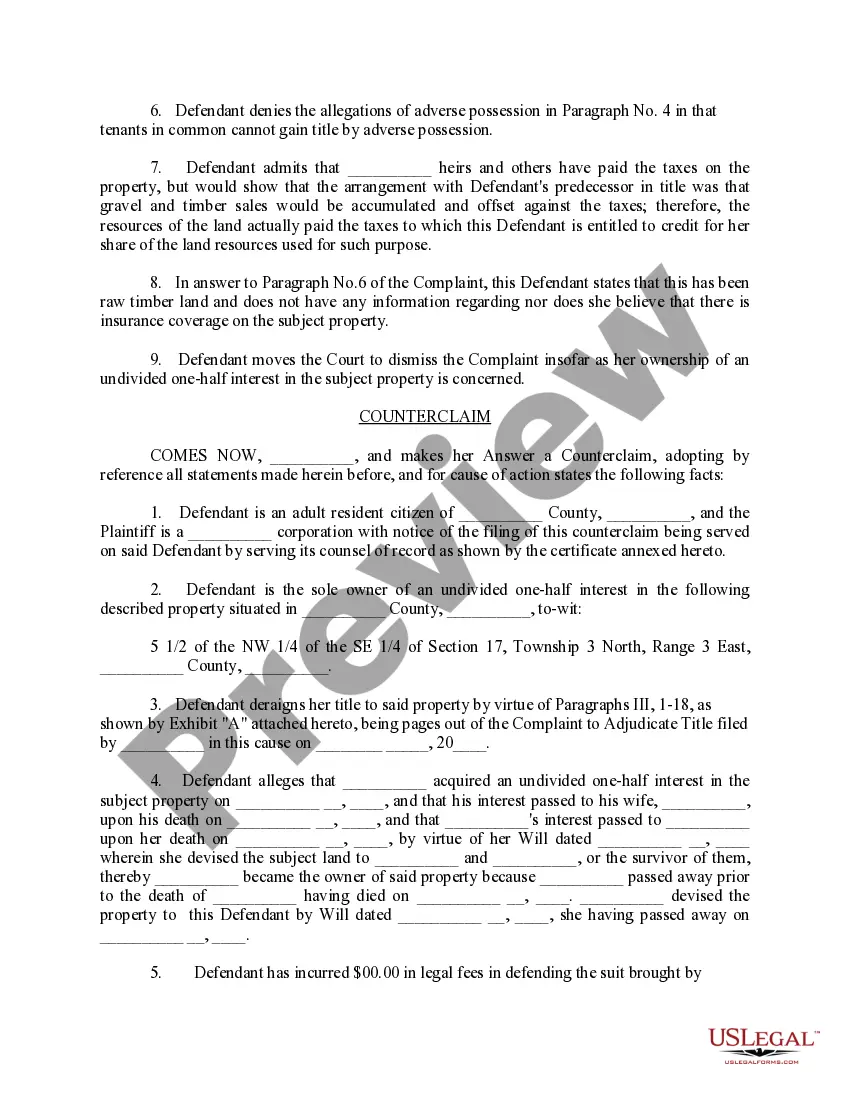
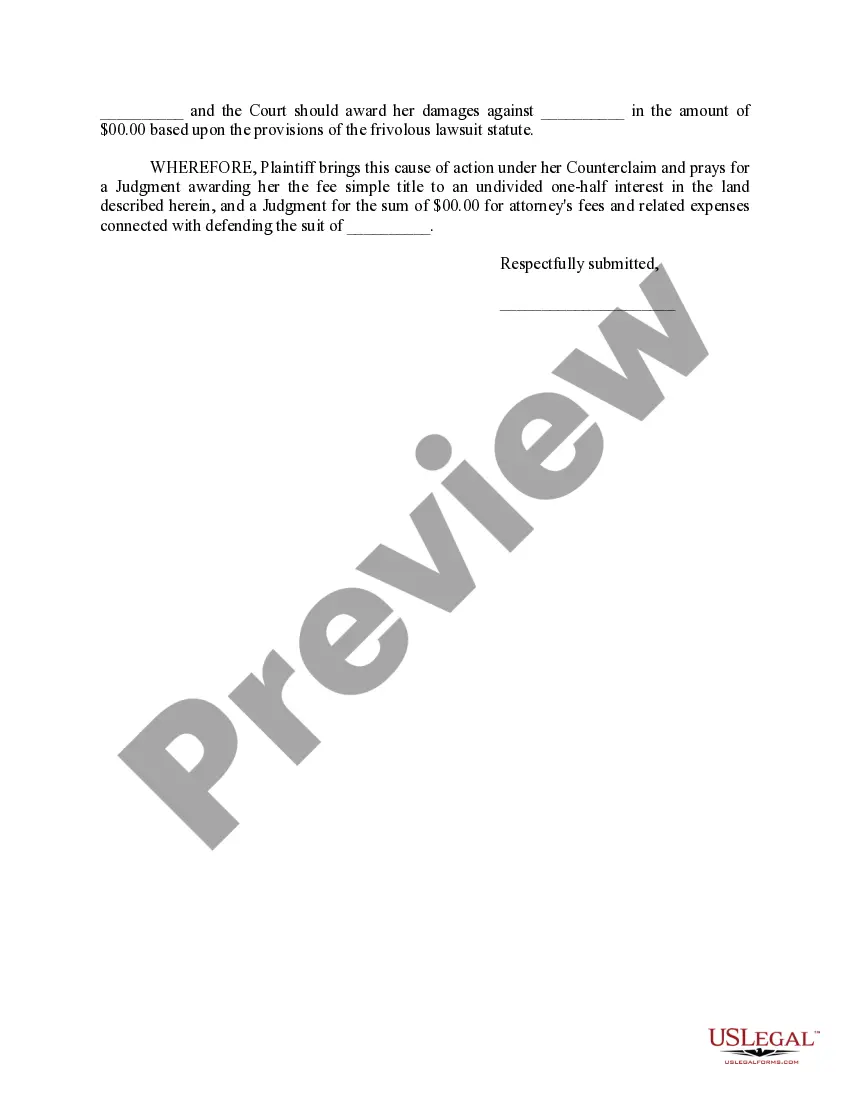
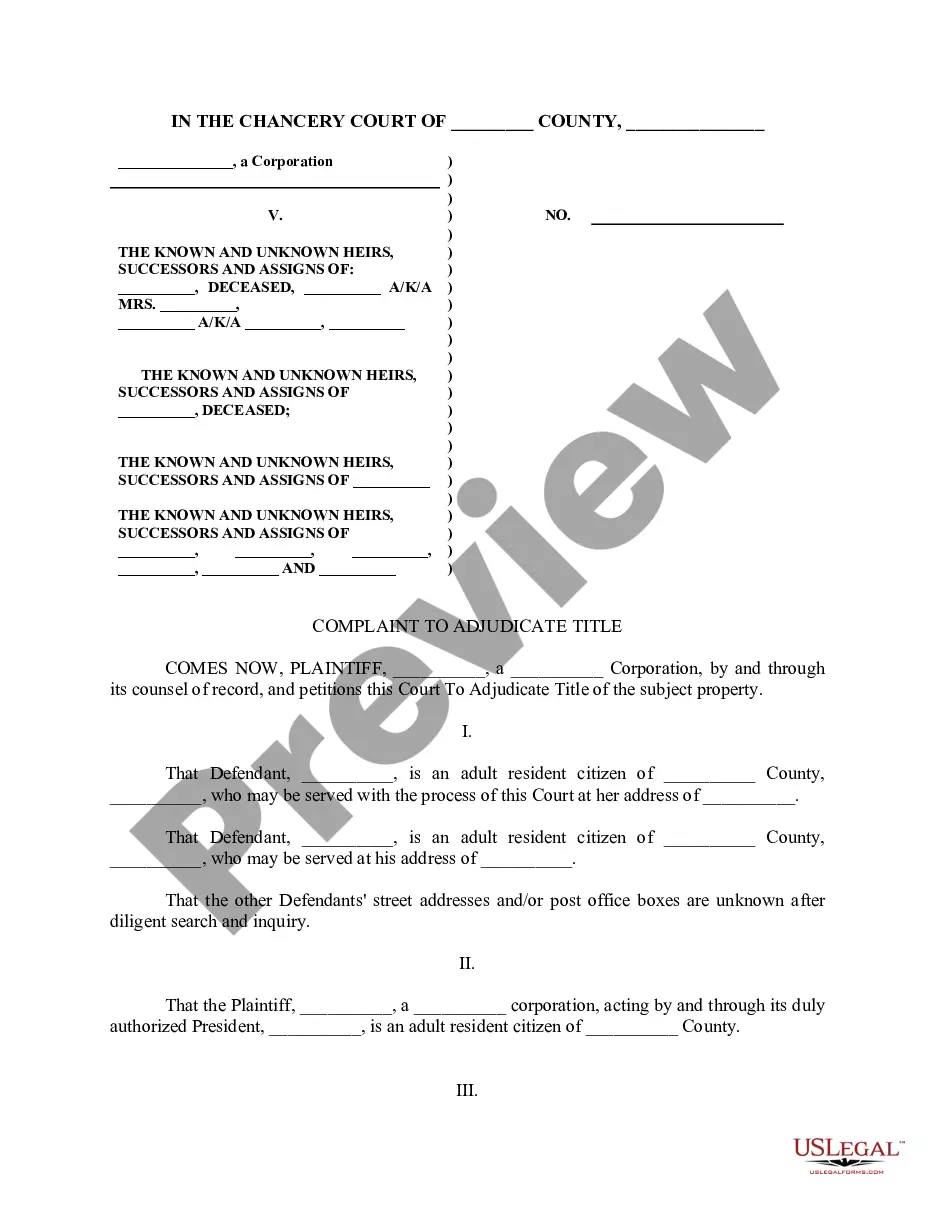
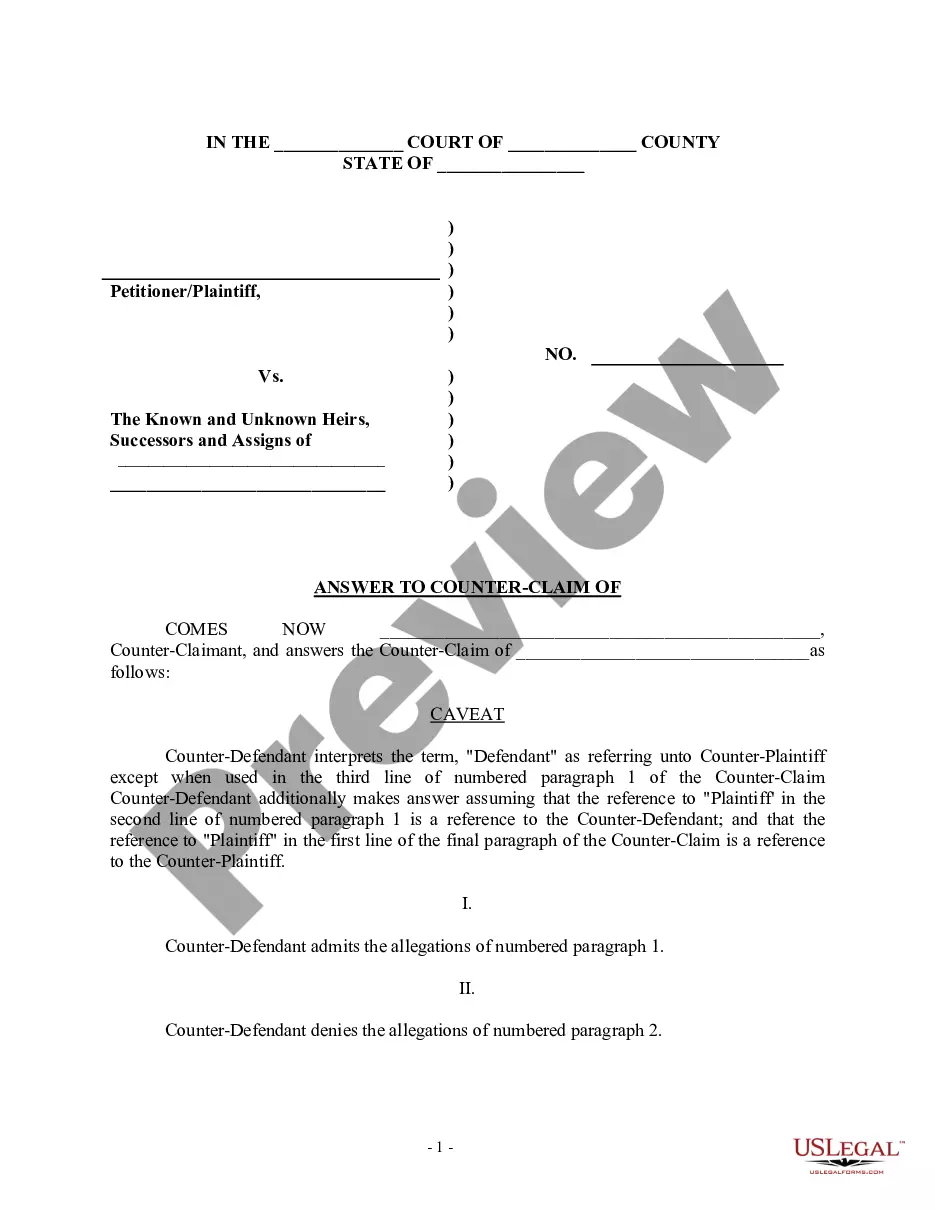
Dallas Texas Answer and Counterclaim to Confirm Title
Description
Get your form ready online
Our built-in tools help you complete, sign, share, and store your documents in one place.
Make edits, fill in missing information, and update formatting in US Legal Forms—just like you would in MS Word.
Download a copy, print it, send it by email, or mail it via USPS—whatever works best for your next step.
Sign and collect signatures with our SignNow integration. Send to multiple recipients, set reminders, and more. Go Premium to unlock E-Sign.
If this form requires notarization, complete it online through a secure video call—no need to meet a notary in person or wait for an appointment.
We protect your documents and personal data by following strict security and privacy standards.

Make edits, fill in missing information, and update formatting in US Legal Forms—just like you would in MS Word.

Download a copy, print it, send it by email, or mail it via USPS—whatever works best for your next step.

Sign and collect signatures with our SignNow integration. Send to multiple recipients, set reminders, and more. Go Premium to unlock E-Sign.

If this form requires notarization, complete it online through a secure video call—no need to meet a notary in person or wait for an appointment.

We protect your documents and personal data by following strict security and privacy standards.
Looking for another form?
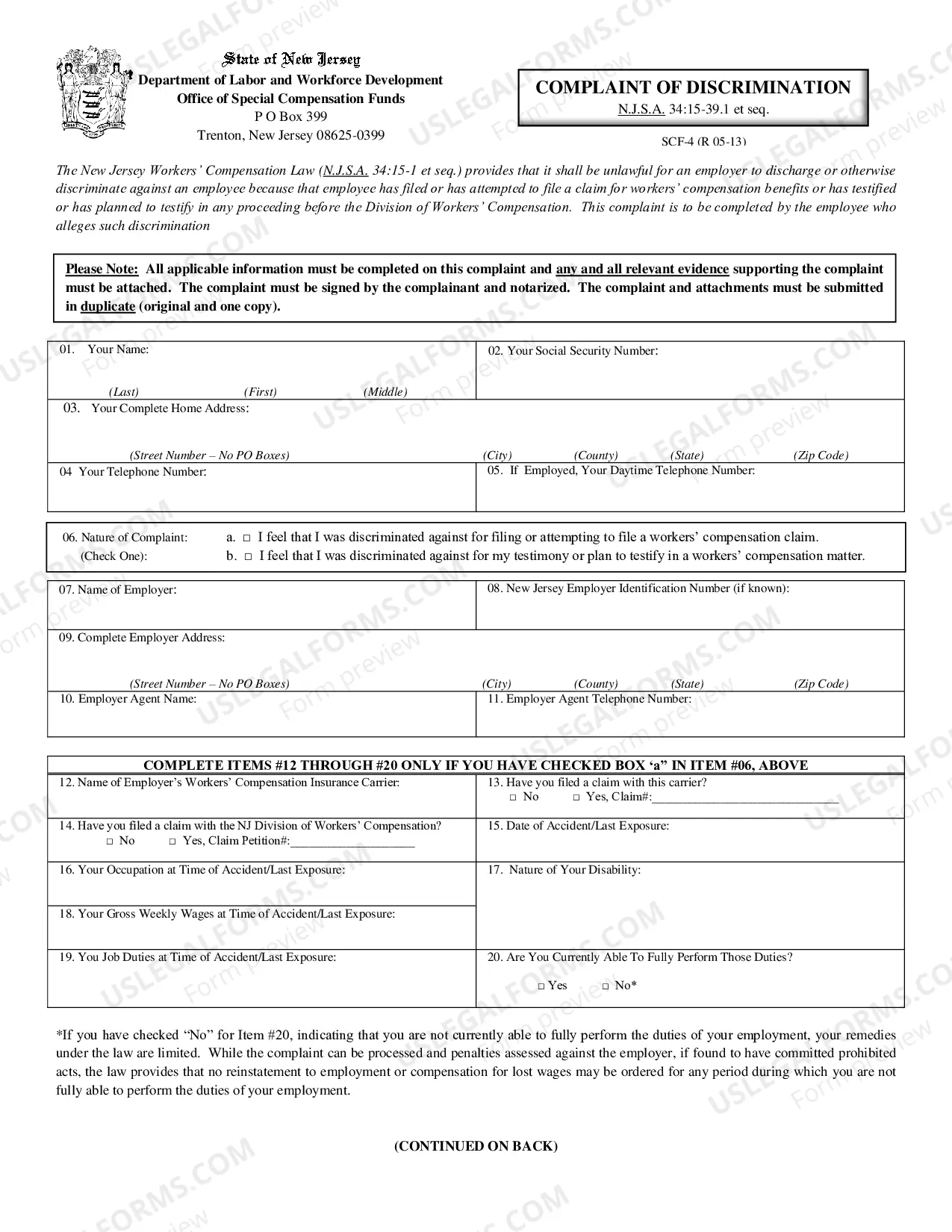
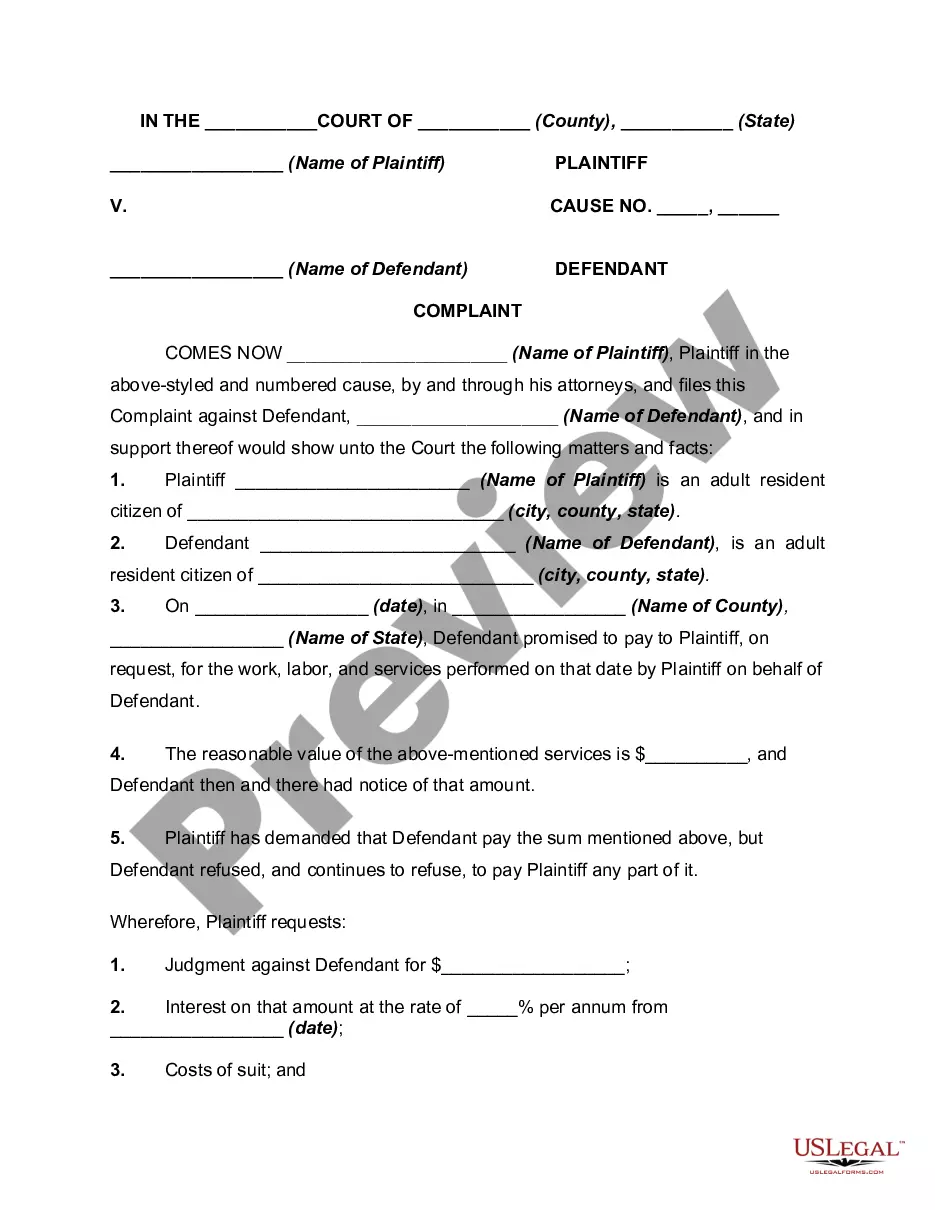
How to fill out Answer And Counterclaim To Confirm Title?
Creating documents for business or personal purposes is consistently a significant obligation.
When formulating a contract, a public service application, or a power of attorney, it is crucial to take into account all federal and state regulations of the specific region.
Nonetheless, small counties and even municipalities also possess legislative stipulations that you must bear in mind.
Utilize your credit card or PayPal account to pay for your subscription.
- All these factors contribute to the anxiety and time consumed to produce a Dallas Answer and Counterclaim to Confirm Title without expert help.
- It is feasible to prevent squandering resources on lawyers drafting your documents and formulate a legally binding Dallas Answer and Counterclaim to Confirm Title independently, utilizing the US Legal Forms online library.
- It is the largest online directory of state-specific legal templates that have been professionally verified, ensuring their authenticity when choosing a template for your county.
- Previous subscribers only need to Log In to their accounts to retrieve the required form.
- If you do not have a subscription yet, follow the structured instructions below to obtain the Dallas Answer and Counterclaim to Confirm Title.
- Review the page you've accessed and confirm whether it contains the template you need.
- To do this, utilize the form description and preview if these features are available.
- To locate the one that meets your requirements, use the search tab in the page header.
- Double-check that the template meets legal standards and click Buy Now.
- Select the subscription package, then Log In or create an account with US Legal Forms.
Form popularity
FAQ
File (turn in) your completed answer form with the court. To file online, go to E-File Texas and follow the instructions. To file in person, take your answer (and copies) to the district clerk's office in the county where the plaintiff filed the case.
The defendant must file a counterclaim petition as provided in Rule 502.2, and must pay a filing fee or provide a Statement of Inability to Afford Payment of Court Costs. The court need not generate a citation for a counterclaim and no answer to the counterclaim need be filed.
The claim is the author's argument that they are attempting to prove in the essay. The counterclaim is the opposite argument which the author addresses in order provide a rebuttal. The reasoning is the logic used to prove a claim.
A Defence to Counterclaim must be filed and served within 14 days of service of any Counterclaim otherwise the Defendant may be able to obtain judgment in default against the Claimant.
(b) The counterclaim or cross claim must be filed not later than the 30th day after the date on which the party's answer is required.
The defendant may also raise counterclaims or affirmative defenses. If a defendant does raise counterclaims in her answer, the plaintiff must respond to those counterclaims with a pleading called an "answer to a counterclaim." The form and content of an "answer to a counterclaim" is similar to that of an answer.
The defendant may also raise counterclaims or affirmative defenses. If a defendant does raise counterclaims in her answer, the plaintiff must respond to those counterclaims with a pleading called an "answer to a counterclaim." The form and content of an "answer to a counterclaim" is similar to that of an answer.
After you file your counterclaim, a copy of the counterclaim must be delivered to each counterdefendant. This is called "service of process." The court applies the same rules to serving a counterclaim as it applies to serving the initial Small Claims Complaint.
The defendant must serve a copy of the counterclaim as provided by Rule 501.4. (b)Cross-Claim. A plaintiff seeking relief against another plaintiff, or a defendant seeking relief against another defendant may file a cross-claim.
A counterclaim makes assertions that the defendant could have made in a lawsuit if the plaintiff had not already begun an action. A counterclaim is distinct from a mere defense, which seeks only to defeat the plaintiff's lawsuit, in that it seeks a form of relief.