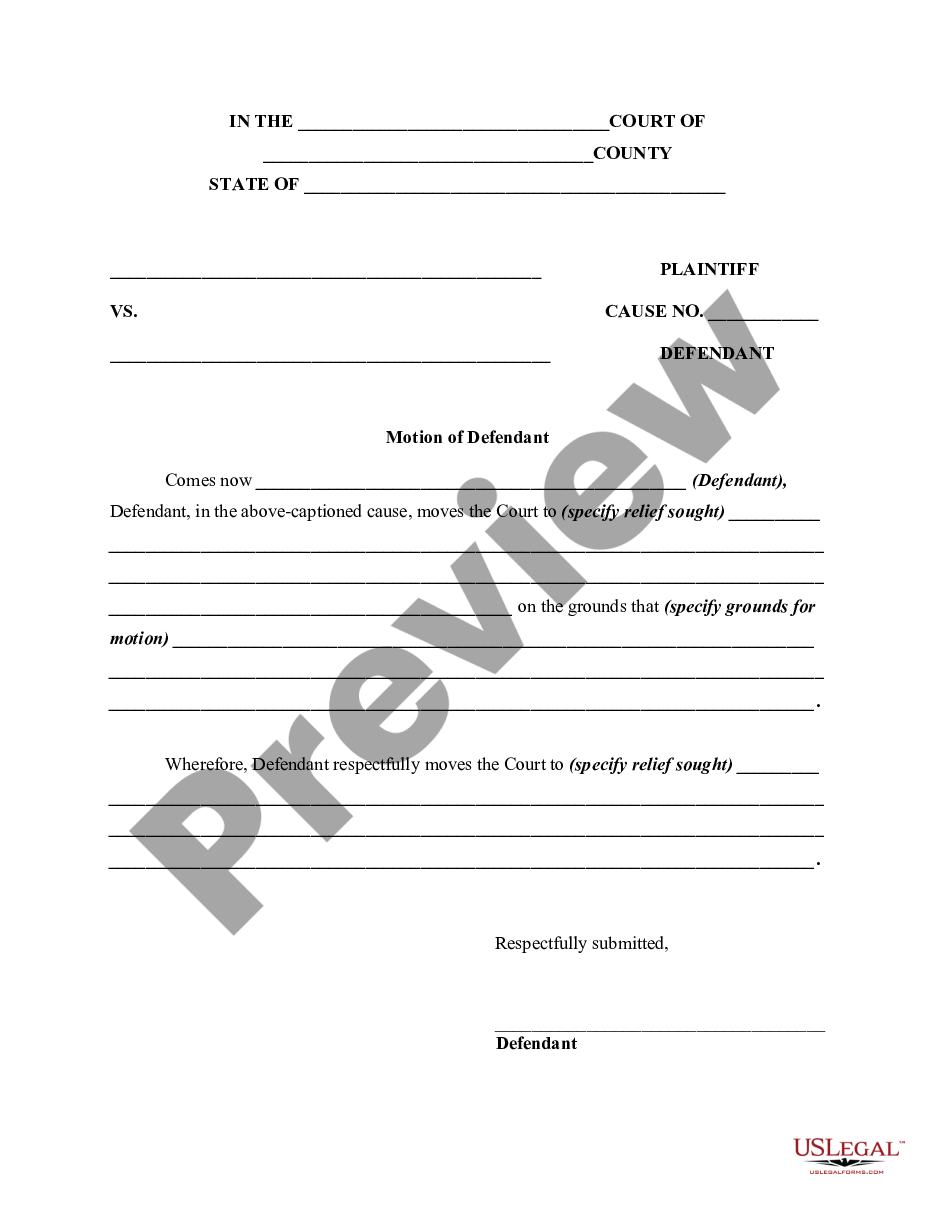
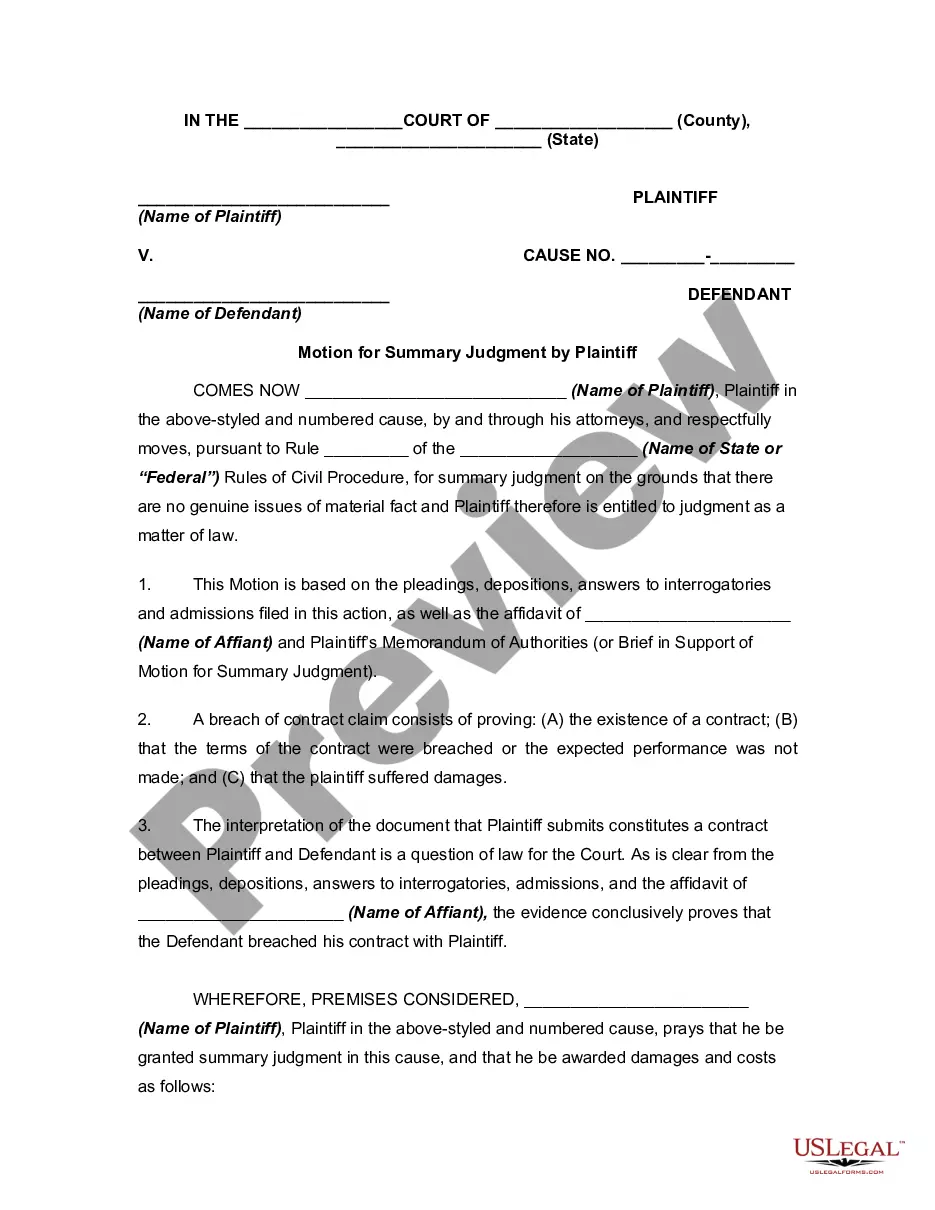
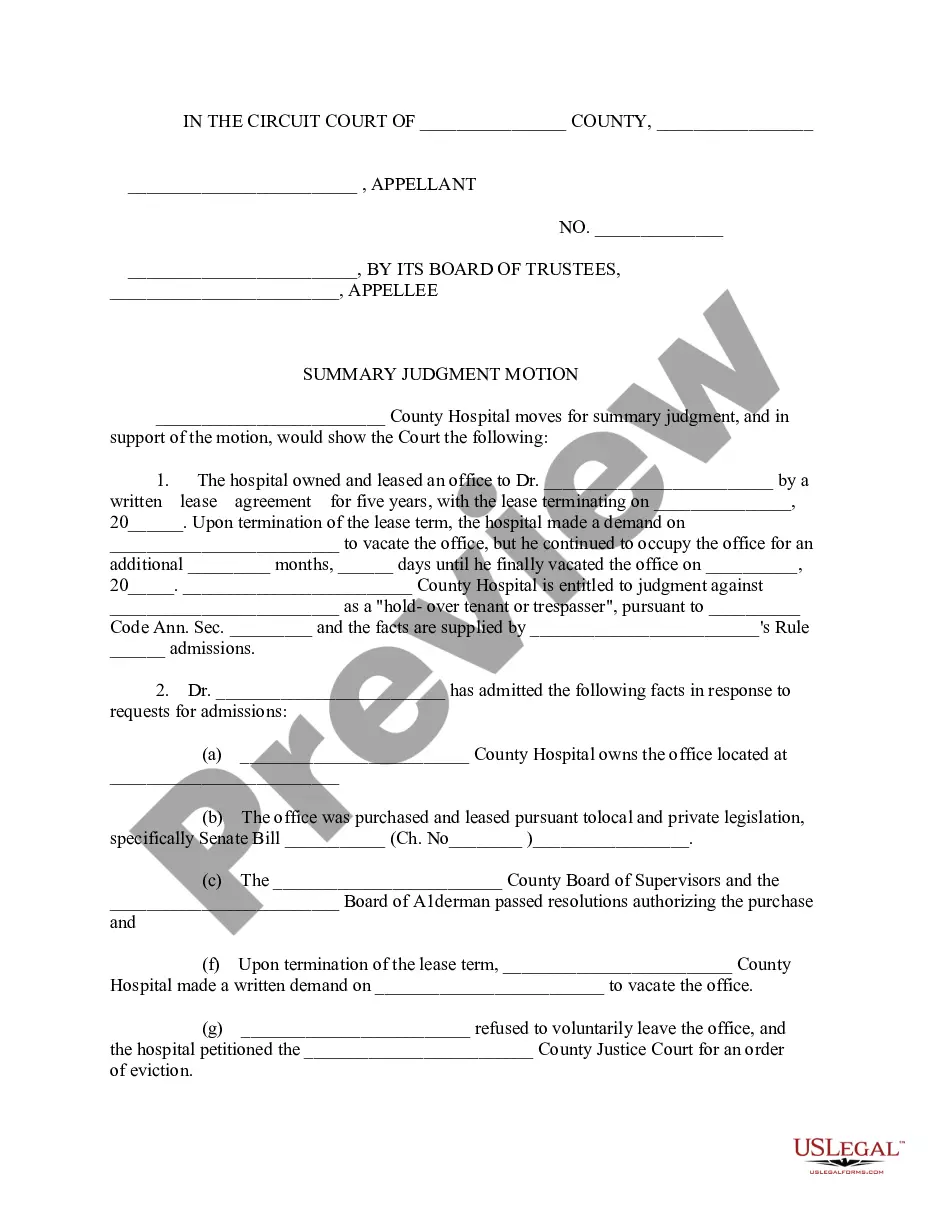
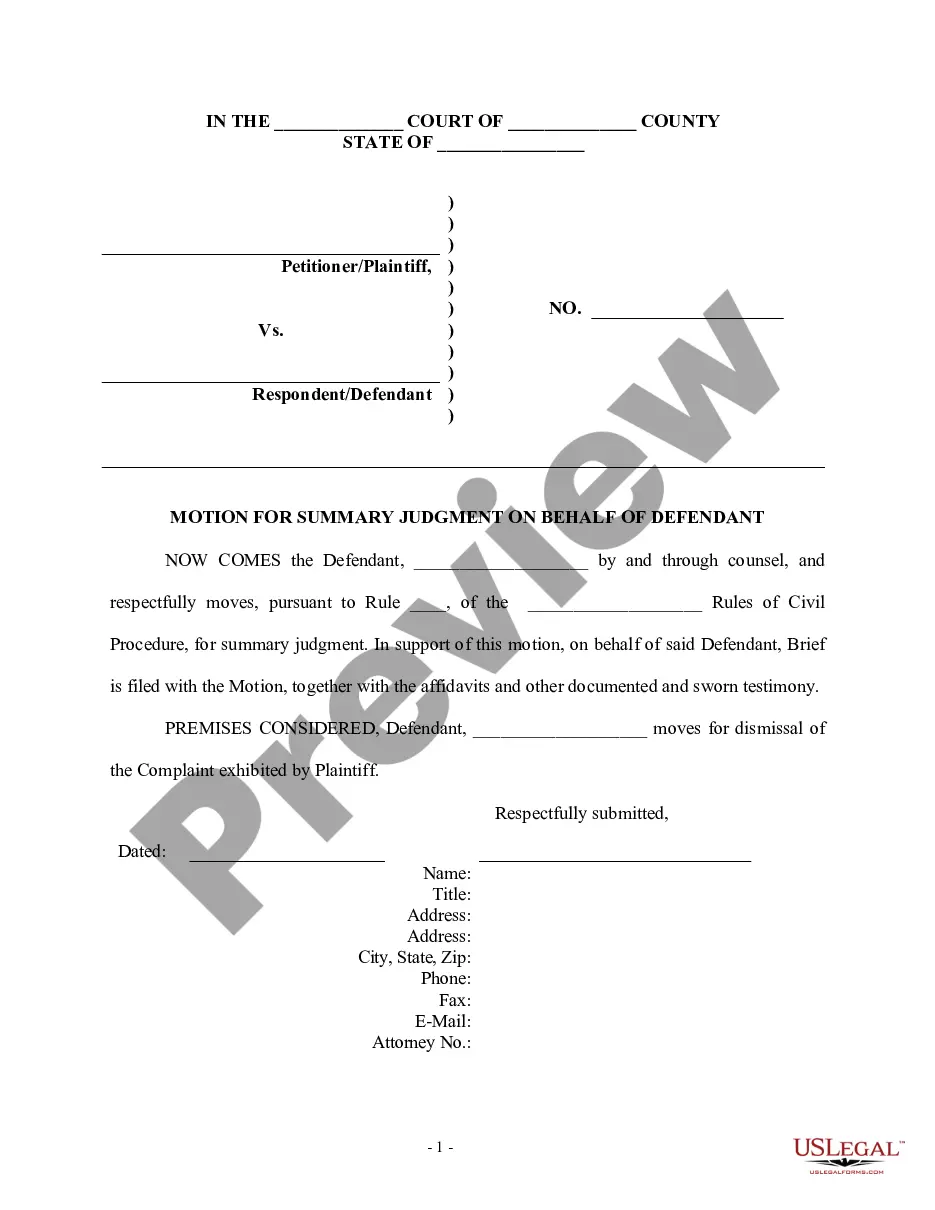
This form is a generic motion for summary judgment. The motion adopts the "notice pleadings" format of the Federal Rules of Civil Procedure, which have been adopted by most states in one form or another.
Dallas Texas Motion for Summary Judgment by Defendant with Notice of Motion
State:
Multi-State
Category:
County:
Dallas
Control #:
US-00920BG
Format:
Word;
Rich Text
165 downloads
Description
Free preview
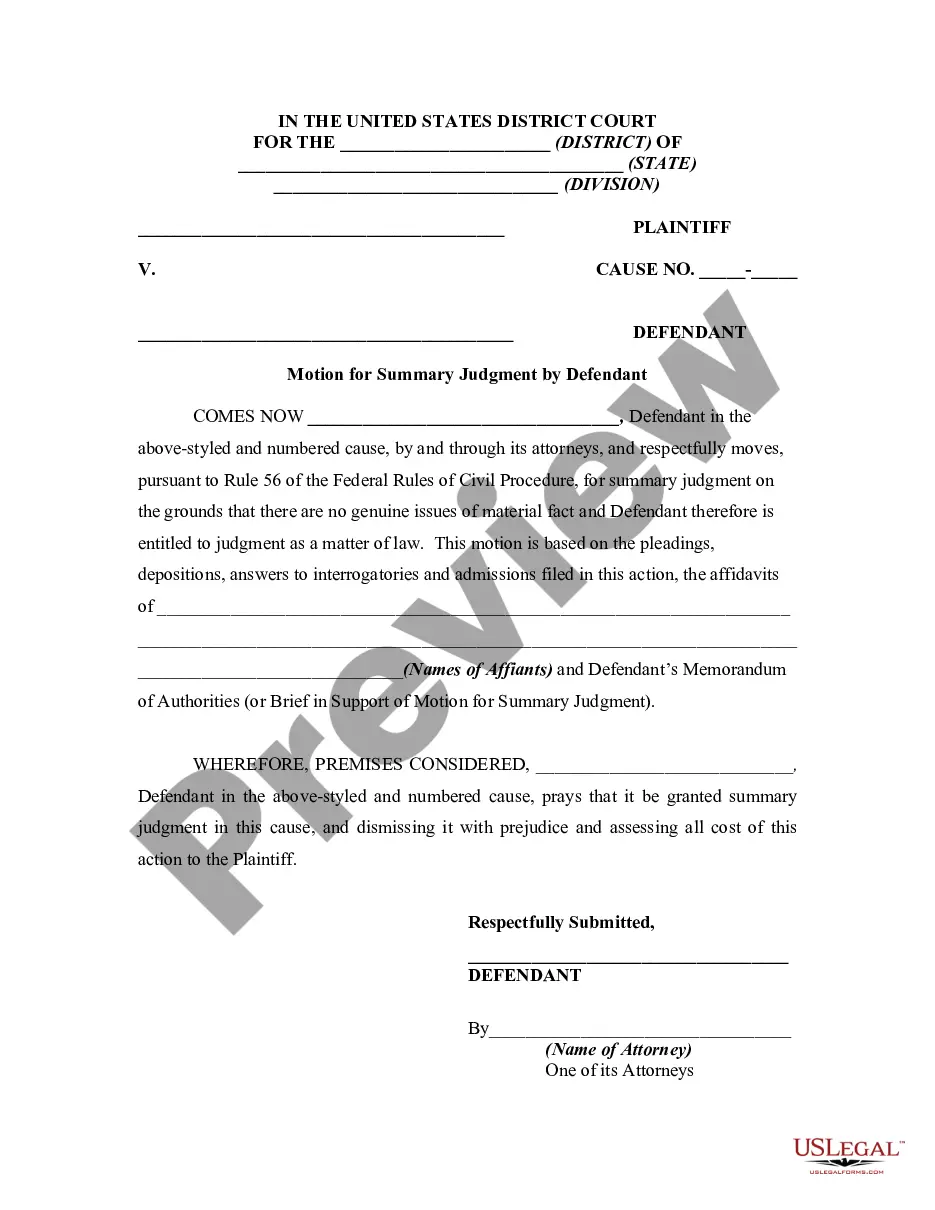
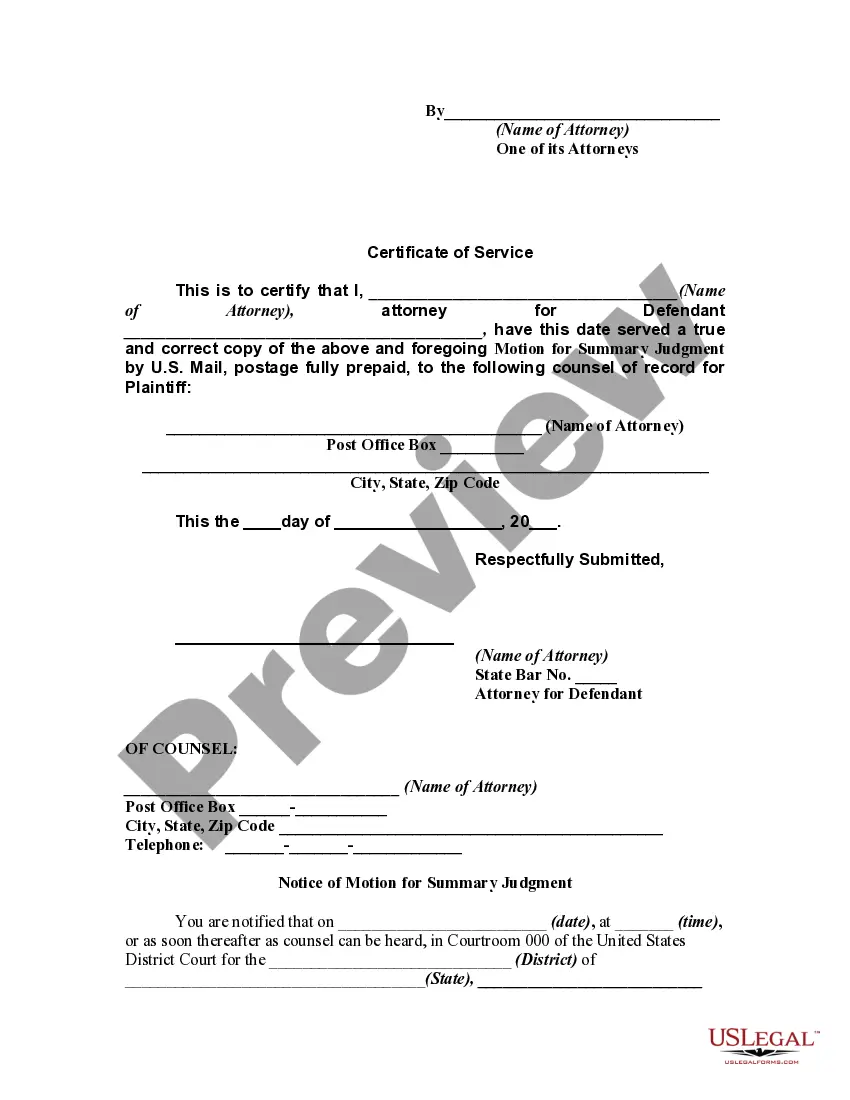
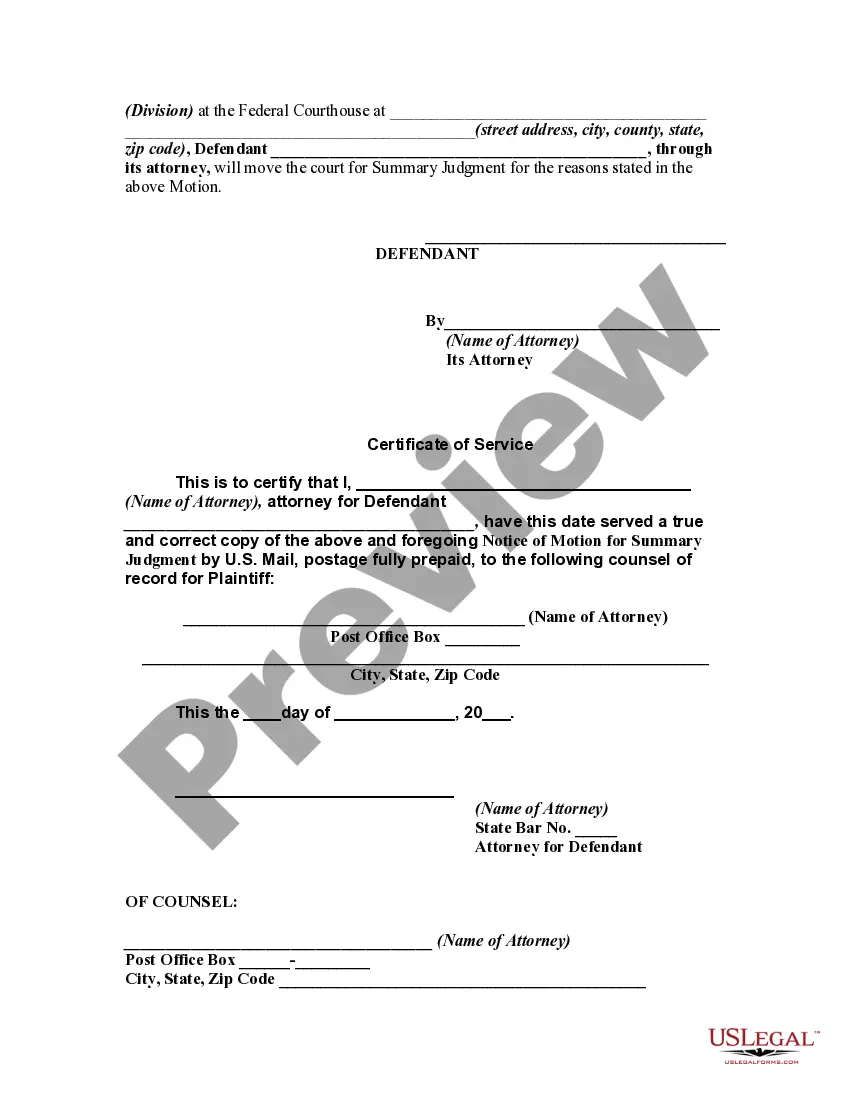

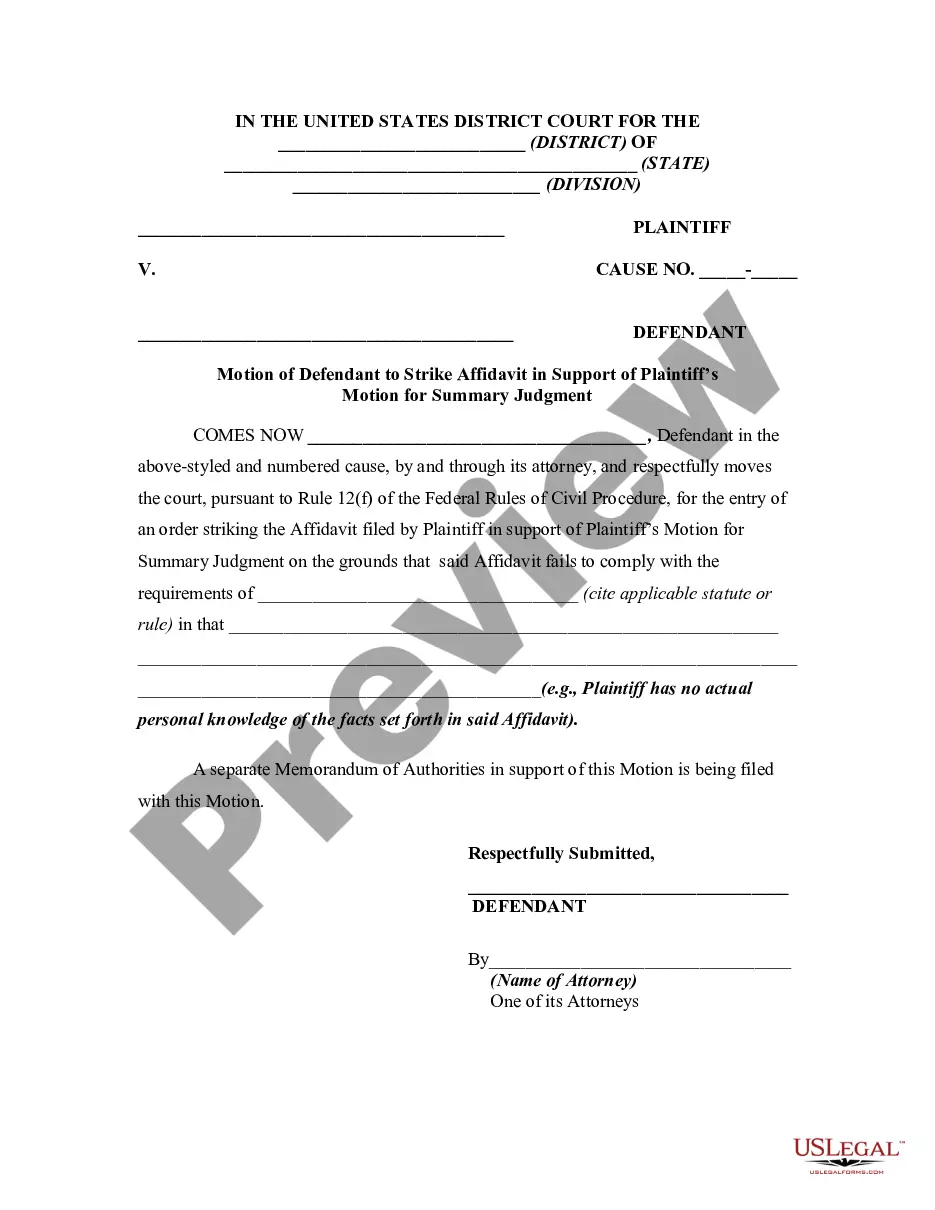
Get your form ready online
Our built-in tools help you complete, sign, share, and store your documents in one place.
Built-in online Word editor
Make edits, fill in missing information, and update formatting in US Legal Forms—just like you would in MS Word.
Export easily
Download a copy, print it, send it by email, or mail it via USPS—whatever works best for your next step.
E-sign your document
Sign and collect signatures with our SignNow integration. Send to multiple recipients, set reminders, and more. Go Premium to unlock E-Sign.
Notarize online 24/7
If this form requires notarization, complete it online through a secure video call—no need to meet a notary in person or wait for an appointment.
Store your document securely
We protect your documents and personal data by following strict security and privacy standards.

Make edits, fill in missing information, and update formatting in US Legal Forms—just like you would in MS Word.

Download a copy, print it, send it by email, or mail it via USPS—whatever works best for your next step.

Sign and collect signatures with our SignNow integration. Send to multiple recipients, set reminders, and more. Go Premium to unlock E-Sign.

If this form requires notarization, complete it online through a secure video call—no need to meet a notary in person or wait for an appointment.

We protect your documents and personal data by following strict security and privacy standards.
Looking for another form?







How to fill out Motion For Summary Judgment By Defendant With Notice Of Motion?
Drafting paperwork, such as the Dallas Motion for Summary Judgment by Defendant with Notice of Motion, to handle your legal issues is a challenging and lengthy endeavor.
Many cases necessitate an attorney’s involvement, which further renders this process not particularly economical.
Nonetheless, you can take charge of your legal matters and manage them on your own.
The onboarding process for new clients is equally straightforward! Here’s what you should do before acquiring the Dallas Motion for Summary Judgment by Defendant with Notice of Motion: Ensure that your document is tailored to your state/county due to the possibility of variations in legal document regulations across different states. Learn more about the form by previewing it or reviewing a short description. If the Dallas Motion for Summary Judgment by Defendant with Notice of Motion isn’t what you were seeking, then utilize the header to locate another option. Sign in or create an account to begin using our service and obtain the document. Everything look good on your end? Click the Buy now button and choose a subscription plan. Select the payment method and enter your payment details. Your form is ready for download. It’s simple to locate and purchase the required document with US Legal Forms. Thousands of businesses and individuals are already benefiting from our extensive collection. Sign up now to discover what additional benefits you can enjoy with US Legal Forms!
- US Legal Forms is here to assist.
- Our platform offers over 85,000 legal documents designed for various situations and life events.
- We ensure that every document adheres to the regulations of each state, alleviating your worries about possible legal complications related to compliance.
- If you're already accustomed to our platform and hold a subscription with US, you're aware of how simple it is to access the Dallas Motion for Summary Judgment by Defendant with Notice of Motion template.
- Just Log In to your account, obtain the form, and modify it to suit your needs.
- Lost your document? No problem. You can retrieve it from the My documents tab in your account on both desktop and mobile.
Form popularity
FAQ
Rule 248 of the Texas Rules of Civil Procedure allows a court to change the time and place of a trial to ensure fairness and convenience for all parties involved. This rule provides the court with the authority to adjust schedules when necessary, keeping in mind the interests of justice. When preparing for a Dallas Texas Motion for Summary Judgment by Defendant with Notice of Motion, being aware of Rule 248 can help you anticipate potential changes that may affect your case. For further assistance, consider consulting uslegalforms to understand how this rule may apply to your situation.
To object to a motion for summary judgment, you need to file a written response that clearly states your reasons for opposing the motion. It is essential to provide evidence that disputes the claims made in the motion, particularly focusing on material facts that are in contention. In the context of a Dallas Texas Motion for Summary Judgment by Defendant with Notice of Motion, ensuring you adhere to filing deadlines is crucial, as it strengthens your position. You may also wish to seek assistance through uslegalforms to ensure your objection is thorough and legally sound.
Summary Judgment as the name implies, is a judgment obtained without a full trial. It is called Summary Judgment Procedure in the some Jurisdictions and Undefended List Procedure in other Jurisdictions. The difference is one of semantics.
There are two types of motions for summary judgment- traditional and no evidence.
Decision on motions for summary judgment: About 15 months after beginning of representation. The judge will make a decision on summary judgment about three months after s/he hears arguments from both sides.
A claimant can apply for summary judgment once the defendant has filed either an acknowledgment of service, or a defence, or if the court otherwise grants permission. A defendant can only apply for summary judgment after it has filed either an acknowledgement of service, or a defence.
When a party wishes to apply for summary judgment: a claimant (or a counter-claimant) must wait until the defendant has filed an Acknowledgment of Service or Defence, unless the court has given permission to override that default rule. a defendant may apply at any time.
A defendant can apply for summary judgment at any time, but typically this is done at the first Case Management Conference (CMC). Any application for summary judgment should be made after acknowledgment of service. If no acknowledgment is served, permission of the court is needed.
Summary judgment motions do have a timeline for filing and response. First, a summary judgment motion must be on file at least 21 days before it can be heard. (TRCP 166a) Second, any opposing affidavits or written response should be on file no later than 7 days before the hearing.
Summary judgment motions do have a timeline for filing and response. First, a summary judgment motion must be on file at least 21 days before it can be heard. (TRCP 166a) Second, any opposing affidavits or written response should be on file no later than 7 days before the hearing. (Id.)