A written agreement regarding child custody and support entered into by unmarried parents at time of their breakup is generally enforceable unless the parties abandon the agreement, or the agreement is unconscionable.
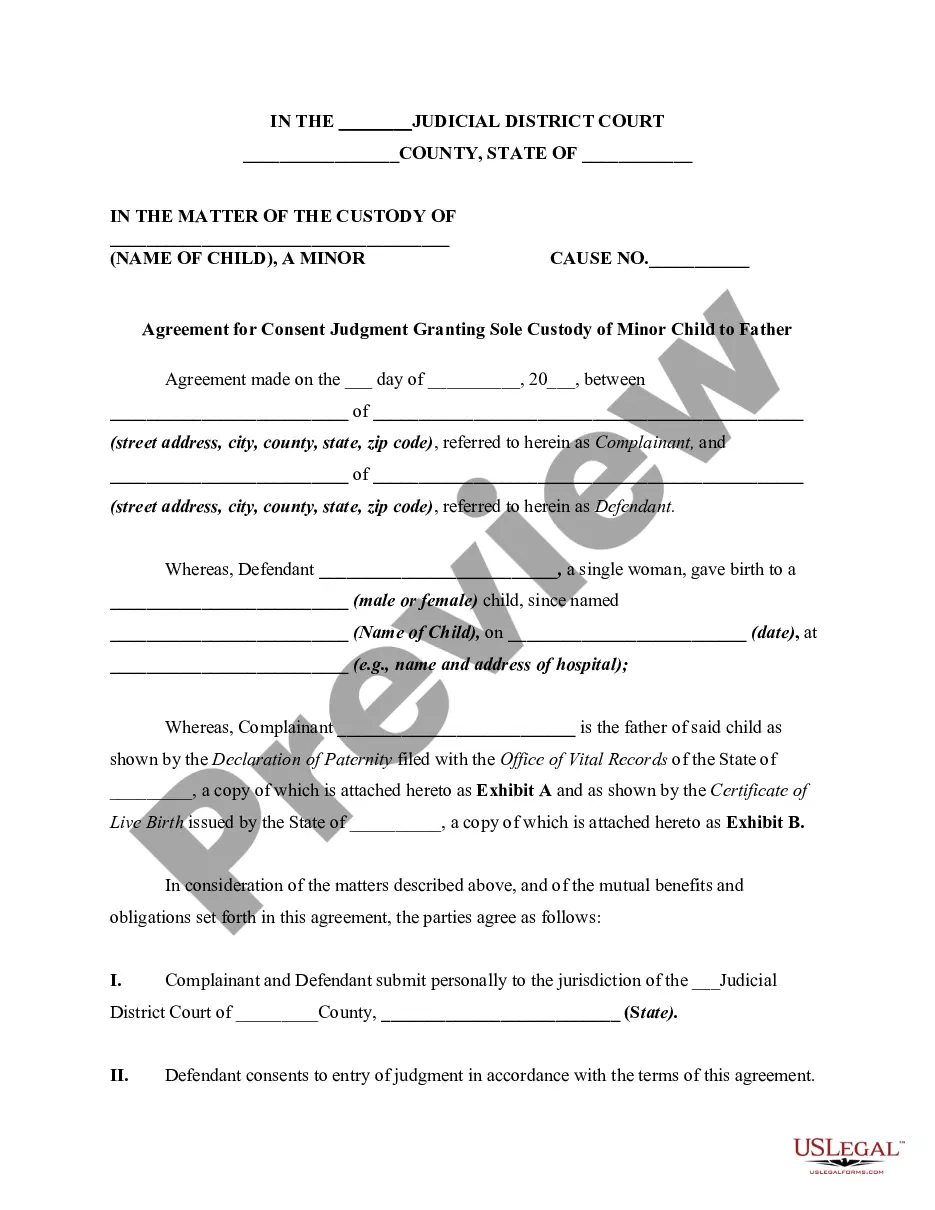
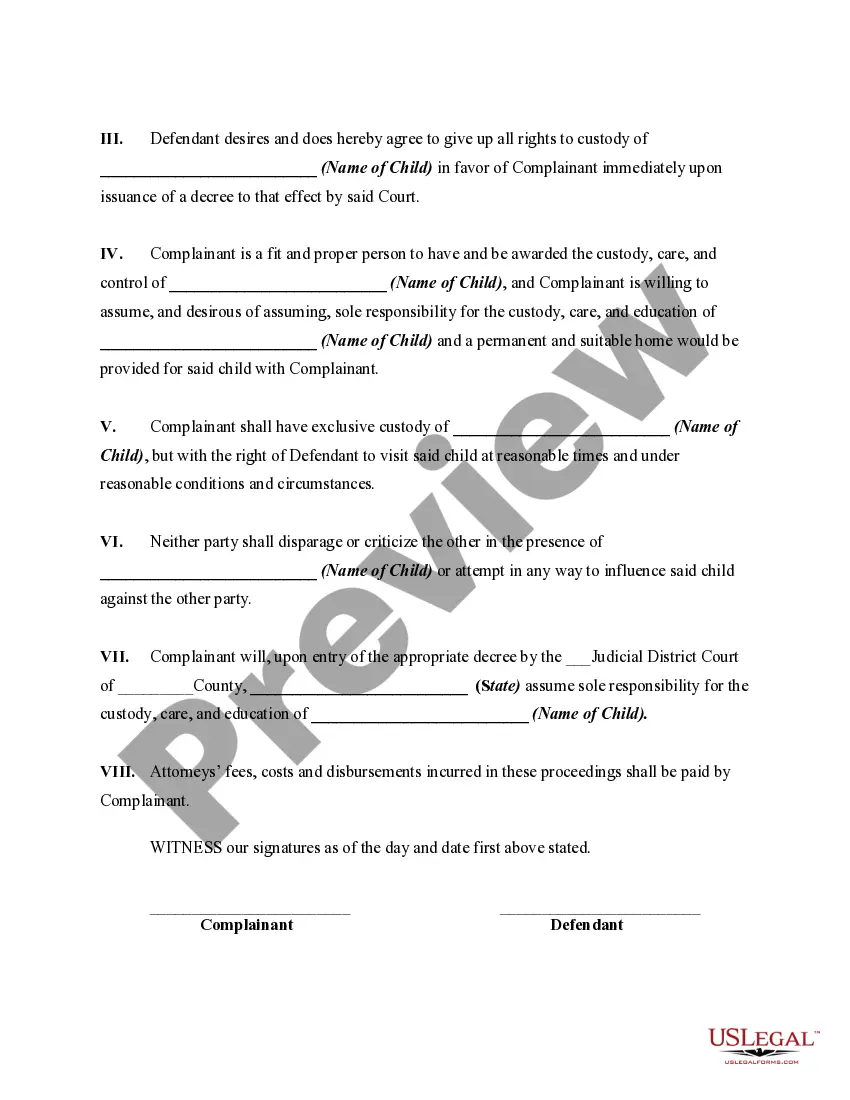
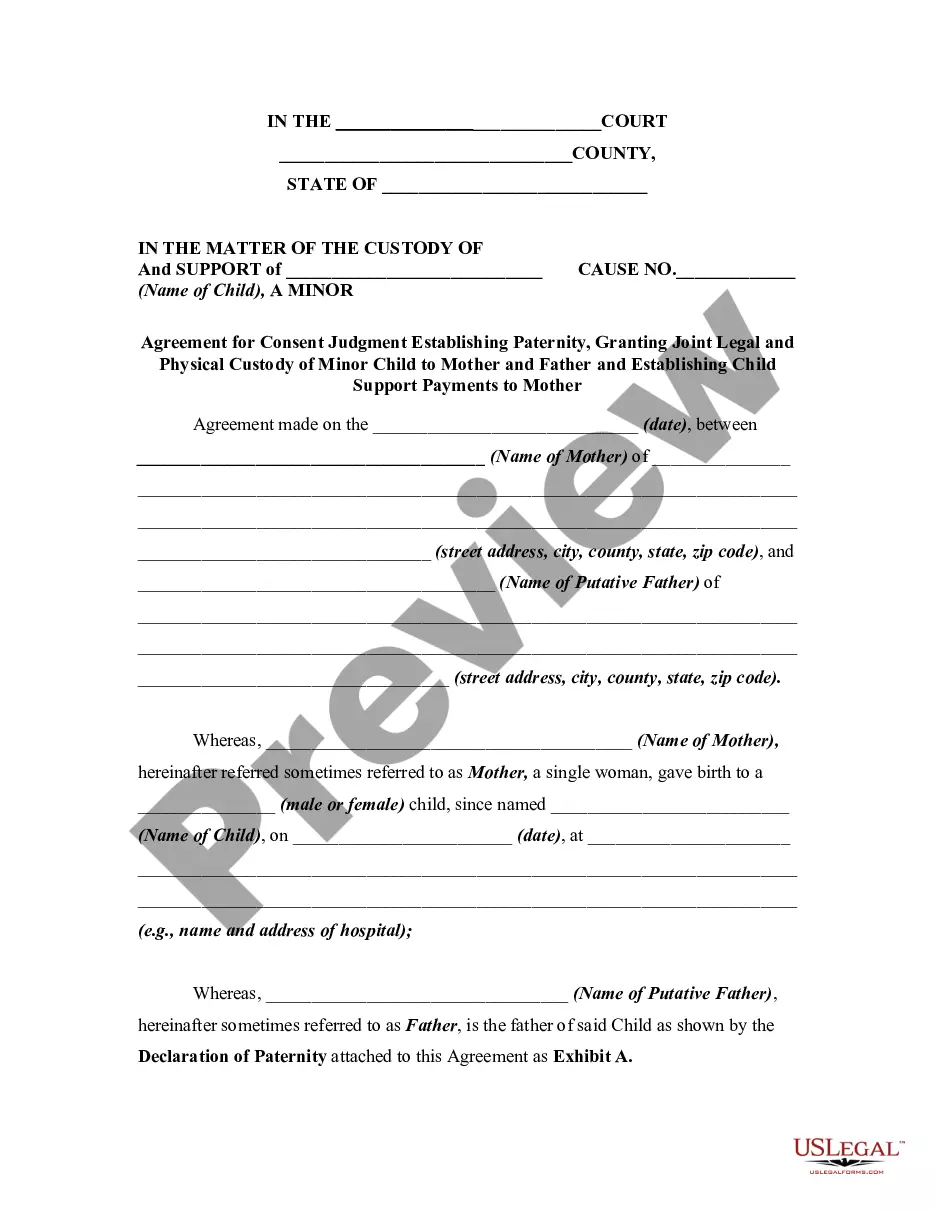
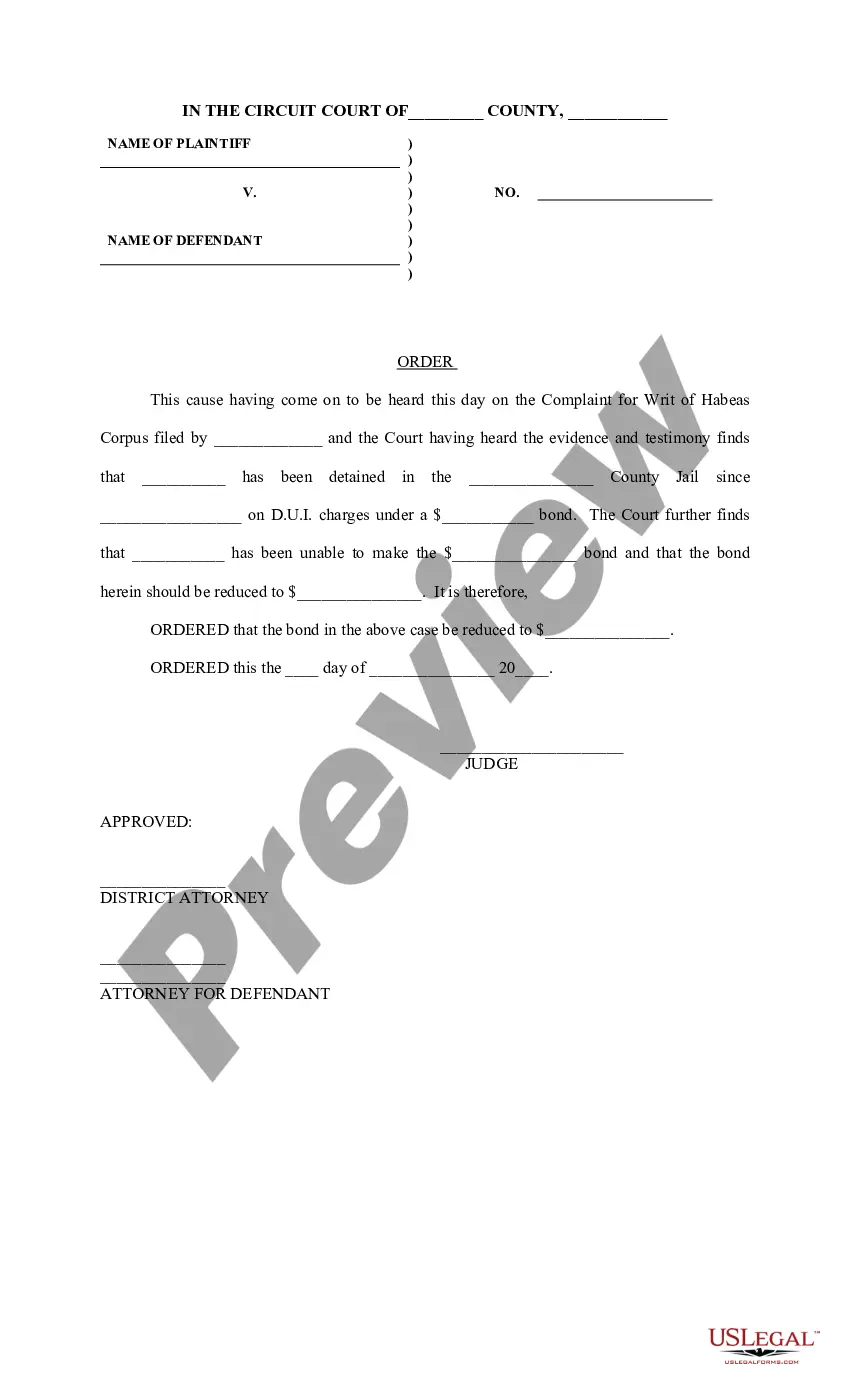
The following form is a sample of an agreement for a consent judgment granting sole custody of a minor child to the father.
Philadelphia Pennsylvania Agreement for Consent Judgment Granting Sole Custody of Minor Child to Father
State:
Multi-State
County:
Philadelphia
Control #:
US-00774BG
Format:
Word;
Rich Text
651 downloads
Description
Free preview

Get your form ready online
Our built-in tools help you complete, sign, share, and store your documents in one place.
Built-in online Word editor
Make edits, fill in missing information, and update formatting in US Legal Forms—just like you would in MS Word.
Export easily
Download a copy, print it, send it by email, or mail it via USPS—whatever works best for your next step.
E-sign your document
Sign and collect signatures with our SignNow integration. Send to multiple recipients, set reminders, and more. Go Premium to unlock E-Sign.
Notarize online 24/7
If this form requires notarization, complete it online through a secure video call—no need to meet a notary in person or wait for an appointment.
Store your document securely
We protect your documents and personal data by following strict security and privacy standards.

Make edits, fill in missing information, and update formatting in US Legal Forms—just like you would in MS Word.

Download a copy, print it, send it by email, or mail it via USPS—whatever works best for your next step.

Sign and collect signatures with our SignNow integration. Send to multiple recipients, set reminders, and more. Go Premium to unlock E-Sign.

If this form requires notarization, complete it online through a secure video call—no need to meet a notary in person or wait for an appointment.

We protect your documents and personal data by following strict security and privacy standards.
Looking for another form?






How to fill out Agreement For Consent Judgment Granting Sole Custody Of Minor Child To Father?
Laws and statutes in each domain differ from jurisdiction to jurisdiction.
If you’re not a lawyer, it’s simple to become confused by the diverse regulations when it comes to formulating legal documents.
To evade expensive legal help while drafting the Philadelphia Agreement for Consent Judgment Awarding Sole Custody of Minor Child to Father, you require a certified template valid for your region. That’s when utilizing the US Legal Forms platform proves to be highly advantageous.
This is the simplest and most economical approach to secure current templates for any legal situations. Discover them all with just a few clicks and maintain your documentation in order with the US Legal Forms!
- US Legal Forms is a reliable online database utilized by millions, containing over 85,000 state-specific legal documents.
- It’s an excellent resource for professionals and individuals looking for do-it-yourself templates for various personal and business situations.
- All forms can be utilized multiple times: once you buy a template, it stays available in your account for future use.
- So, if you have a valid subscription account, you can simply Log In and re-download the Philadelphia Agreement for Consent Judgment Awarding Sole Custody of Minor Child to Father from the My documents section.
- For newcomers, it’s essential to take a few additional steps to obtain the Philadelphia Agreement for Consent Judgment Awarding Sole Custody of Minor Child to Father.
- Examine the page content to confirm you’ve found the correct sample.
- Utilize the Preview feature or review the form description if accessible.
- Seek another document if there are discrepancies with any of your requirements.
- Press the Buy Now button to obtain the template once you locate the suitable one.
- Select one of the subscription options and log in or create an account.
- Choose your preferred method to pay for your subscription (either with a credit card or PayPal).
- Select the format you wish to save the file as and click Download.
- Fill out and sign the document on paper after printing it or complete it entirely online.
Form popularity
FAQ
In Pennsylvania, the Court determines an award of custody based on the best interest of a child after consideration of all relevant factors. Particular consideration is given to factors that affect the safety of the child and the gender of a parent is not a consideration.
Sole legal custody means that one parent has complete authority to make decisions in the best interests of the child. If you want to receive sole custody in PA, the burden is upon you to prove that it would be detrimental to the welfare of your child to live with your ex, even part-time.
Advertisements. You had the best intentions, but unfortunately, your notarized CUSTODY AGREEMENT is not enforceable in Pennsylvania. You actually need a Custody Stipulation signed by a judge that is turned into a Court Order. Only a Court Order can hold both parties accountable to the Court for enforcement.
Keep in mind, some requirements may vary by case and county. Step 1: Decide whether to e-file. Many Pennsylvania counties let parents file electronically (known as e-filing).Step 2: Fill out your paperwork.Step 3: Finalize your paperwork.Step 4: Open your case.Step 5: Serve the other parent.
No, a parenting plan is not legally binding, but if you both agree it could be shown in court to explain what the arrangements have been to date. To make a legally binding order you will need to apply for a child arrangements order. You can do this by consent but you would both still need to attend your local court.
A common 70/30 arrangement, the every 3rd-day schedule has your child live with one parent for two days and the other parent for one day. The every weekend schedule is another 70/30 option. Your child lives with one parent on weekdays and spends weekends with the other.
Pennsylvania allows for parents to share custody of a minor child after a divorce, and in some cases, that custody is split equally, 50/50.
Custody: The legal right to keep, control, guard, care for, and preserve a child (Pa. R.C.P. 1915.1). If a person is filing for custody, s/he is asking the court to formally acknowledge that s/he is the parent or acting as the parent of a child. This person is asking the court to make a custody determination.