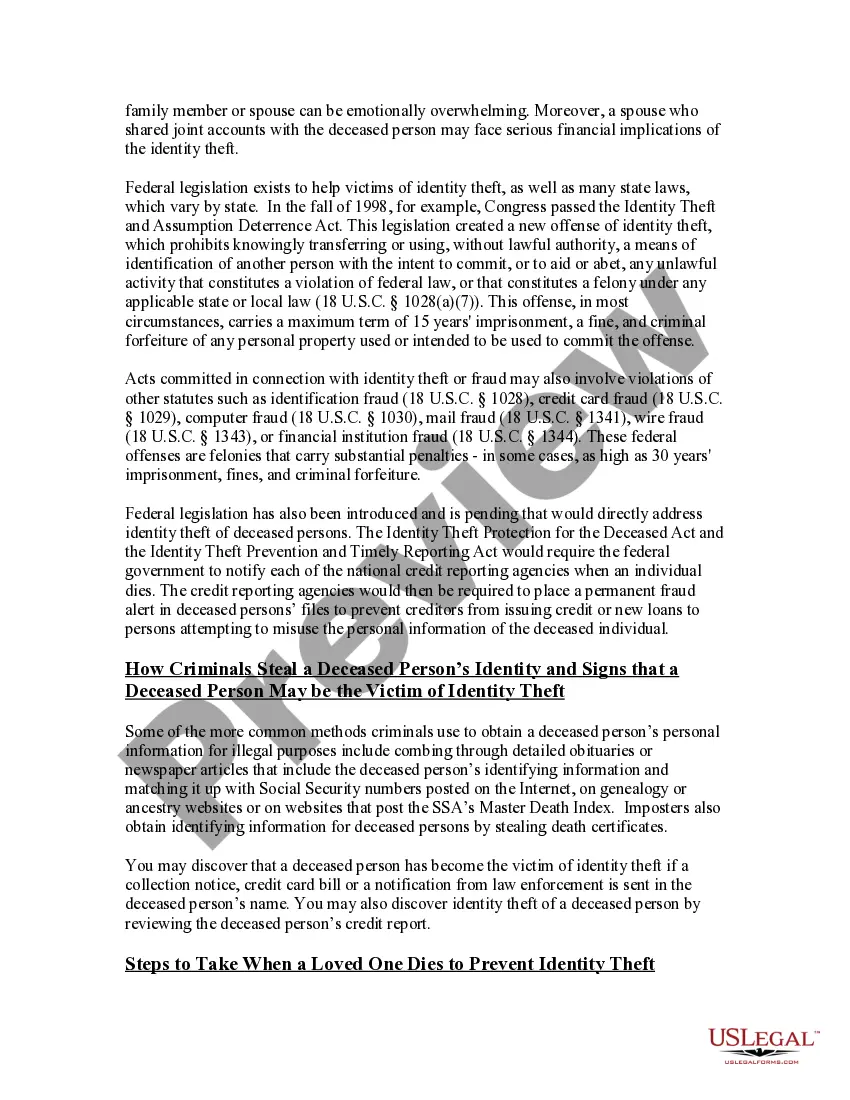
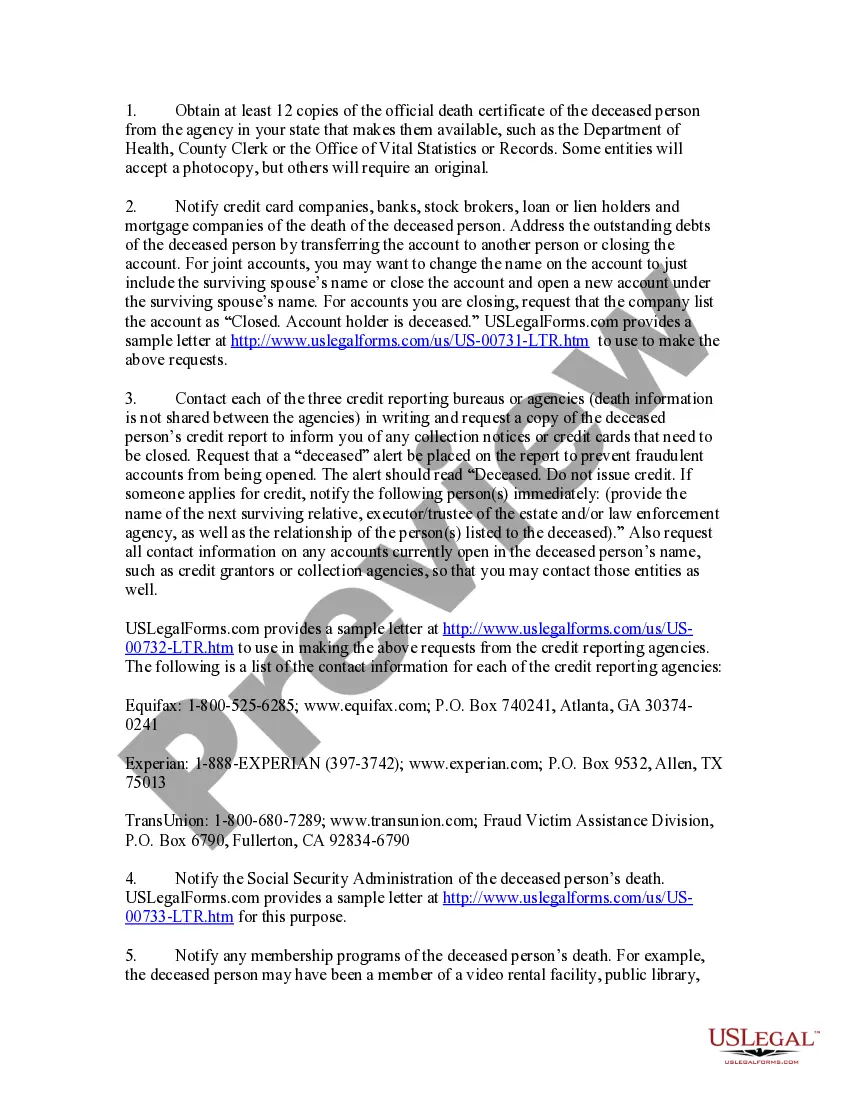
Pittsburgh Pennsylvania Guide for Protecting Deceased Persons from Identity Theft
Description





Form popularity
FAQ
Reporting identity theft of a deceased person involves several key steps, including notifying credit bureaus and local authorities. You can also file a report with the Federal Trade Commission to document the theft. The Pittsburgh Pennsylvania Guide for Protecting Deceased Persons from Identity Theft provides a clear process for these actions, ensuring you understand each step. Platforms like uslegalforms can also assist you in preparing the necessary documents for reporting and protecting the deceased's identity.
When someone steals the identity of a deceased person, it can lead to unauthorized transactions and damage to the deceased's credit history. This situation may also complicate the probate process for the estate. The Pittsburgh Pennsylvania Guide for Protecting Deceased Persons from Identity Theft outlines the potential consequences and necessary actions you can take to mitigate this risk. Utilizing platforms like uslegalforms can simplify the process of reporting identity theft and protecting against it.
To address theft from a deceased person, start by securing their financial accounts and notifying the relevant institutions. You can place a fraud alert on their credit report to prevent new accounts from being opened in their name. Additionally, the Pittsburgh Pennsylvania Guide for Protecting Deceased Persons from Identity Theft offers steps on how to monitor their financial situation and protect their legacy. Using resources like uslegalforms can help you navigate the necessary legal documents and actions.
If you suspect identity theft in Pennsylvania, you should report it to several key authorities. Start with the Federal Trade Commission (FTC) to file a report, then reach out to local law enforcement to document the crime. Additionally, consider using resources from the Pittsburgh Pennsylvania Guide for Protecting Deceased Persons from Identity Theft, which outlines steps to mitigate risks and provides guidance on reporting. Taking rapid action can significantly reduce the impact of identity theft.
A dead person's Social Security number can be misused in various ways. For instance, identity thieves may apply for credit, open bank accounts, or even file fraudulent tax returns using this information. To prevent these issues, refer to the Pittsburgh Pennsylvania Guide for Protecting Deceased Persons from Identity Theft, which offers strategies to safeguard sensitive information. Taking proactive steps can help you honor your loved one's memory while protecting their identity.
Reporting identity theft of a deceased person online involves several steps to ensure proper documentation. Start by gathering necessary information and evidence before visiting official websites like the Federal Trade Commission. The Pittsburgh Pennsylvania Guide for Protecting Deceased Persons from Identity Theft also simplifies this process by showing you how to file complaints online, register for alerts, and manage legal proceedings effectively.
To protect a deceased person from identity theft, take proactive steps immediately after their passing. Close their accounts promptly, place a death notification with credit bureaus, and consider monitoring services. Utilizing the Pittsburgh Pennsylvania Guide for Protecting Deceased Persons from Identity Theft can provide you with vital resources to navigate this process effectively, ensuring their identity remains safe.
In Pennsylvania, the statute of limitations for identity theft is typically two years from the discovery of the theft. Knowing this is crucial as it allows you to understand your rights and the timeline for taking action. For more detailed guidance, consult the Pittsburgh Pennsylvania Guide for Protecting Deceased Persons from Identity Theft, which outlines your options based on the situation.
To effectively prevent identity theft of a deceased person, ensure that you notify all relevant institutions about the passing. This includes banks, credit card companies, and social security agencies. Additionally, consider using the Pittsburgh Pennsylvania Guide for Protecting Deceased Persons from Identity Theft, which offers insights into keeping personal information secure and managing accounts responsibly after death.