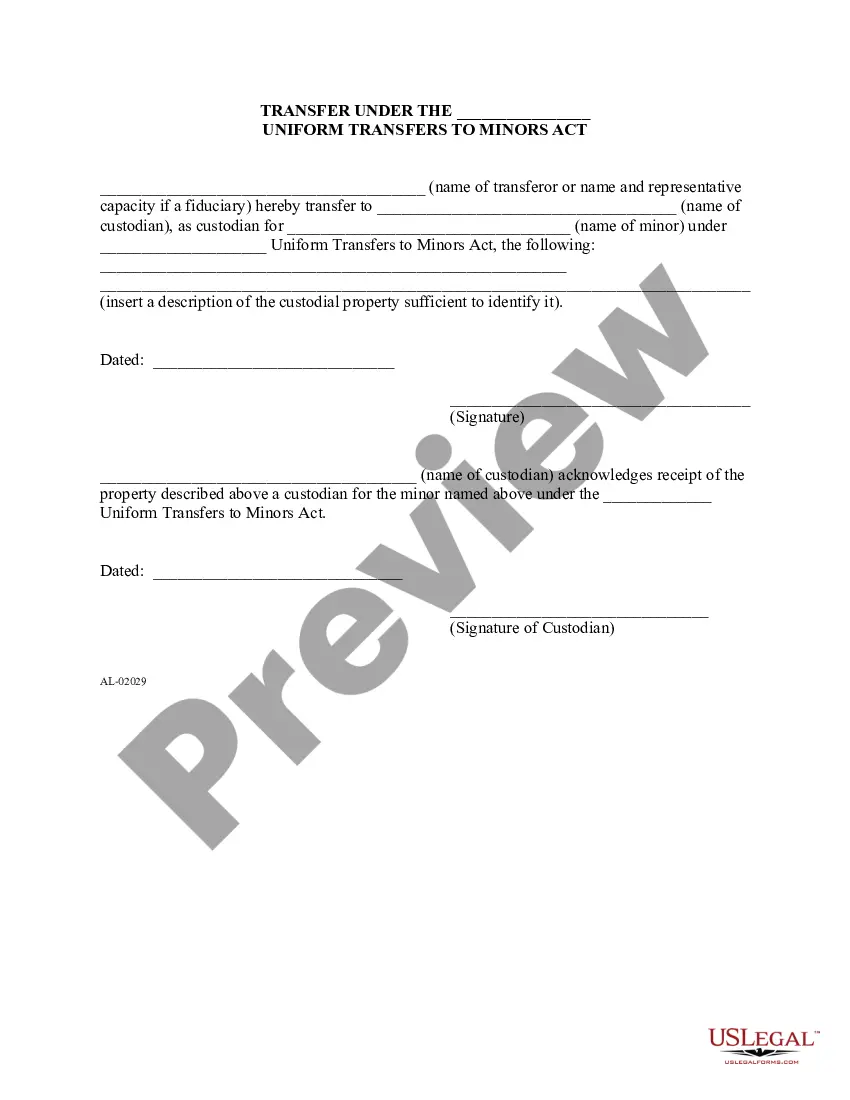
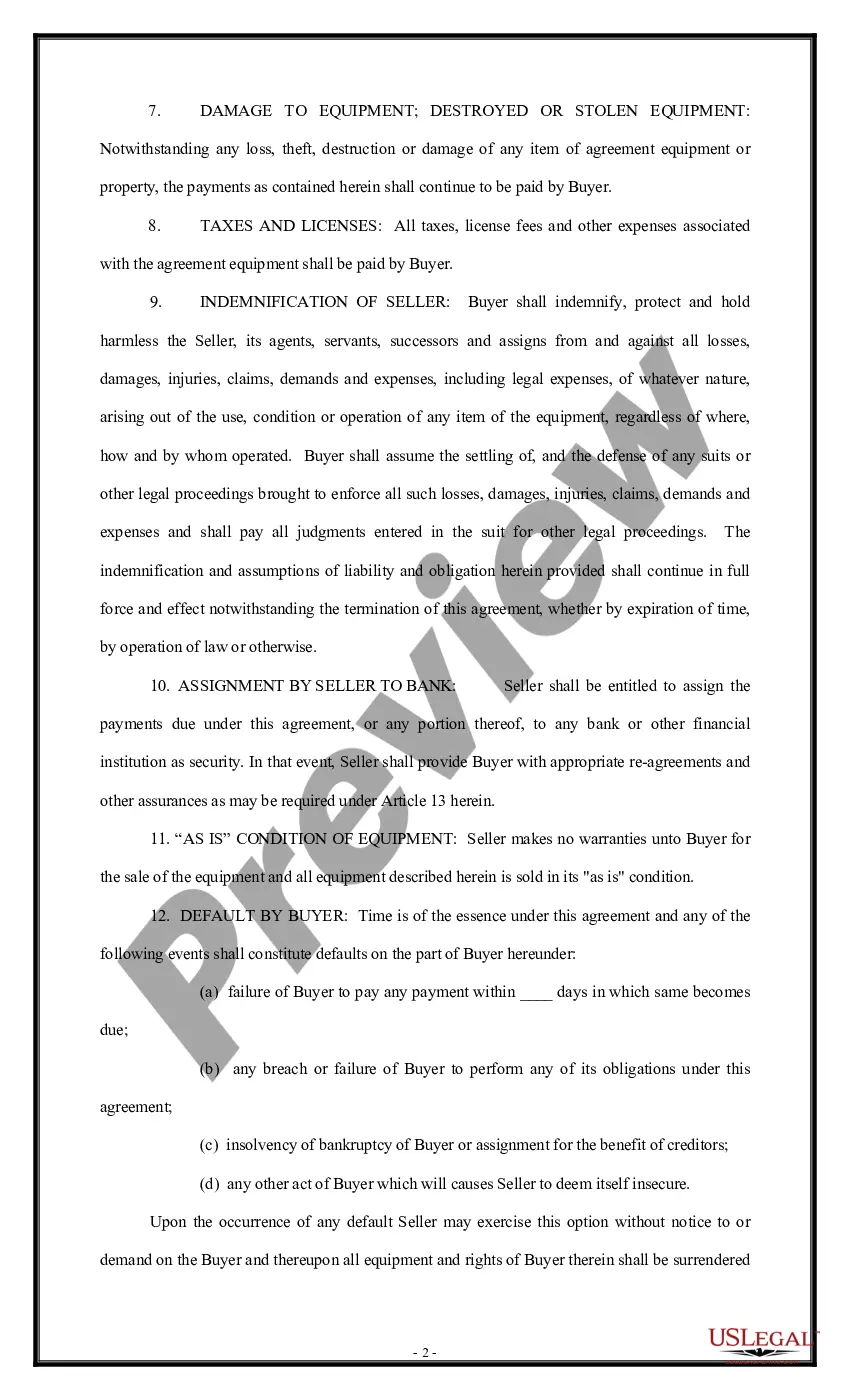
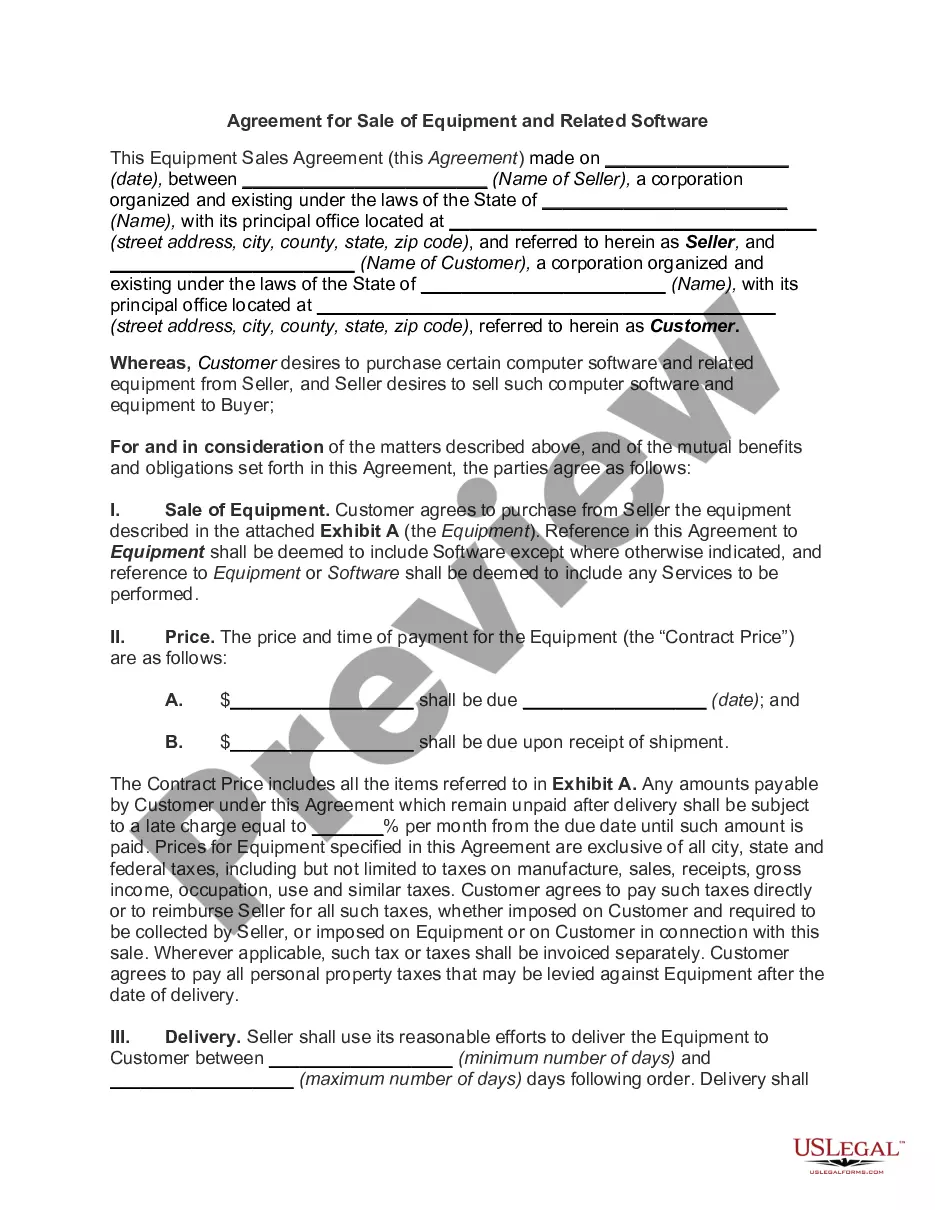
Columbus Ohio Equipment Purchase Agreement
Description




Form popularity
FAQ
In Ohio, it is not mandatory to record land contracts, but doing so is advisable, especially in the context of a Columbus Ohio Equipment Purchase Agreement. Recording provides public notice of the transaction, which protects the buyer's interests and clarifies property ownership. If disputes arise, having a recorded contract can serve as evidence of the agreement and strengthen the buyer's position.
In Ohio, a buyer agency agreement is not strictly required, but it is highly recommended, especially when dealing with a Columbus Ohio Equipment Purchase Agreement. This agreement establishes a formal relationship between the buyer and the real estate agent, ensuring that both parties understand their responsibilities. By having this in place, buyers can receive dedicated support and guidance throughout the purchasing process, making their experience smoother and more efficient.
Filling out an Ohio residential lease agreement involves careful attention to detail. Begin by providing the names of the landlord and tenant, along with the property address. Then, specify the lease term, rent amount, and payment due dates. For added protection, consider utilizing uSlegalforms to access templates that ensure compliance with local laws and requirements.
When formatting a Columbus Ohio Equipment Purchase Agreement, use a clear and organized layout. Start with the title of the agreement, followed by the date, and clearly list the names and addresses of both parties. Use headings and bullet points to break down complex sections, making it easier to read and understand. Proper formatting enhances the professionalism of your contract.
In Ohio, all written agency agreements must include essential elements such as the names of the parties, a clear description of the services to be provided, and the agreed-upon compensation. Furthermore, the Columbus Ohio Equipment Purchase Agreement should specify the duration of the agreement and any rights or obligations of each party. Incorporating these components fosters transparency and legal security.
Ing to Ohio Instructions for Form IT 1040, ?Every Ohio resident and part year resident is subject to the Ohio Income tax.? Every full-year resident, part year resident and full year nonresident must file an Ohio tax return if they have income from Ohio sources.
Local income tax is usually based on where a taxpayer lives, but in some cases, taxpayers also owe local income tax based on where they perform work (for example, if they commute). You may have withholding obligations based on where your company does business or based on where your employees perform work.
Columbus residents pay a total of 2.5% in taxes on all income earned, regardless of whether it was earned in Columbus or another city.
In Ohio, you have an income tax obligation to both your employment city and your resident city. Your employer is required by law to withhold your work place city tax and if you have "fully withheld", you have no filing requirement with your work place city.
Municipalities may generally impose tax on on wages, salaries, and other compensation earned by residents and by nonresidents who work in the municipality. The tax also applies to the net profits of business attributable to activities in the municipality, and to the net profits from rental activities.