In a deed, a grantee may agree to do something or refrain from doing certain acts. This agreement will become a binding contract between the grantor and the grantee. An example would be an agreement to maintain fences on the property or that the property will only be used for residential purposes. This kind of covenant is binding, not only between the grantor and the grantee, but also runs with the land. This means that anyone acquiring the land from the grantee is also bound by the covenant of the grantee. A covenant that provides that the grantee will refrain from certain conduct is called a restrictive or protective covenant. For example, there may be a covenant that no mobile home shall be placed on the property.
A restrictive or protective covenant may limit the kind of structure that can be placed on the property and may also restrict the use that can be made of the land. For example, when a tract of land is developed for individual lots and homes to be built, it is common to use the same restrictive covenants in all of the deeds in order to cause uniform restrictions and patterns on the property. For example, the developer may provide that no home may be built under a certain number of square feet. Any person acquiring a lot within the tract will be bound by the restrictions if they are placed in the deed or a prior recorded deed. Also, these restrictive covenants may be placed in a document at the outset of the development entitled "Restrictive Covenants," and list all the restrictive covenants that will apply to the tracts of land being developed. Any subsequent deed can then refer back to the book and page number where these restrictive covenants are recorded. Any person owning one of the lots in the tract may bring suit against another lot owner to enforce the restrictive covenants. However, restrictive covenants may be abandoned or not enforceable by estoppel if the restrictive covenants are violated openly for a sufficient period of time in order for a Court to declare that the restriction has been abandoned.
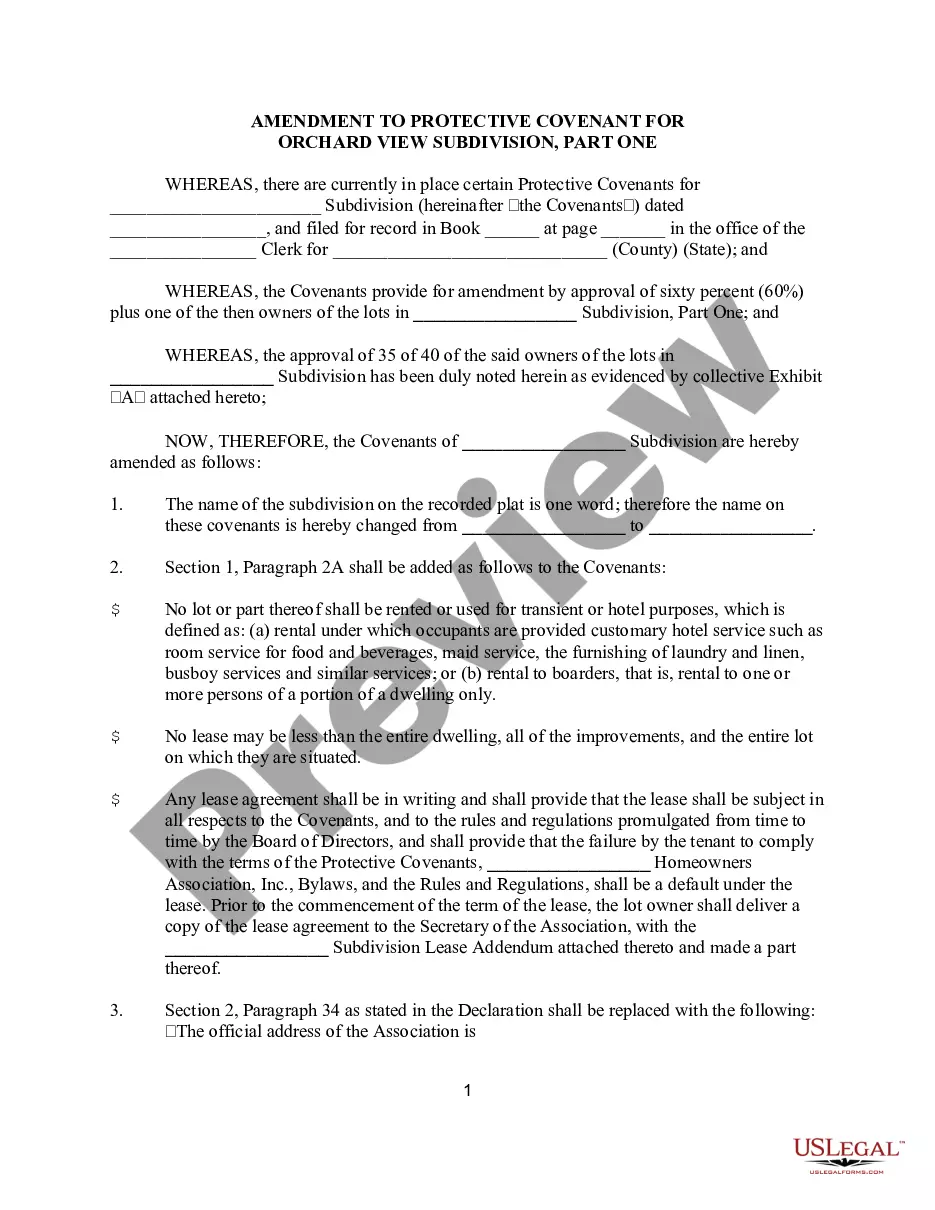
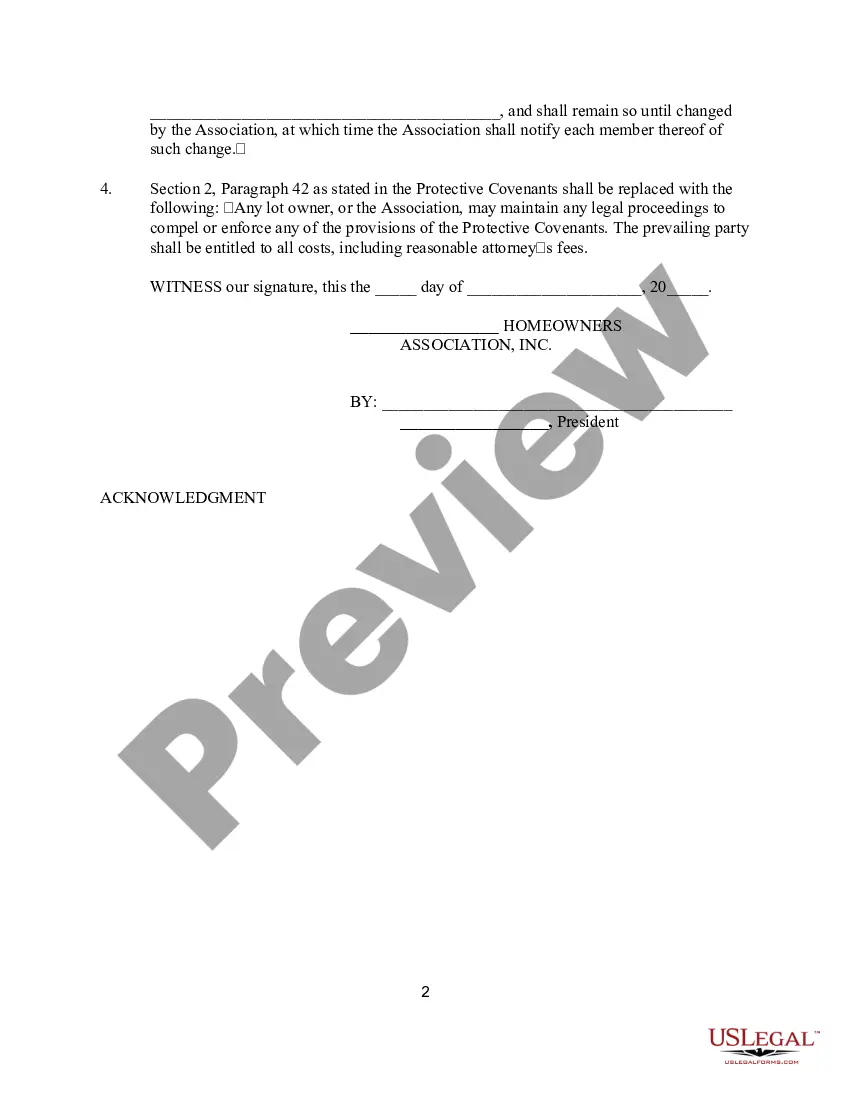
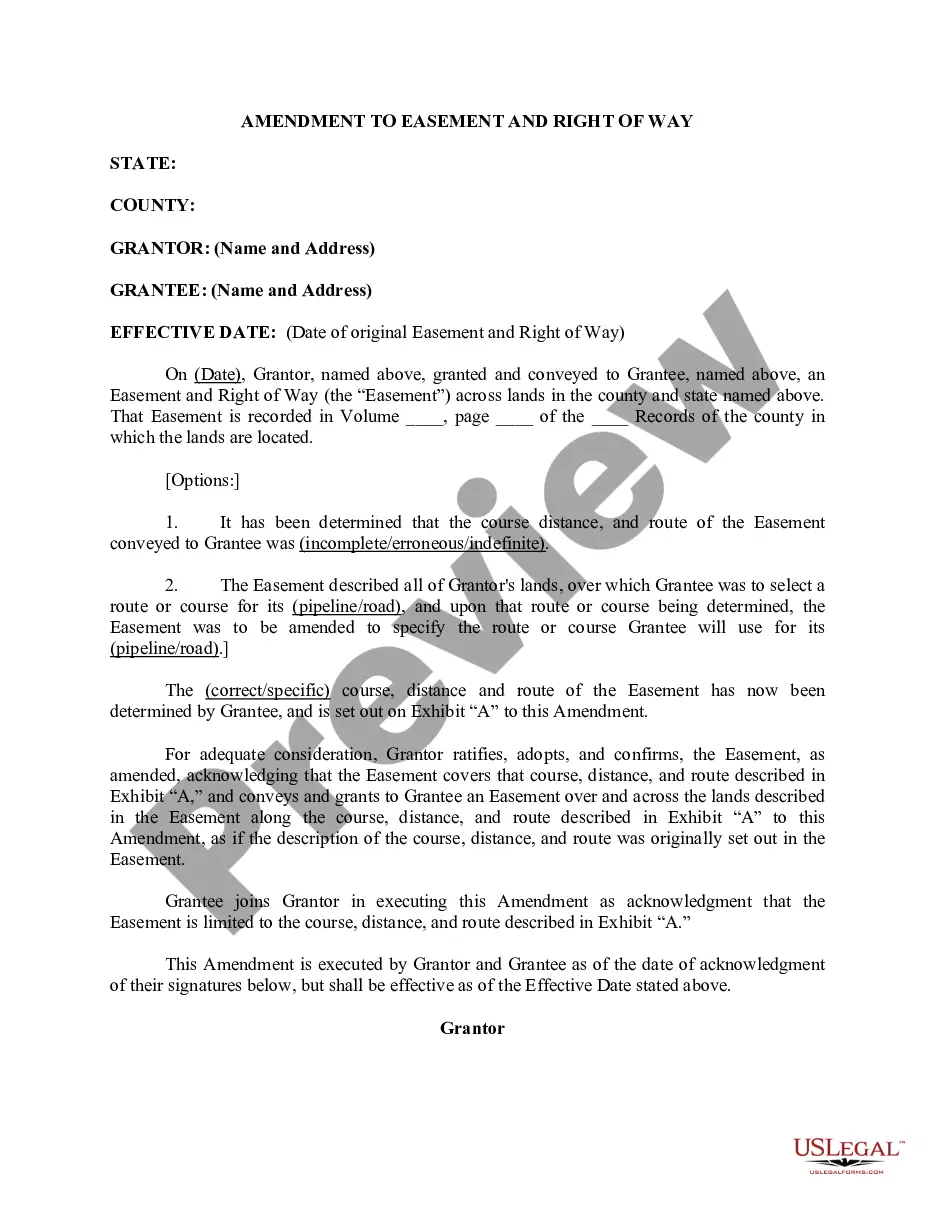
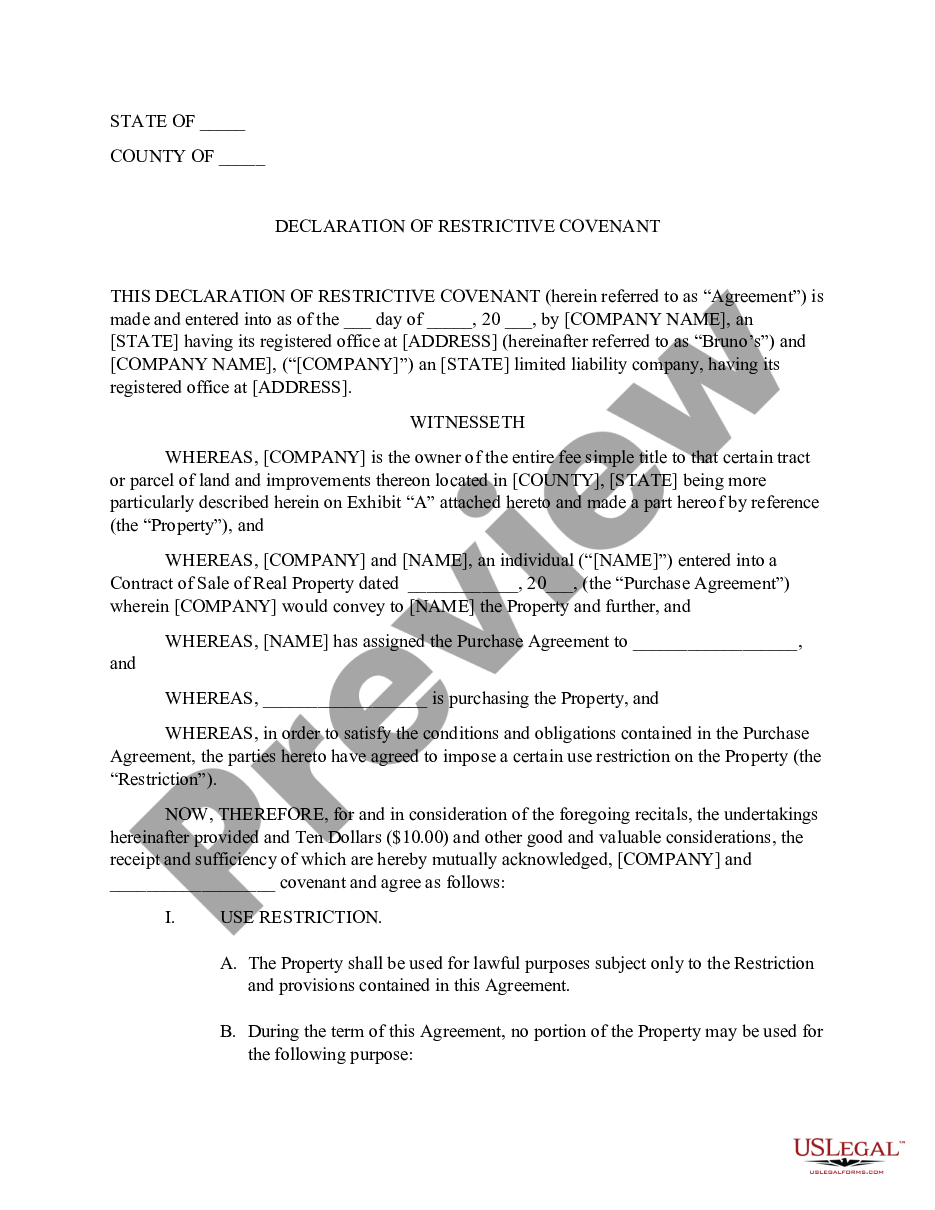
The following form shows one way in which Restrictive or Protective Covenants may be amended.
Dallas Texas Amendment to Protective Covenant
Category:
State:
Multi-State
County:
Dallas
Control #:
US-00405BG
Format:
Word;
Rich Text
Instant download
Description
Free preview



How to fill out Amendment To Protective Covenant?
Drafting documentation, such as the Dallas Amendment to Protective Covenant, to manage your legal issues can be a challenging and time-intensive task.
Many situations necessitate an attorney’s involvement, which also renders this endeavor costly.
However, you can take control of your legal concerns and handle them independently.
The onboarding process for new users is quite simple! Here’s what you need to do before obtaining the Dallas Amendment to Protective Covenant: Ensure that your template corresponds to your state/county as the regulations for drafting legal documents can differ from one state to another.
- US Legal Forms comes to your aid.
- Our site offers over 85,000 legal documents designed for various circumstances and life events.
- We ensure that each document complies with the laws of each state, alleviating your worries about potential legal compliance issues.
- If you’re already familiar with our site and have a subscription with US, you understand how easy it is to acquire the Dallas Amendment to Protective Covenant template.
- Just Log In to your account, download the template, and adapt it to your requirements.
- Lost your form? No problem. You can retrieve it in the My documents section of your account - available on both desktop and mobile.
Form popularity
FAQ
By way of agreement; By way of drawing up a Deed of Release of Restrictive Covenant or; By applying to the Upper Tribunal to have the covenant removed, if it meets certain criteria, such as, the beneficiary is unknown, the covenant cannot be enforced or the covenant is unreasonable.
Recent changes in deed restrictions Texas law means that you can change the CC&Rs with a 67 percent "yes" vote. This means that 67 percent of everyone who is eligible to vote must agree with the changes, not just those who turn up to vote on that day.
If there is a restrictive covenant on your property you may be able to remove it. The first step would be to negotiate with the original developer or landowner to enter into a formal agreement to remove the covenants from the title.
Generally speaking, it is hard to enforce a restrictive covenant after 20 years. The Limitation Act 1980 also states that claims in land should be brought within 12 years, within 12 years from the time the breach occurred, not when the deed came into force.
The Lands Chamber is required by law to charge fees. The fee for lodging an application to discharge or modify restrictive covenants is £880. The fee for hearing an application is A£1,100, but this is reduced to A£275 if the Tribunal determines the application without a hearing.
If there's not a governing body and the deed restriction is instead with a neighbor or another party, you'll need to get their consent for release from the agreement (it's usually via a form called a Restriction Release). Once everyone has signed the Restriction Release, you can file a copy with the county.
To do this, you'll need to apply to remove the restrictive covenant. An application to remove or modify the restrictive covenant can take between 18 and 24 months to go through. If the party controlling the covenant can still enforce the ruling, consider negotiation, but be prepared for them to want compensation.
Can I get a restrictive covenant removed? If there is a covenant on your property which is obsolete, you can make an application to the Upper Tribunal (Lands Chamber) (which use to be known as the Lands Tribunal) asking for the covenant to be discharged or modified.
(1) Covenant Must Be in Writing For a covenant that states by its terms that it is to last for more than one year, it must be in writing to be enforceable. Most often in Texas real estate transactions, the restrictive covenant language is contained in the deed of sale for the property.