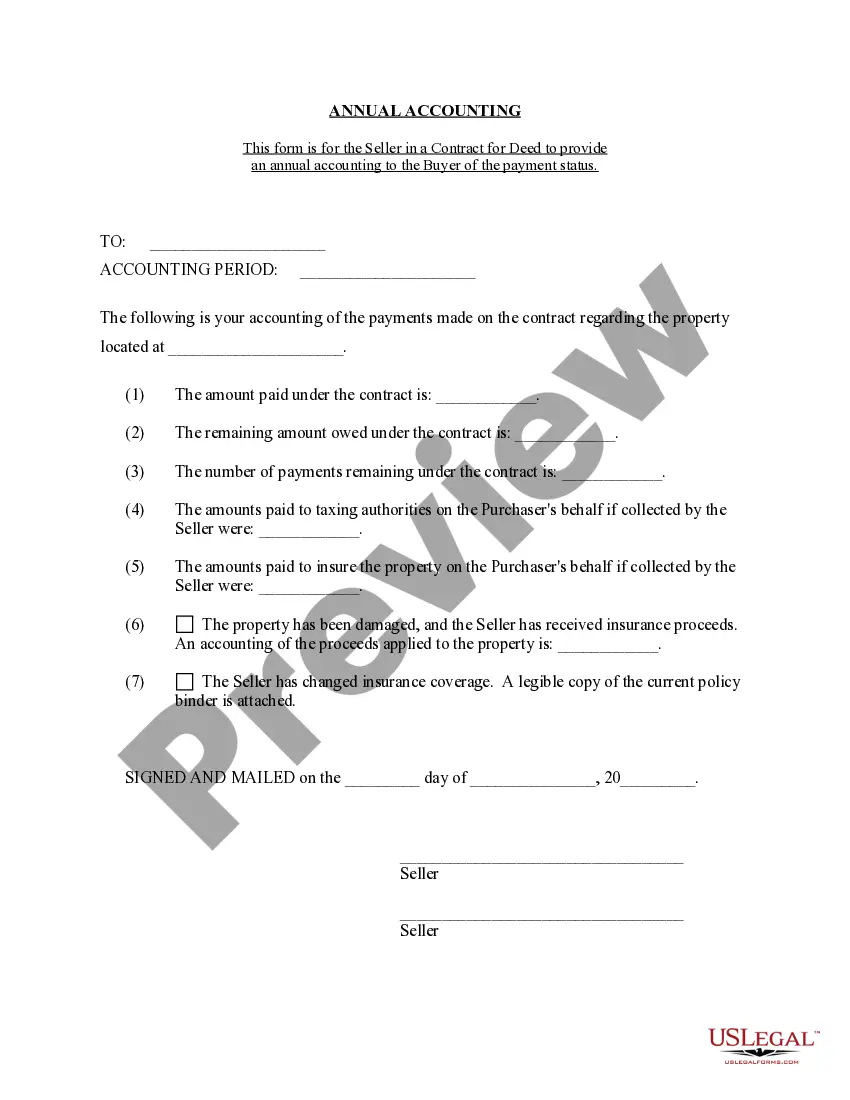
Austin Texas General Easement

State:
Texas
City:
Austin
Control #:
TX-EAS-9
Format:
Word; 
Rich Text
Instant download

Description

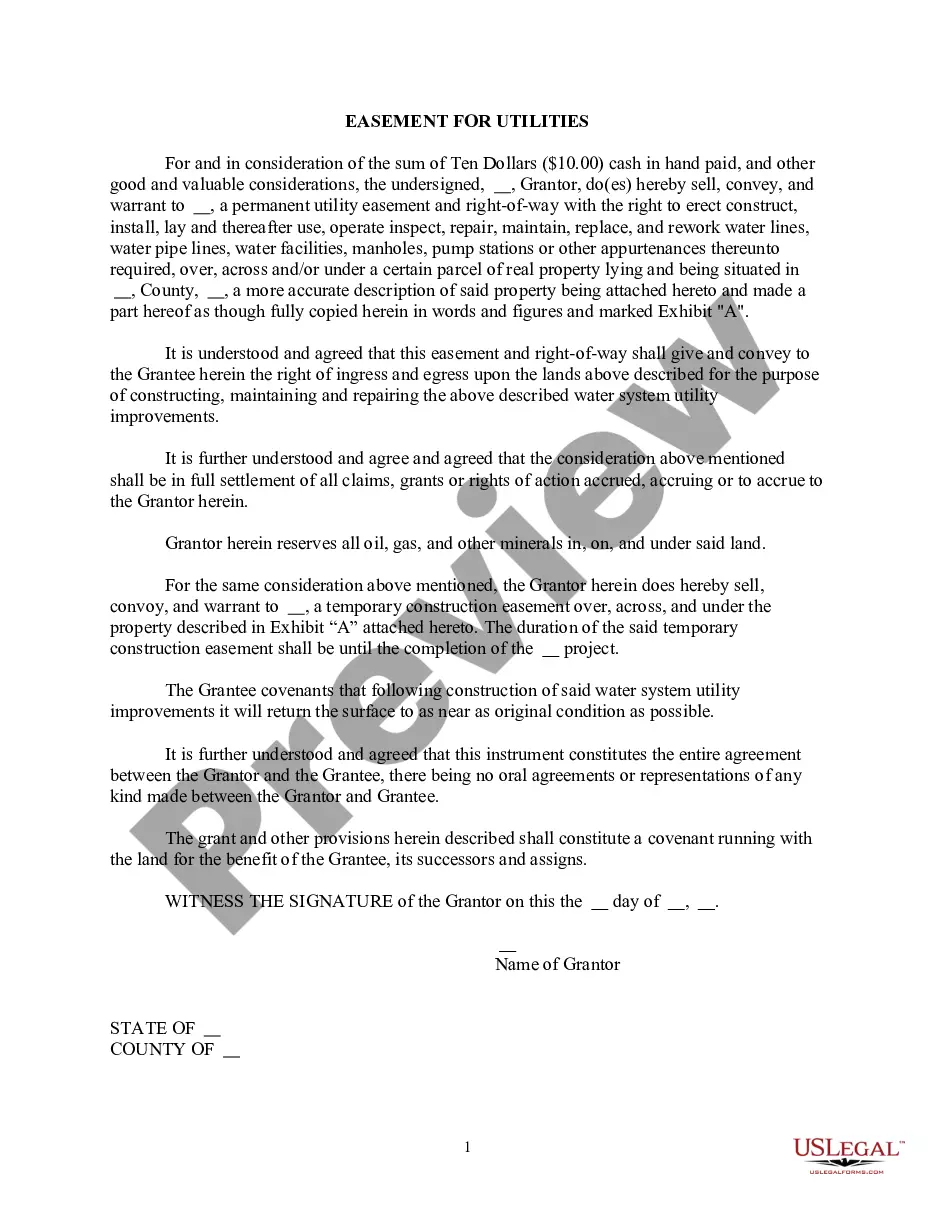
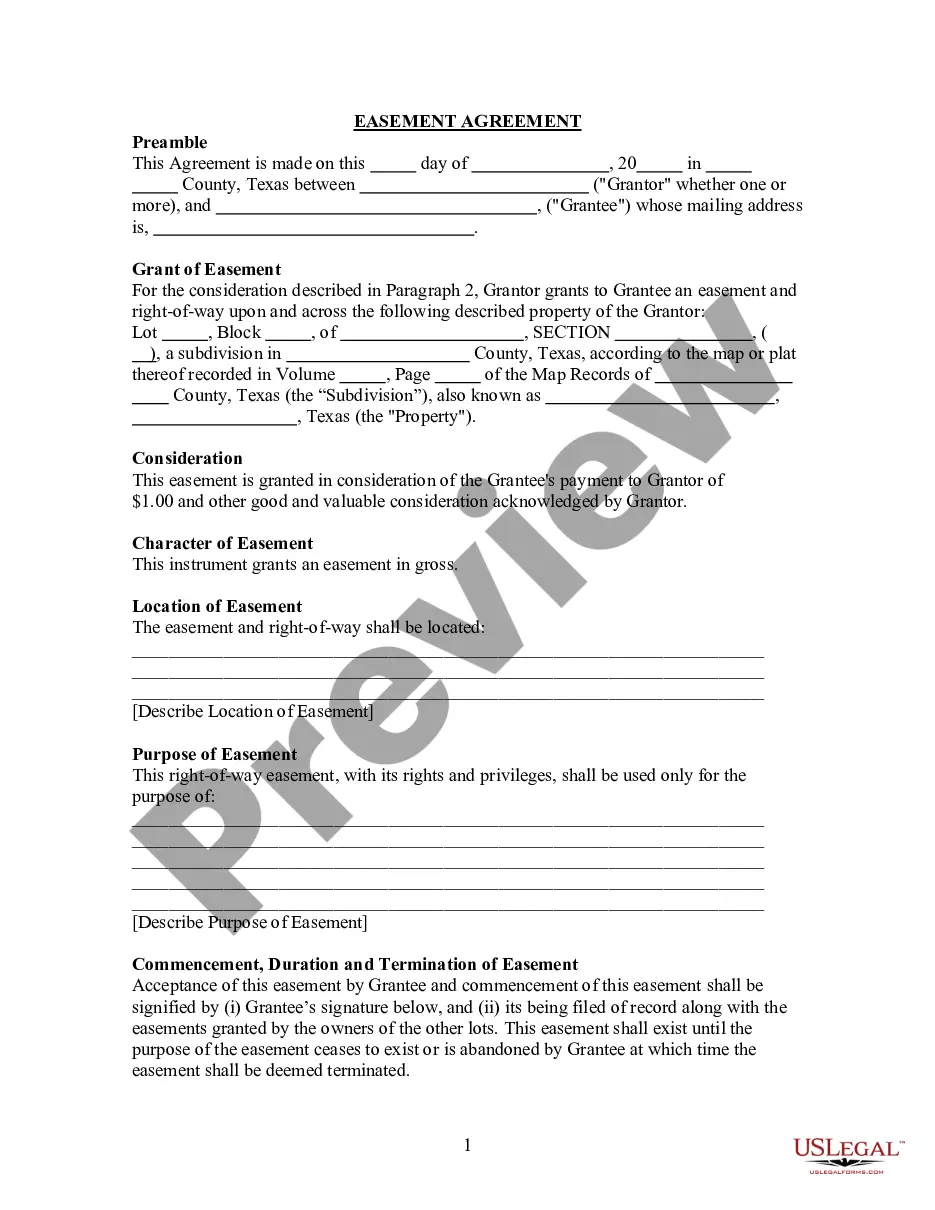
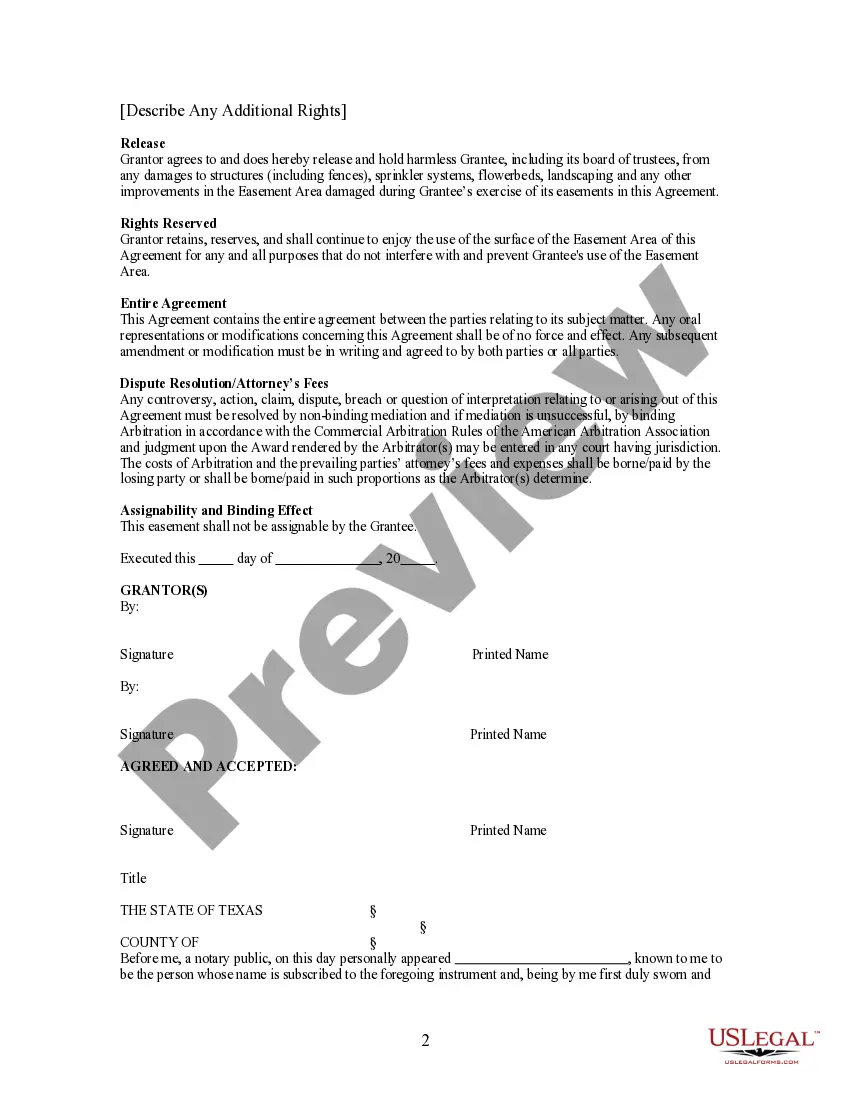
This Texas easement form is a General Easement for purposes to be designated by easement drafter.


An easement gives one party the right to go onto another party's property. That property may be owned by a private person, a business entity, or a group of owners. Utilities often get easements that allow them to run pipes or phone lines beneath private property. Easements may be obtained for access to another property, called "access and egress", use of spring water, entry to make repairs on a fence or slide area, drive cattle across and other uses. The easement is a real property interest, but separate from the legal title of the owner of the underlying land.
Free preview
  • Preview General Easement
  • Preview General Easement
  • Preview General Easement

How to fill out Texas General Easement?

Obtaining verified templates tailored to your local regulations can be difficult unless you utilize the US Legal Forms library.

This is an online resource featuring over 85,000 legal forms catering to both personal and professional requirements, as well as various real-life situations.

All documents are correctly organized by usage area and jurisdiction, making it simple to search for the Austin Texas General Easement, akin to ABC.

By following the steps outlined, you can easily navigate through the extensive online form collection.

  1. Preview the template and its description.
  2. Ensure you have selected the appropriate one that aligns with your specifications and local regulations.
  3. Look for another template, if necessary.
  4. Use the search tab above to locate the correct one in case of any discrepancies.
  5. Purchase the document.

Form popularity

FAQ

(1) Utility easements (along property lines) shall be eight feet on each side of the property line; (2) Drainage easements shall be the width of the drainage structure plus five feet on each side, rounding the total distance down to the nearest foot, or the width of the 50-year floodplain, whichever is greater.

Historically, the easement has been considered to be thirty feet across (fifteen feet on each side of the power line).

An easement is a means by which a landowner grants another person the right to use the landowner's property for a specific purpose. The land on which the easement is granted is referred to as the ?servient estate?, and the land the easement benefits is referred to as the ?dominant estate?.

For the most part, a property owner can't block an easement if it was already mentioned in the property's deed. If the property owner tries to contest the easement's boundaries, then it's a good idea to have a property survey conducted by a reputable local company in Guadalupe County, TX.

HEALTH & SAFETY CODE § 342.004. If a city has an easement, the city has authority to maintain the easement in a way that protects the city's property rights while still allowing some use by the property owner. The easement holder also has the duty to maintain the easement.

The short answer is ? the owner of the easement is responsible for maintaining the easement.

Jones, 578 S.W. 2d 669 (Tex. 1974). The easement use must be uninterrupted and continuous for a period of at least 10 years.

This publication explains two broad categories of easements?private and public. Private easements are those in which the enjoyment and use are restricted to one or a few individuals. Public easements are those in which the rights of enjoyment and use are vested in the public generally or in an entire community.

Interesting Questions

Trusted and secure by over 3 million people of the world’s leading companies

Austin Texas General Easement