Harris Texas General Denial and Affirmative Defenses
Description

How to fill out Texas General Denial And Affirmative Defenses?
We consistently endeavor to minimize or evade legal repercussions when engaging with intricate legal or financial issues.
To achieve this, we seek legal assistance that is typically very expensive.
However, not all legal challenges are quite so complicated.
Many of them can be managed independently.
Make sure to utilize US Legal Forms whenever you need to obtain and download the Harris Texas General Denial and Affirmative Defenses or any other form swiftly and securely.
- US Legal Forms is an online repository of current DIY legal documents encompassing everything from wills and powers of attorney to registration articles and dissolution petitions.
- Our platform enables you to handle your affairs independently without resorting to legal advice.
- We offer access to legal form templates that are not always publicly available.
- Our templates are specific to states and regions, which greatly simplifies the search process.
Form popularity
FAQ
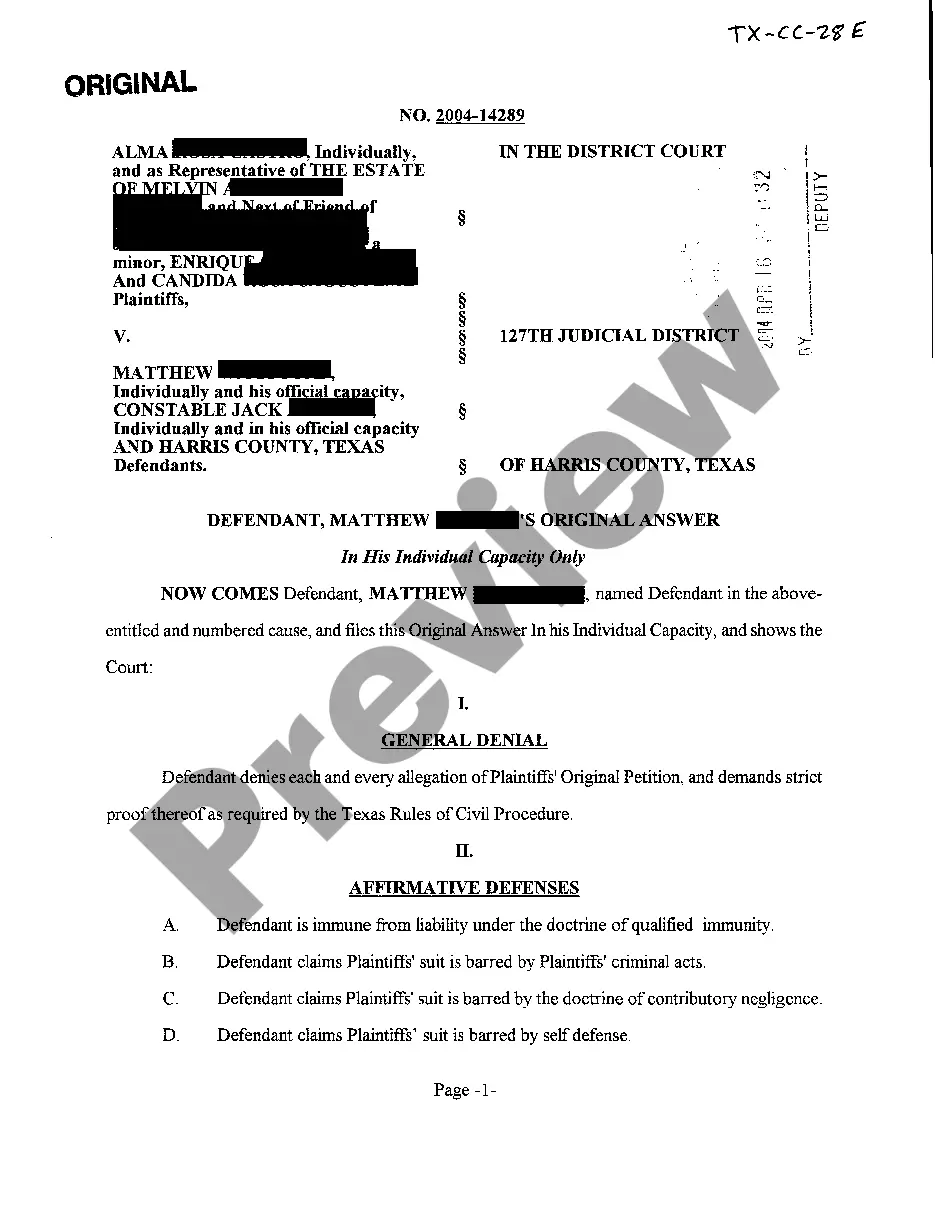
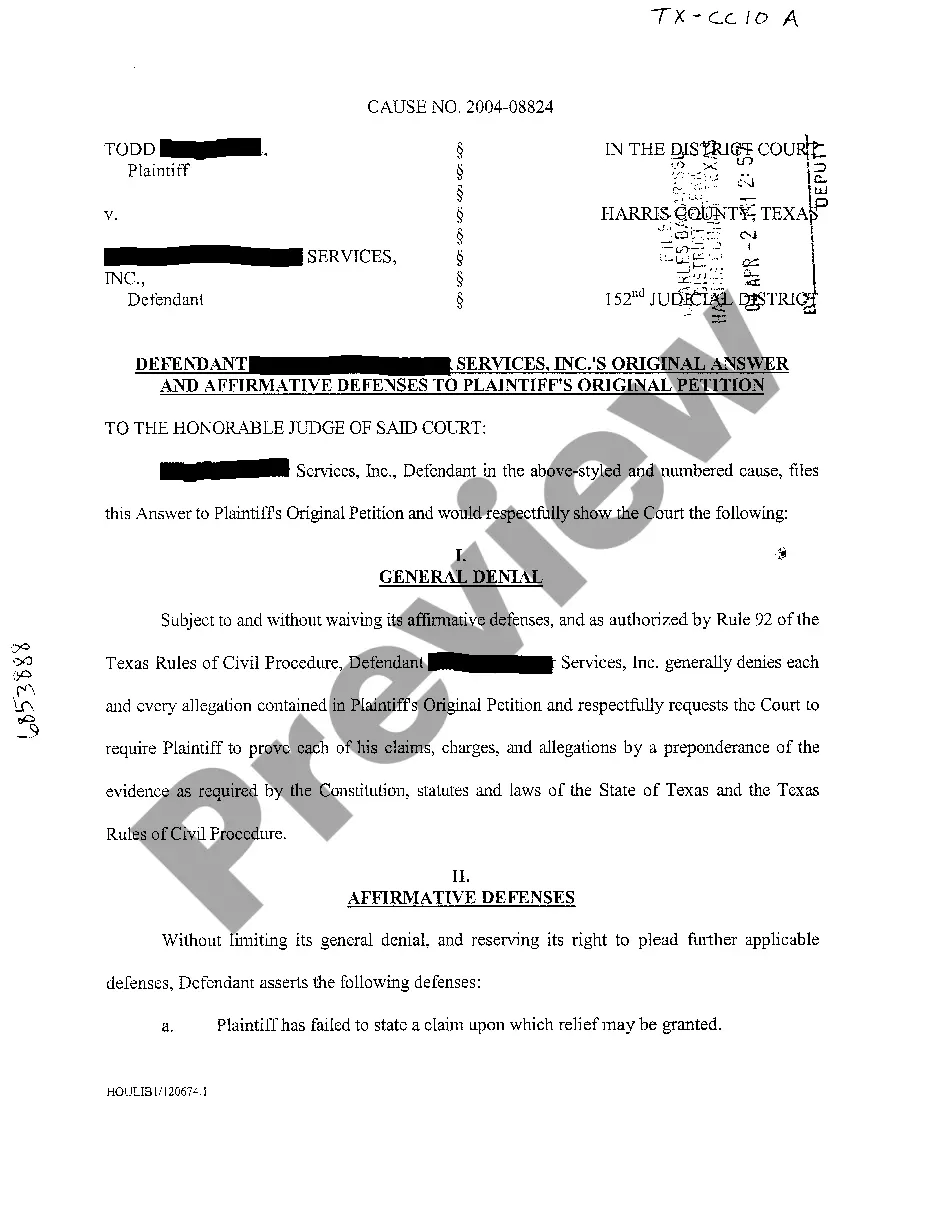
In Texas family law, a general denial permits a party to deny all allegations in a family law suit, such as divorce or custody cases. This approach allows individuals to contest claims without initially presenting a detailed counterargument. A strategic general denial can set the stage for further negotiation or litigation. Familiarizing yourself with Harris Texas General Denial and Affirmative Defenses helps you leverage this option effectively, and UsLegalForms offers valuable tools for drafting your answers.
Pleading affirmative defenses requires that you assert specific defenses that, if proven, will negate liability even if the plaintiff's factual claims are true. In Texas, affirmative defenses must be explicitly stated in your answer alongside a general denial, ensuring that the court recognizes your legal strategies. Crafting these pleadings can be complex, but understanding Harris Texas General Denial and Affirmative Defenses can clarify this process. UsLegalForms provides templates that simplify the formulation of effective affirmative defenses.
General denials are not typically accepted in federal court as they are in Texas state court. In federal court, defendants must provide a more detailed answer, specifying which allegations they deny. The rules of federal procedure require clarity and specificity. If you need guidance on handling responses, consider the resources on Harris Texas General Denial and Affirmative Defenses available through UsLegalForms.
The general denial rule in Texas allows a defendant to deny all allegations made by the plaintiff in a lawsuit. This response simplifies the legal process by requiring no specific admissions or defenses. By using a general denial, defendants can challenge the claims against them without providing detailed reasons. Understanding the Harris Texas General Denial and Affirmative Defenses will help you navigate this aspect of Texas law effectively.
The three major affirmative defenses to negligence claims include comparative negligence, assumption of risk, and contributory negligence. Each of these defenses presents a different strategy for contesting liability by indicating that the plaintiff also shares some responsibility for the incident. By understanding these defenses within the framework of Harris Texas General Denial and Affirmative Defenses, you can engage more effectively with legal challenges.
The five common affirmative defenses include consent, self-defense, necessity, insanity, and statute of limitations. Each defense provides a distinct legal avenue that can potentially absolve a defendant from liability in various legal claims. When dealing with issues related to Harris Texas General Denial and Affirmative Defenses, it’s beneficial to be aware of these options to build a robust legal strategy.
Rule 11 addresses the penalties for presenting frivolous claims or defenses in court. In the realm of Harris Texas General Denial and Affirmative Defenses, it requires that all submissions to the court are well-grounded in fact and law. Failure to adhere to this rule can lead to sanctions, including fines, which emphasizes the importance of being thorough and truthful in your legal documents.
Affirmative defenses can vary widely, but common types include statutory defenses, constitutional defenses, and policy defenses. Each type serves to counteract the claims made against a defendant by providing legal reasoning as to why the claims should not hold. Familiarity with these types is essential in the context of Harris Texas General Denial and Affirmative Defenses, as they frame your legal response.
In the context of Harris Texas General Denial and Affirmative Defenses, affirmative defenses to Americans with Disabilities Act (ADA) claims often include legitimate business necessity, undue hardship, and safety concerns. These defenses assert that the employer's actions were justified, given the circumstances. Understanding these defenses can help you navigate complex legal situations effectively, and resources like USLegalForms can provide templates and guidance.
Yes, you can file a general denial in Texas as part of your legal response to a lawsuit. This defense allows defendants to contest all claims made against them without providing specific reasons. If you find yourself navigating a lawsuit in Harris Texas, employing a general denial can open up your options while you prepare your case further.