Tarrant Texas Plaintiffs Original Petition regarding Breach of Land Purchase Contract
Description
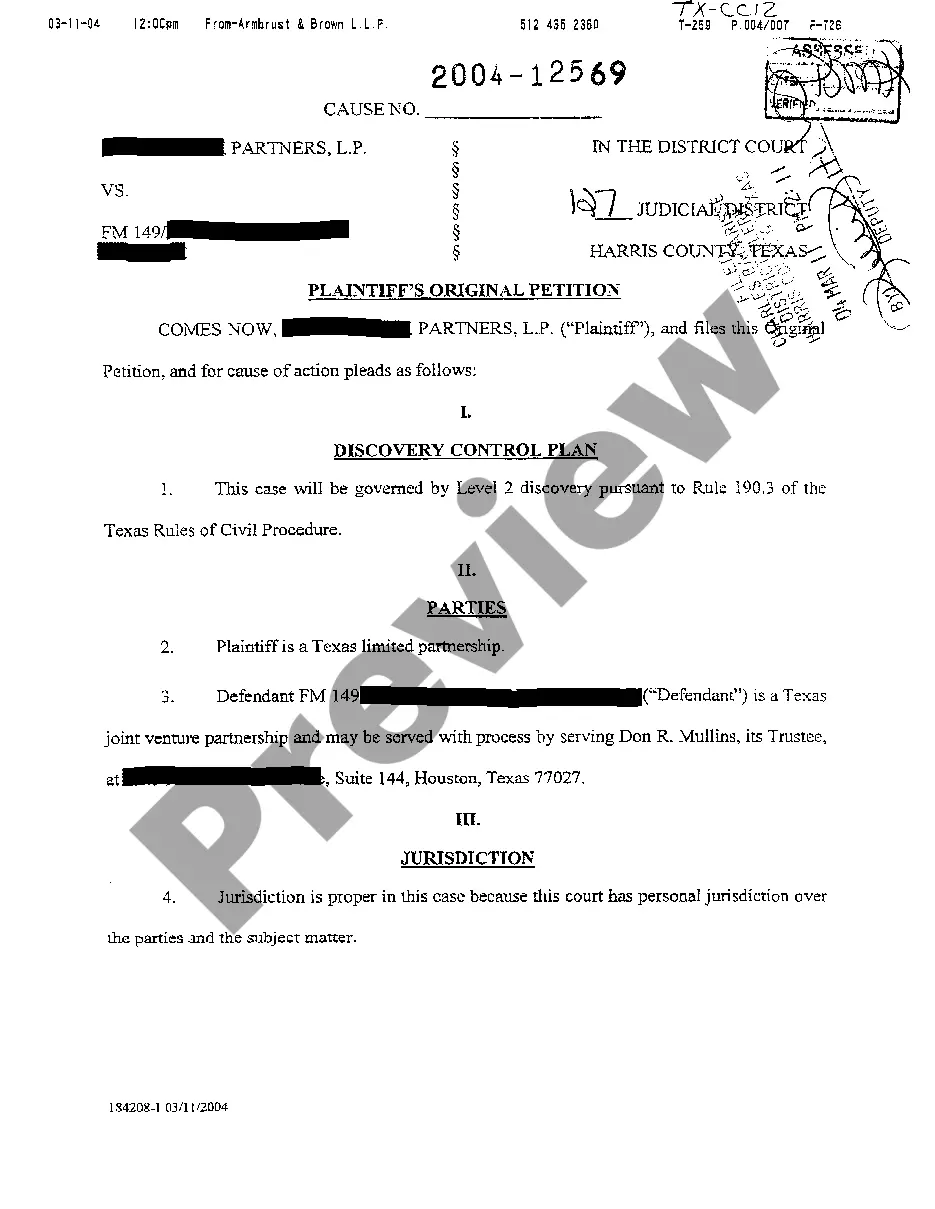
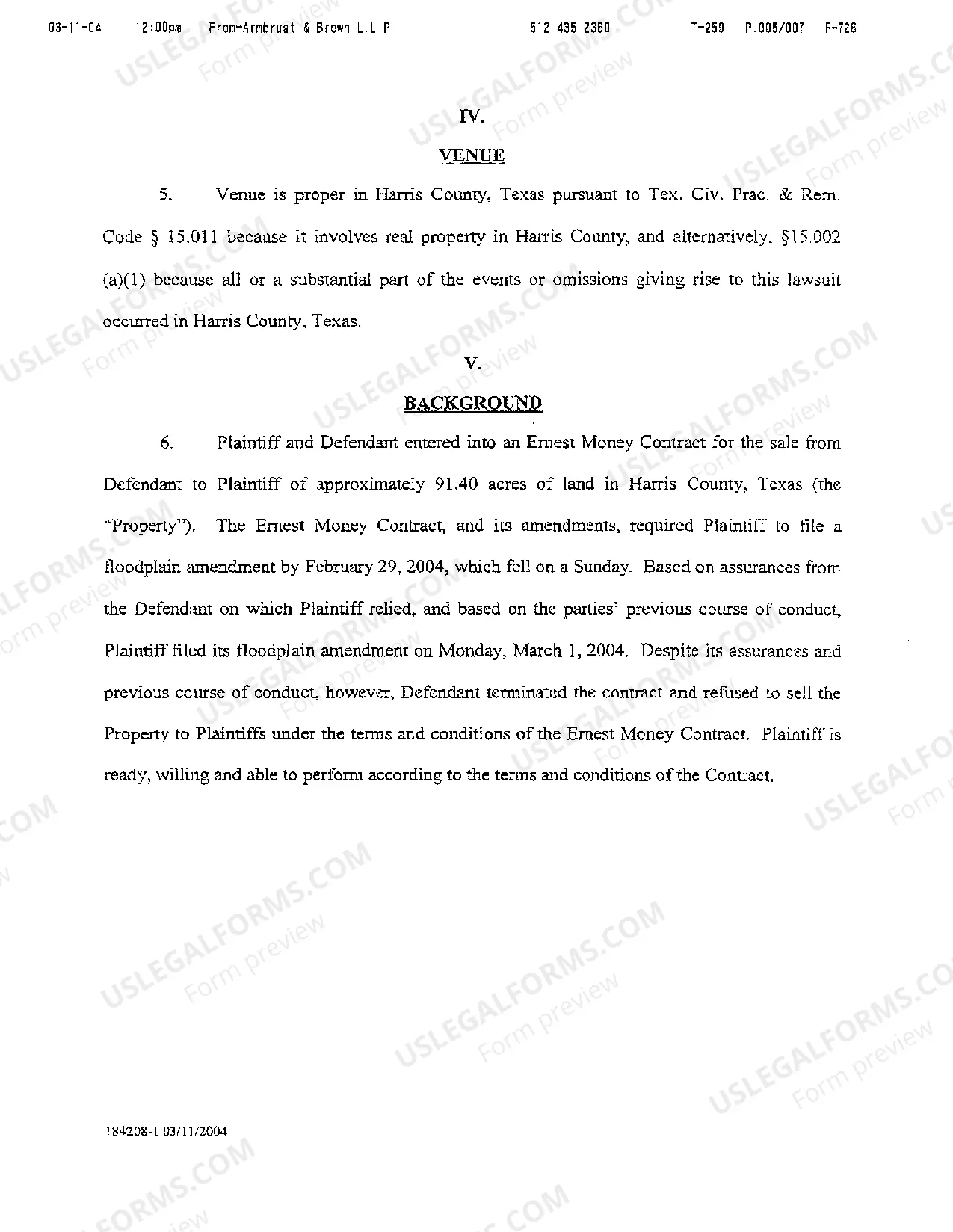
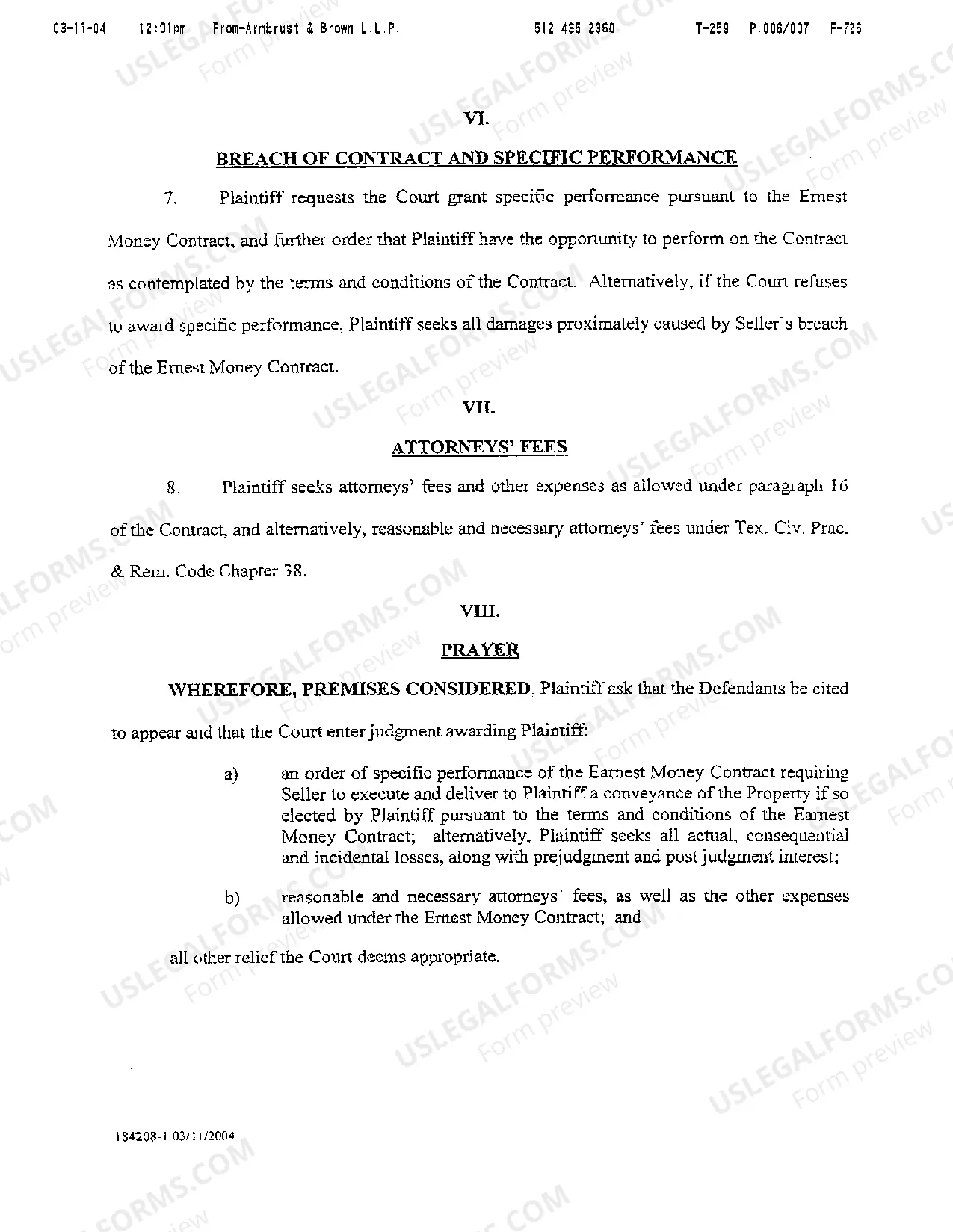
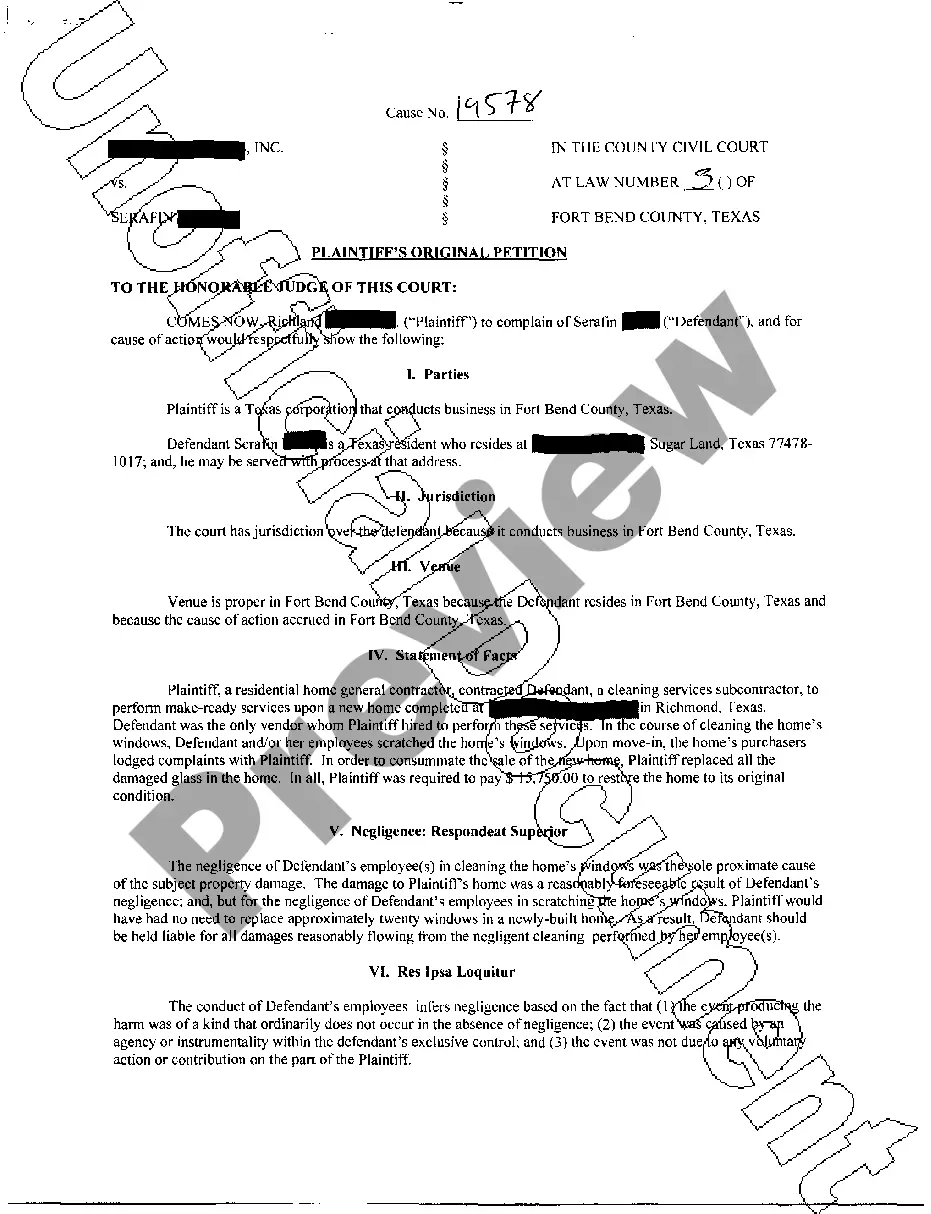
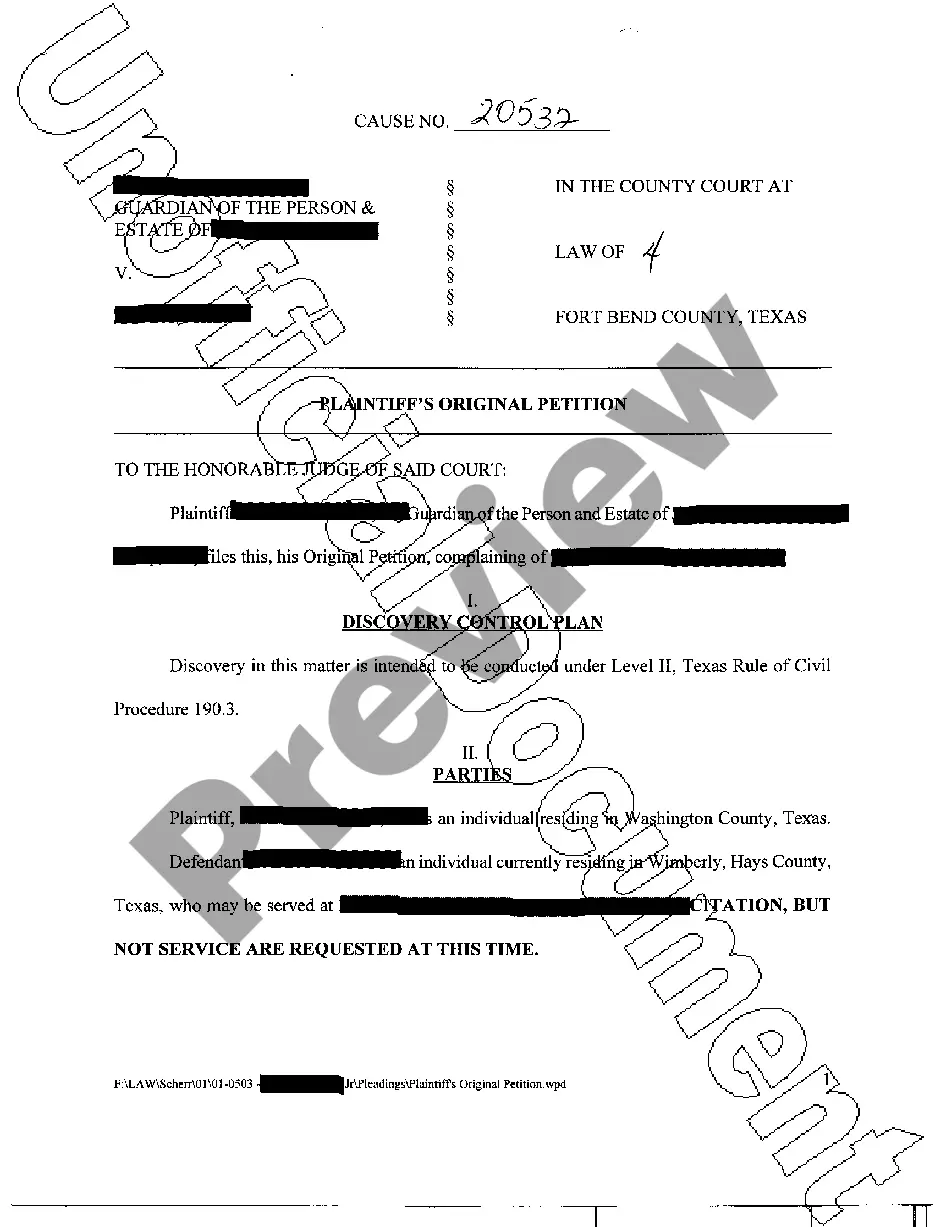
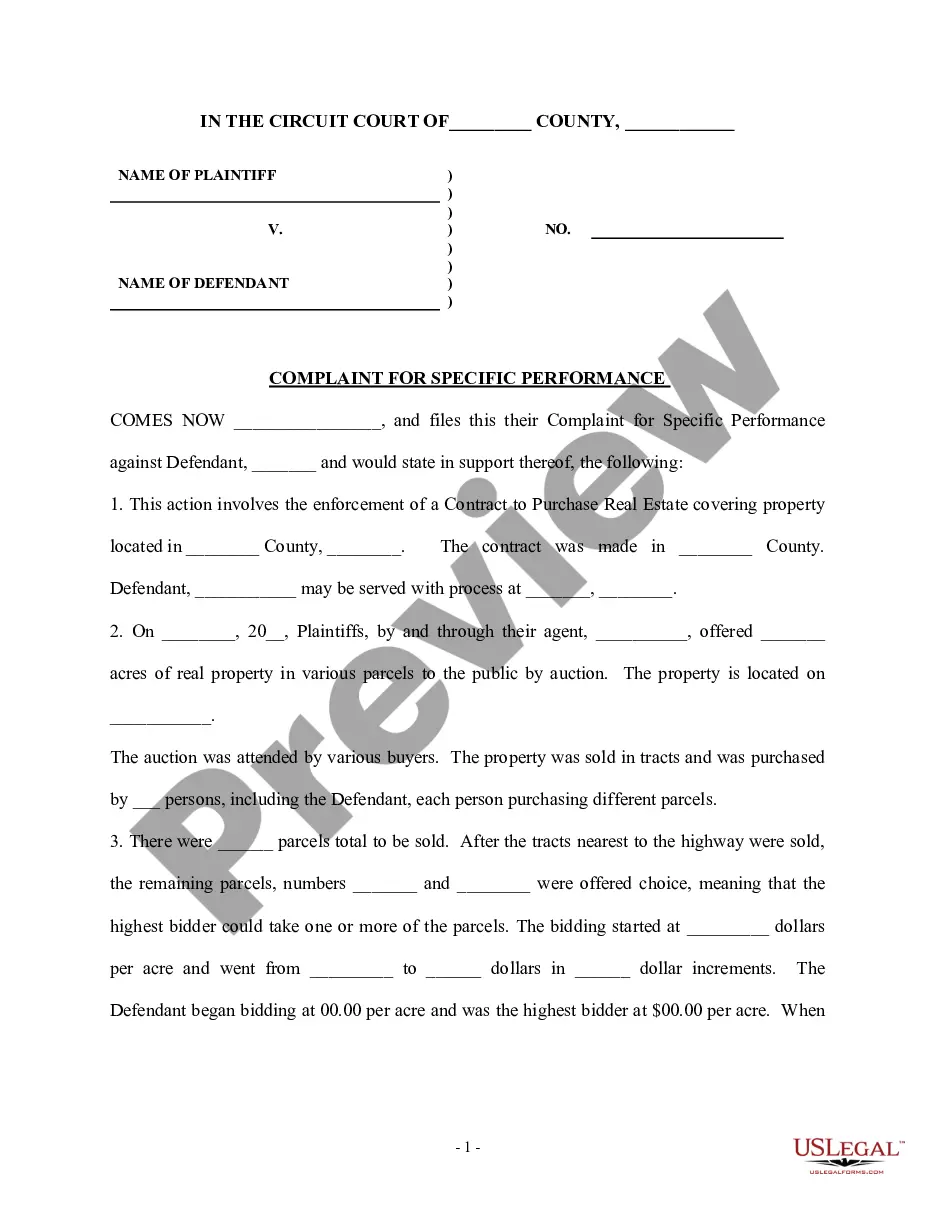

How to fill out Texas Plaintiffs Original Petition Regarding Breach Of Land Purchase Contract?
Regardless of one's social or professional standing, completing legal documents is a regrettable requirement in today's work setting.
Frequently, it’s nearly unfeasible for an individual without a legal background to assemble this kind of documentation from scratch, primarily due to the intricate terminology and legal subtleties they involve.
This is where US Legal Forms can come to the rescue.
Confirm that the template you have found is suitable for your location as the laws of one state or county do not apply to another.
Examine the document and read a brief summary (if available) of cases for which the form can be utilized.
- Our service offers an extensive collection with over 85,000 ready-to-use state-specific forms that are applicable for almost any legal matter.
- US Legal Forms is also a fantastic resource for associates or legal advisers looking to save time with our DIY documents.
- Whether you need the Tarrant Texas Plaintiff's Original Petition regarding Breach of Land Purchase Agreement or any other relevant paperwork for your state or county, US Legal Forms has everything you need at your fingertips.
- Here’s how to acquire the Tarrant Texas Plaintiff's Original Petition regarding Breach of Land Purchase Agreement in minutes using our reliable service.
- If you are currently a member, you can proceed to Log In to your account to download the necessary form.
- However, if you’re new to our collection, be sure to follow these guidelines before obtaining the Tarrant Texas Plaintiff's Original Petition regarding Breach of Land Purchase Agreement.
Form popularity
FAQ
In Part V of these Rules of Civil Procedure: (a) ?Answer? is the written response that a party who is sued must file with the court after being served with a citation. (b) ?Citation? is the court-issued document required to be served upon a party to inform the party that it has been sued.
Counting from the day you were served, you have 20 days plus the following Monday, at 10 a.m. to file an answer. If you do not file an answer by the deadline, the Plaintiff can ask the court to enter a default judgment against you.
File (turn in) your completed answer form with the court. To file online, go to E-File Texas and follow the instructions. To file in person, take your answer (and copies) to the district clerk's office in the county where the plaintiff filed the case.
Writing Your Response For each point that you admit or deny, include a brief reason why. An example would be if the plaintiff alleged you never paid back a loan you've already repaid. You can include any affirmative defense at the end of these responses, such as the statute of limitations nullifying the complaint.
Small Claim Cases in Texas Justice courts provide a more informal setting than the district or county courts, so parties will often represent themselves rather than hiring an attorney. The limit to the amount that a person can sue for in small claims cases is $20,000.
Texas law provides that every county in the state have a Small Claims Court as a forum for settling legal disputes involving cases for money damages up to $10,000. It costs approximately $85 to file a case.
You must file your claim within any applicable statute of limitations. For example, a suit to collect money owed on a contract must be brought within four (4) years. A suit for personal injury or damage to property must be brought within two (2) years.
In Texas, a two-year statute of limitation is the norm for torts based on trespass to personal or property rights. For example, injury to personal property, conversion, personal injury, and wrongful death are all torts subject to the two-year statute of limitation.
You must submit an original and one copy of the complaint, plus a copy for each defendant being sued. 2. Filing Fee: A filing fee of $402.00 is required to file a complaint. A person who cannot afford to pay this fee may request to proceed ?in forma pauperis? (referred to as ?IFP?).
Effective January 1, 2021, the Texas Supreme Court now permits lower courts to substitute serve defendants by social media, email, or other technology. That means plaintiffs will have much greater means for serving defendants who remain physically elusive but digitally accessible.