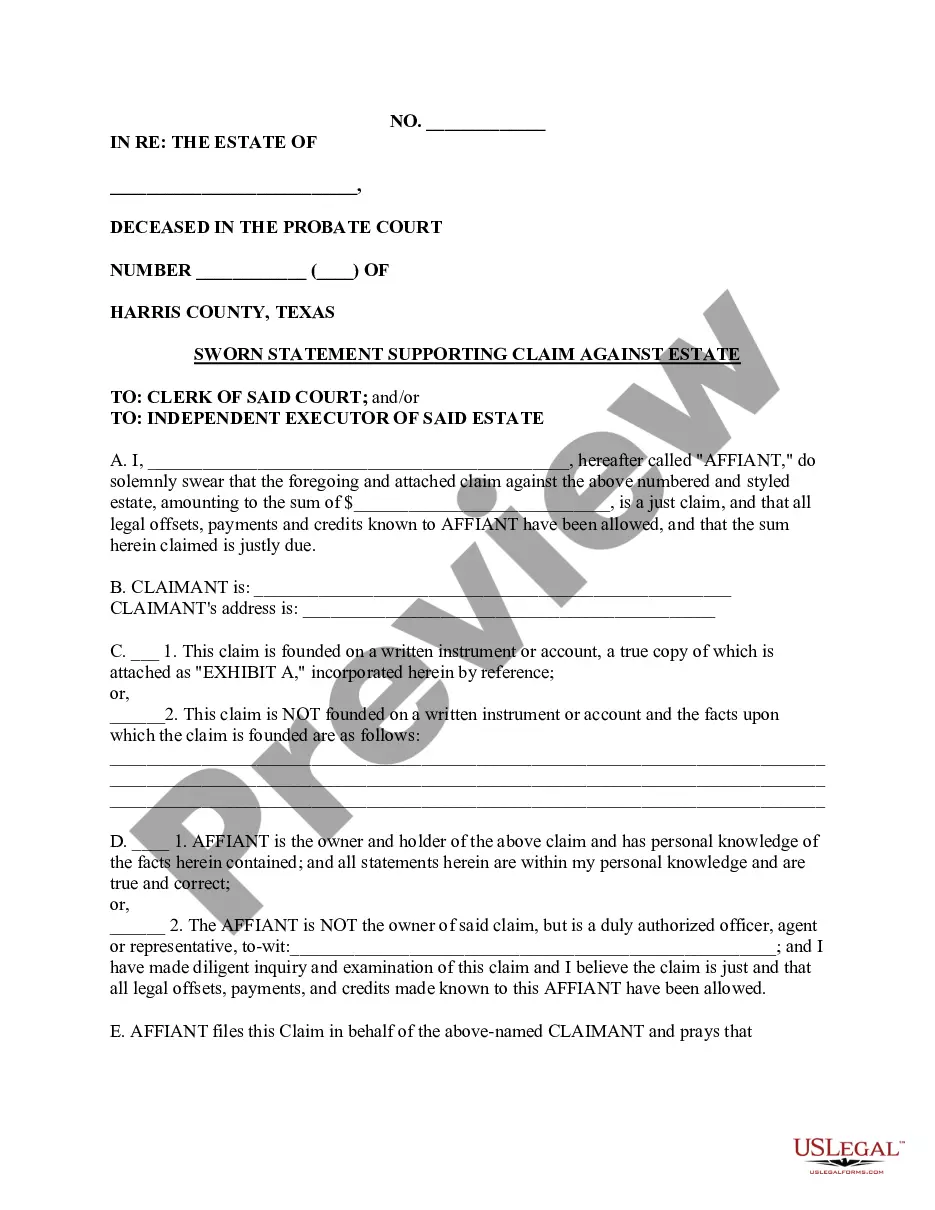
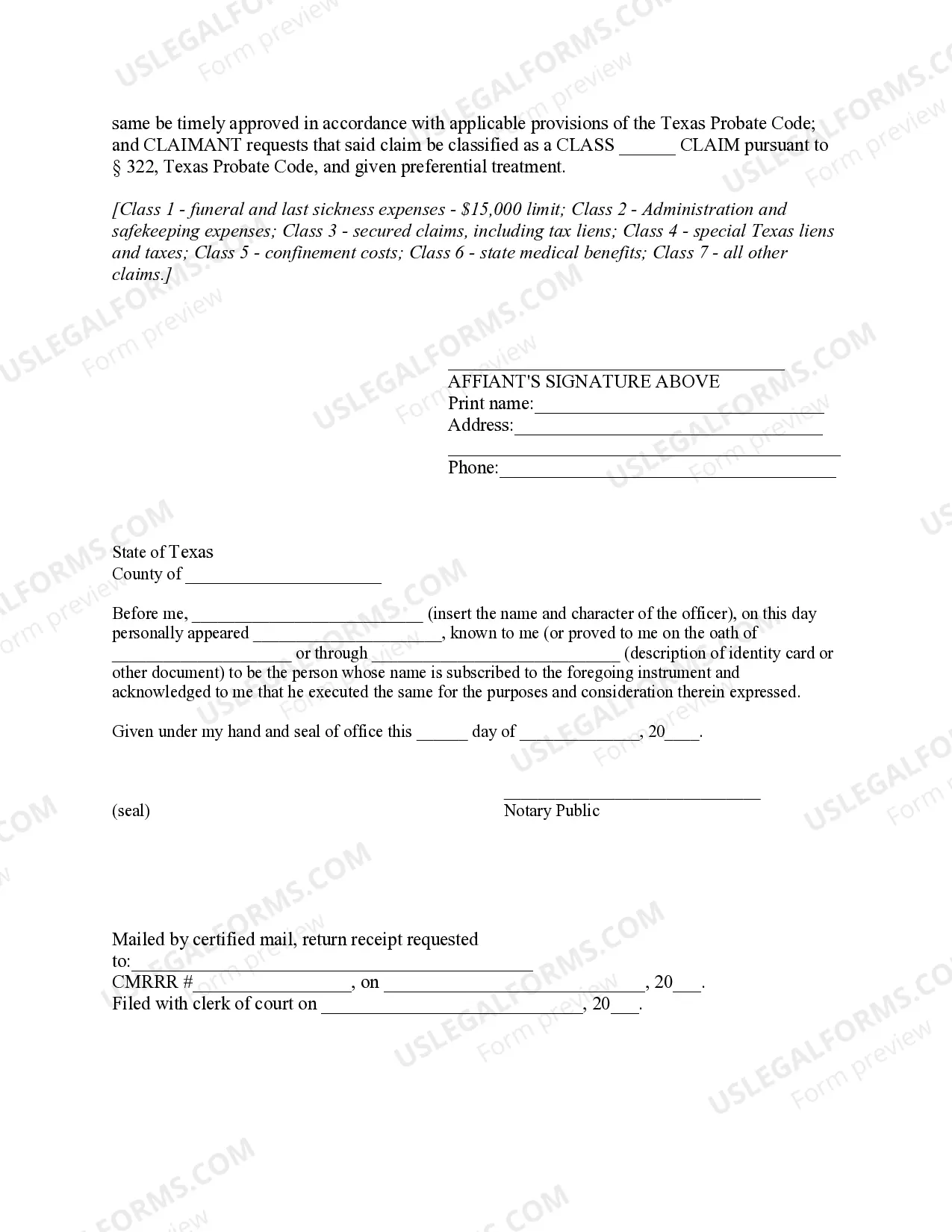
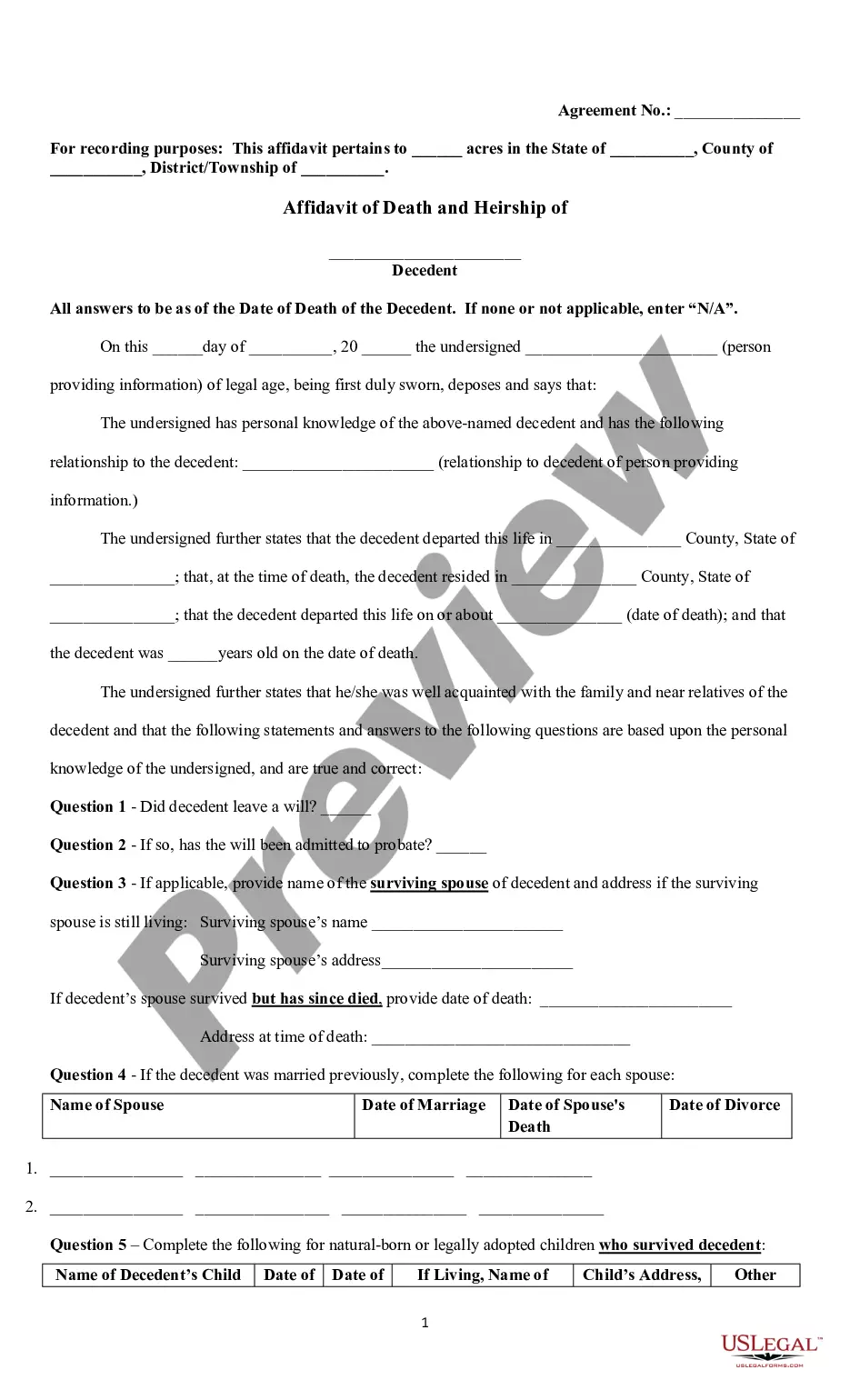
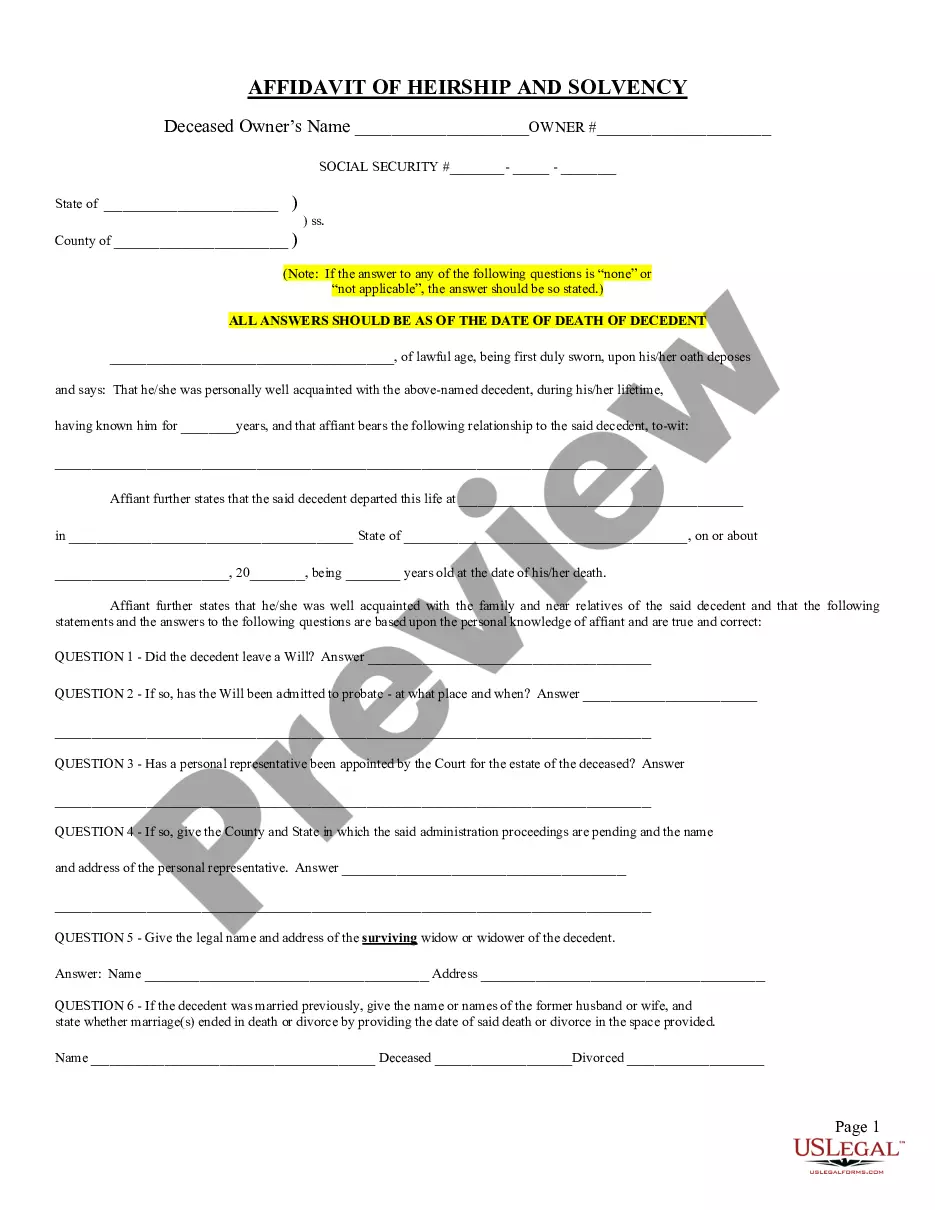
Houston Texas Sworn Statement Supporting Claim Against Estate
Description

Get your form ready online
Our built-in tools help you complete, sign, share, and store your documents in one place.
Make edits, fill in missing information, and update formatting in US Legal Forms—just like you would in MS Word.
Download a copy, print it, send it by email, or mail it via USPS—whatever works best for your next step.
Sign and collect signatures with our SignNow integration. Send to multiple recipients, set reminders, and more. Go Premium to unlock E-Sign.
If this form requires notarization, complete it online through a secure video call—no need to meet a notary in person or wait for an appointment.
We protect your documents and personal data by following strict security and privacy standards.

Make edits, fill in missing information, and update formatting in US Legal Forms—just like you would in MS Word.

Download a copy, print it, send it by email, or mail it via USPS—whatever works best for your next step.

Sign and collect signatures with our SignNow integration. Send to multiple recipients, set reminders, and more. Go Premium to unlock E-Sign.

If this form requires notarization, complete it online through a secure video call—no need to meet a notary in person or wait for an appointment.

We protect your documents and personal data by following strict security and privacy standards.
Looking for another form?
How to fill out Texas Sworn Statement Supporting Claim Against Estate?
If you have previously availed yourself of our service, sign in to your account and store the Houston Sworn Statement Supporting Claim Against Estate - Texas on your device by clicking the Download button. Ensure your subscription remains valid. If it has expired, renew it as per your payment plan.
If this is your first interaction with our service, follow these straightforward steps to acquire your document.
You have lifelong access to each document you have purchased: you can retrieve it in your profile under the My documents section whenever you wish to use it again. Utilize the US Legal Forms service to conveniently find and store any template for your personal or professional requirements!
- Ensure you’ve located the correct document. Review the details and utilize the Preview feature, if available, to confirm it fits your requirements. If it does not meet your expectations, use the Search tab above to find the suitable one.
- Purchase the template. Click the Buy Now button and select either a monthly or yearly subscription plan.
- Establish an account and process payment. Use your credit card information or the PayPal option to finish the transaction.
- Obtain your Houston Sworn Statement Supporting Claim Against Estate - Texas. Select the file format for your document and save it to your device.
- Fill out your document. Print it or use professional online editors to complete it and sign it electronically.
Form popularity
FAQ
The executor generally has three years after their appointment to distribute the remaining assets (after debts and disputes are resolved). The Texas probate process can be fairly simple in most cases.
Residuary beneficiaries are additionally entitled to receive a copy of the estate accounts, once these have been prepared, so that they can see how their share of the inheritance has been calculated.
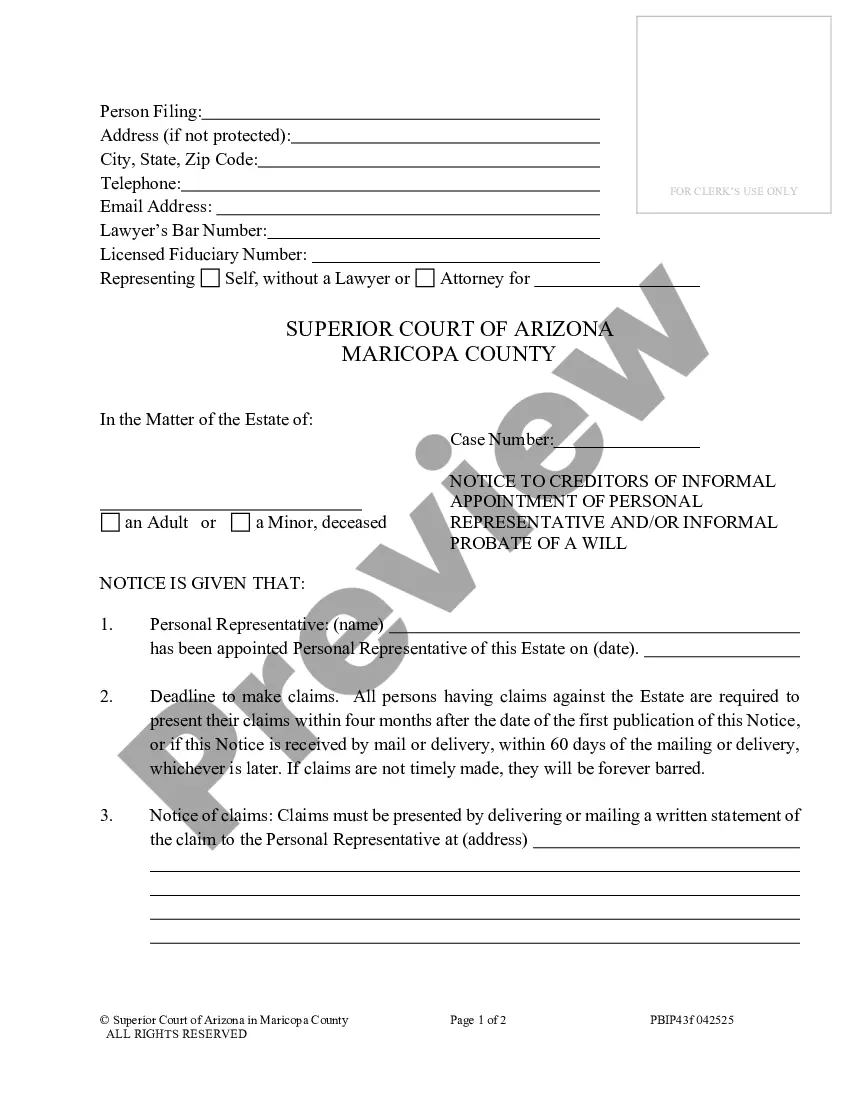
How Long Do You Have to Make a Claim? Once a Grant of Probate or letters of administration have been issued, there is a deadline of six months during which you can lodge a claim against a deceased person's estate.
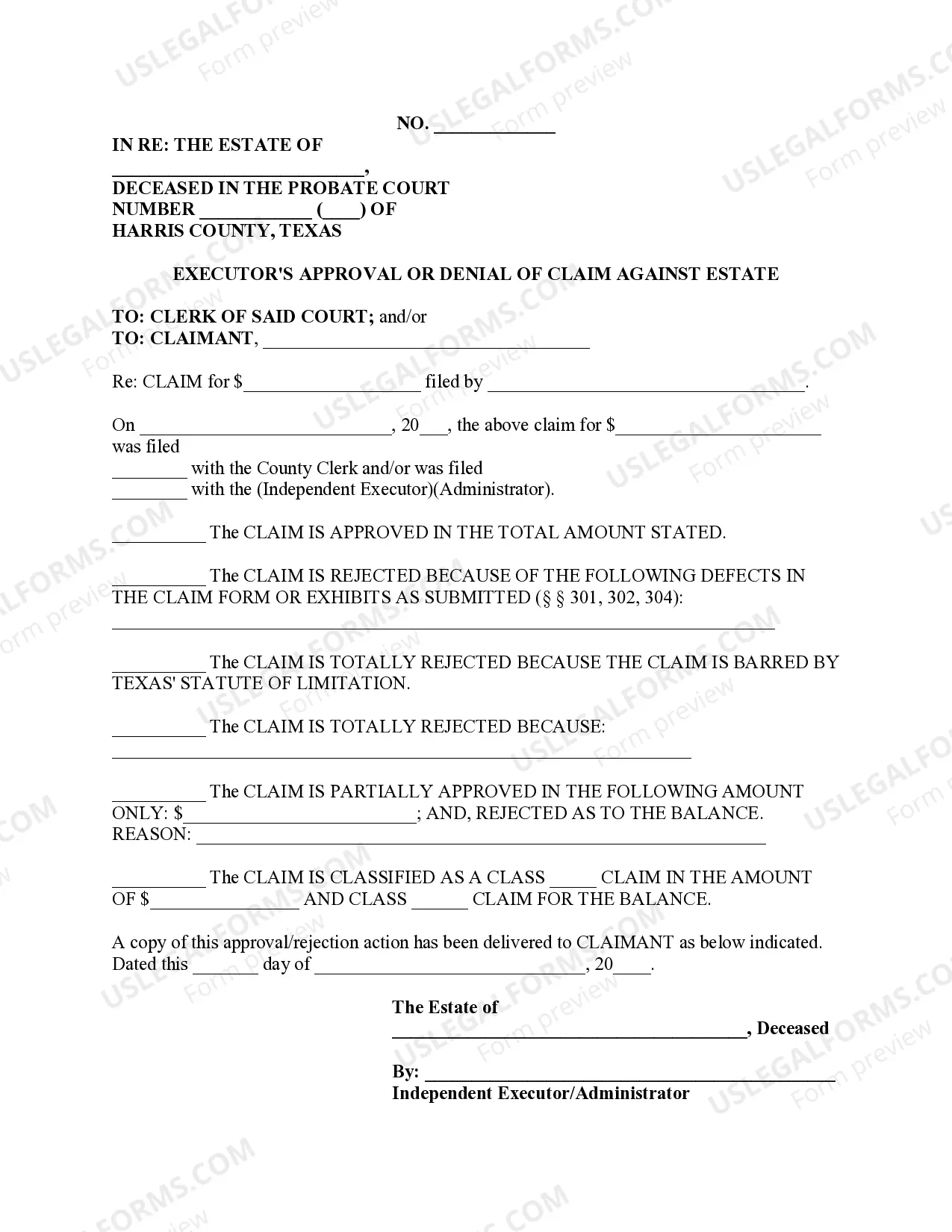
Secured creditors generally have six months from the executor's appointment, or four months after their receipt of the notice from the executor, to file their claim against the estate. After this time limit, any claim submitted will be barred, meaning that the creditor will be unable to sue the estate.
If an estate is insolvent and a legacy cannot be paid in full, the beneficiaries of that estate will have a right to see the accounts. This is also true for beneficiaries whose full legacy cannot be paid for other reasons.
Once the assets of the estate have been distributed, the personal representative must issue a final accounting with the court, which must also be sent to each beneficiary.
(b) A personal representative holding a claim against the decedent shall file the claim in the court granting the letters testamentary or of administration, verified by affidavit as required in other cases, within six months after the date the representative qualifies, or the claim is barred.
Generally speaking, the only people who are entitled to see Estate Accounts during Probate are the Residuary Beneficiaries of the Estate.
A claim for money against an estate must be accompanied by an affidavit that supports the claim, showing that: The claim is just; All legal offsets, payments, and credits known to the affiant have been allowed; and, If the claim is not founded on a written instrument or account, the facts on which the claim is founded.
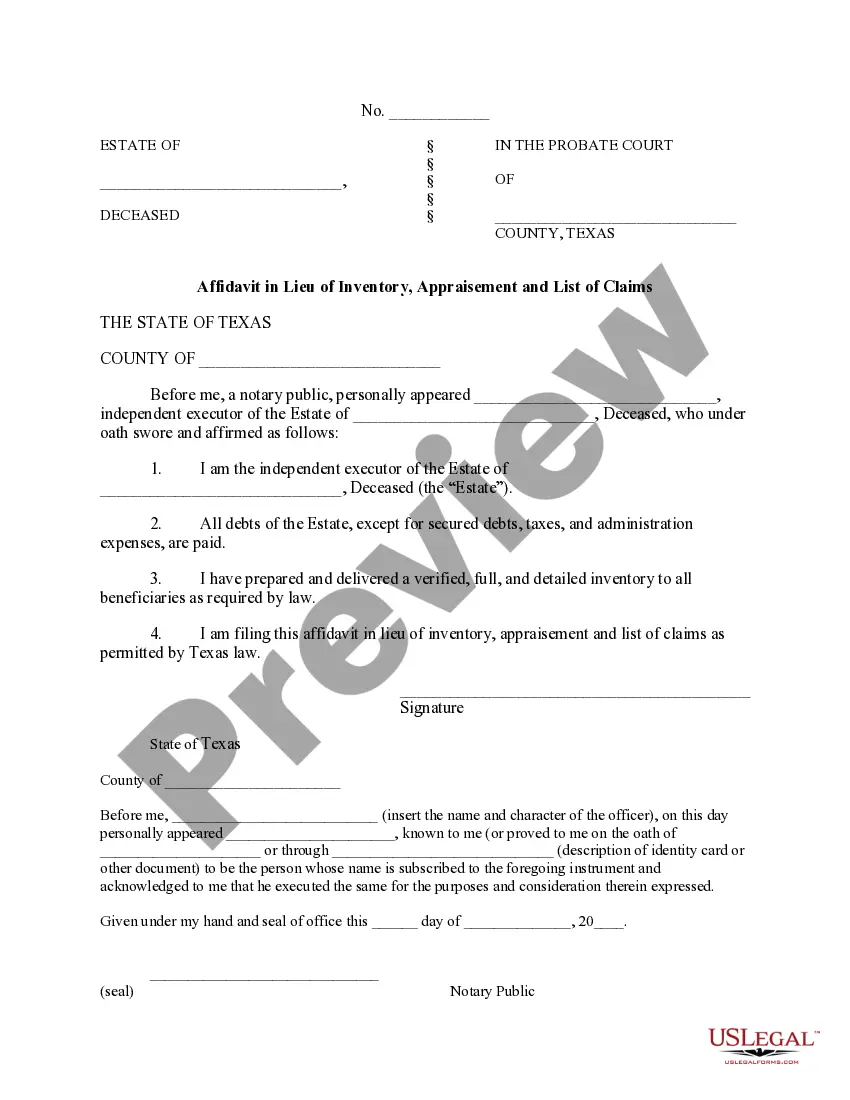
In Texas, while an executor of an estate does have to file an inventory, appraisement, and list of claims with the probate court, they are not necessarily required to show accountings to beneficiaries. A personal representative must file an inventory of the estate assets within 90 days of qualification.