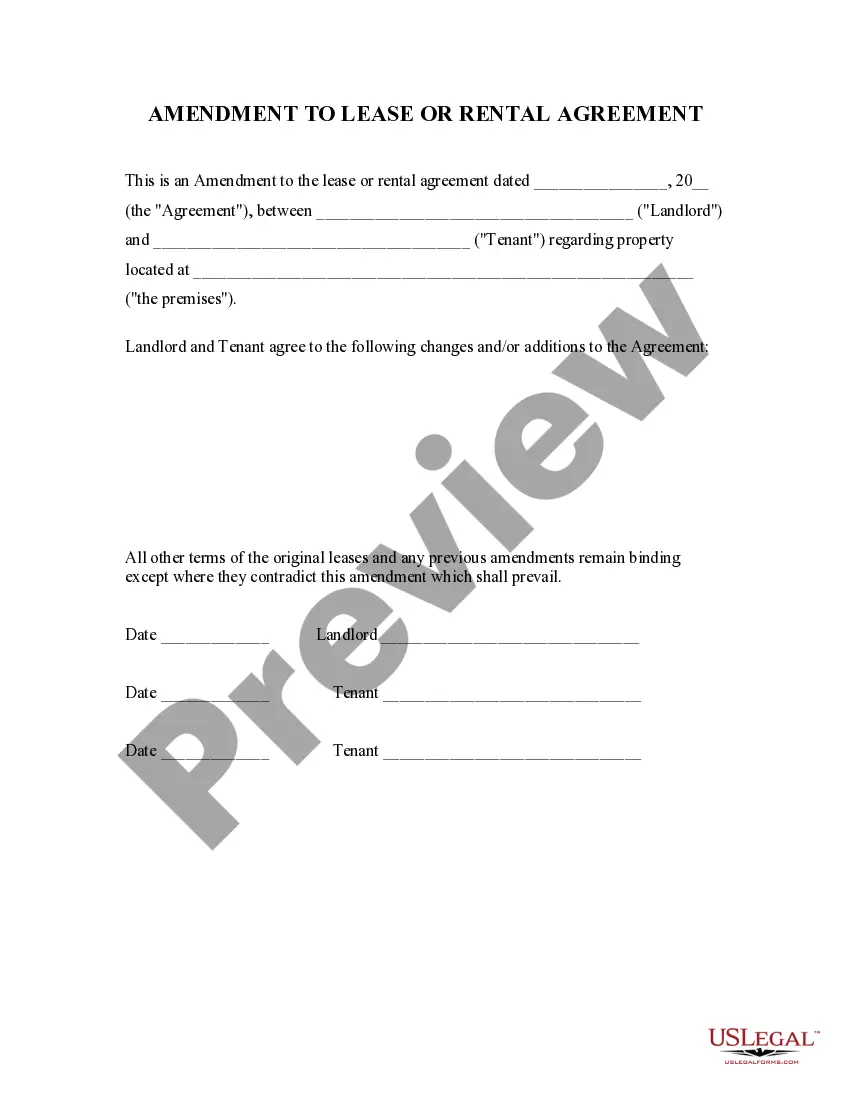
Chicago Illinois Amendment to Lease or Rental Agreement
Description
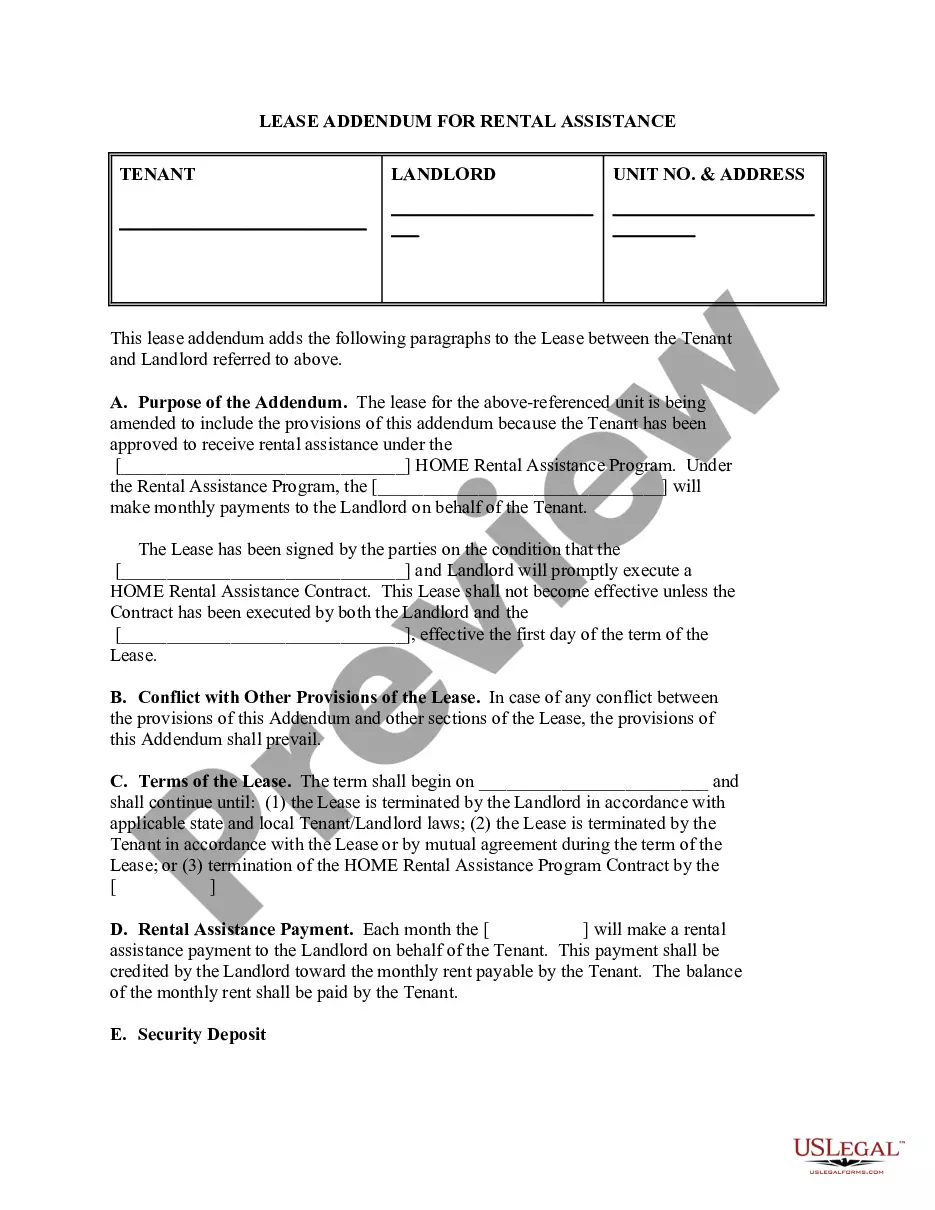
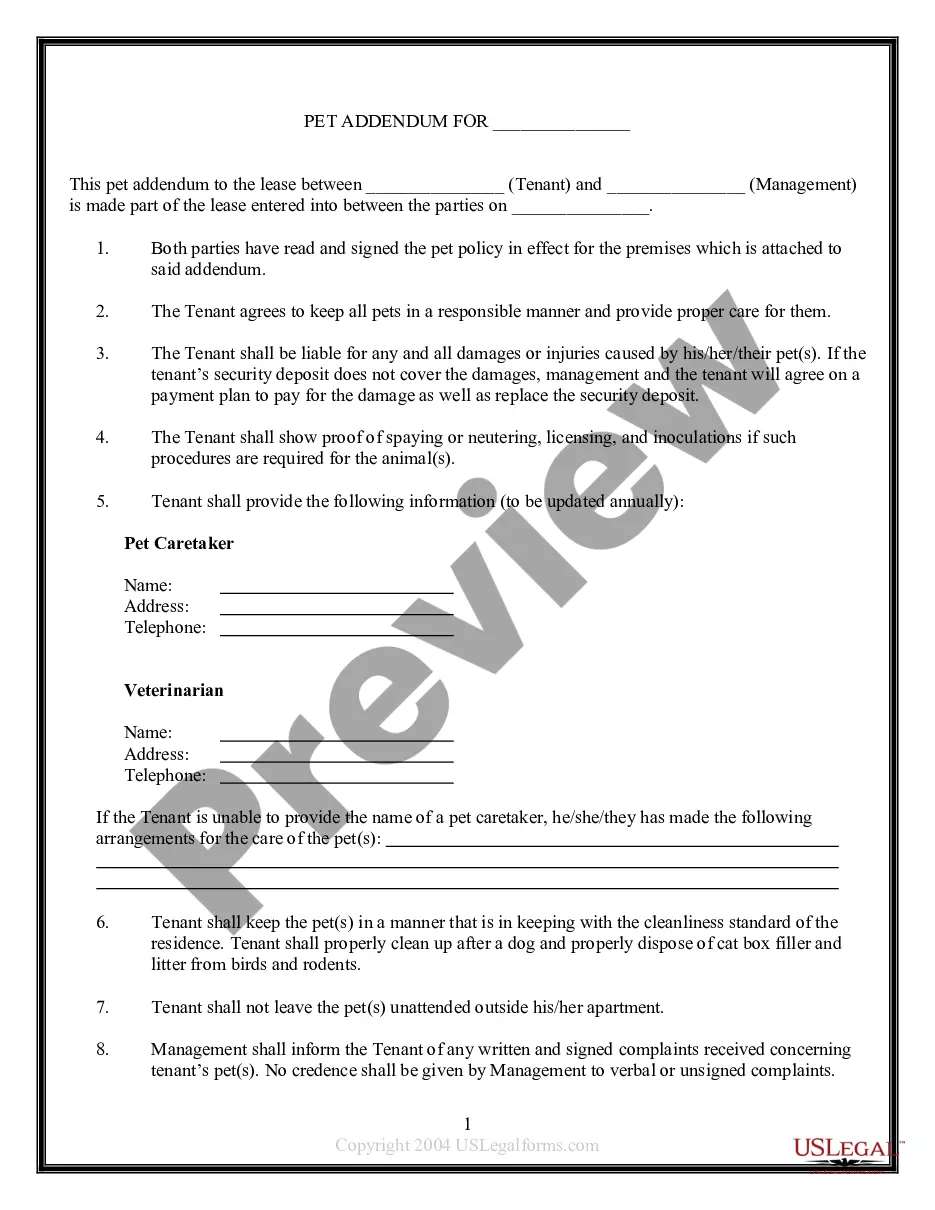
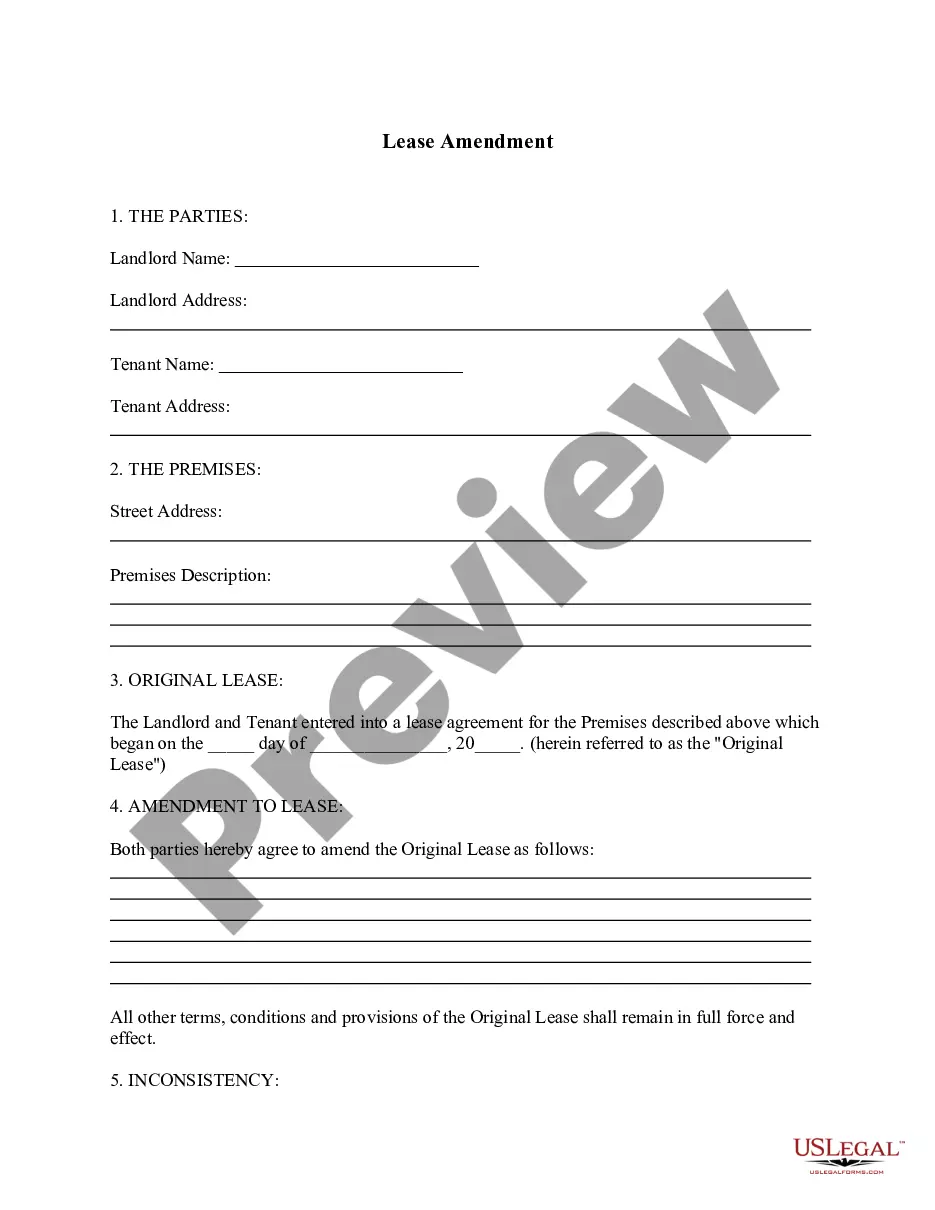
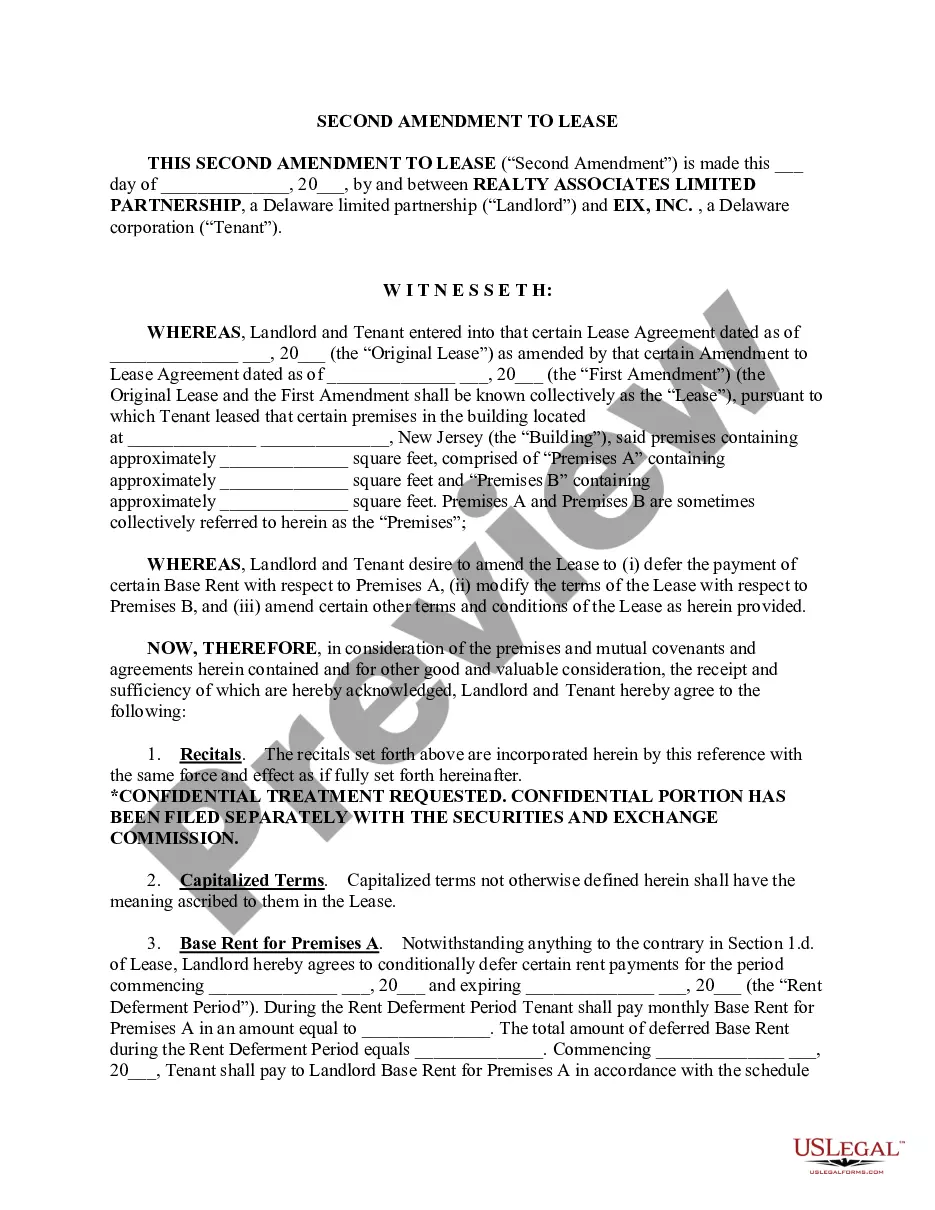
Get your form ready online
Our built-in tools help you complete, sign, share, and store your documents in one place.
Make edits, fill in missing information, and update formatting in US Legal Forms—just like you would in MS Word.
Download a copy, print it, send it by email, or mail it via USPS—whatever works best for your next step.
Sign and collect signatures with our SignNow integration. Send to multiple recipients, set reminders, and more. Go Premium to unlock E-Sign.
If this form requires notarization, complete it online through a secure video call—no need to meet a notary in person or wait for an appointment.
We protect your documents and personal data by following strict security and privacy standards.

Make edits, fill in missing information, and update formatting in US Legal Forms—just like you would in MS Word.

Download a copy, print it, send it by email, or mail it via USPS—whatever works best for your next step.

Sign and collect signatures with our SignNow integration. Send to multiple recipients, set reminders, and more. Go Premium to unlock E-Sign.

If this form requires notarization, complete it online through a secure video call—no need to meet a notary in person or wait for an appointment.

We protect your documents and personal data by following strict security and privacy standards.
Looking for another form?
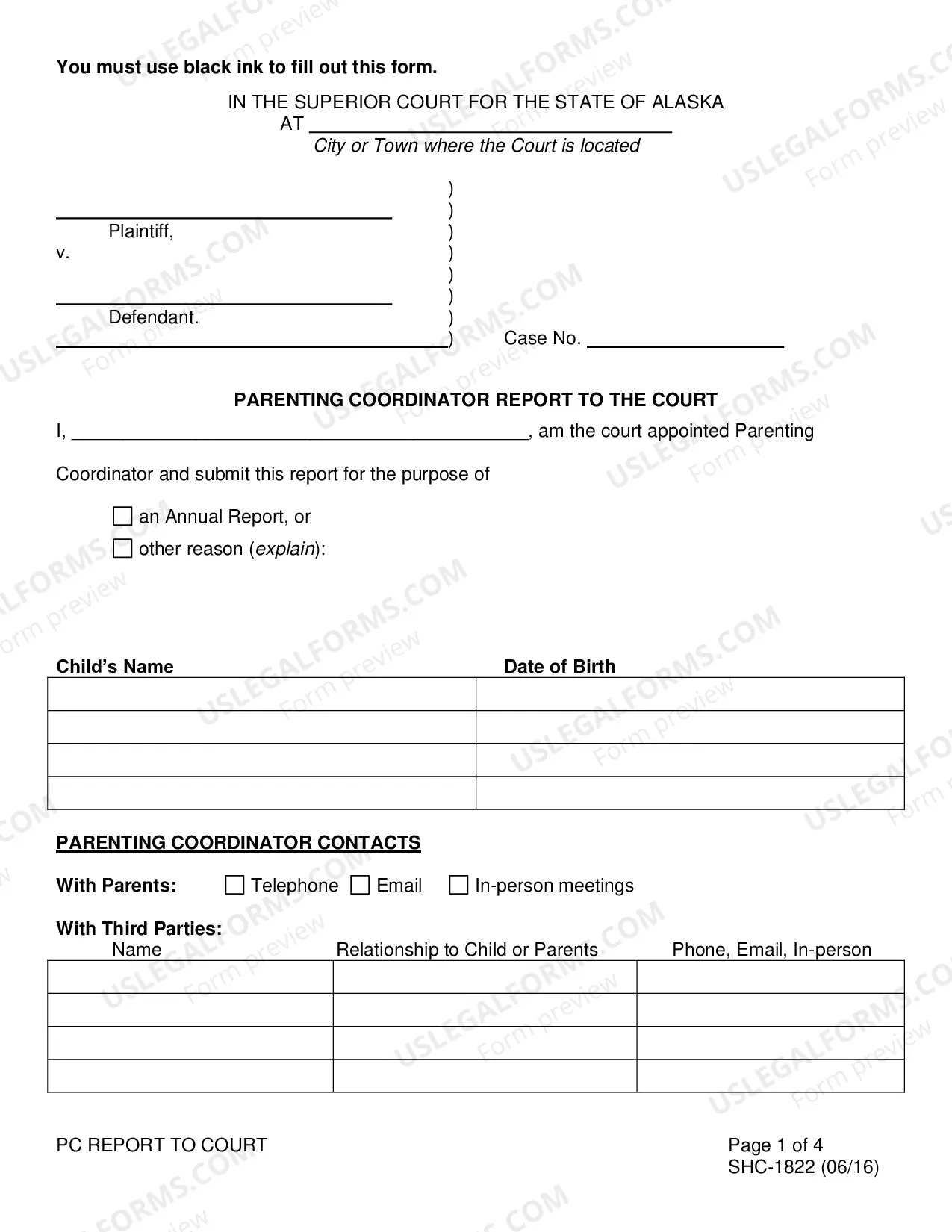
How to fill out Illinois Amendment To Lease Or Rental Agreement?
We consistently endeavor to minimize or avert legal complications when engaging with intricate legal or fiscal issues.
To achieve this, we enroll in legal services that are typically prohibitively expensive.
However, not every legal complication is of equal intricacy. A majority of them can be managed by us independently.
US Legal Forms is an internet repository of current DIY legal documents covering everything from wills and power of attorney to articles of incorporation and petitions for dissolution.
Simply Log In to your account and click the Get button next to it. If you happen to misplace the form, you can always re-download it from within the My documents tab.
- Our platform enables you to manage your affairs independently without the necessity of legal counsel.
- We provide access to legal document templates that are not frequently available to the public.
- Our templates are specific to states and regions, significantly simplifying the search process.
- Utilize US Legal Forms whenever you need to acquire and download the Chicago Illinois Amendment to Lease or Rental Agreement or any other document effortlessly and securely.
Form popularity
FAQ
Are Month-to-Month Leases Legal in Chicago? Month-to-month leases are legal. However, keep in mind that Illinois law still applies regardless of leasing length. This means that regulations of the Chicago Residential Landlord and Tenant Ordinance (CRLTO) still apply and must be adhered to.
It's important to note the Chicago Landlord Tenant Ordinance requires landlords to give tenants 30 days' written notice if they do not intend to renew their lease. Failure to do so enables a tenant to stay in the property for 60 days after the lease ends under the same terms and conditions as the previous lease.
A tenancy agreement can normally only be changed if both you and your landlord agree. If you both agree, the change should be recorded in writing, either by drawing up a new written document setting out the terms of the tenancy or by amending the existing written tenancy agreement.
Under the ordinance, landlords must provide: 60 days of notice to terminate your lease if you have lived in your apartment for more than six months but less than three years. 120 days of notice to terminate your lease if you have lived in your apartment for more than 3 years.
A Lease Amendment is used to modify an existing Lease Agreement between a tenant and landlord by adding or removing clauses, or changing existing clauses. An amendment allows the parties to change the terms without having to sign a new Lease Agreement.
If Your Landlord Moves to Terminate Your Lease Under the ordinance, landlords must provide: 60 days of notice to terminate your lease if you have lived in your apartment for more than six months but less than three years.
You had a contract for the term of the lease and there's no obligation to continue past the stated date. There's also no obligation for you to stay if you want to move at the end of the lease. But if your landlord doesn't renew, you'll have to move. If you're a reliable renter, most landlords want to renew the lease.
Landlords must give tenants 30 days written notice if the lease will not be renewed. If the landlord fails to do this, the tenant can stay in the property for 60 days after the lease ends under the same terms and conditions of the previous lease.
Notice to terminate must be given at least four months before the end of the term. In all other lease agreements for a period of less than one year, a party must give thirty days' written notice. Any notice given should call for ter- mination on the last day of that rental period.
A landlord must file a lawsuit in order to evict you. Your landlord cannot make you move by turning off your utilities. Also, your landlord may not evict you by locking you out, changing the locks or removing your personal property from the rental unit.