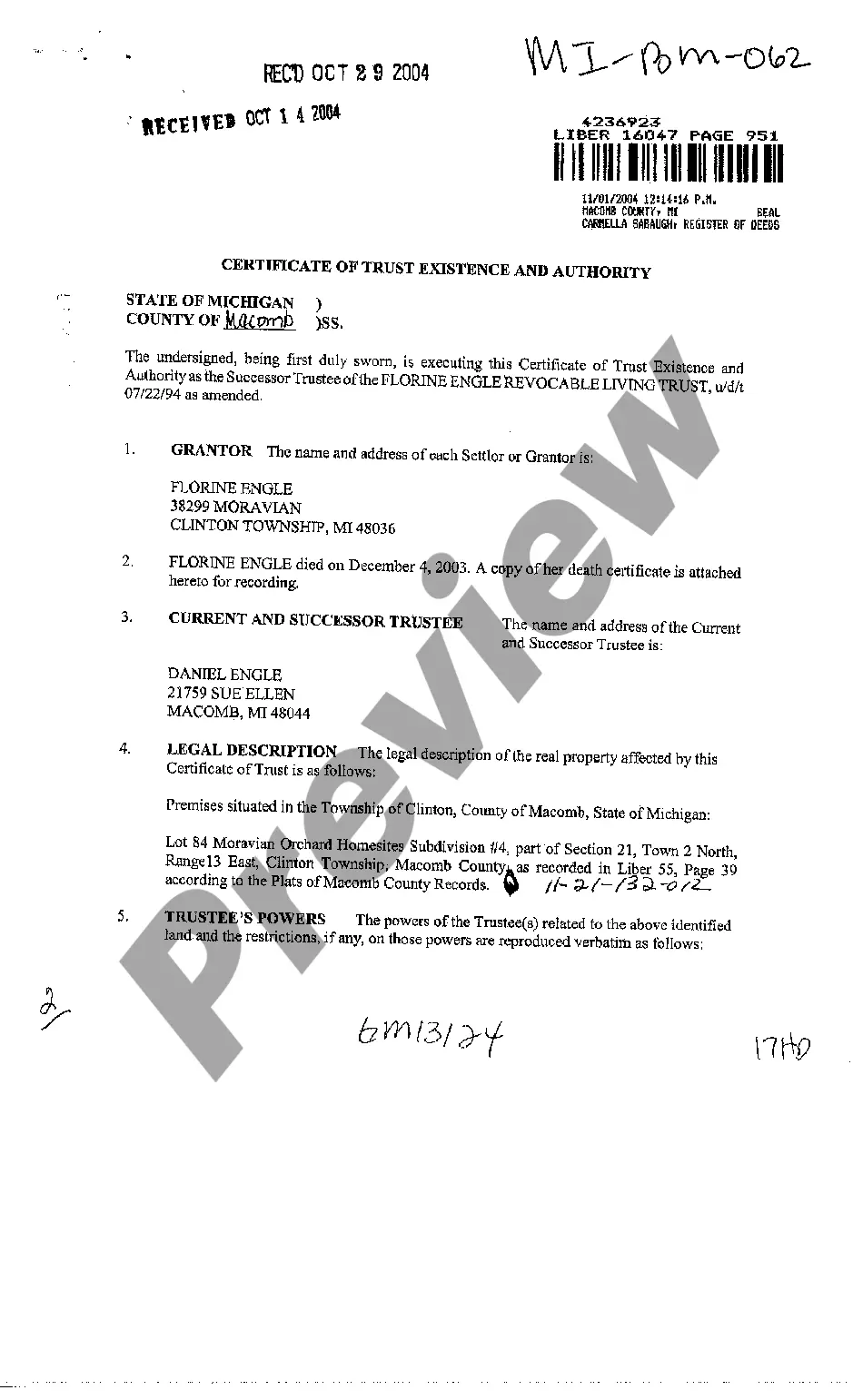
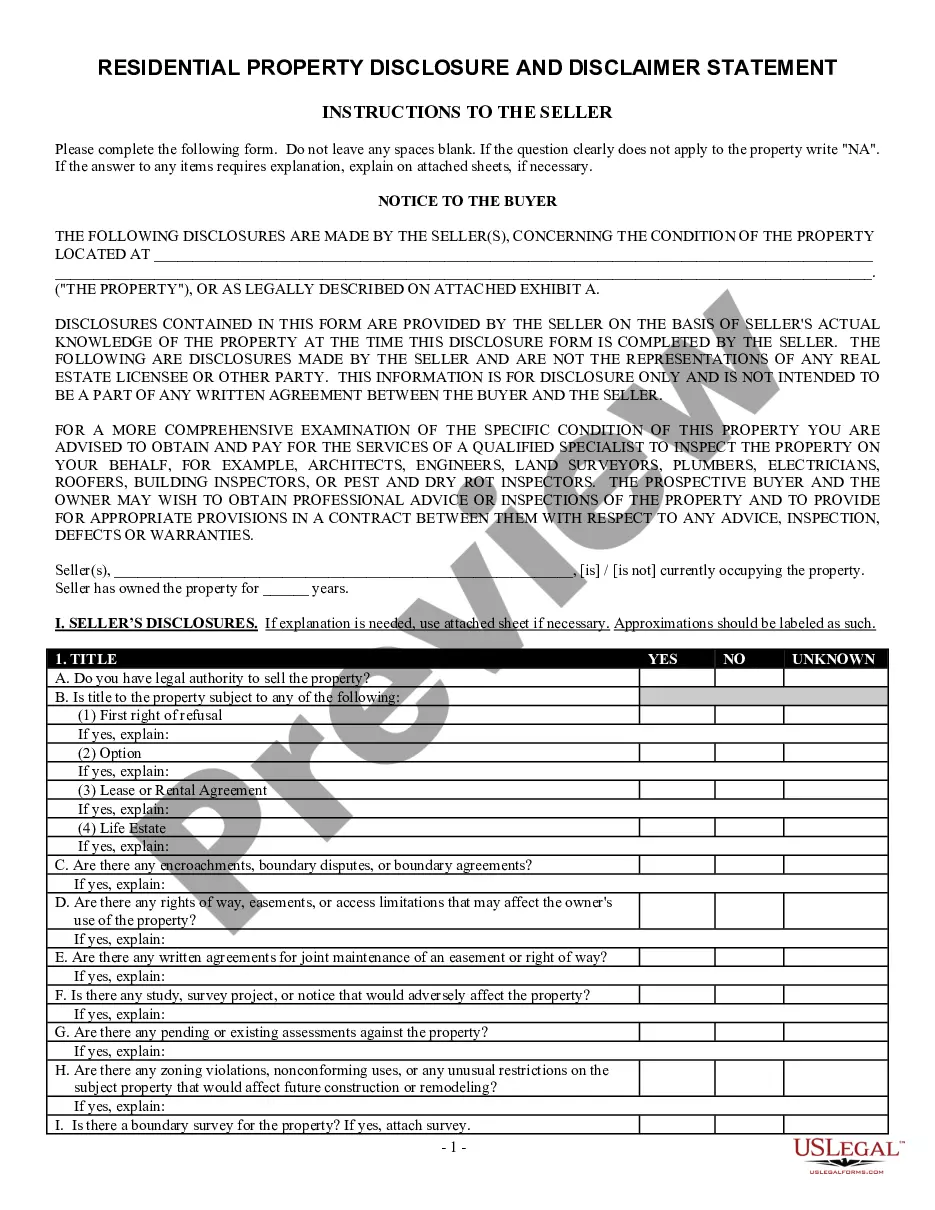
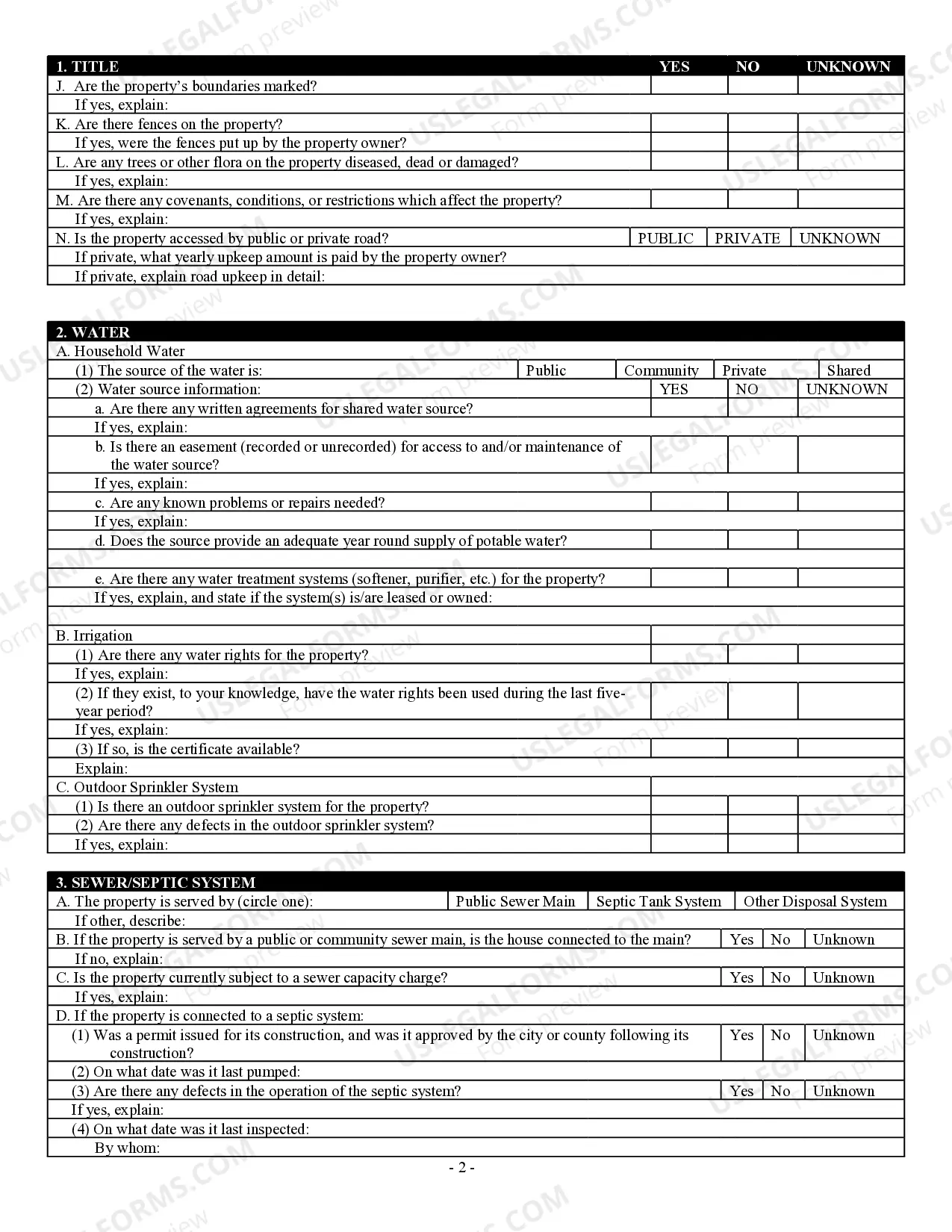
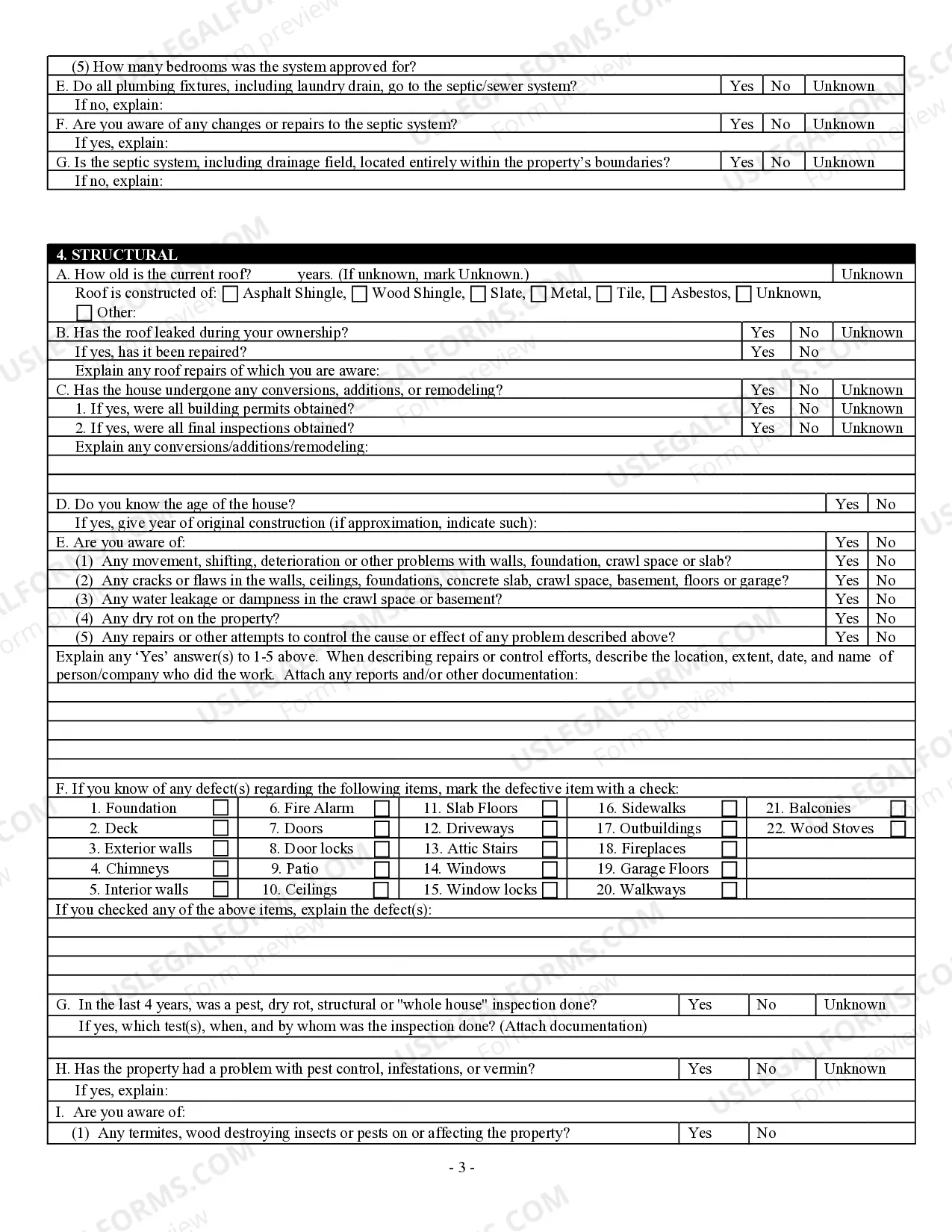
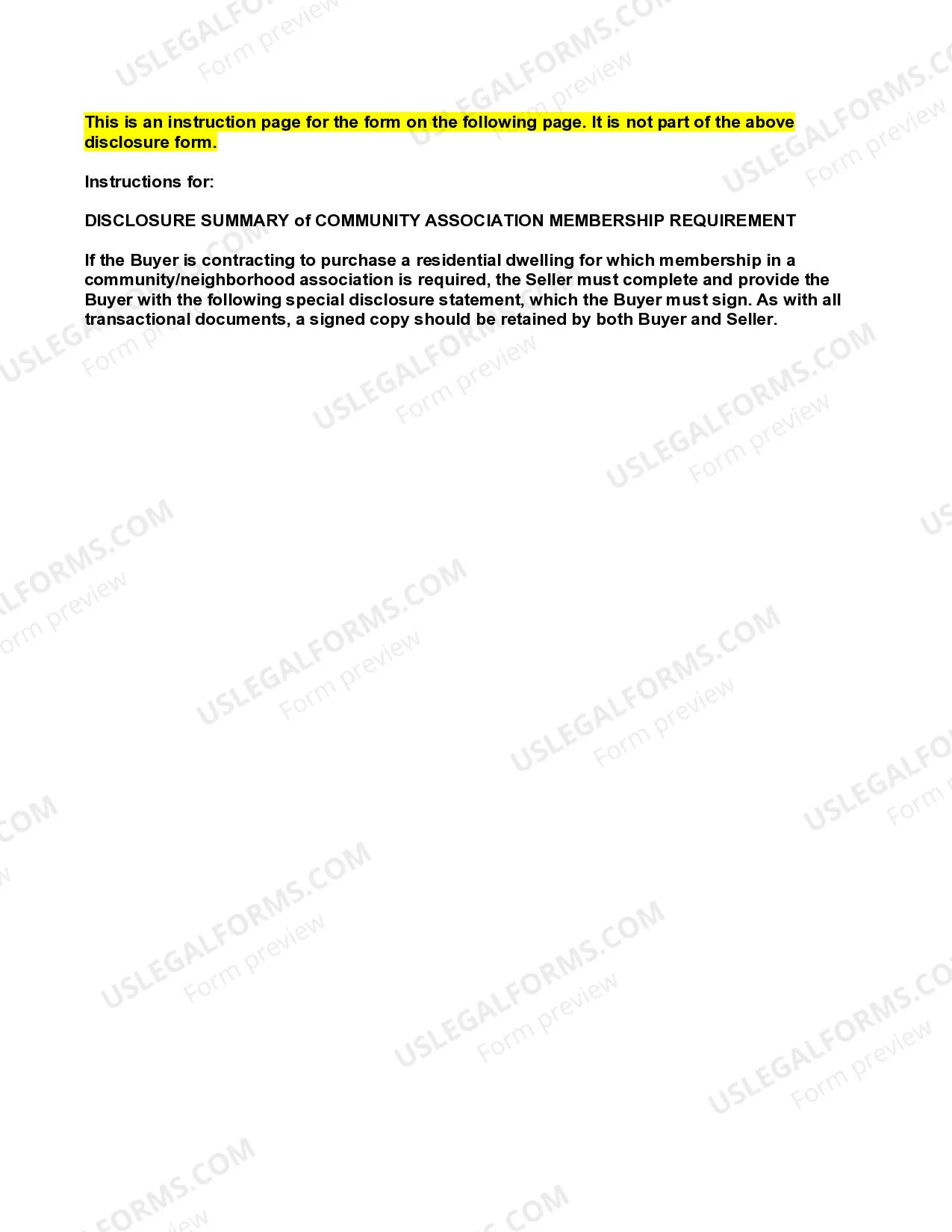
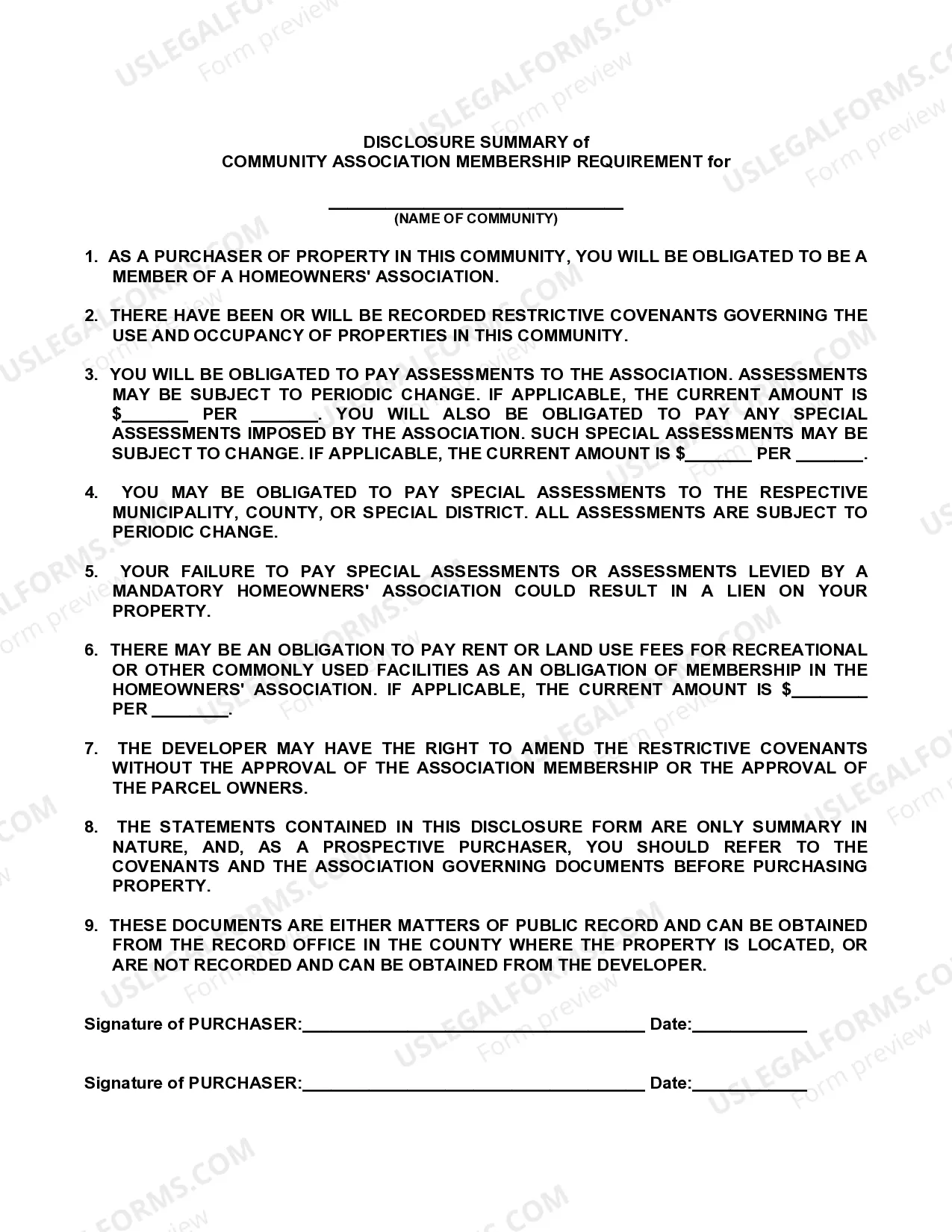
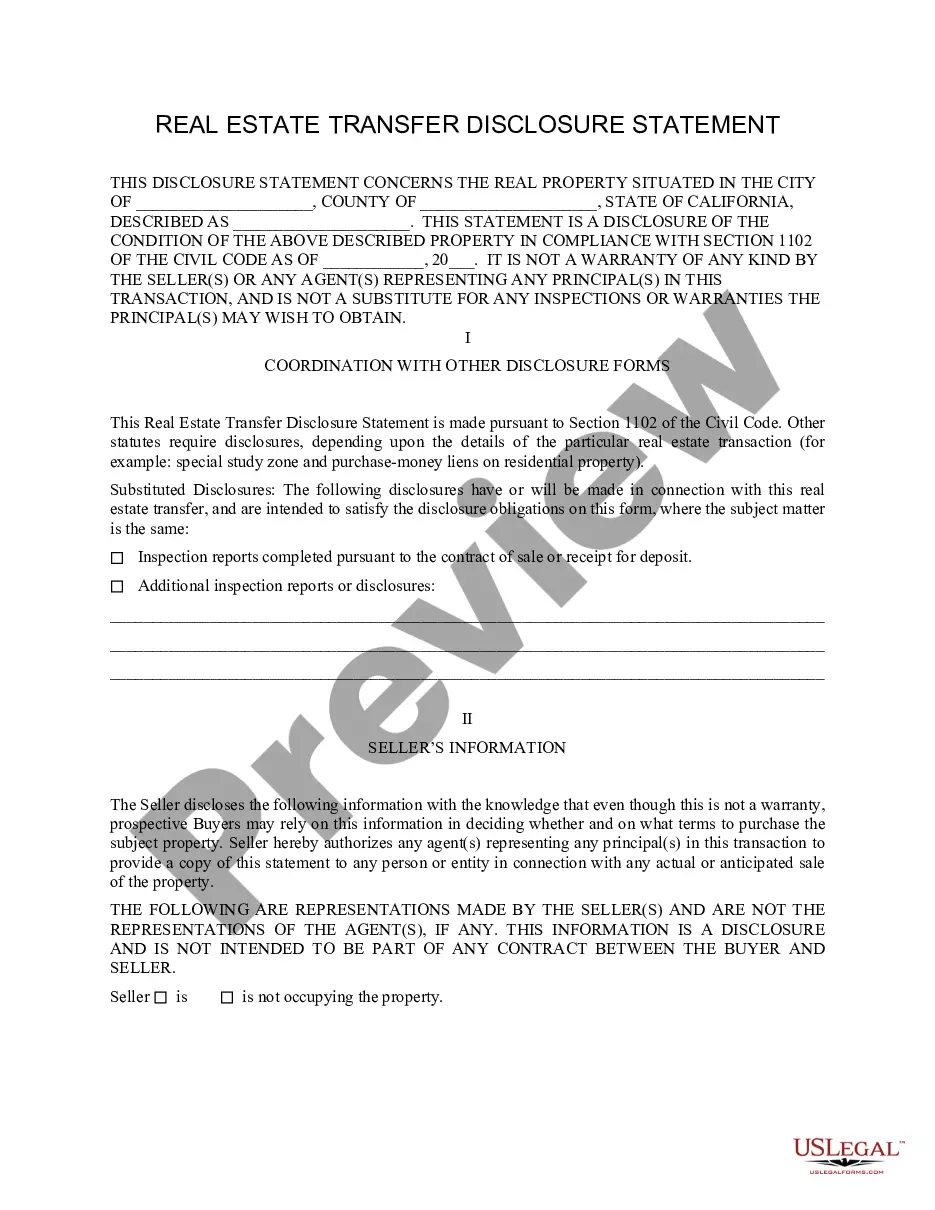
This form is a Seller's Disclosure Statement for use in a residential sales transaction in Florida. This disclosure statement concerns the condition of property and is completed by the Seller.
Miami-Dade Florida Residential Real Estate Sales Disclosure Statement
State:
FloridaPlease select your state
Select state
Category:
County:
Miami-Dade
Control #:
FL-37014
Format:
Word;
Rich Text
64 downloads
Description
Free preview
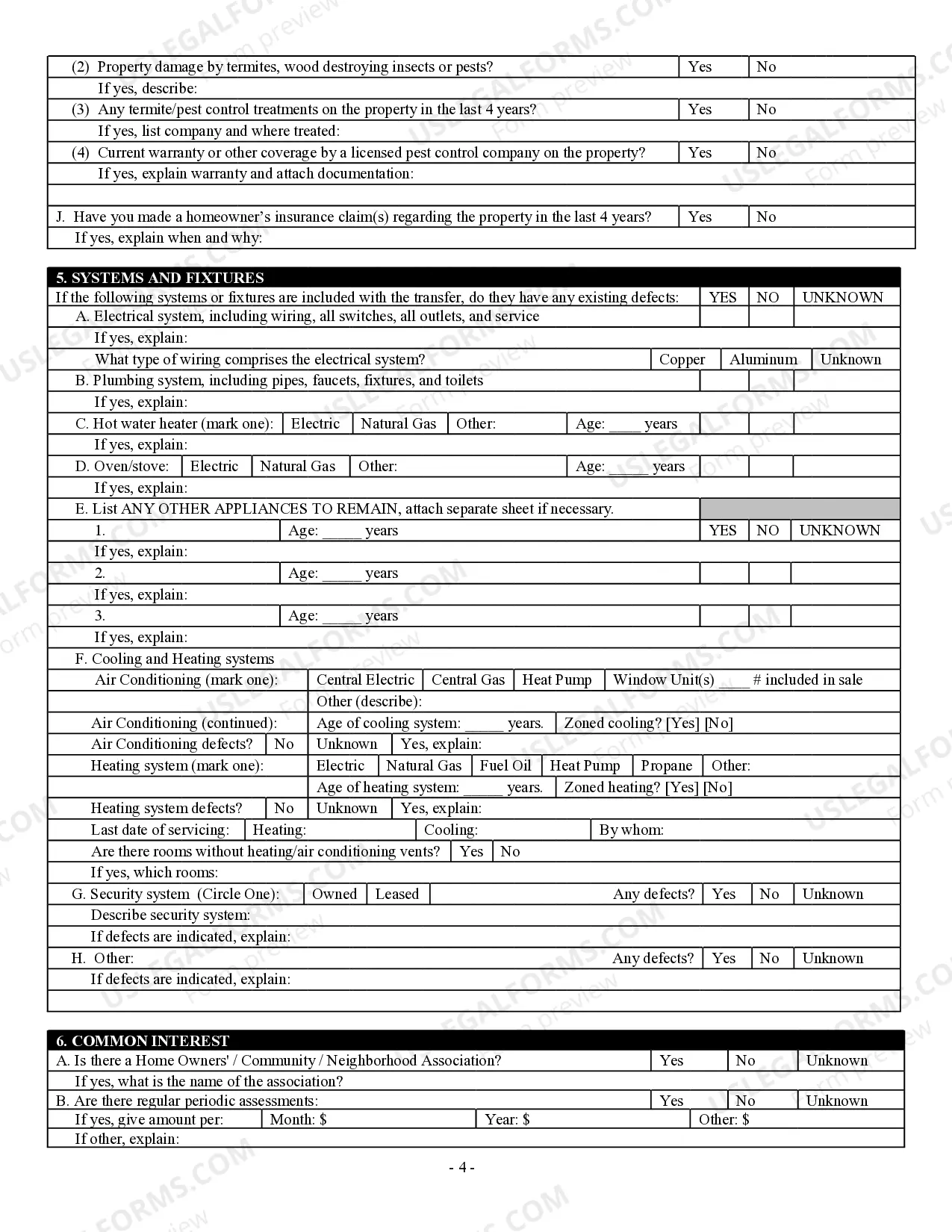
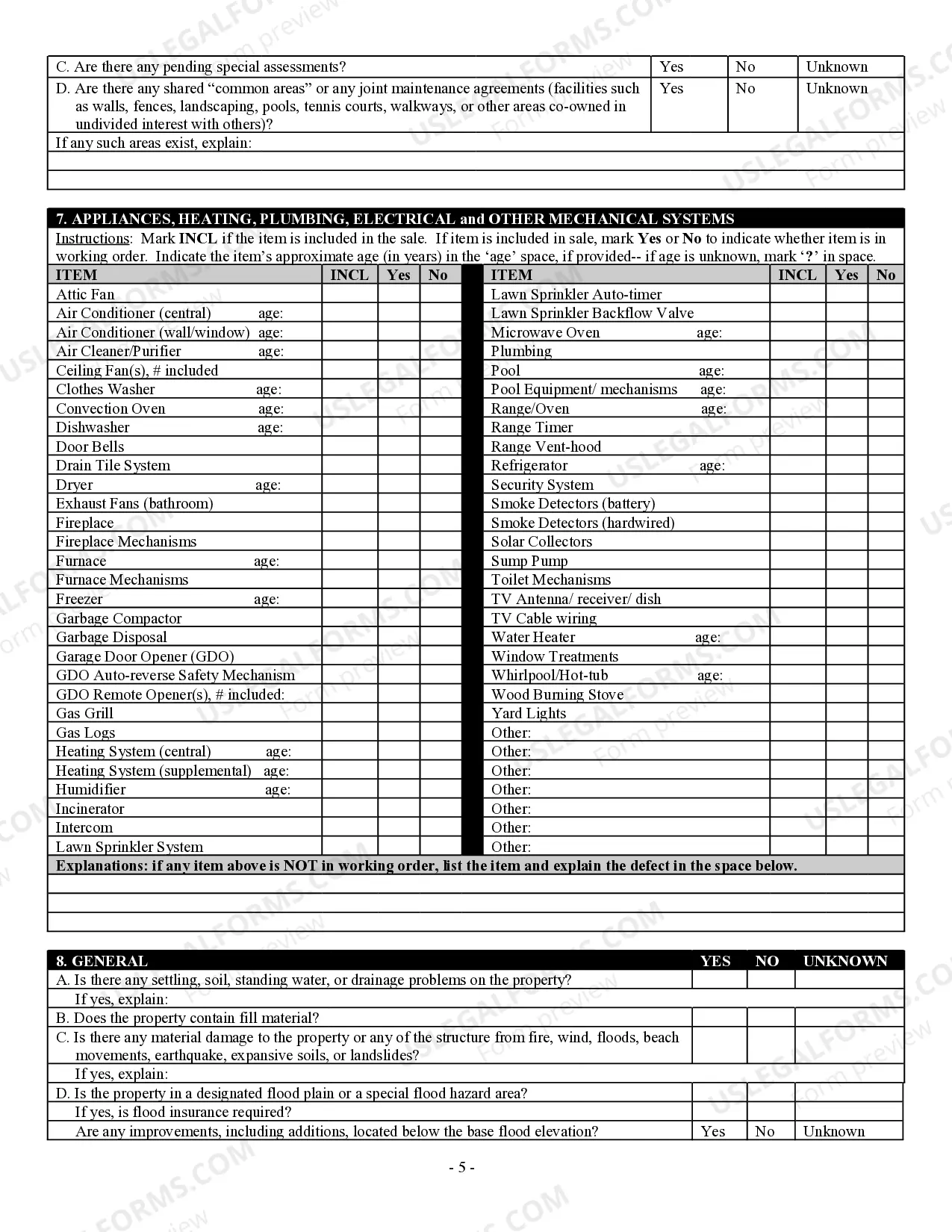
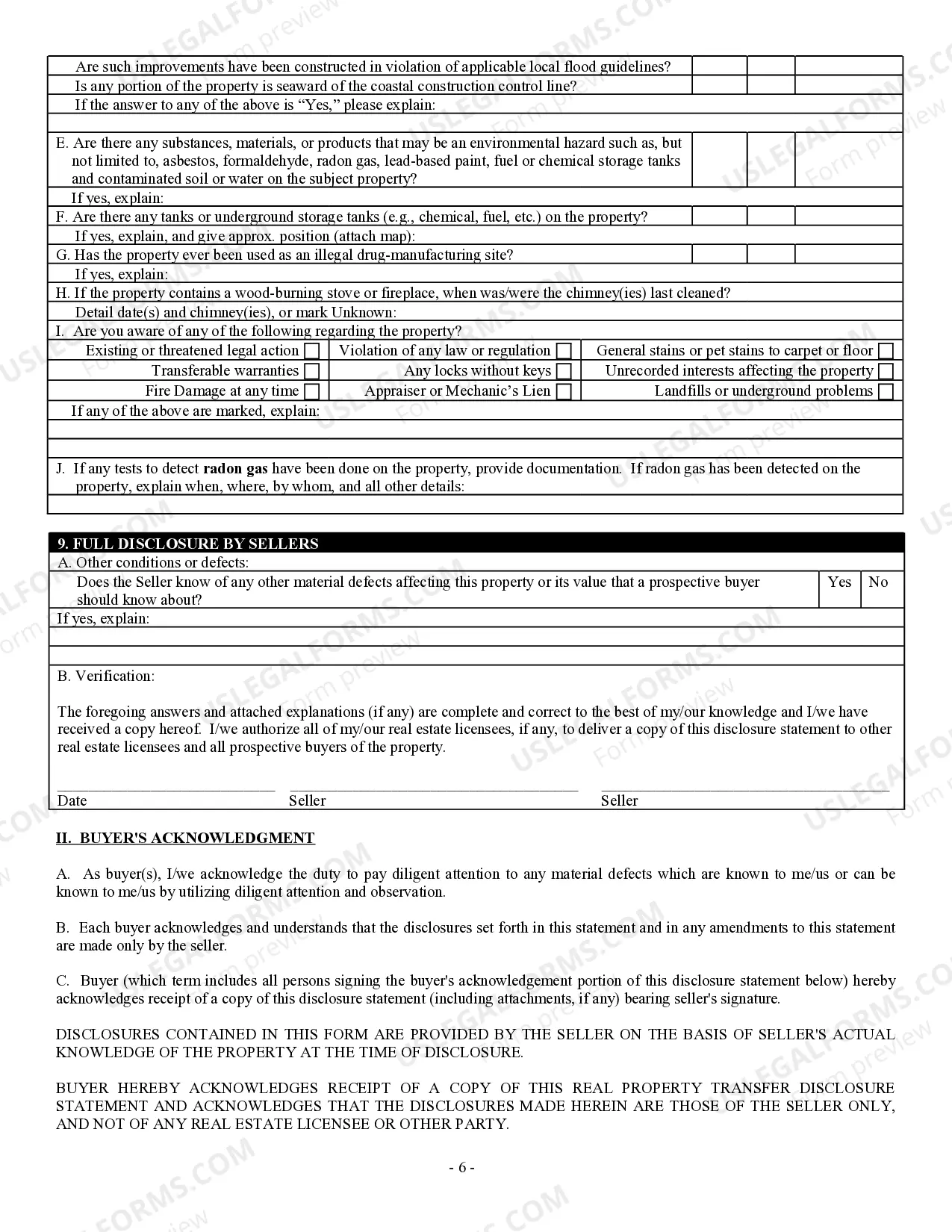
Get your form ready online
Our built-in tools help you complete, sign, share, and store your documents in one place.
Built-in online Word editor
Make edits, fill in missing information, and update formatting in US Legal Forms—just like you would in MS Word.
Export easily
Download a copy, print it, send it by email, or mail it via USPS—whatever works best for your next step.
E-sign your document
Sign and collect signatures with our SignNow integration. Send to multiple recipients, set reminders, and more. Go Premium to unlock E-Sign.
Notarize online 24/7
If this form requires notarization, complete it online through a secure video call—no need to meet a notary in person or wait for an appointment.
Store your document securely
We protect your documents and personal data by following strict security and privacy standards.

Make edits, fill in missing information, and update formatting in US Legal Forms—just like you would in MS Word.

Download a copy, print it, send it by email, or mail it via USPS—whatever works best for your next step.

Sign and collect signatures with our SignNow integration. Send to multiple recipients, set reminders, and more. Go Premium to unlock E-Sign.

If this form requires notarization, complete it online through a secure video call—no need to meet a notary in person or wait for an appointment.

We protect your documents and personal data by following strict security and privacy standards.
Looking for another form?
How to fill out Florida Residential Real Estate Sales Disclosure Statement?
Regardless of one's social or professional standing, finalizing legal documents is a regrettable requirement in the current professional landscape.
Frequently, it’s nearly impossible for individuals without any legal expertise to draft such documents from scratch, primarily due to the intricate terminology and legal nuances involved.
This is where US Legal Forms steps in to assist.
Verify that the form you have located is appropriate for your locality, as the laws of one state or county may not apply to another.
Review the document and examine a brief overview (if available) of the scenarios for which the paper can be utilized.
- Our platform offers an extensive collection of over 85,000 ready-to-use state-specific forms applicable to nearly any legal situation.
- US Legal Forms also acts as an excellent resource for partners or legal advisors seeking to enhance their efficiency by utilizing our DIY documents.
- Whether you need the Miami-Dade Florida Residential Real Estate Sales Disclosure Statement or any other documentation valid in your jurisdiction, US Legal Forms makes everything accessible.
- Here’s how to quickly acquire the Miami-Dade Florida Residential Real Estate Sales Disclosure Statement using our dependable platform.
- If you are a returning customer, feel free to Log In to your account to acquire the necessary form.
- If you are new to our platform, make sure to follow these steps prior to obtaining the Miami-Dade Florida Residential Real Estate Sales Disclosure Statement.
Form popularity
FAQ
A seller's property disclosure statement should reveal any known issues, past repairs, environmental hazards, and other factors affecting the property's value. In the Miami-Dade area, sellers must disclose specific conditions mandated by local regulations. This critical information not only protects sellers during the transaction but also helps prospective buyers make informed choices.
Filling out a Miami-Dade Florida Residential Real Estate Sales Disclosure Statement involves completing a checklist of questions regarding the property. Sellers should be comprehensive in their responses, ensuring they address each item thoroughly. Utilizing platforms like USLegalForms can simplify the process, providing templates and guidance to ensure all necessary information is captured.
When writing a Miami-Dade Florida Residential Real Estate Sales Disclosure Statement, it is essential to include accurate details about the property's current condition, any repairs made, and any known issues. Clearly stating information about utilities, mechanical systems, and environmental factors will aid in transparency. Aim for honesty and clarity to protect both parties involved in the transaction.
Most seller property disclosures, including the Miami-Dade Florida Residential Real Estate Sales Disclosure Statement, are required to inform potential buyers about the property's condition. These disclosures often cover aspects like structural integrity, pest issues, and appliance functionality. By providing this information, sellers foster trust and enable buyers to make well-informed offers.
In Florida, sellers are required to complete a Miami-Dade Florida Residential Real Estate Sales Disclosure Statement that discloses property defects, repairs, and other significant issues. Florida law mandates that sellers reveal facts that could affect the value or desirability of the home. Failure to disclose such information can lead to legal issues for the seller, highlighting the importance of thoroughness.
Dade Florida Residential Real Estate Sales Disclosure Statement must include essential details about the property, such as its condition, any known issues, and relevant historical information. Sellers should provide information on past repairs, damages, and any relevant financial obligations. This transparency helps potential buyers make informed decisions about the property.
Absolutely, sellers disclosures are indeed required in Florida. Completing a Miami-Dade Florida Residential Real Estate Sales Disclosure Statement allows sellers to inform buyers about the property's condition and history. This requirement helps prevent any misunderstandings later in the process. You can rely on services like uslegalforms to make sure your disclosures are thorough and compliant.
Yes, seller disclosures are required in Florida, including Miami-Dade County. The law mandates that sellers complete a Miami-Dade Florida Residential Real Estate Sales Disclosure Statement before selling their property. This document ensures buyers receive key information about the property, and it protects the seller from future legal issues. By being honest and upfront, sellers can foster trust with potential buyers.
A real estate disclosure is a formal statement provided by the seller to inform potential buyers about the condition of a property. This statement typically includes necessary details about repairs, defects, and other pertinent information that buyers should know. Understanding the Miami-Dade Florida Residential Real Estate Sales Disclosure Statement is crucial for both parties to facilitate a smooth transaction. Clear disclosures can lead to a more transparent buyer-seller relationship.
In Florida, a seller does not need to disclose the presence of a death on the property unless it impacts the value. However, it's essential to complete a Miami-Dade Florida Residential Real Estate Sales Disclosure Statement that covers issues that may affect the buyer's decision. This document outlines what sellers must disclose, making transparency a priority. Always consult local laws to ensure you meet all requirements.