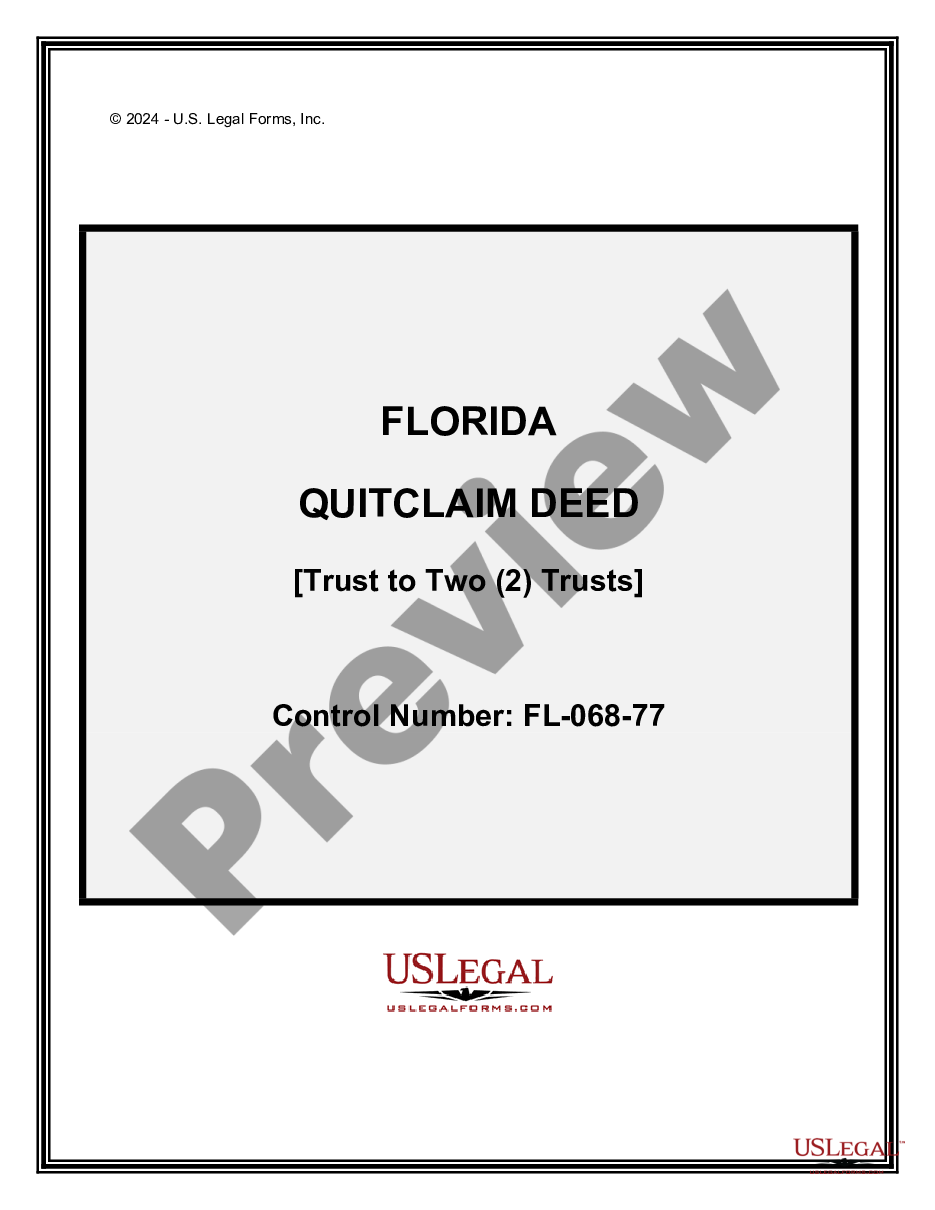
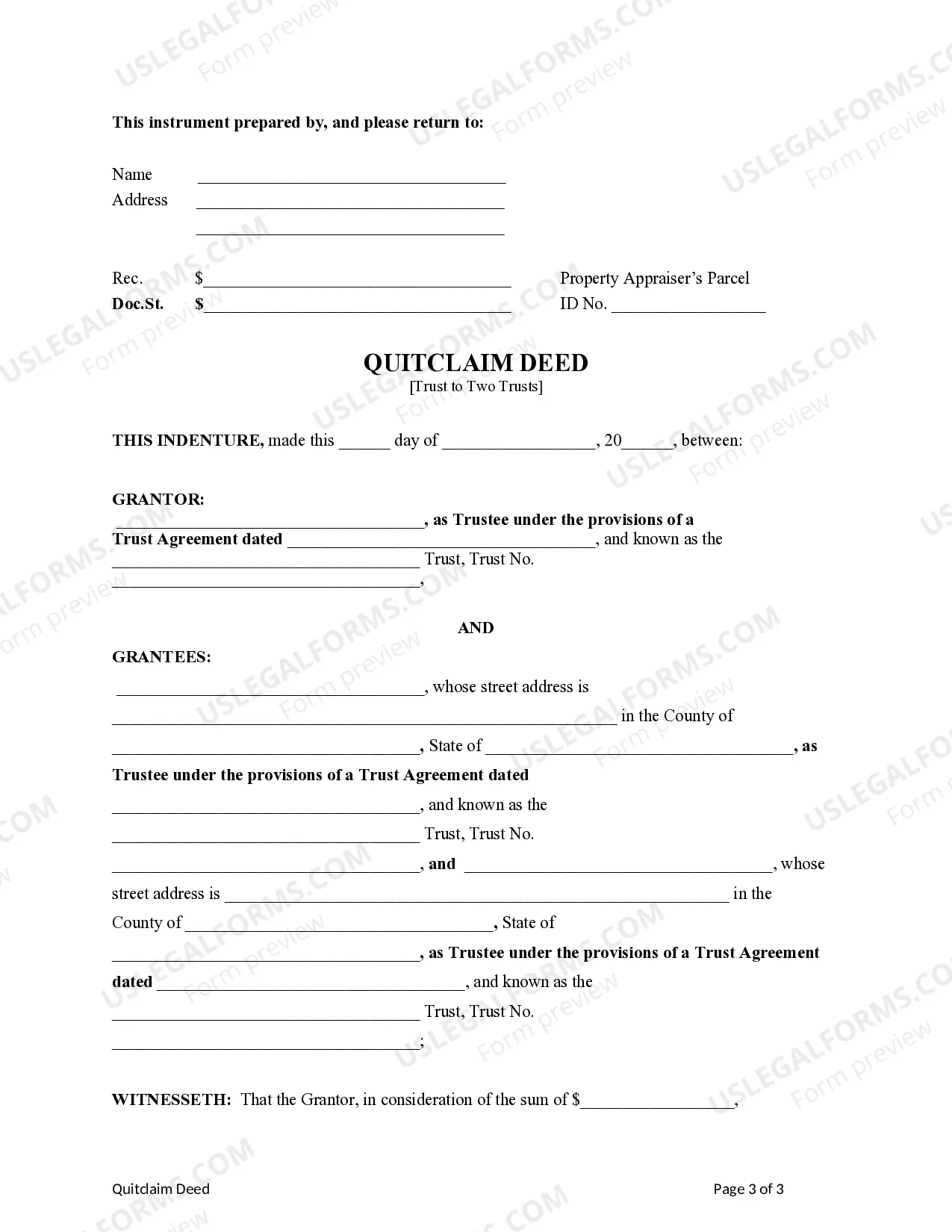
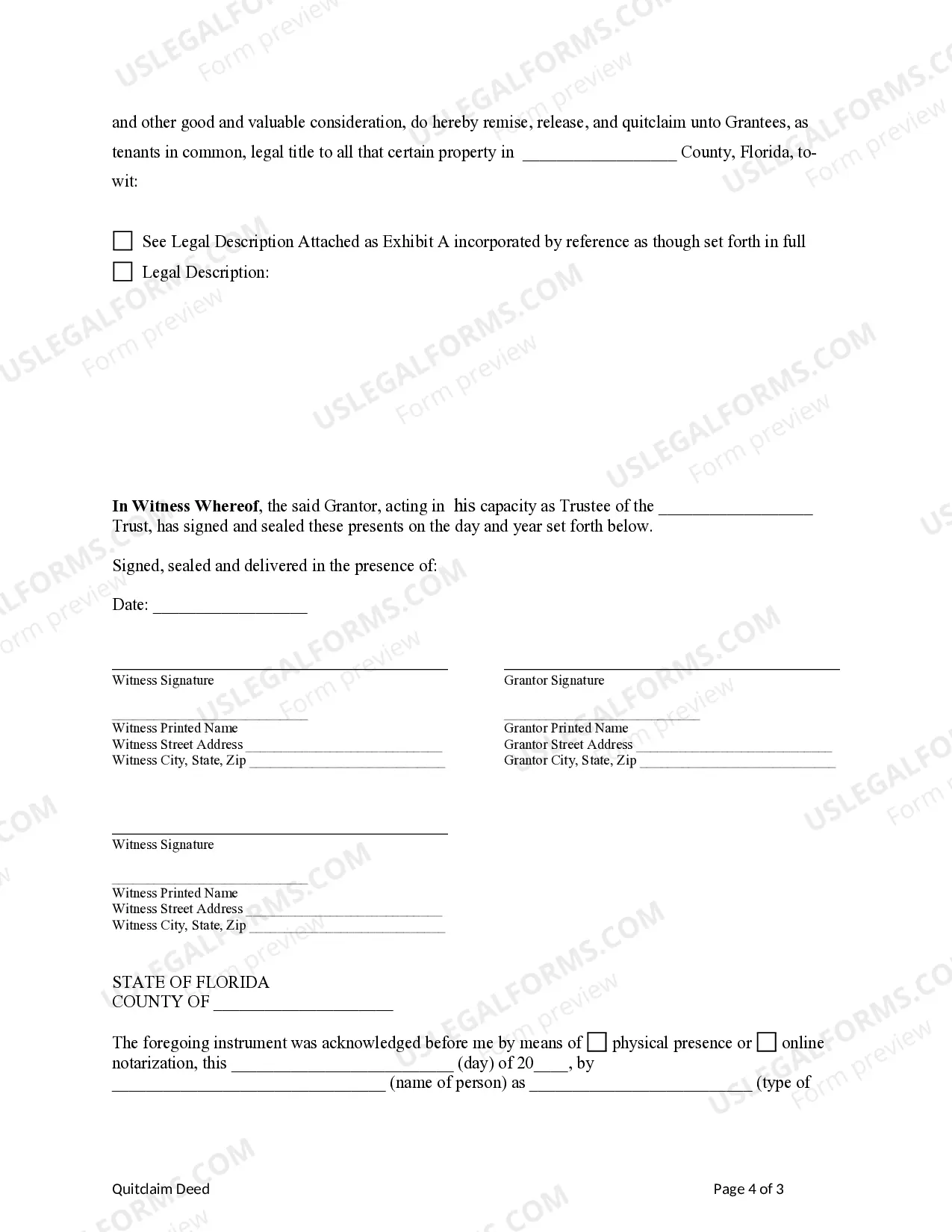
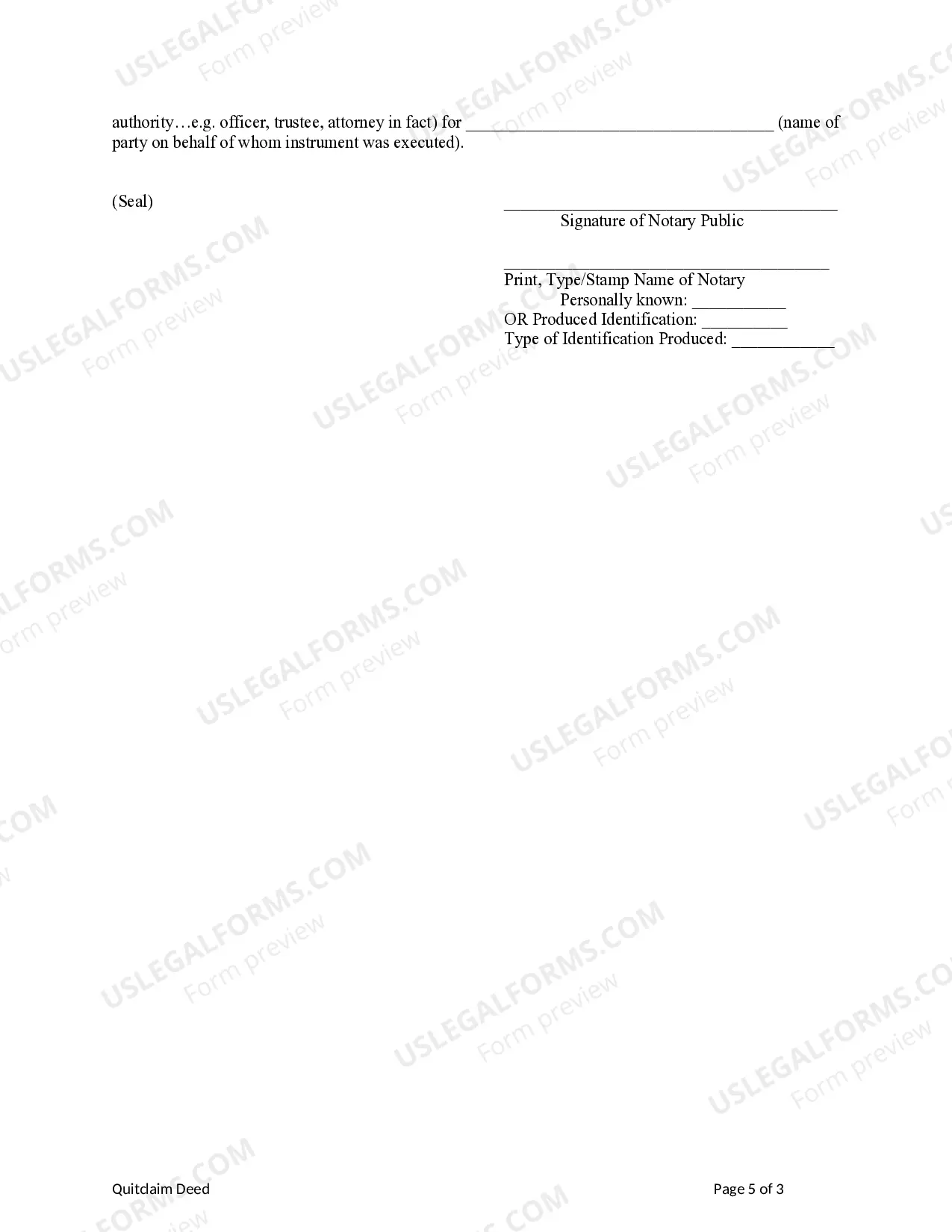
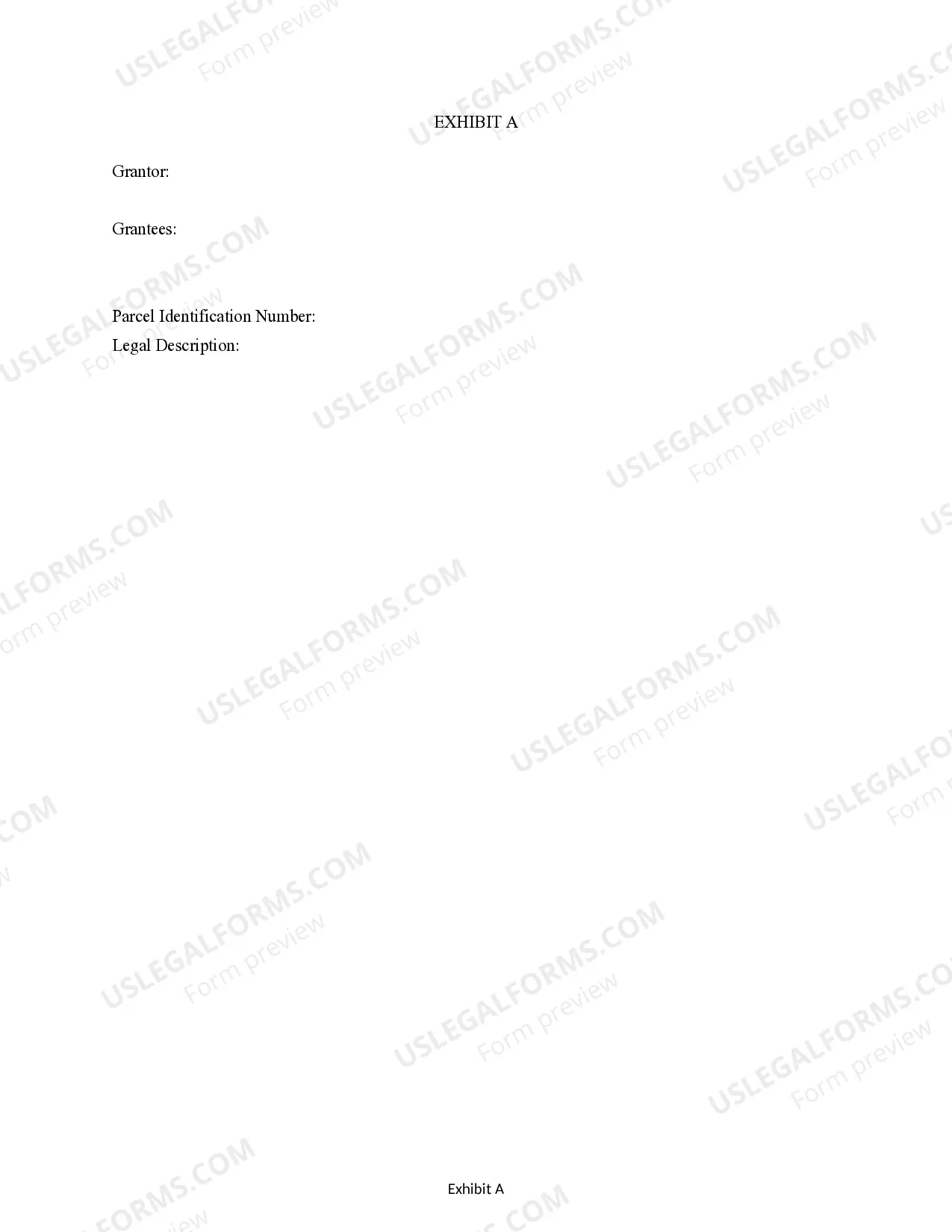
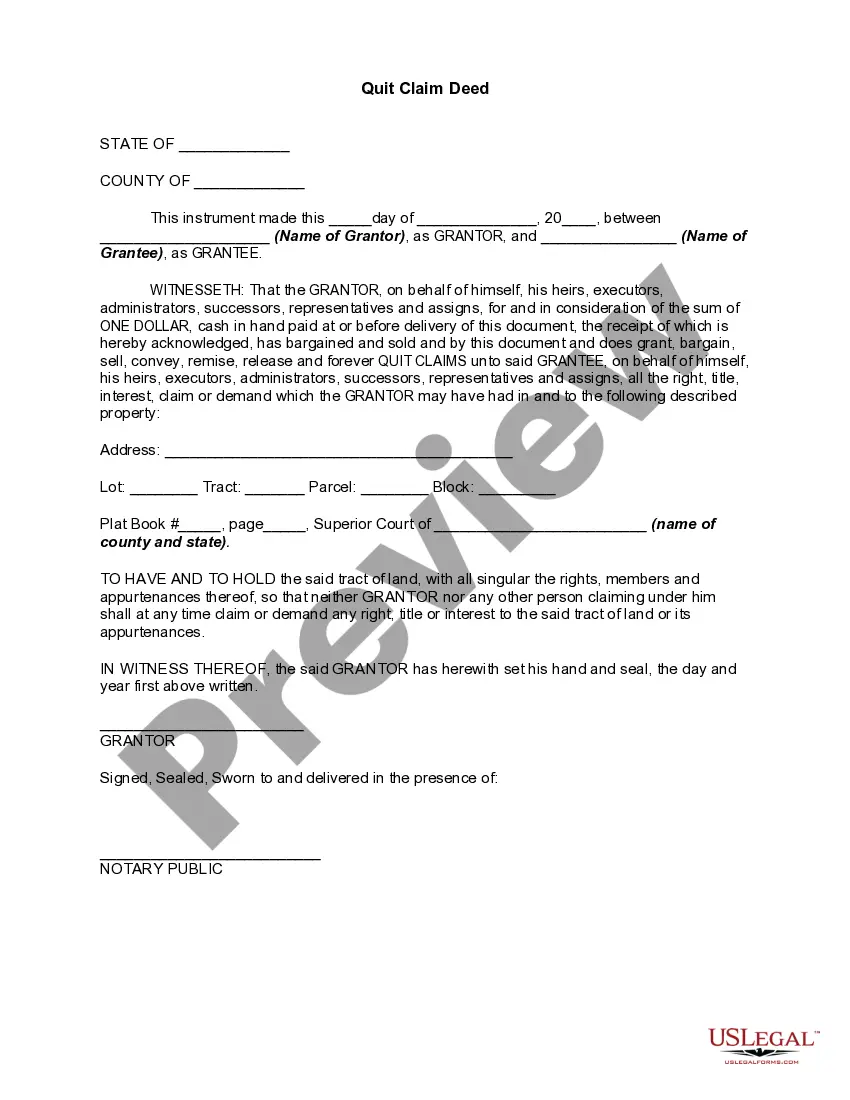
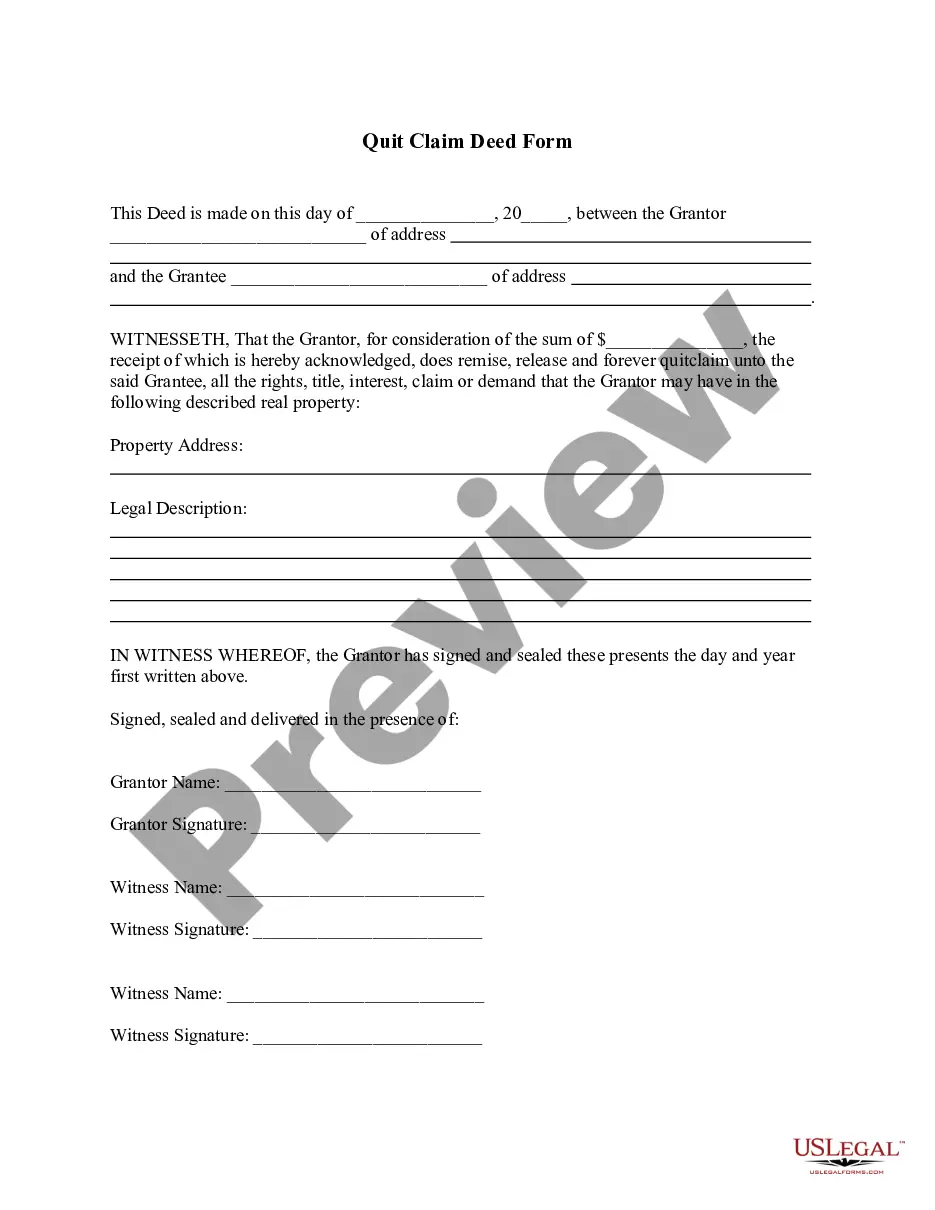
This form is a Quitclaim Deed where the Grantor is a Trust and the Grantees are two Trusts. Grantor conveys and quitclaims the described property to Grantees. This deed complies with all state statutory laws.
Miami-Dade Florida Quitclaim Deed
State:
Florida
Category:
County:
Miami-Dade
Control #:
FL-068-77
Format:
Word;
Rich Text
0 downloads
Description
Free preview

Get your form ready online
Our built-in tools help you complete, sign, share, and store your documents in one place.
Built-in online Word editor
Make edits, fill in missing information, and update formatting in US Legal Forms—just like you would in MS Word.
Export easily
Download a copy, print it, send it by email, or mail it via USPS—whatever works best for your next step.
E-sign your document
Sign and collect signatures with our SignNow integration. Send to multiple recipients, set reminders, and more. Go Premium to unlock E-Sign.
Notarize online 24/7
If this form requires notarization, complete it online through a secure video call—no need to meet a notary in person or wait for an appointment.
Store your document securely
We protect your documents and personal data by following strict security and privacy standards.

Make edits, fill in missing information, and update formatting in US Legal Forms—just like you would in MS Word.

Download a copy, print it, send it by email, or mail it via USPS—whatever works best for your next step.

Sign and collect signatures with our SignNow integration. Send to multiple recipients, set reminders, and more. Go Premium to unlock E-Sign.

If this form requires notarization, complete it online through a secure video call—no need to meet a notary in person or wait for an appointment.

We protect your documents and personal data by following strict security and privacy standards.
Looking for another form?
How to fill out Florida Quitclaim Deed?
Regardless of social or professional standing, filling out law-related documents is a regrettable requirement in today’s professional landscape.
Frequently, it’s nearly impossible for an individual lacking legal expertise to draft this type of documentation from the ground up, primarily due to the intricate terminology and legal nuances they contain.
This is where US Legal Forms steps in to assist.
Make sure the template you found is appropriate for your region since the laws of one state or county might not apply to another.
Preview the document and review a brief summary (if available) of the scenarios for which the document is applicable.
- Our platform offers an extensive library of over 85,000 ready-to-use forms that are specific to each state and applicable for nearly any legal situation.
- US Legal Forms also acts as a valuable resource for associates or legal advisors who aim to save time with our DIY documents.
- Whether you need the Miami-Dade Florida Quitclaim Deed or any other legally valid document for your state or county, with US Legal Forms, everything is readily accessible.
- Here’s how you can quickly acquire the Miami-Dade Florida Quitclaim Deed using our reliable platform.
- If you are an existing customer, just Log In to your account to retrieve the desired form.
- However, if you are a newcomer to our platform, ensure you follow these instructions before acquiring the Miami-Dade Florida Quitclaim Deed.
Form popularity
FAQ
In Miami-Dade County, the time it takes to record a deed can vary. Typically, once you submit your Miami-Dade Florida Quitclaim Deed to the Clerk's office, it can be recorded the same day, depending on the office's workload. After recording, you'll receive a stamped copy of the deed for your records. It's always best to check directly with the clerk for any delays that may arise.
You can record a quitclaim deed in Miami-Dade County at the Clerk of the Courts office. The office is responsible for maintaining public records, including property deeds. You can also reach them online for further instructions or to find the nearest location for recording your Miami-Dade Florida Quitclaim Deed. Utilizing professional templates from US Legal Forms may ease your process.
Yes, you can file a quitclaim deed yourself in Florida. The process involves completing the necessary forms correctly and ensuring they comply with state laws. For convenience and accuracy, many people use tools provided by platforms like US Legal Forms, which guide you in preparing and filing your Miami-Dade Florida Quitclaim Deed. This approach can save time and minimize errors.
In Florida, a Miami-Dade Florida Quitclaim Deed does not need to be recorded to be valid. However, recording the deed provides public notice of ownership and protects your rights as the property owner. Failure to record may cause complications in the future, especially if there are disputes regarding property ownership. To ensure protection, it is advisable to record the deed.
Yes, you can create a Miami-Dade Florida Quitclaim Deed by yourself. However, it is essential to ensure that you understand the process and the requirements. Many individuals prefer to use online platforms like US Legal Forms to obtain easy-to-understand templates and instructions. This help can guide you through the document preparation and filing process.
One significant issue with a quitclaim deed is that it does not guarantee the property has a clear title, which can lead to future legal disputes. Additionally, without proper legal guidance, the grantor may unknowingly transfer more liability than intended, such as outstanding liens. It is important to consult an experienced service like uslegalforms to understand the implications of using a Miami-Dade Florida Quitclaim Deed and to ensure the process is executed correctly.
People use a quitclaim deed in various situations, often to transfer property among family members or friends without complicating transactions. A common reason is to remove one party's name from the title after a divorce or to add a spouse's name to a property title. In Miami-Dade Florida, this deed provides a quick and straightforward method to handle property transfers.
Filling out the quitclaim deed form requires you to include specific details. You must indicate the names of both the person giving and receiving the property, provide a detailed legal description of the property, and include information about any valuable consideration exchanged. Once completed, remember to have the document notarized before filing it to ensure it’s recognized in Miami-Dade County.
To fill out a Florida quitclaim deed, start by entering the names of the grantor and grantee at the top of the form. Next, you need to provide a description of the property, including the parcel number and the address. Finally, both parties must sign the Miami-Dade Florida Quitclaim Deed in the presence of a notary public for it to be valid.
A quitclaim deed is a legal document that allows one party to transfer their interest in real property to another party. For example, if a parent wishes to transfer their property to a child in Miami-Dade Florida, they can use a Miami-Dade Florida Quitclaim Deed to make this transfer. This type of deed does not guarantee that the title is clear, meaning that the child might inherit any existing liens or claims against the property.