Kansas Bill of Sale without Warranty by Corporate Seller
About this form
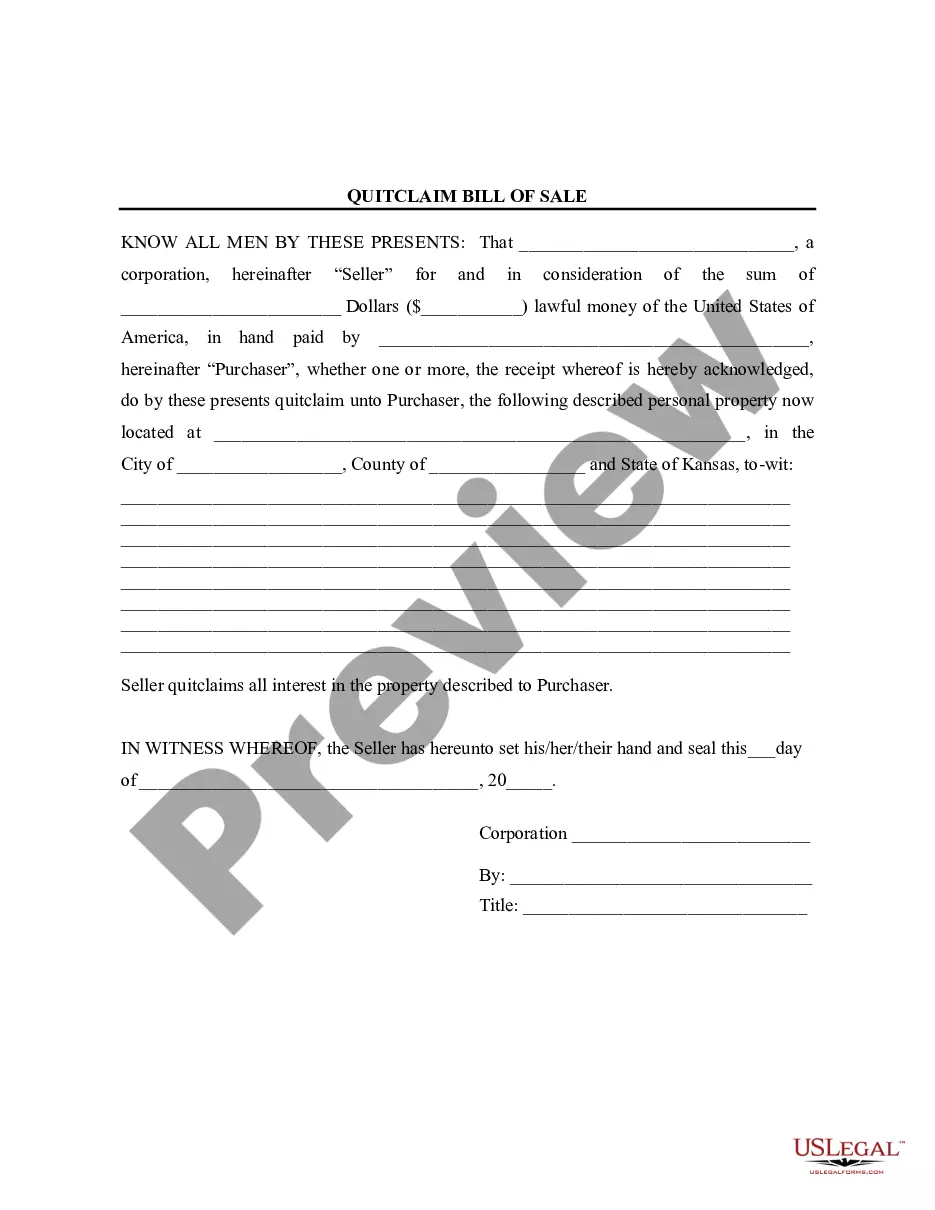
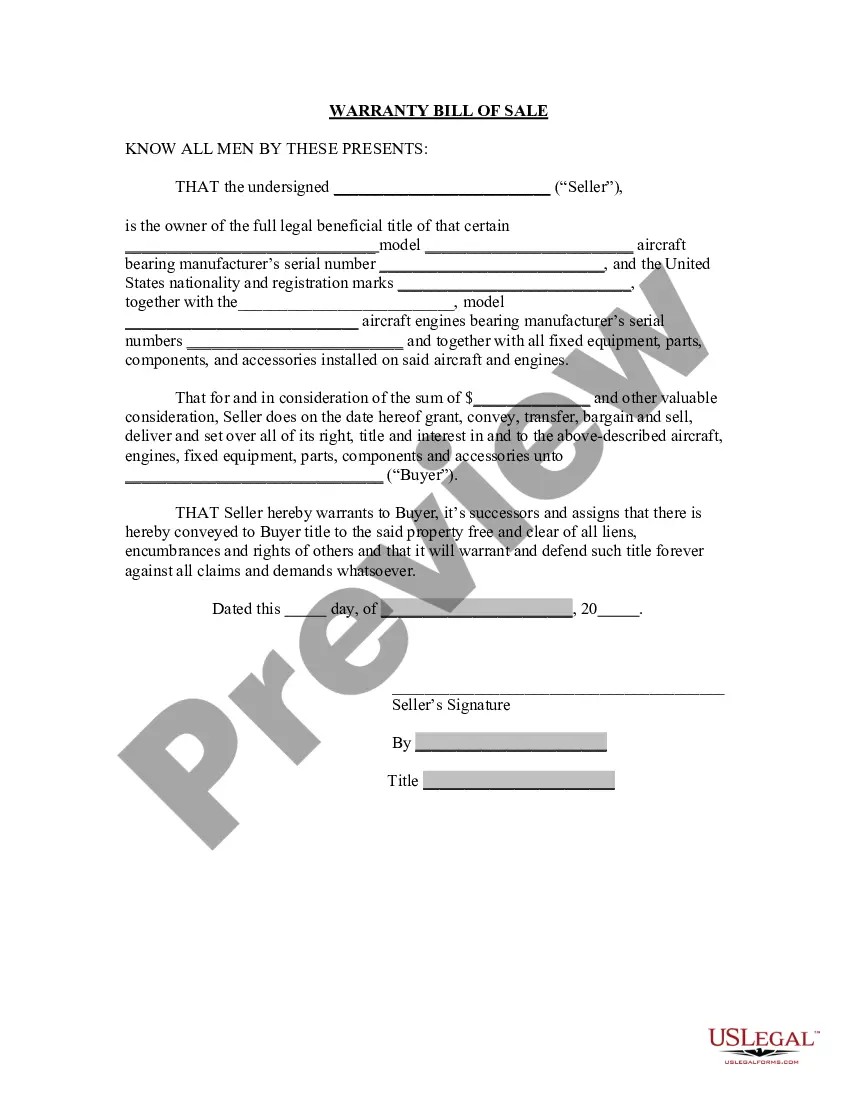
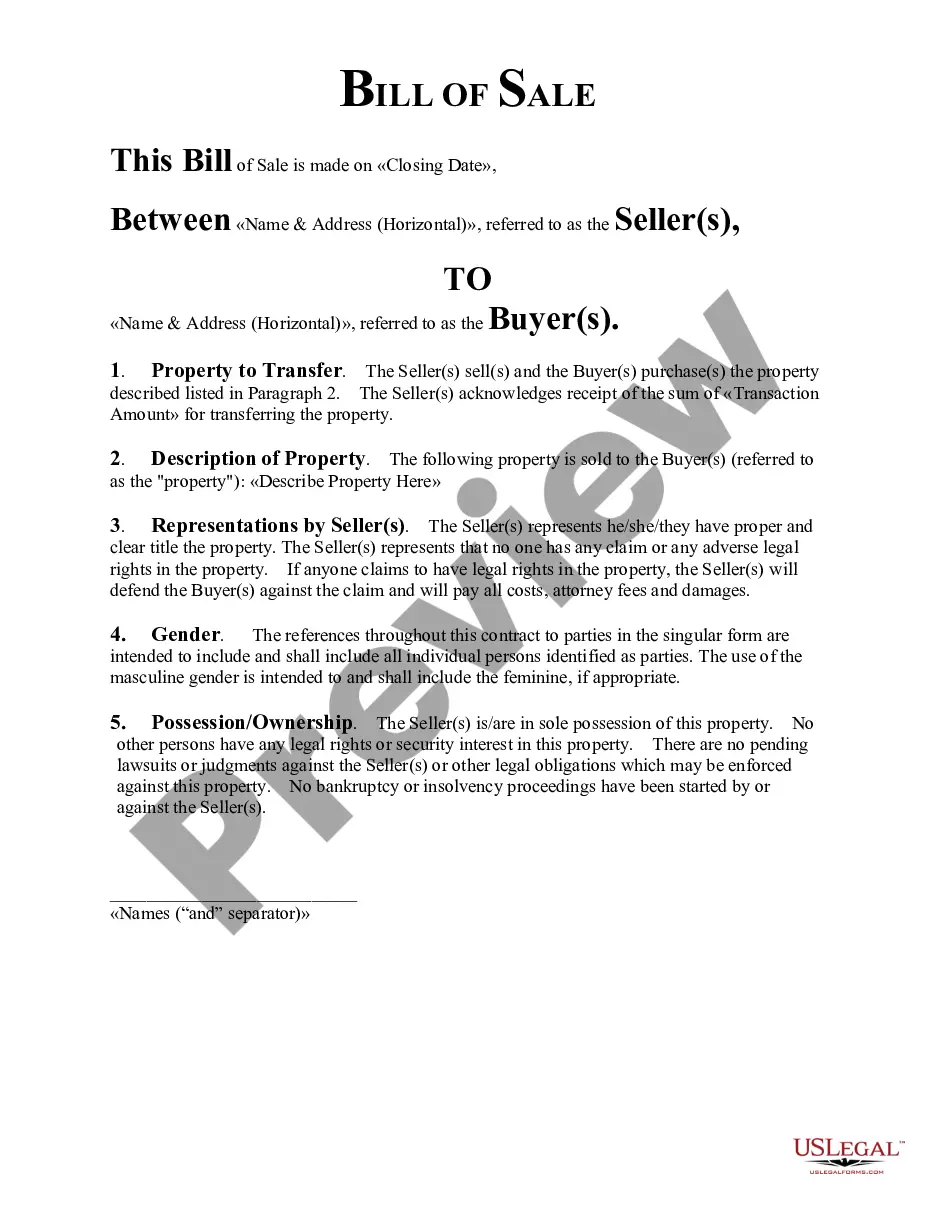
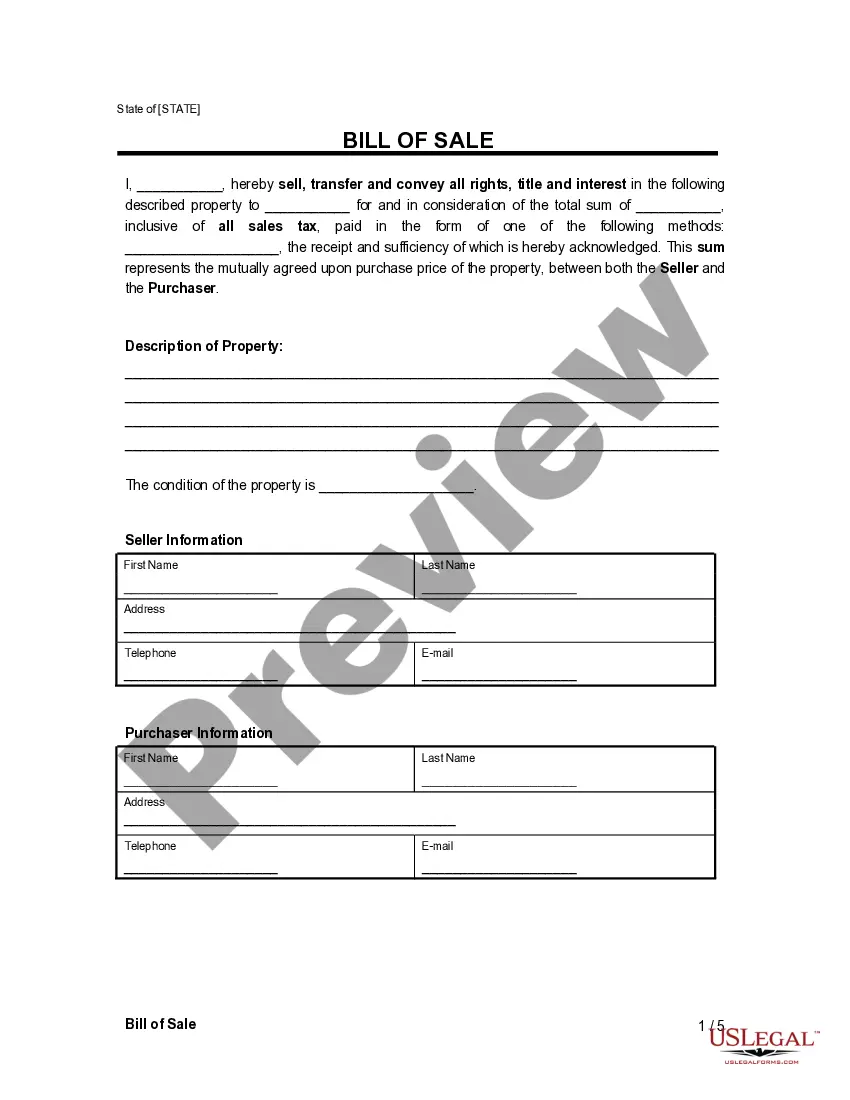
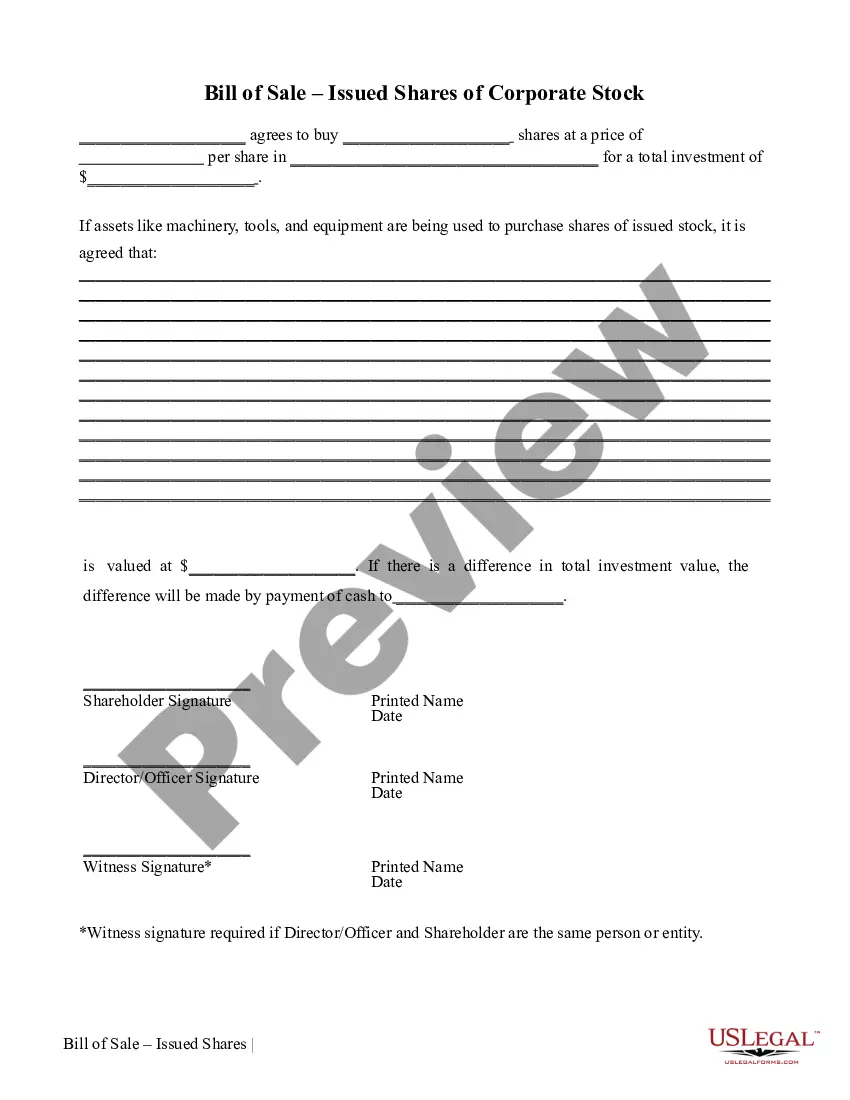
The Bill of Sale without Warranty by Corporate Seller is a legal document used to transfer ownership of personal property from a corporate seller to a purchaser without any warranties. This type of bill of sale acts as a quitclaim conveyance, ensuring that the seller relinquishes all claims to the property being sold. Unlike other forms of bill of sale, this specific version is tailored for corporate sellers and complies with applicable state laws, making it essential for businesses engaging in sales transactions.
What’s included in this form
- Identification of the Seller as a corporation and the Purchaser's details.
- Clear statement of the purchase amount and acknowledgment of receipt.
- Description of the personal property being sold, including its location.
- Quitclaim language indicating the seller relinquishes all interest in the property.
- Signature lines for the authorized corporate representative and date of signing.
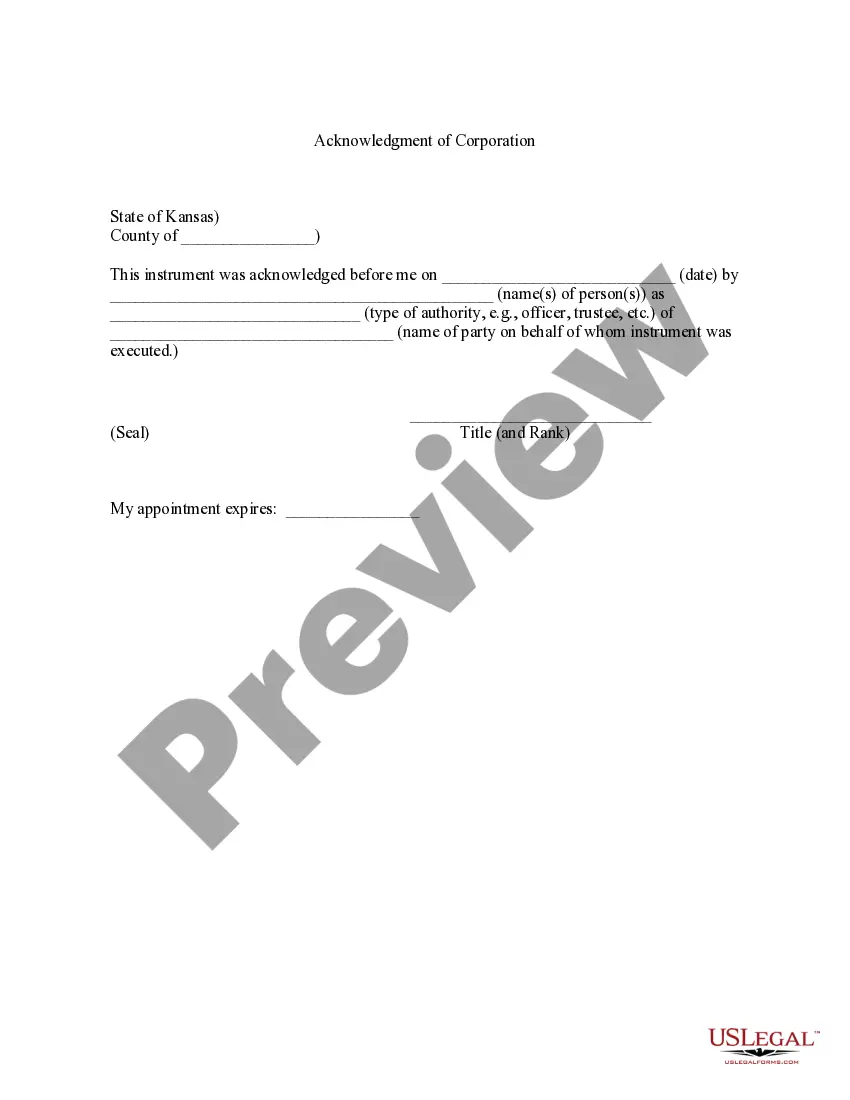
- Acknowledgment section for notarization, if required by jurisdiction.
Common use cases
This form is used when a corporation wishes to sell personal property without any warranties on its condition. It is ideal for transactions where the seller does not want to guarantee the quality or fitness of the item being sold. Examples include selling used equipment, inventory, or other types of property where the seller seeks to mitigate liability post-sale.
Who needs this form
- Corporations that are selling personal property.
- Businesses looking to transfer assets without providing warranties.
- Purchasers seeking a straightforward transfer of ownership where warranty is not a concern.
Completing this form step by step
- Identify the selling corporation by entering its official name in the Seller section.
- Enter the purchase amount in both numerical and written form.
- Specify the Purchaser's name and any relevant details.
- Clearly describe the personal property being sold, including its location.
- Have the authorized corporate representative sign and date the form.
- If required, complete the acknowledgment section before a notary public.
Is notarization required?
To make this form legally binding, it must be notarized. Our online notarization service, powered by Notarize, lets you verify and sign documents remotely through an encrypted video session.
Get your form ready online
Our built-in tools help you complete, sign, share, and store your documents in one place.
Make edits, fill in missing information, and update formatting in US Legal Forms—just like you would in MS Word.
Download a copy, print it, send it by email, or mail it via USPS—whatever works best for your next step.
Sign and collect signatures with our SignNow integration. Send to multiple recipients, set reminders, and more. Go Premium to unlock E-Sign.
If this form requires notarization, complete it online through a secure video call—no need to meet a notary in person or wait for an appointment.
We protect your documents and personal data by following strict security and privacy standards.

Make edits, fill in missing information, and update formatting in US Legal Forms—just like you would in MS Word.

Download a copy, print it, send it by email, or mail it via USPS—whatever works best for your next step.

Sign and collect signatures with our SignNow integration. Send to multiple recipients, set reminders, and more. Go Premium to unlock E-Sign.

If this form requires notarization, complete it online through a secure video call—no need to meet a notary in person or wait for an appointment.

We protect your documents and personal data by following strict security and privacy standards.
Common mistakes to avoid
- Failing to provide a complete description of the property being sold.
- Not having the form signed by an authorized representative of the corporation.
- Omitting the acknowledgment section when required for notarization.
Benefits of using this form online
- Convenient access to a legally drafted form that meets state requirements.
- Edit and customize the document easily to fit specific transaction details.
- Save time and ensure accuracy in the sales transaction process.
Looking for another form?


Form popularity
FAQ
Alabama. Arkansas. Colorado. Connecticut. Hawaii. Idaho. Maine. Nebraska.
Both the buyer and seller should receive copies of the bill of sale form. It's important for the buyer to keep the bill of sale with the title of the vehicle for registration and licensing purposes, if necessary. However, all parties should keep them for their own personal records.
Can a bill of sale be handwritten? If your state does not provide a bill of sale form, yes, you can handwrite one yourself. As long as the document includes all of the necessary parts of a bill of sale and is signed by both parties and a notary, it is valid. Some states require a bill of sale while others don't.
A bill of sale does not serve as proof of ownership. Only a title has that legal authority. Bills of sale serve as proof of title transfer, which buyers and sellers need for personal financial and tax records.
Certificate of Title. Lien Release, if applicable (form TR-150) Seller's Notification of Sale (form TR-216)
Most states do not require a notary to witness the signing of a bill of sale. However, by law, a notary public must witness both parties signing the document in Louisiana, Nebraska, Maryland, New Hampshire, West Virginia, and Montana. Notaries are optional in other states.
In simple terms, a bill of sale agreement is nothing more than a contract for the purchase of a vehicle between a buyer and a seller.In most cases, the contract is legally binding between buyer and seller as long as the bill of sale follows guidelines required in the state where the sale or transfer takes place.
In general, Kansas does not require bills of sale, title assignments, and applications to be notarized. However, it has the right to request notarization in unusual circumstances, such as if document information is incomplete or questionable.