What is a petition for discharge of personal representative, conservator, or guardian?
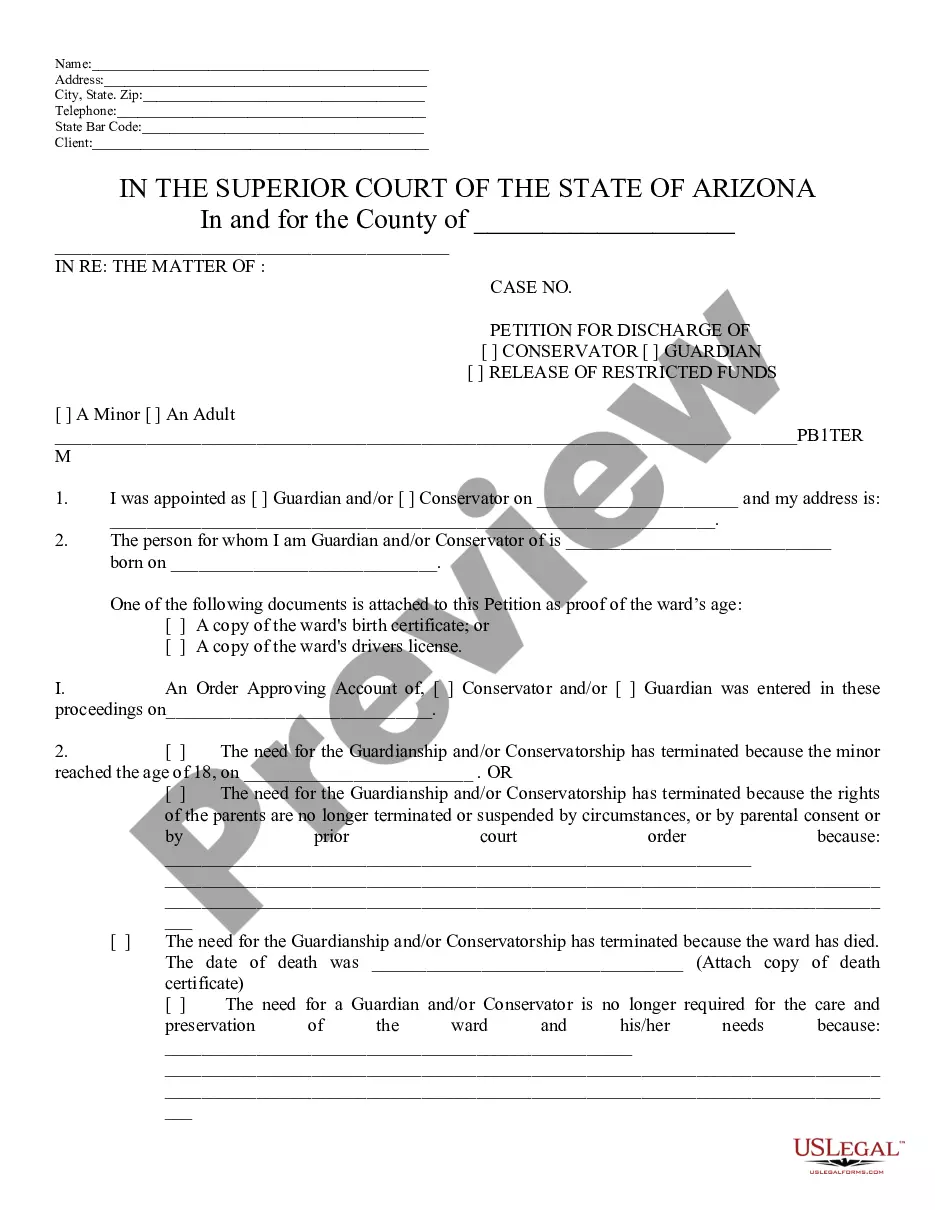
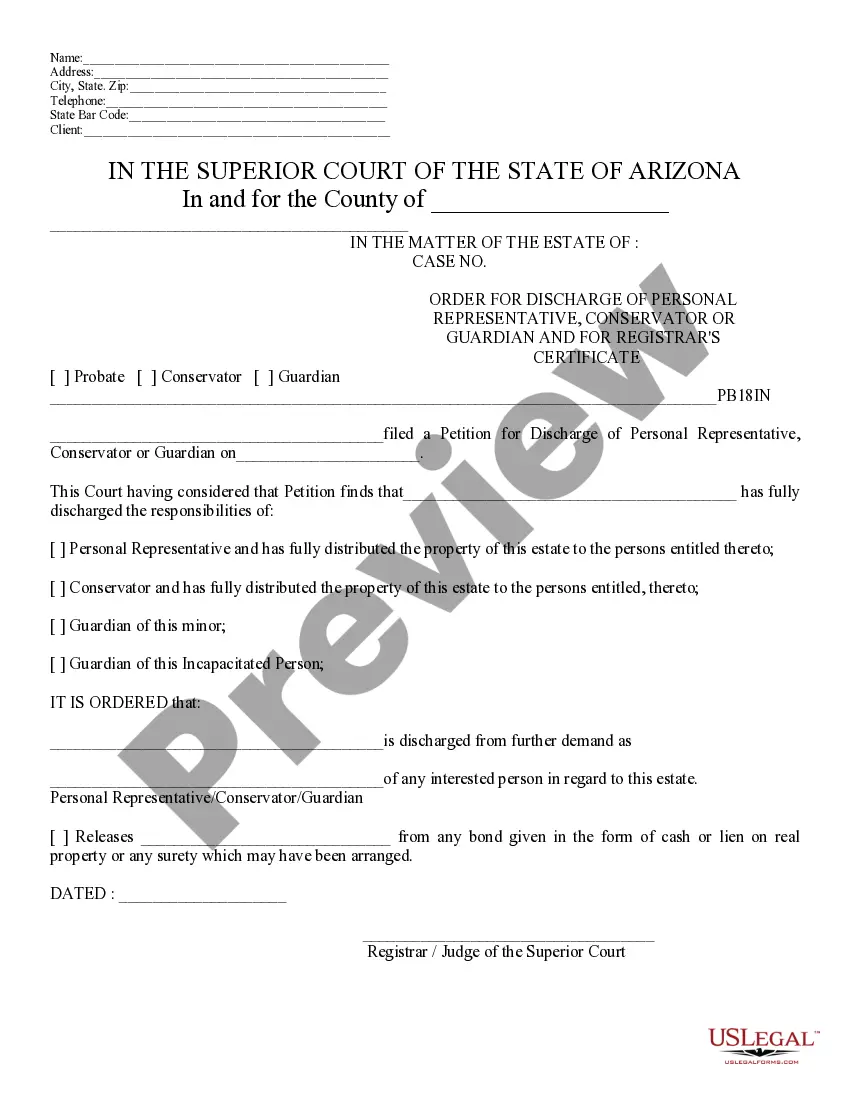
A Petition for Discharge of Personal Representative, Conservator, or Guardian is a legal document filed in court, requesting the official termination of the responsibilities held by an individual in these roles. This form is typically used after the individual has fulfilled their duties, which may include managing an estate, overseeing the affairs of a minor, or taking care of someone who is incapacitated. By filing this petition, the person seeks to be released from any further obligations and liabilities connected to their role.
Legal use and context
This petition is commonly utilized within probate and family court systems, particularly in matters involving estate administration and guardianship. When a personal representative or conservator has completed their duties, such as distributing assets or ensuring the well-being of the individual they were appointed to protect, this form helps legally document the conclusion of their role. Its significance lies in formally closing the case and protecting the interests of all parties involved.
Who should use this form
This form is applicable for:
- Individuals who have acted as a personal representative in managing an estate.
- Conservators responsible for maintaining the financial and personal affairs of an individual.
- Guardians assigned to protect the rights and welfare of a minor or an incapacitated person.
Anyone in these positions who has fulfilled their obligations should consider utilizing this form to officially conclude their responsibilities.
Key components of the form
The Petition includes several essential elements:
- Identification of the type of representative (personal, conservator, or guardian).
- Confirmation that duties have been completed.
- Statement regarding the lack of pending actions concerning the estate.
- Requests for discharge from further claims and release of any bonds.
Each component plays a crucial role in ensuring the petition is valid and serves its intended purpose.
Common mistakes to avoid when using this form
When filing this petition, be mindful of the following common errors:
- Neglecting to provide accurate information about your completed duties.
- Failing to check the appropriate boxes to indicate the capacity in which you served.
- Not confirming that there are no pending claims related to the estate.
- Overlooking any required signatures or notarization.
Avoiding these mistakes will help ensure that your petition is processed smoothly.
What documents you may need alongside this one
When filing the Petition for Discharge, you may also need to provide:
- Evidence of completed duties, such as final accounting documents.
- Any previously filed court orders related to your appointment.
- Notarized statements confirming that all claims have been addressed.
Including the correct documentation will support your petition and expedite the process.
What to expect during notarization or witnessing
During the notarization process, you will need to present the petition along with a valid form of identification to the notary public. The notary will:
- Verify your identity and your understanding of the document.
- Sign and affix their seal on the petition to confirm its authenticity.
This step is vital to ensure the legal validity of your filing.