Indiana Bill of Sale without Warranty by Corporate Seller
Overview of this form
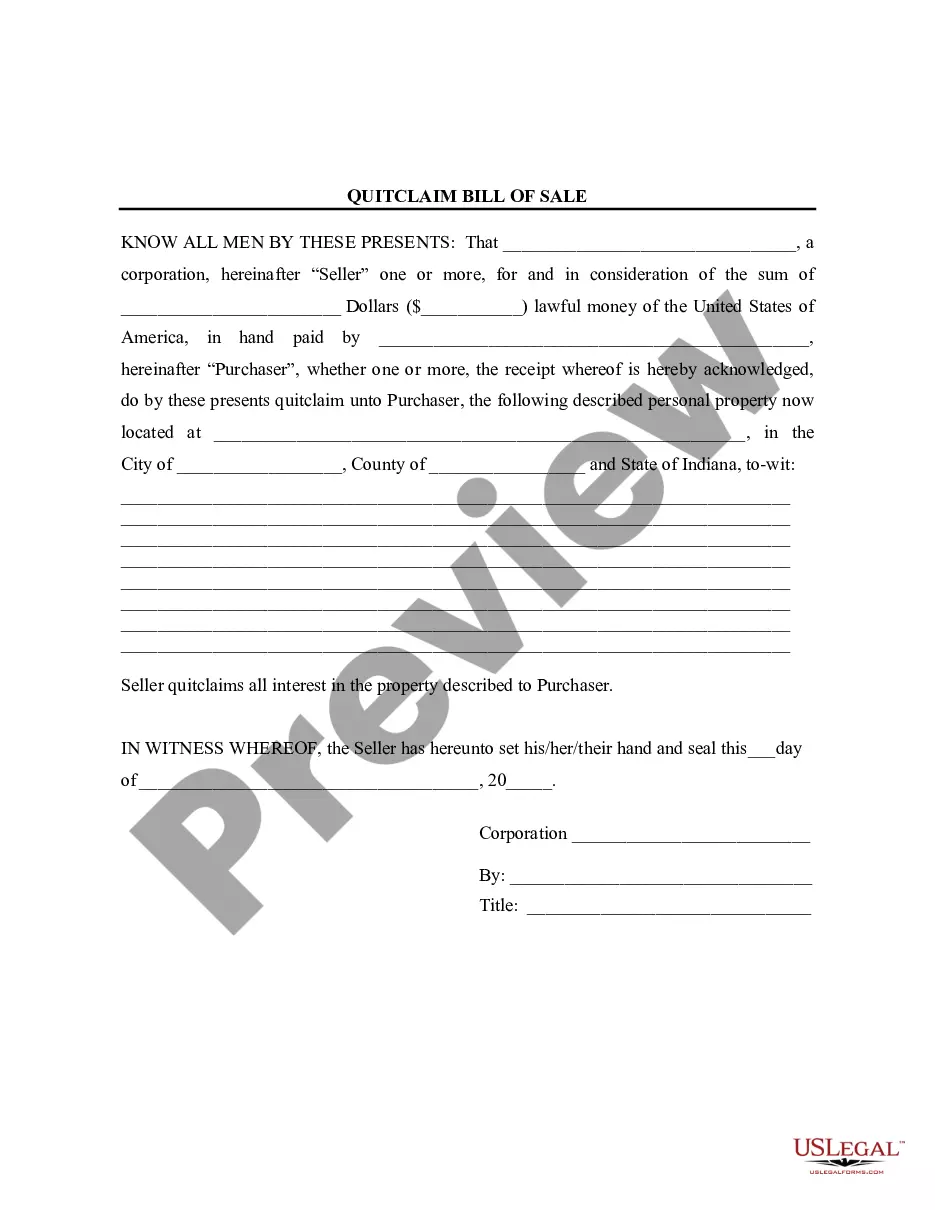
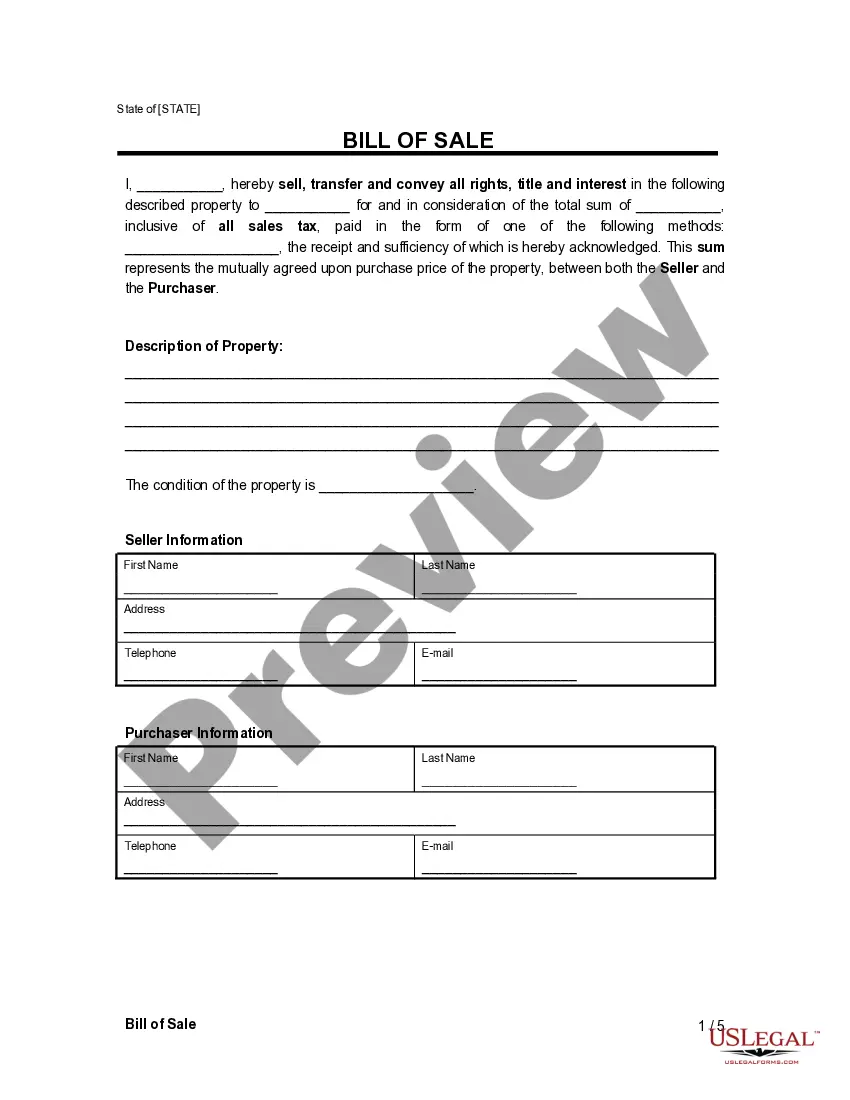
The Bill of Sale without Warranty by Corporate Seller is a legal document that facilitates the sale of personal property from a corporate seller to a purchaser. This form denotes a quitclaim conveyance, meaning the seller transfers any interest it holds in the property without providing a warranty. It is crucial for situations where the seller wants to limit their liability regarding the condition of the item being sold. This form is essential for corporate transactions involving personal property, distinguishing it from other sales agreements that may offer warranties or guarantees on the goods sold.
What’s included in this form
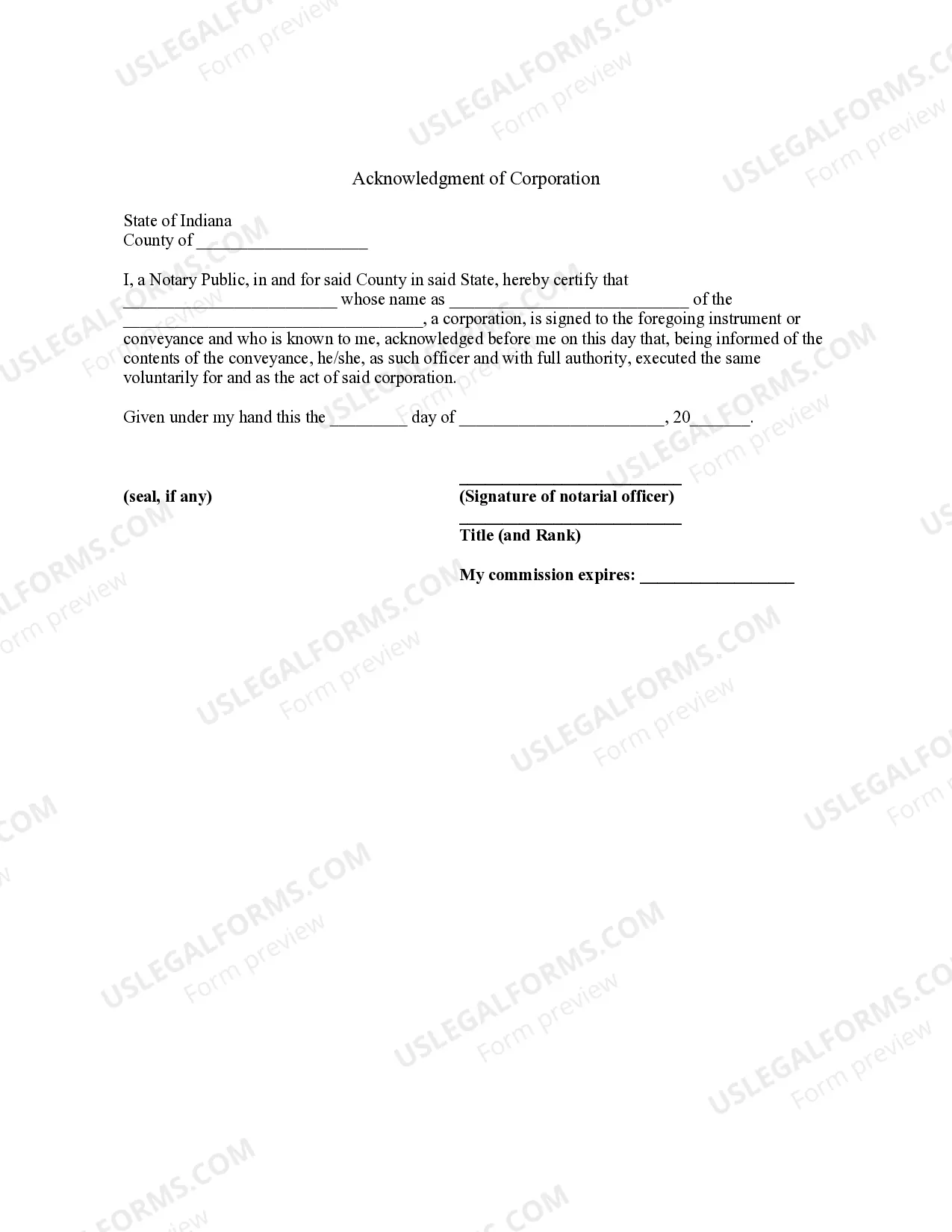
- Identification of the Seller and Purchaser
- Statement of consideration or payment amount
- Detailed description of the property being sold
- Quitclaim clause establishing the transfer of ownership
- Execution section for the Sellerâs signature and title
- Notary acknowledgment for legal validation
Situations where this form applies
This form is used when a corporate entity wants to sell personal property and wishes to limit any liability related to the property's condition. It is appropriate for asset sales where the seller does not wish to provide any warranties or guarantees about the property, making it beneficial in transactions involving used or unknown-condition items. Use this form in situations such as the sale of office equipment, vehicles, inventory, or other tangible items owned by the corporation.
Who should use this form
This form is suitable for:
- Corporations selling personal property without warranties
- Purchasers looking to purchase personal property from a corporate seller
- Legal representatives or attorneys facilitating the sale of corporate assets
How to complete this form
- Identify the parties involved: Enter the names of the corporate Seller and the Purchaser.
- Specify the property: Clearly describe the personal property being sold, including its location.
- State the consideration: Insert the payment amount in dollars.
- Sign and date: The corporate representative should sign the document, including their title, on the designated line.
- Arrange for notarization: A notary public must complete the acknowledgment section to validate the transaction.
Notarization requirements for this form
Yes, this form must be notarized to be legally valid. A notary public must acknowledge the execution of this document, ensuring all parties involved are identified and that the signing is voluntary. US Legal Forms offers integrated online notarization services, providing secure video calls with licensed notaries available 24/7, adding convenience without the need for travel.
Get your form ready online
Our built-in tools help you complete, sign, share, and store your documents in one place.
Make edits, fill in missing information, and update formatting in US Legal Forms—just like you would in MS Word.
Download a copy, print it, send it by email, or mail it via USPS—whatever works best for your next step.
Sign and collect signatures with our SignNow integration. Send to multiple recipients, set reminders, and more. Go Premium to unlock E-Sign.
If this form requires notarization, complete it online through a secure video call—no need to meet a notary in person or wait for an appointment.
We protect your documents and personal data by following strict security and privacy standards.

Make edits, fill in missing information, and update formatting in US Legal Forms—just like you would in MS Word.

Download a copy, print it, send it by email, or mail it via USPS—whatever works best for your next step.

Sign and collect signatures with our SignNow integration. Send to multiple recipients, set reminders, and more. Go Premium to unlock E-Sign.

If this form requires notarization, complete it online through a secure video call—no need to meet a notary in person or wait for an appointment.

We protect your documents and personal data by following strict security and privacy standards.
Common mistakes to avoid
- Failing to provide a complete description of the property.
- Omitting signatures or titles from the Seller.
- Not completing the notarization section, which is vital for legal validity.
- Incorrectly stating the amount of consideration paid.
Benefits of using this form online
- Convenient access to legally compliant forms tailored for different jurisdictions.
- Editable templates that allow for customization to suit specific needs.
- Instant downloading, providing immediate access to legal documents.
- Guidance through the completion process, ensuring accurate and thorough submissions.
What to keep in mind
- The Bill of Sale without Warranty by Corporate Seller transfers property rights without guarantees.
- Understanding the implications of a quitclaim conveyance is crucial for both sellers and buyers.
- Ensure proper completion and notarization for the sale to be legally enforceable.
Looking for another form?

Form popularity
FAQ
Alabama. Arkansas. Colorado. Connecticut. Hawaii. Idaho. Maine. Nebraska.
A Bill of Sale is a legal document that provides proof of ownership.According Indiana laws, you as the seller must provide the document while selling your car. You will also need to fill in the information of the bill of sale in the Form 44237.
Both the buyer and seller should receive copies of the bill of sale form. It's important for the buyer to keep the bill of sale with the title of the vehicle for registration and licensing purposes, if necessary. However, all parties should keep them for their own personal records.
Is a Bill of Sale required for selling a car in Indiana? Yes, Indiana requires a bill of sale for private party vehicle transactions. Form 44237 is what you need, and it requires signatures from both the buyer and the seller.
A bill of sale does not serve as proof of ownership. Only a title has that legal authority. Bills of sale serve as proof of title transfer, which buyers and sellers need for personal financial and tax records.
A complete bill of sale is the only step available to you if you want to sell your car without a title. The bill of sale needs to include all the details of the car, including the make, model, year, and VIN. It also needs to include all your information (name, contact details, registration details).
In simple terms, a bill of sale agreement is nothing more than a contract for the purchase of a vehicle between a buyer and a seller.In most cases, the contract is legally binding between buyer and seller as long as the bill of sale follows guidelines required in the state where the sale or transfer takes place.
Although an Indiana bill of sale isn't legally necessary for every item that is sold, it is an excellent way to document a sale for your personal records.
An IN bill of sale is required in place of vehicle titles if the buyer or seller cannot obtain a valid title.However, a DMV bill of sale is not required if vehicle titles are obtainable or if residents can use other documents to prove vehicle ownership.