Illinois Letter from Landlord to Tenant for Failure to use electrical, plumbing, sanitary, heating, ventilating, air conditioning and other facilities in a reasonable manner
Overview of this form
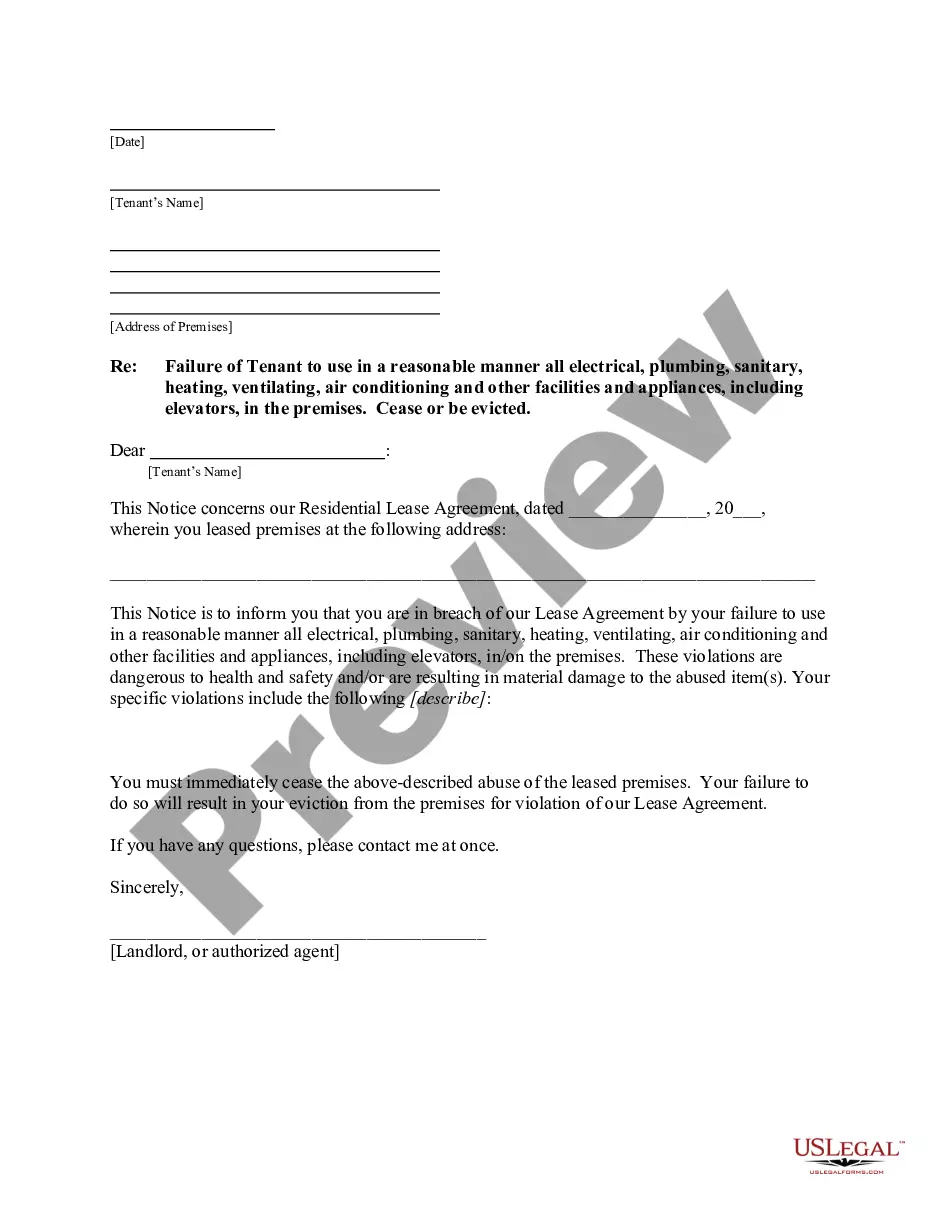
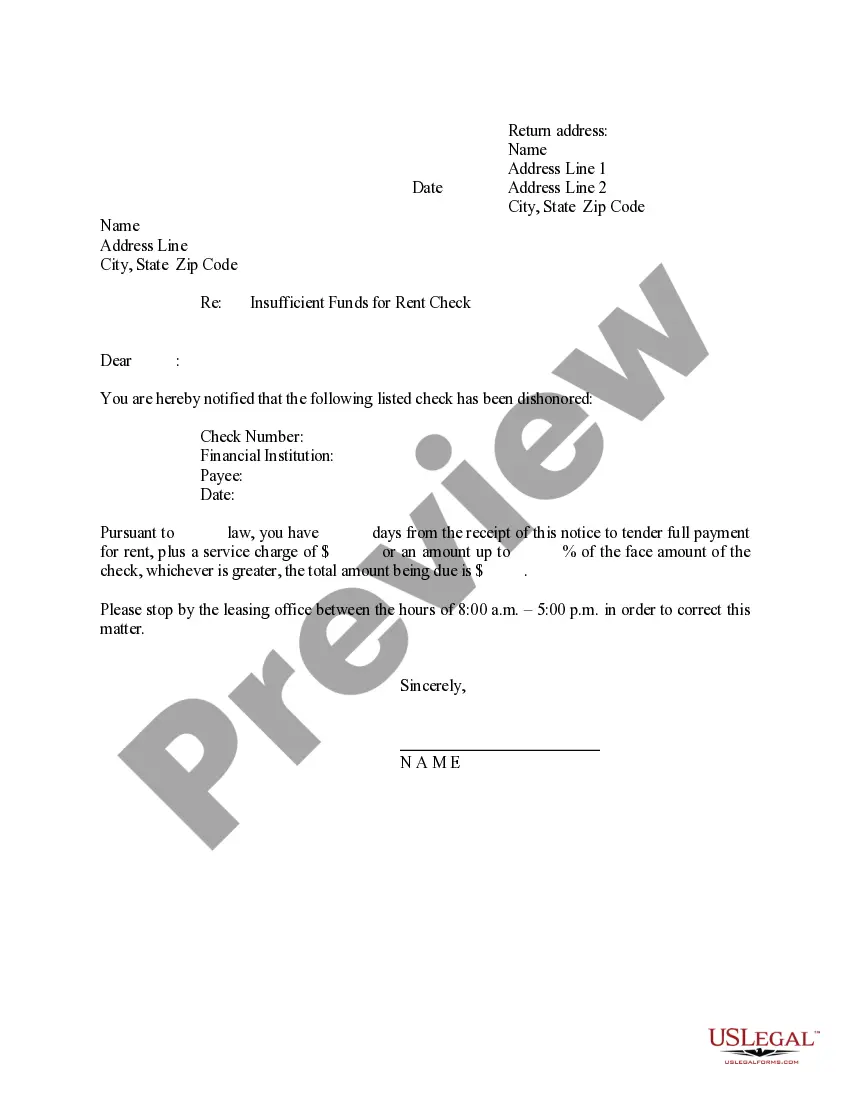
This form is a Letter from Landlord to Tenant, specifically addressing the tenant's failure to use electrical, plumbing, sanitary, heating, ventilating, air conditioning, and other facilities in a reasonable manner. It serves as a formal notice allowing landlords to communicate issues regarding lease violations and the misuse of property facilities. This document differs from eviction notices as it first alerts the tenant to correct their behavior before any eviction proceedings commence.
Key parts of this document
- Identification of the landlord and tenant involved in the lease agreement.
- Specific description of the violations related to facility use.
- Clear statement indicating potential consequences if the misuse continues.
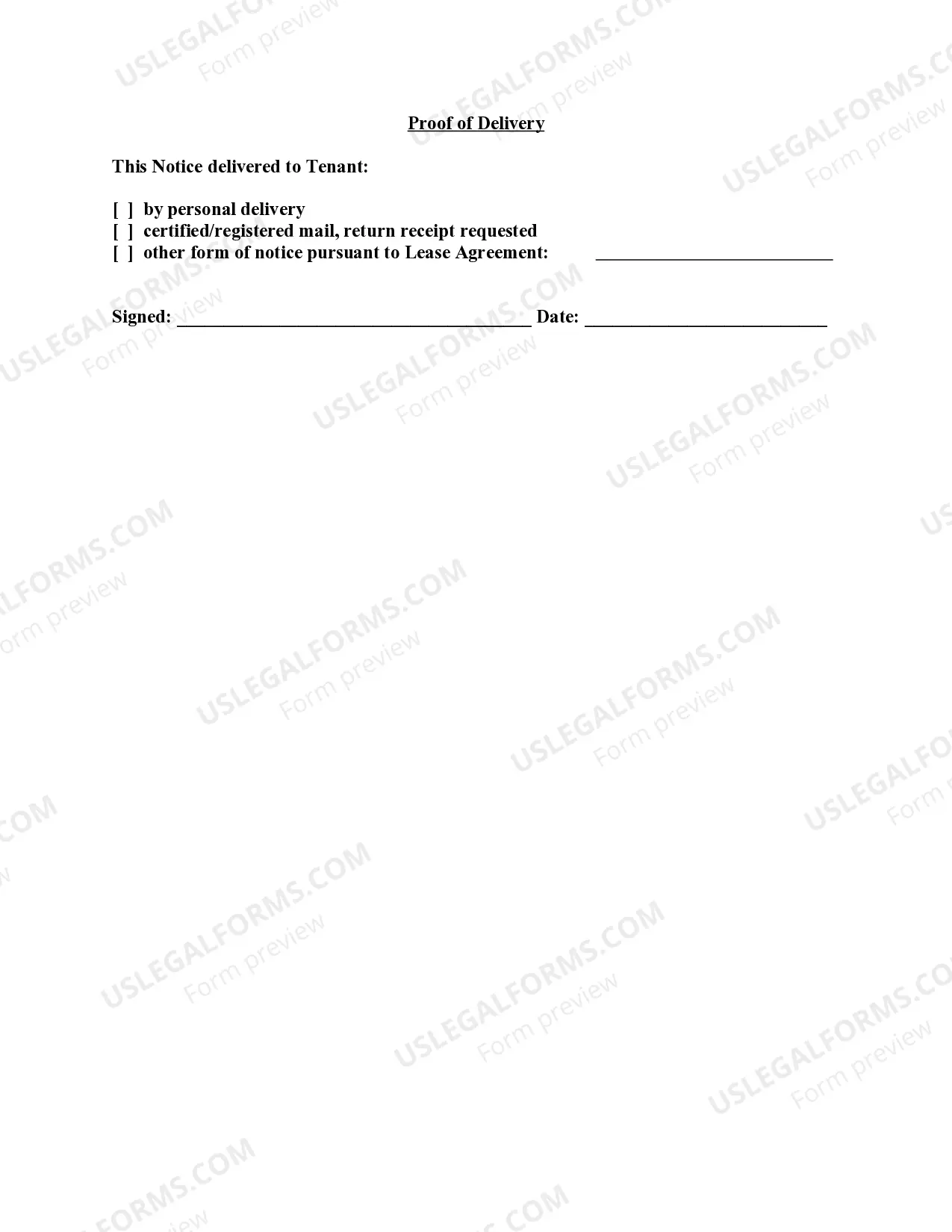
- Proof of delivery options for serving the notice to the tenant.
- Space for the landlord's signature and contact information.


When to use this form
This form should be used when a landlord observes that a tenant is not using the specified facilities and appliances as required by the lease agreement. It is appropriate to issue this notice as a formal warning before considering eviction. Common situations include excessive neglect or misuse of plumbing systems, electrical outlets, heating and air conditioning units, and other shared facilities. This notice helps to ensure that the tenant is informed and given an opportunity to correct their actions.
Intended users of this form
- Landlords who have a signed lease agreement with a tenant.
- Property management companies managing rental properties.
- Real estate professionals facilitating landlord-tenant relationships.
- Landlords seeking to protect their properties from damage or misuse.
Completing this form step by step
- Identify and enter the names of the landlord and tenant at the top of the notice.
- Clearly state the issues related to the misuse of facilities.
- Specify a deadline for the tenant to correct the behavior outlined.
- Sign the notice and include your contact information.
- Choose a method of delivery and document how the notice was delivered.
Notarization requirements for this form
This form does not typically require notarization to be legally valid. However, some jurisdictions or document types may still require it. US Legal Forms provides secure online notarization powered by Notarize, available 24/7 for added convenience.
Get your form ready online
Our built-in tools help you complete, sign, share, and store your documents in one place.
Make edits, fill in missing information, and update formatting in US Legal Forms—just like you would in MS Word.
Download a copy, print it, send it by email, or mail it via USPS—whatever works best for your next step.
Sign and collect signatures with our SignNow integration. Send to multiple recipients, set reminders, and more. Go Premium to unlock E-Sign.
If this form requires notarization, complete it online through a secure video call—no need to meet a notary in person or wait for an appointment.
We protect your documents and personal data by following strict security and privacy standards.

Make edits, fill in missing information, and update formatting in US Legal Forms—just like you would in MS Word.

Download a copy, print it, send it by email, or mail it via USPS—whatever works best for your next step.

Sign and collect signatures with our SignNow integration. Send to multiple recipients, set reminders, and more. Go Premium to unlock E-Sign.

If this form requires notarization, complete it online through a secure video call—no need to meet a notary in person or wait for an appointment.

We protect your documents and personal data by following strict security and privacy standards.
Avoid these common issues
- Failing to specify the exact violations in the letter.
- Not including a deadline for compliance with the notice.
- Neglecting to properly serve the notice, which can affect enforceability.
Why complete this form online
- Convenient access to legally drafted templates.
- Edit and customize the form easily to fit your specific needs.
- Reliable formats created by licensed attorneys.
Legal use & context
- The form serves as a formal communication to address lease violations.
- Failure to comply with the notice can lead to legal eviction actions.
- Provides documentation that the landlord addressed the issue with the tenant.
Main things to remember
- This form is critical for addressing misuse of property facilities.
- Serving this notice is a necessary step before pursuing eviction.
- Ensure that you are compliant with local regulations regarding tenant notices.
Looking for another form?



Form popularity
FAQ
Yes, they do. According to the Phase 3: Recovery Guidance of the Division of Real Estate of the Illinois Department of Financial and Professional Regulation, showings of occupied rental units are NOT allowed without the tenant's express consent.
In all states, a landlord can enter the property in an emergency without notice or permission.Even if your landlord gives you notice, he or she must have a good reason to enter the property. In most cases, your landlord can enter your home: In an emergency.
The big take-away is that in most circumstances a landlord cannot enter a property without agreement from the tenant. And If the landlord ignores the law and enters the property without permission, the tenant may be able to claim damages or gain an injunction to prevent the landlord doing it again.
Landlord Right to Entry in IllinoisIllinois law has no provisions governing landlord right to entry. However, in the city of Chicago, landlords must provide at least 2 days of notice before entering the premises.
Illinois has a high volume of tenants compared to most states, but not as high as D.C., California, or New York.Overall, Chicago has one of the most strict landlord climates in the country, which is why we say Illinois is a tenant-friendly state. In this article, we'll go through Illinois landlord-tenant law.
In Illinois, if there is no lease or if the lease does not specify a move out date, the Landlord must give at least 30 days of notice to a tenant that the landlord wants to move out. This notice must be in writing and must arrive to the tenant at least 30 days prior to their move out date.
Provides that a landlord may enter only at reasonable times except in case of an emergency and that an entry between A.M. and P.M., or at a time requested by the tenant, shall be presumed reasonable.
A landlord cannot evict a tenant without an adequately obtained eviction notice and sufficient time. A landlord cannot retaliate against a tenant for a complaint. A landlord cannot forego completing necessary repairs or force a tenant to do their own repairs.A landlord cannot remove a tenant's personal belongings.
State law regulates several rent-related issues, including the amount of notice (at least 30 days in Illinois) landlords must give tenants to raise the rent and how much time (five days in Illinois) a tenant has to pay rent or move before a landlord can file for eviction.