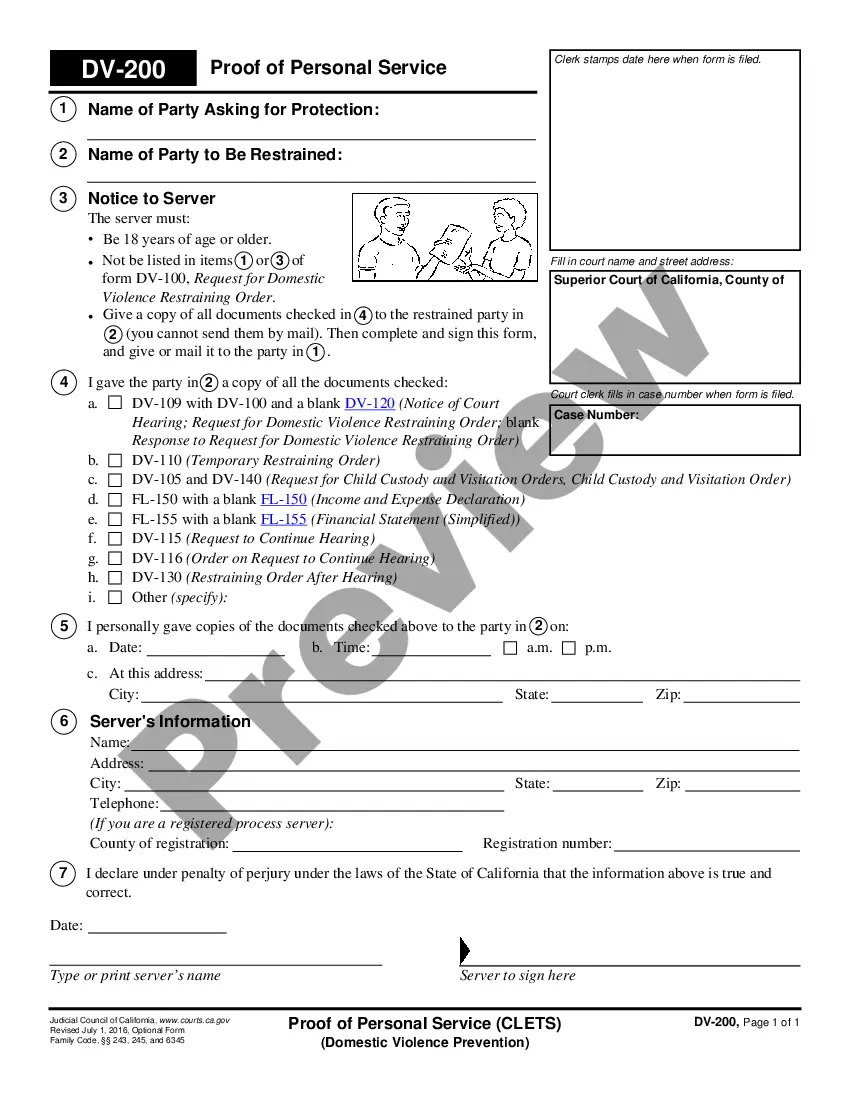
Illinois Letter from Tenant to Landlord containing Notice of termination for landlord's noncompliance with possibility to cure
About this form
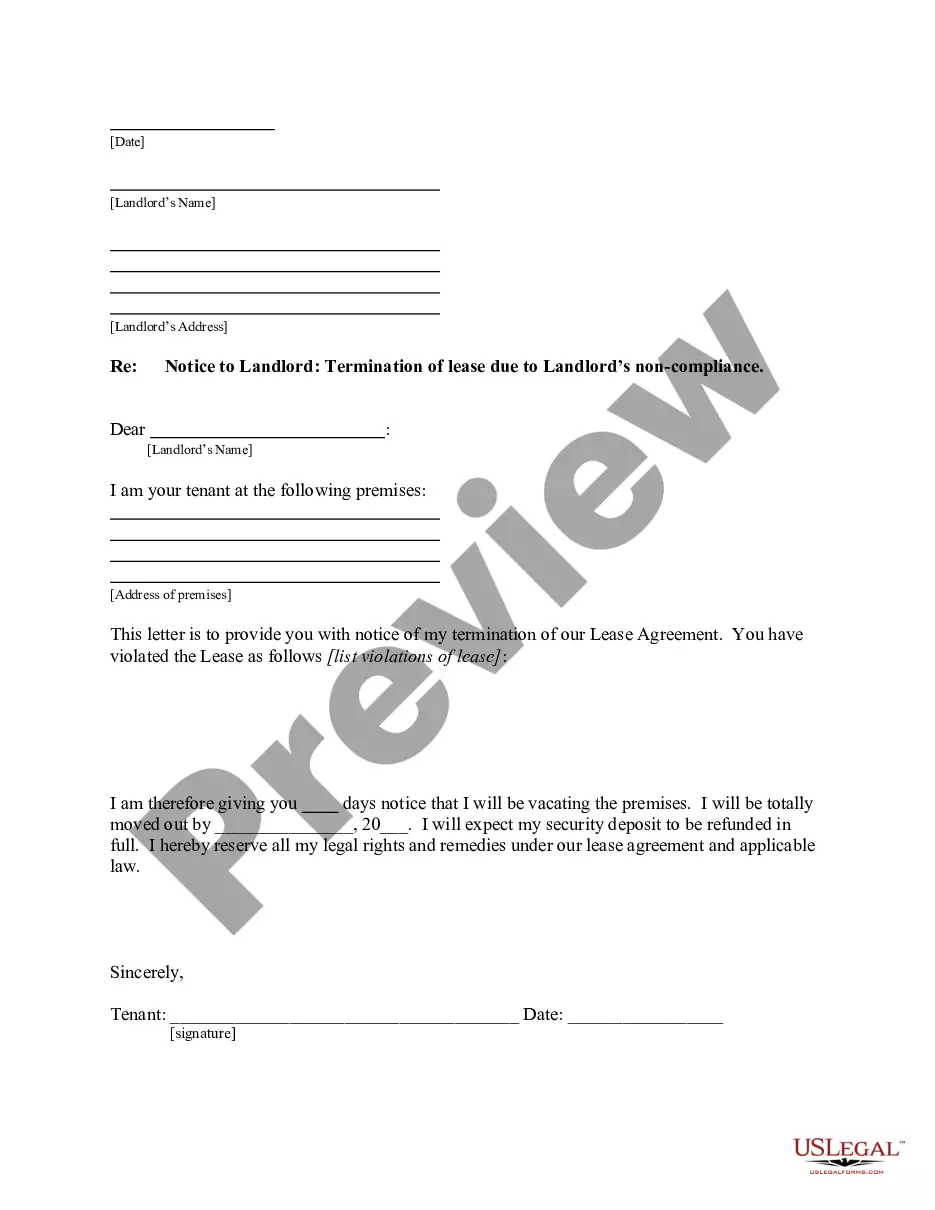
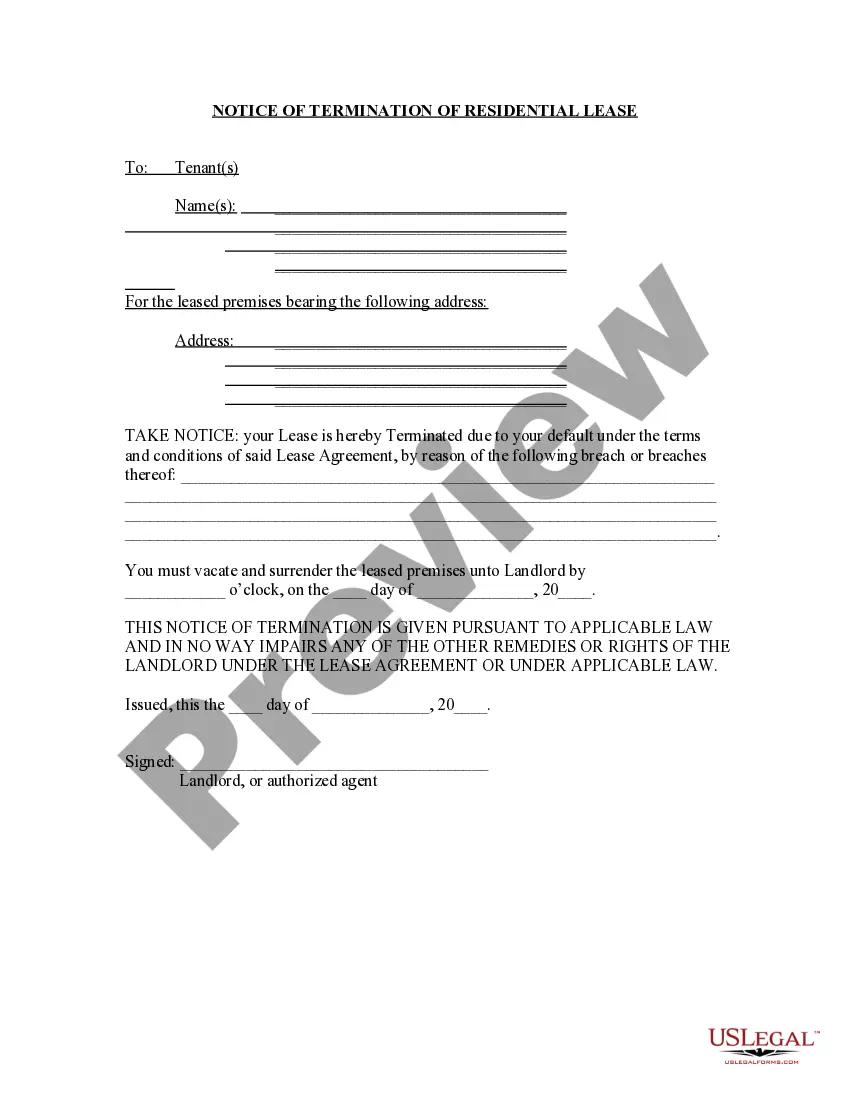
This Letter from Tenant to Landlord containing Notice of Termination for Landlord's Noncompliance with Possibility to Cure is a formal document that allows a tenant to notify their landlord of a lease violation. This notice informs the landlord of the tenant's intent to vacate the premises due to the landlord's failure to comply with the terms of the lease agreement. Unlike other notices, this specific form includes an opportunity for the landlord to remedy the situation before the tenant vacates.
Key components of this form
- Tenant's name and signature
- Date of delivery
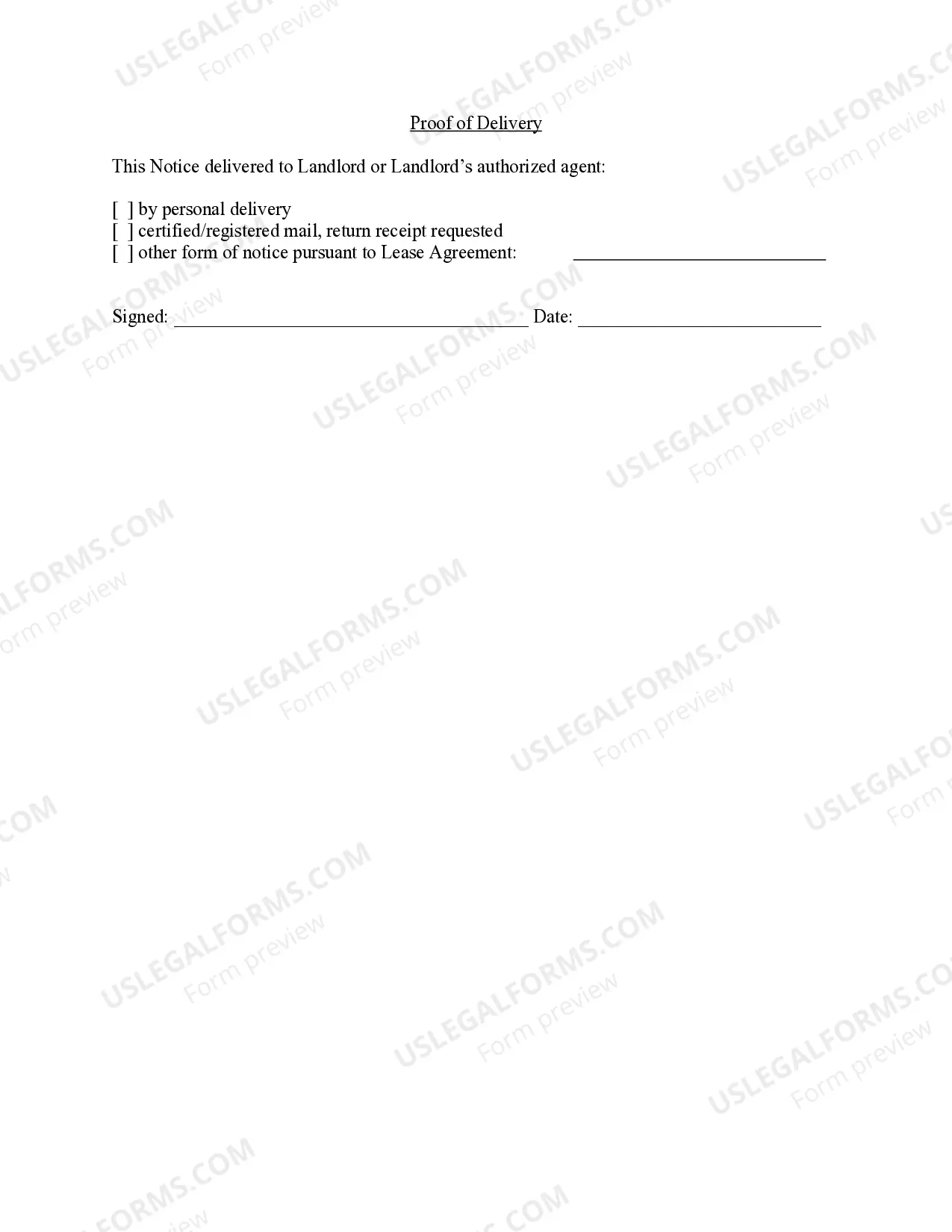
- Proof of delivery method (e.g., personal delivery or certified mail)
- Notice of the tenant's vacating due to landlord's breach
- Opportunity for the landlord to cure the breach



When to use this form
This form should be used when a tenant has identified noncompliance by the landlord with the lease agreement. Common situations would include failure to make necessary repairs, not providing essential services, or any other breach that affects the habitability of the rental property. The tenant must provide notice of these issues and the intent to terminate the lease, allowing the landlord a chance to resolve the issues.
Who can use this document
This form is intended for tenants who are experiencing issues with their landlord regarding lease violations. It is suitable for renters who wish to formally address the landlord's noncompliance and seek a resolution before deciding to vacate the property.
Steps to complete this form
- Identify the tenant's name and address clearly at the top of the form.
- State the specific reasons for the complaint regarding noncompliance by the landlord.
- Include the address of the rental property in question.
- Set a date for the intended vacating of the premises.
- Sign and date the form to make it official before delivering it to the landlord.
Does this document require notarization?
Notarization is not commonly needed for this form. However, certain documents or local rules may make it necessary. Our notarization service, powered by Notarize, allows you to finalize it securely online anytime, day or night.
Get your form ready online
Our built-in tools help you complete, sign, share, and store your documents in one place.
Make edits, fill in missing information, and update formatting in US Legal Forms—just like you would in MS Word.
Download a copy, print it, send it by email, or mail it via USPS—whatever works best for your next step.
Sign and collect signatures with our SignNow integration. Send to multiple recipients, set reminders, and more. Go Premium to unlock E-Sign.
If this form requires notarization, complete it online through a secure video call—no need to meet a notary in person or wait for an appointment.
We protect your documents and personal data by following strict security and privacy standards.

Make edits, fill in missing information, and update formatting in US Legal Forms—just like you would in MS Word.

Download a copy, print it, send it by email, or mail it via USPS—whatever works best for your next step.

Sign and collect signatures with our SignNow integration. Send to multiple recipients, set reminders, and more. Go Premium to unlock E-Sign.

If this form requires notarization, complete it online through a secure video call—no need to meet a notary in person or wait for an appointment.

We protect your documents and personal data by following strict security and privacy standards.
Mistakes to watch out for
- Failing to include the specific reasons for the landlord's noncompliance.
- Not providing adequate proof of delivery to the landlord.
- Overlooking the required notice period specified in the lease or state law.
Why complete this form online
- Convenient access to professionally drafted forms that are easy to complete.
- Editable to personalize the document according to individual circumstances.
- Reliable legal content ensured by licensed attorneys.
Legal use & context
- This form serves as a legal record of the tenant's notice to the landlord.
- It may be used in disputes as evidence of the tenant's attempts to resolve issues.
- Understanding local state laws regarding lease agreements is crucial for enforceability.
Summary of main points
- The form is essential for tenants facing noncompliance from their landlords.
- It provides a formal way to notify the landlord and gives an opportunity to cure the violation.
- Always check specific state requirements when preparing this notice.
Looking for another form?
Form popularity
FAQ
Stat. § 735/1.4) or changing the locks on the door of the rental unit. If the landlord tries to evict the tenant through one of these methods, without a court order, the landlord could owe the tenant damages. See the Nolo article Illegal Eviction Procedures in Illinois for more information.
Landlord Right to Entry in IllinoisIllinois law has no provisions governing landlord right to entry. However, in the city of Chicago, landlords must provide at least 2 days of notice before entering the premises.
In Illinois, if there is no lease or if the lease does not specify a move out date, the Landlord must give at least 30 days of notice to a tenant that the landlord wants to move out. This notice must be in writing and must arrive to the tenant at least 30 days prior to their move out date.
The Illinois Forcible Entry and Detainer Act, at 735 ILCS 5/9-101 provides: Forcible entry prohibited. No person shall make an entry into lands or tenements except in cases where entry is allowed by law, and in such cases he or she shall not enter with force, but in a peaceable manner.
Your landlord can end the let at any time by serving a written 'notice to quit'. The notice period will depend on the tenancy or agreement, but is often at least 4 weeks.
Provides that a landlord may enter only at reasonable times except in case of an emergency and that an entry between A.M. and P.M., or at a time requested by the tenant, shall be presumed reasonable.
Time Frames for Eviction Notices in Illinois Upon receiving the notice to quit, the tenant will have five days to either pay the rent or move out of the rental property. The five-day time frame begins on the date the notice is given to the tenant.
Notice Requirements for Illinois Tenants It is equally easy for tenants in Illinois to get out of a month-to-month rental agreement. You must provide the same amount of notice (30 days) as the landlord (unless your rental agreement provides for a shorter amount of notice).