Texas Home Sale Forms
Texas home sale forms cover every step from offer to closing. Browse purchase agreements, disclosures, and deed transfers — all attorney-drafted templates ready to use.

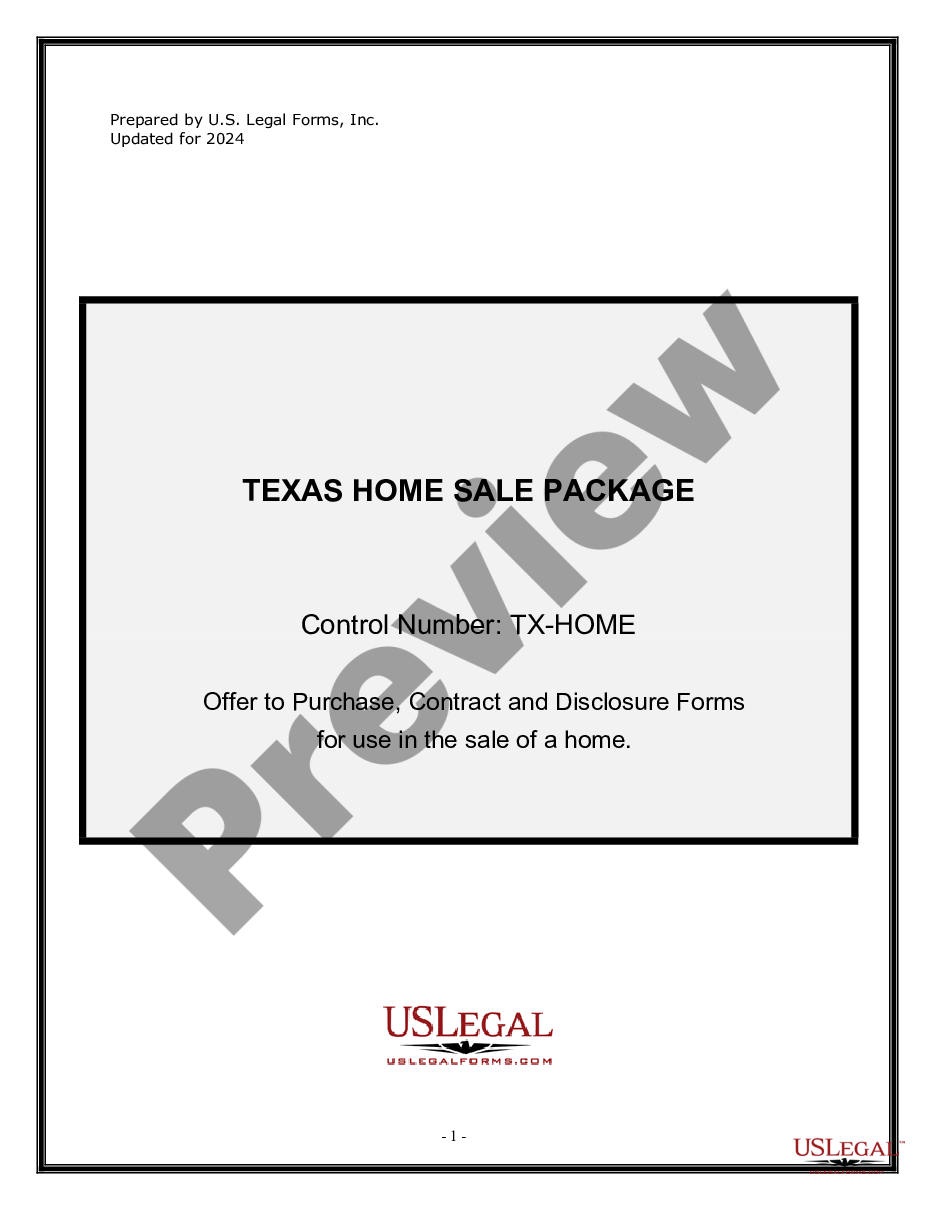
Similar documents: key differences
- Purchase Agreement vs. Letter of Intent — a purchase agreement is legally binding; a letter of intent signals interest without committing either party.
- Warranty Deed vs. Quitclaim Deed — a warranty deed guarantees clear title; a quitclaim deed transfers only whatever interest the seller currently holds.
- Property Disclosure vs. Home Inspection Report — a disclosure reflects what the seller knows; an inspection report reflects what a licensed inspector finds.
- Earnest Money Receipt vs. Down Payment Confirmation — earnest money is an upfront deposit toward the purchase; a down payment is settled at closing.
- Closing Statement vs. Loan Estimate — a closing statement shows final figures at settlement; a loan estimate is the lender's early projection of costs.
- FSBO Agreement vs. Agent-Assisted Contract — an FSBO agreement is prepared by the seller directly; an agent-assisted contract is negotiated through licensed representatives.
Search for more forms
Common Texas Home Sale Forms documents
- Purchase Agreement — records the agreed price, terms, and conditions between buyer and seller.
- Property Disclosure Statement — informs the buyer of known defects or material issues with the property.
- Deed Transfer Form — legally conveys ownership of the property from seller to buyer.
- Earnest Money Receipt — confirms the buyer's good-faith deposit has been received and held.
- Lead-Based Paint Disclosure — required for homes built before 1978 to notify buyers of potential paint hazards.
- Home Inspection Contingency — makes the sale conditional on the results of a professional property inspection.
- Closing Settlement Statement — itemizes all costs, credits, and final figures for both parties at closing.
FAQs
Most Texas home sales require at minimum a purchase agreement, a property disclosure statement, and a deed transfer form. Depending on the property, you may also need a lead-based paint disclosure, an earnest money receipt, and a closing settlement statement.
Yes. Texas allows homeowners to sell property on their own through a For Sale By Owner (FSBO) process. The same legal documents apply, so using accurate, attorney-drafted forms helps protect the sale.
Earnest money is a good-faith deposit made by the buyer to show serious intent to purchase. It is not legally required in Texas, but it is standard practice and gives the seller confidence the buyer is committed.
Texas sellers are required to complete a disclosure form notifying buyers of any known material defects — such as roof damage, foundation issues, or water damage. Providing an accurate disclosure protects sellers from future liability.
Ownership transfers when the signed deed is delivered to the buyer and recorded with the county clerk's office. Recording the deed is what makes the transfer a matter of public record.
Key legal points
- Texas does not require a real estate attorney to close a transaction, but using one is always an option.
- Sellers in Texas are required to disclose known material defects that could affect the property's value or desirability.
- The Texas Real Estate Commission (TREC) publishes standard contract forms widely used in agent-assisted transactions.
- Earnest money is typically held in escrow by a title company or broker and applied to the purchase price at closing.
- Lead-based paint disclosures are federally mandated for any residential property built before 1978, regardless of state.
- Title insurance is common in Texas and protects buyers and lenders against undiscovered claims on the property's title.
- A deed must be signed, notarized, and recorded with the county clerk's office to complete the legal transfer of ownership.
- Contingencies — such as financing or inspection clauses — give buyers a defined window to back out without losing their deposit.
- FSBO (For Sale By Owner) transactions use the same core documents as agent-assisted sales and carry the same legal weight.
How to get started
Start your home sale in minutes with these simple steps.
- Search the Texas Home Sale forms library and select the document type that fits your transaction.
- Preview the template to confirm it covers the terms, disclosures, and clauses you need.
- Subscribe to unlock full access to the complete library of attorney-drafted real estate forms.
- Open the form in the online editor and fill in all required fields, dates, and party details.
- Export the completed document as a PDF or send it directly to the other party for review and signature.
Practical tip
In Texas, always record the signed deed with the county clerk's office promptly after closing — an unrecorded deed can create title complications down the road.