South Dakota Home Sale Forms
Complete your South Dakota home sale with confidence. Cover every step from offer to closing with attorney-drafted templates built for South Dakota transactions.

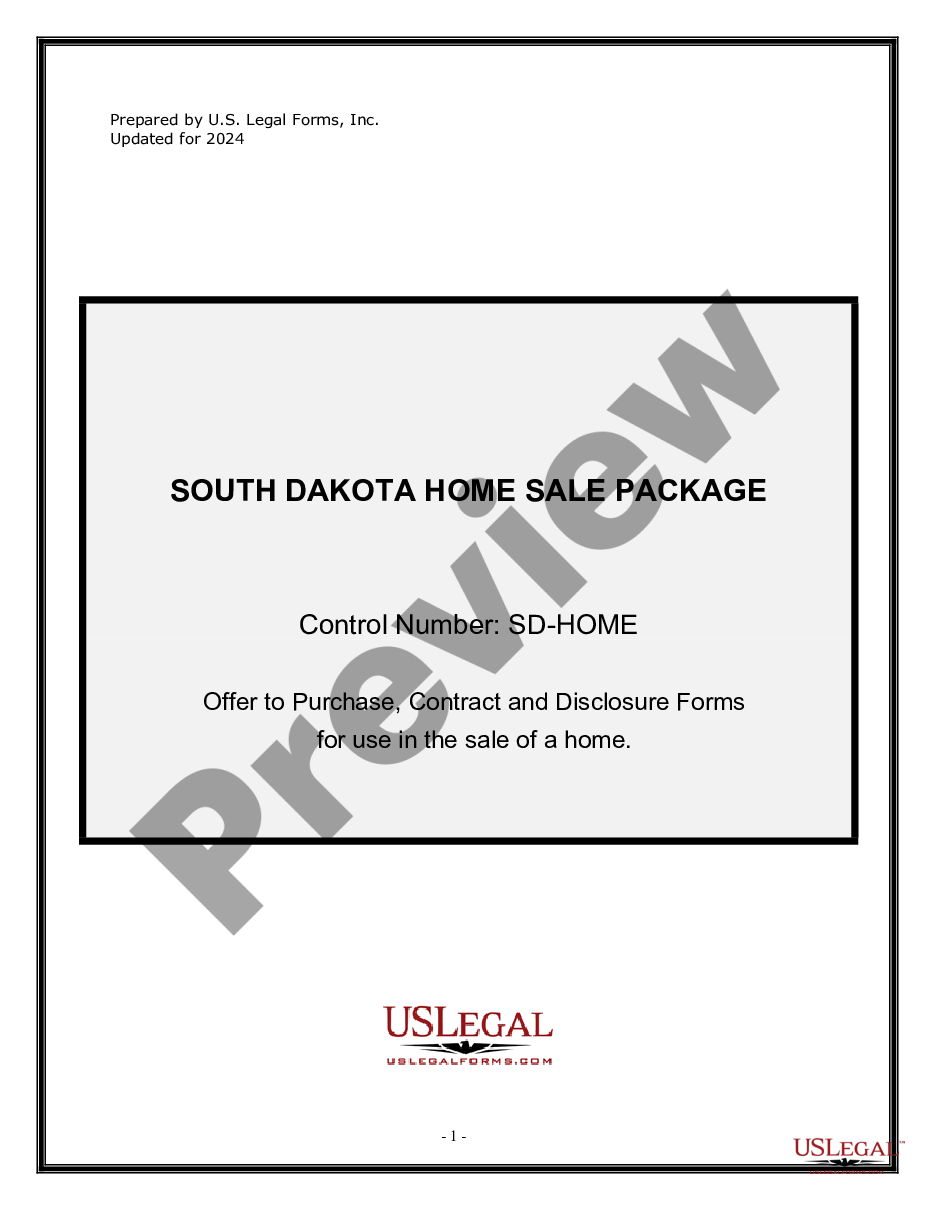
Home Sales Package
PopularEverything needed to sell or buy a home - sale contract, offer to purchase, disclosure statements, and lead-paint disclosure.
Similar documents: key differences
- Purchase Agreement vs. Letter of Intent — a purchase agreement is legally binding on both parties, while a letter of intent is a preliminary, non-binding expression of interest.
- Warranty Deed vs. Quitclaim Deed — a warranty deed guarantees the seller holds clear title, while a quitclaim deed transfers only whatever interest the seller currently holds with no title guarantee.
- Property Disclosure vs. Home Inspection Report — a disclosure captures what the seller already knows about the property, while an inspection report reflects findings from an independent professional examination.
- Earnest Money Receipt vs. Purchase Agreement — the receipt documents the deposit alone, while the purchase agreement governs the full terms of the sale.
- Closing Statement vs. Loan Estimate — the closing statement shows final, actual costs at settlement, while the loan estimate provides the lender's early projection of anticipated costs.
- General Warranty Deed vs. Special Warranty Deed — a general warranty deed covers the entire chain of title history, while a special warranty deed limits the seller's guarantee to the period of their own ownership.
Search for more forms
Common South Dakota Home Sale Forms documents
- Purchase Agreement — sets out the price, contingencies, and terms both buyer and seller commit to before closing.
- Property Disclosure Statement — informs the buyer of any known defects or material conditions affecting the property.
- Deed Transfer Form — officially conveys legal ownership of the property from seller to buyer at closing.
- Earnest Money Receipt — acknowledges the buyer's good-faith deposit and outlines conditions for its return or forfeiture.
- Lead-Based Paint Disclosure — required for homes built before 1978, notifying buyers of potential lead paint hazards.
- Home Inspection Contingency Addendum — makes the sale conditional on the results of a professional property inspection.
- Closing Settlement Statement — itemizes all costs, credits, and funds exchanged between both parties at the closing table.
FAQs
South Dakota does not require an attorney to be present at closing, but many buyers and sellers choose to have one review the documents. Using attorney-drafted templates is a reliable way to ensure your paperwork meets state standards even without direct legal representation.
Sellers must provide a written property condition disclosure covering known defects, structural issues, and other material facts. Homes built before 1978 also require a federal lead-based paint disclosure.
Earnest money is a good-faith deposit made by the buyer to show serious intent to purchase. It is not legally required in South Dakota, but it is common practice and is typically held in escrow until closing.
At closing, both parties sign the final documents, funds are transferred, and the deed is delivered to the buyer. A settlement statement itemizes all costs, and the deed is then recorded with the county to complete the transfer of ownership.
Yes. For Sale By Owner (FSBO) sales are fully legal in South Dakota. You are still responsible for all required disclosures and a valid purchase agreement, so starting with professionally drafted forms helps keep the process smooth and compliant.
Key legal points
- South Dakota law requires sellers to complete a written property condition disclosure before a residential sale is finalized.
- Any known material defects — structural, mechanical, or environmental — must be disclosed to the buyer in good faith.
- Federal law requires a lead-based paint disclosure and a 10-day inspection period for all homes built before 1978.
- The purchase agreement should clearly state the purchase price, closing date, earnest money amount, and any contingencies.
- Earnest money is typically held in escrow by a neutral third party and applied toward closing costs or the down payment.
- Title searches are standard practice in South Dakota to confirm the seller holds clear, marketable title before transfer.
- A deed must be signed, notarized, and recorded with the county register of deeds to complete the legal transfer of ownership.
- Home sale contracts with contingencies — financing, inspection, or appraisal — give either party defined grounds to exit the agreement without penalty.
- FSBO (For Sale By Owner) transactions follow the same disclosure and documentation requirements as agent-assisted sales in South Dakota.
How to get started
Start your South Dakota home sale in minutes with these simple steps.
- Find the right template by browsing the Home Sale category and selecting the document that matches your current stage in the transaction.
- Preview the full form before committing so you can confirm it covers the terms and disclosures your sale requires.
- Subscribe to unlock unlimited access to all South Dakota home sale templates and related real estate forms.
- Complete the form in the online editor by filling in your property details, parties' names, agreed terms, and any contingencies.
- Export the finished document as a PDF or Word file, then share it with the other party, your agent, or your closing attorney.
Practical tip
In South Dakota, recording the signed deed promptly with the county register of deeds protects the buyer's ownership rights and prevents title disputes down the line.