South Carolina Home Sale Forms
Complete your South Carolina home sale with confidence. Every form is attorney-drafted, easy to customize, and built for buyers, sellers, and agents alike.

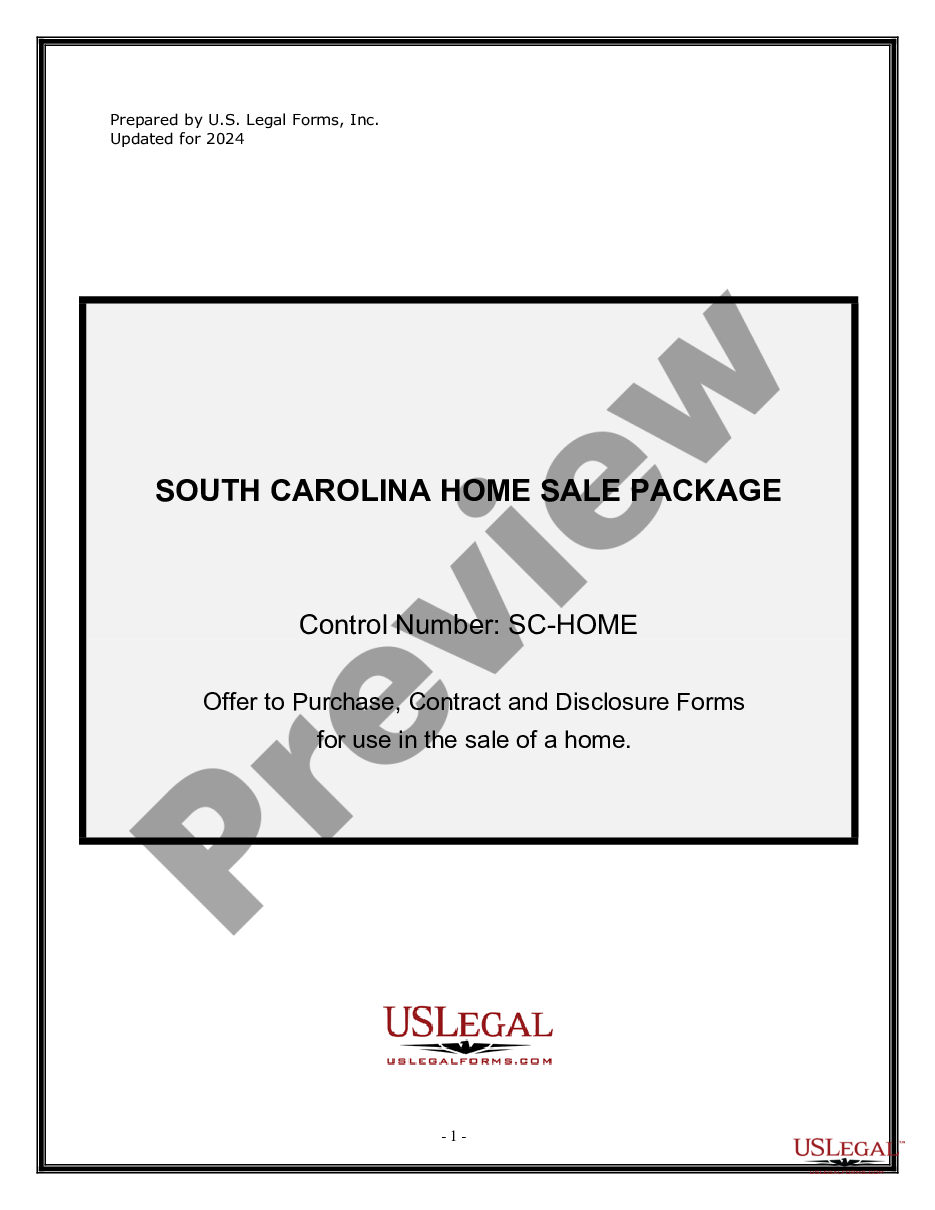
Home Sales Package
PopularEverything needed to sell or buy a home - sale contract, offer to purchase, disclosure statements, and lead-paint disclosure.
Similar documents: key differences
- Purchase Agreement vs. Letter of Intent — a purchase agreement is binding; a letter of intent is a preliminary, non-binding expression of interest.
- Warranty Deed vs. Quitclaim Deed — a warranty deed guarantees clear title; a quitclaim deed transfers only whatever interest the grantor holds, without guarantees.
- Property Disclosure vs. Home Inspection Report — the disclosure is completed by the seller; the inspection report is produced by a licensed third-party inspector.
- Earnest Money Receipt vs. Closing Statement — the receipt documents the deposit at the start; the closing statement reconciles all funds at the end.
- General Warranty Deed vs. Special Warranty Deed — a general warranty covers the full ownership history; a special warranty covers only the seller's period of ownership.
- FSBO Agreement vs. Agent-Listed Agreement — an FSBO agreement is used when the seller represents themselves; an agent-listed agreement involves a licensed real estate broker.
Search for more forms
Common South Carolina Home Sale Forms documents
- Purchase Agreement — sets out the price, terms, and conditions both parties agree to before closing.
- Property Disclosure Statement — details the seller's known material defects and condition of the home.
- Deed Transfer Form — officially conveys legal title from the seller to the buyer at closing.
- Earnest Money Receipt — acknowledges the buyer's good-faith deposit and outlines how it is held.
- Lead-Based Paint Disclosure — required for homes built before 1978, informing buyers of potential hazards.
- Home Inspection Contingency Addendum — gives the buyer the right to request repairs or withdraw based on inspection results.
- Closing Statement — itemizes all costs, credits, and funds exchanged at the time of settlement.
FAQs
South Carolina is one of the states that requires a licensed attorney to conduct the real estate closing and handle the title work. While you can prepare your own purchase agreement and disclosures, an attorney must be present at or oversee the closing itself.
Sellers are required to complete the Residential Property Condition Disclosure Statement, which covers structural issues, systems, and known defects. Sellers of homes built before 1978 must also provide a Lead-Based Paint Disclosure under federal law.
Earnest money is a good-faith deposit the buyer submits with an offer to show serious intent. Whether it is refundable depends on the contingencies written into the purchase agreement — for example, if financing falls through and a financing contingency is in place, the deposit is typically returned.
Yes. For Sale By Owner (FSBO) sales are fully permitted in South Carolina. You will still need the standard purchase agreement, disclosure forms, and a closing attorney — the same documents required in any residential transaction.
The deed is signed and transferred at the closing table. After closing, the attorney records the deed with the county Register of Deeds, which officially makes the buyer the legal owner of record.
Key legal points
- South Carolina requires sellers to complete a Residential Property Condition Disclosure Statement before or at the time of an offer.
- The state imposes a deed recording fee, often called a deed stamp tax, calculated on the sale price at closing.
- Earnest money is typically held in a neutral escrow account by the real estate brokerage or an attorney.
- South Carolina law requires a licensed attorney to conduct the closing and issue title insurance on behalf of the buyer.
- Deeds must be recorded with the Register of Deeds in the county where the property is located.
- Lead-based paint disclosures are federally mandated for all homes built before 1978, regardless of state rules.
- A home inspection contingency gives buyers a negotiated window — typically 5 to 10 days — to complete inspections and request repairs.
- For Sale By Owner (FSBO) transactions still require the same legally valid forms and a closing attorney as agent-assisted sales.
- Any changes to an executed purchase agreement must be made through a written addendum signed by both parties.
How to get started
Start your South Carolina home sale in minutes with these simple steps.
- Browse the South Carolina Home Sale library and select the document type that matches your need.
- Preview the template to confirm it covers the terms, disclosures, or transfer details you require.
- Subscribe to unlock full access to all attorney-drafted home sale forms for South Carolina.
- Complete the form using the online editor — fill in property details, names, dates, and any state-specific fields.
- Download, print, or share the finished document with the other party, your agent, or your closing attorney.
Practical tip
In South Carolina, all closings must go through a licensed closing attorney — confirm your attorney is booked early in the process, as availability can be limited in busy markets.