New Jersey Home Sale Forms
Complete your New Jersey home sale with confidence. Cover every step from offer to closing with attorney-drafted templates built for New Jersey transactions.

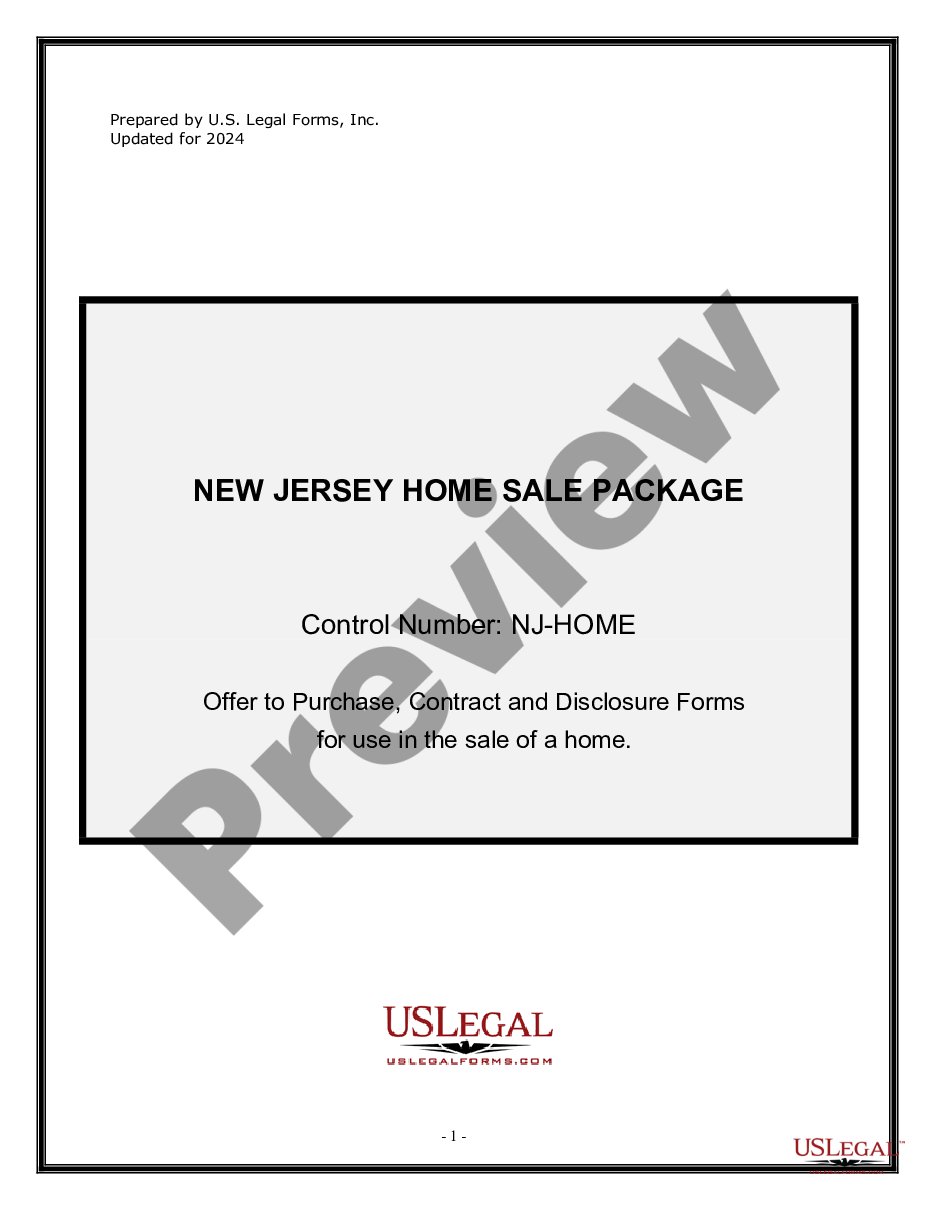
Home Sales Package
PopularEverything needed to sell or buy a home - sale contract, offer to purchase, disclosure statements, and lead-paint disclosure.
Similar documents: key differences
- Purchase Agreement vs. Letter of Intent — a purchase agreement is a binding contract, while a letter of intent is a non-binding expression of interest to buy.
- Warranty Deed vs. Quitclaim Deed — a warranty deed guarantees clear title from the seller, while a quitclaim deed transfers only whatever interest the seller currently holds.
- Property Disclosure vs. Home Inspection Report — a disclosure is the seller's written account of known issues, while an inspection report is an independent professional assessment.
- Earnest Money Receipt vs. Closing Settlement Statement — the earnest money receipt records the initial deposit, while the settlement statement accounts for all final financial transactions at closing.
- Purchase Agreement vs. Deed Transfer Form — the purchase agreement sets the sale terms before closing, while the deed transfer form legally conveys ownership at closing.
- Home Inspection Contingency vs. As-Is Addendum — an inspection contingency allows the buyer to request repairs, while an as-is addendum confirms the buyer accepts the property in its current condition.
Search for more forms
Common New Jersey Home Sale Forms documents
- Purchase Agreement — establishes the price, terms, and conditions that both buyer and seller agree to before closing.
- Property Disclosure Statement — informs the buyer of any known defects or material conditions affecting the property.
- Deed Transfer Form — officially conveys legal ownership of the property from the seller to the buyer.
- Lead-Based Paint Disclosure — required for homes built before 1978, notifying buyers of potential lead paint hazards.
- Earnest Money Receipt — documents the buyer's good-faith deposit and outlines conditions for its return or forfeiture.
- Home Inspection Contingency Addendum — gives the buyer the right to conduct an inspection and negotiate repairs before finalizing the sale.
- Closing Settlement Statement — itemizes all costs, credits, and payments exchanged at the close of the transaction.
FAQs
New Jersey does not legally require an attorney for a residential sale, but most buyers and sellers choose to have one review the contract. An attorney can catch issues before they become costly problems at closing.
Sellers are required to provide a property condition disclosure statement covering structural, mechanical, and environmental issues. Federal law also requires a lead-based paint disclosure for homes built before 1978.
Earnest money is a good-faith deposit the buyer submits when making an offer. Whether it is refundable depends on the contingencies written into the purchase agreement — such as financing or inspection clauses.
At closing, all parties sign the final documents, the buyer pays the remaining balance, and the seller receives the net proceeds. The deed is then recorded with the county, officially transferring ownership.
Yes, for-sale-by-owner (FSBO) sales are fully legal in New Jersey. Sellers who go this route are still responsible for completing all required disclosures and contracts, which makes having proper templates especially important.
Key legal points
- New Jersey requires sellers to complete a property disclosure form, even for older homes.
- Lead-based paint disclosures are federally mandated for any residential property built before 1978.
- The New Jersey Realty Transfer Fee is paid by the seller at closing and is calculated based on the sale price.
- Earnest money deposits are held in escrow and the terms governing their release must be clearly stated in writing.
- New Jersey law does not require an attorney to close a real estate transaction, but legal review is strongly recommended.
- A deed transfer must be recorded with the county clerk's office to make the change of ownership part of the public record.
- Home inspection contingencies must specify a deadline by which the buyer must complete the inspection and submit any repair requests.
- FSBO sellers in New Jersey are still legally responsible for completing all required disclosure forms.
- Closing documents must accurately reflect the final agreed-upon price, credits, and any seller concessions to be enforceable.
How to get started
Start your New Jersey home sale in minutes with these simple steps.
- Browse the library to find the right home sale template for your specific need, whether you are buying, selling, or both.
- Preview the full document to confirm it covers the correct transaction type and meets New Jersey requirements before proceeding.
- Subscribe to access the complete library of attorney-drafted home sale forms with no per-document fees.
- Open your chosen form in the online editor and fill in property details, party names, dates, and any applicable terms.
- Download, print, or share the completed document directly from the platform when you are ready to sign or send.
Practical tip
New Jersey sellers should gather their property survey, past utility records, and any known repair history before completing the disclosure form — it speeds up the process and reduces buyer questions later.