New Hampshire Home Sale Forms
Cover every step of a New Hampshire property transfer with ready-to-use, attorney-drafted templates for buyers, sellers, and agents.

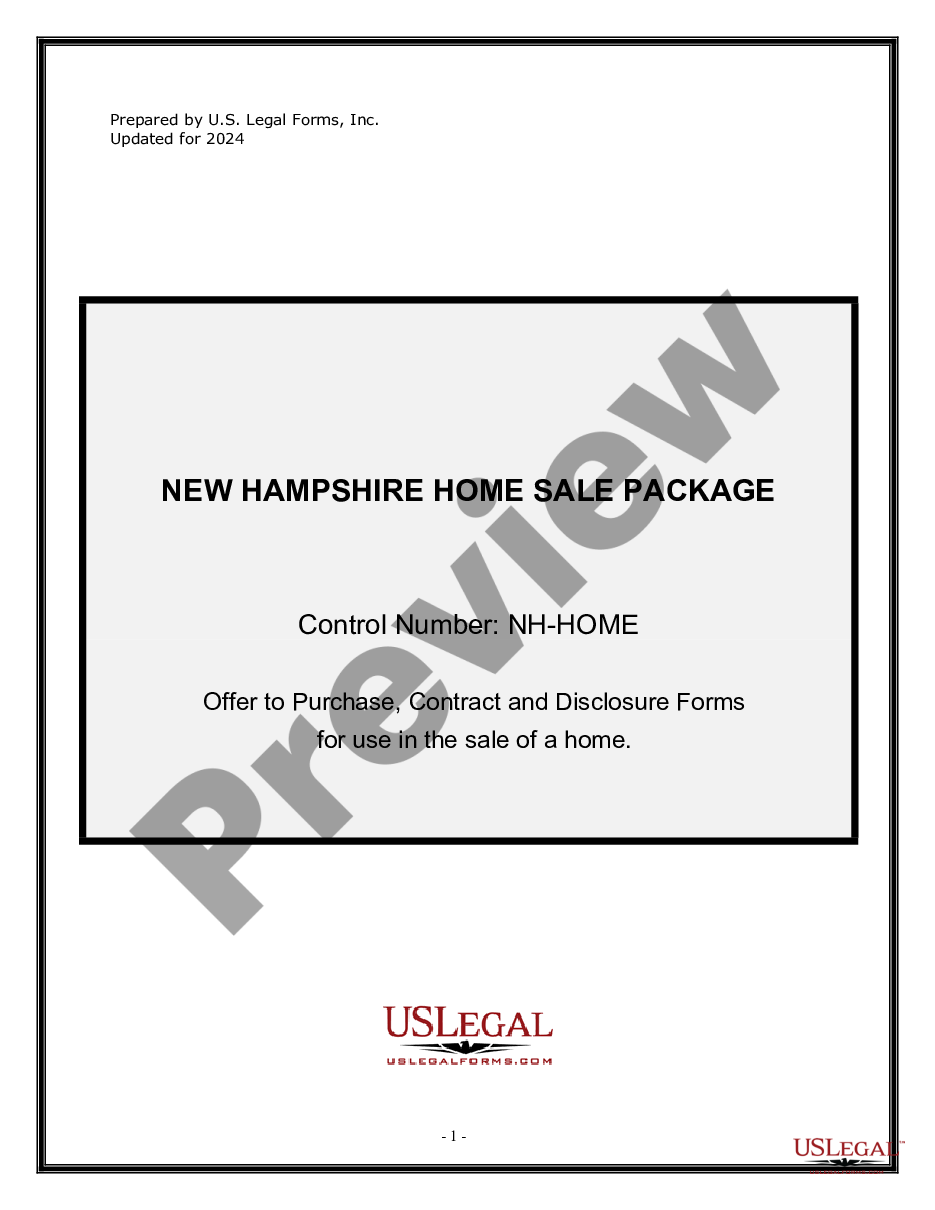
Home Sales Package
PopularEverything needed to sell or buy a home - sale contract, offer to purchase, disclosure statements, and lead-paint disclosure.
Similar documents: key differences
- Purchase Agreement vs. Letter of Intent — a purchase agreement is binding; a letter of intent is a non-binding expression of interest.
- Warranty Deed vs. Quitclaim Deed — a warranty deed guarantees clear title; a quitclaim deed transfers only the seller's existing interest without guarantees.
- Earnest Money Receipt vs. Closing Statement — the earnest money receipt confirms the deposit at the start; the closing statement reconciles all funds at the end.
- Property Disclosure vs. Home Inspection Report — the disclosure comes from the seller; the inspection report comes from a licensed inspector hired by the buyer.
- Purchase Agreement vs. Offer to Purchase — an offer to purchase is the buyer's initial proposal; a purchase agreement is the mutually signed, enforceable contract.
- Title Transfer vs. Bill of Sale — a title transfer conveys real property ownership; a bill of sale is used for personal property included in the sale.
Search for more forms
Common New Hampshire Home Sale Forms documents
- Purchase Agreement — establishes the price, terms, and conditions both parties agree to before closing.
- Property Disclosure Statement — informs the buyer of known defects or material conditions affecting the property.
- Deed Transfer Form — legally conveys ownership of the property from seller to buyer upon closing.
- Earnest Money Receipt — acknowledges the buyer's good-faith deposit and outlines the conditions for its return.
- Home Inspection Contingency — gives the buyer the right to negotiate or withdraw based on inspection findings.
- Lead-Based Paint Disclosure — required for homes built before 1978, notifying buyers of potential lead hazards.
- Closing Statement — itemizes all financial credits, debits, and fees settled at the close of the transaction.
FAQs
Most transactions involve a purchase agreement, a property disclosure statement, deed transfer paperwork, and a closing statement. Depending on the property, additional forms such as a lead-based paint disclosure or a home inspection contingency addendum may also be required.
New Hampshire does not mandate attorney involvement at closing. However, many buyers and sellers choose to work with an attorney to review documents, conduct a title search, and oversee the closing process.
Earnest money is a good-faith deposit made by the buyer when submitting an offer. It is held in escrow and applied toward the purchase price at closing. The purchase agreement spells out the conditions under which it may be refunded or forfeited.
FSBO stands for For Sale By Owner, meaning the seller handles the transaction without a listing agent. FSBO sellers still need the same core documents — purchase agreement, property disclosure, deed transfer, and closing statement — to complete a legally valid sale.
Ownership transfers when a signed deed is delivered and accepted at closing. Recording the deed with the county Registry of Deeds immediately afterward makes the transfer part of the official public record.
Key legal points
- New Hampshire does not require an attorney at closing, but consulting one is a common and practical choice for both parties.
- Sellers in New Hampshire are required to disclose known material defects that could affect the value or desirability of the property.
- The purchase agreement must include a clear description of the property, the agreed purchase price, and any contingencies.
- Earnest money is typically held in escrow by the listing broker or an attorney until closing or termination of the contract.
- Federal law requires a lead-based paint disclosure for all residential properties built before 1978, regardless of state.
- New Hampshire uses a deed recorded with the county Registry of Deeds to complete the legal transfer of property ownership.
- Home inspection contingencies give buyers a defined window — typically 7 to 14 days — to conduct inspections and request repairs.
- Title searches are standard practice in New Hampshire to confirm the seller holds clear, marketable title before closing.
- Real estate transfer taxes in New Hampshire are paid at closing and are generally split equally between buyer and seller.
How to get started
Start your home sale in minutes with these simple steps.
- Search the library and select the New Hampshire home sale template that fits your transaction.
- Preview the full document to confirm it covers the terms and disclosures you need.
- Subscribe to access the complete, attorney-drafted form.
- Fill in the details using the guided online editor — no legal software required.
- Download, print, or share the completed document directly from your account.
Practical tip
In New Hampshire, record the signed deed with the county Registry of Deeds as soon as possible after closing to establish the buyer's ownership in the public record.