Nebraska Home Sale Forms
Nebraska home sale forms cover every step from offer to closing. All templates are attorney-drafted so you can move forward with confidence.

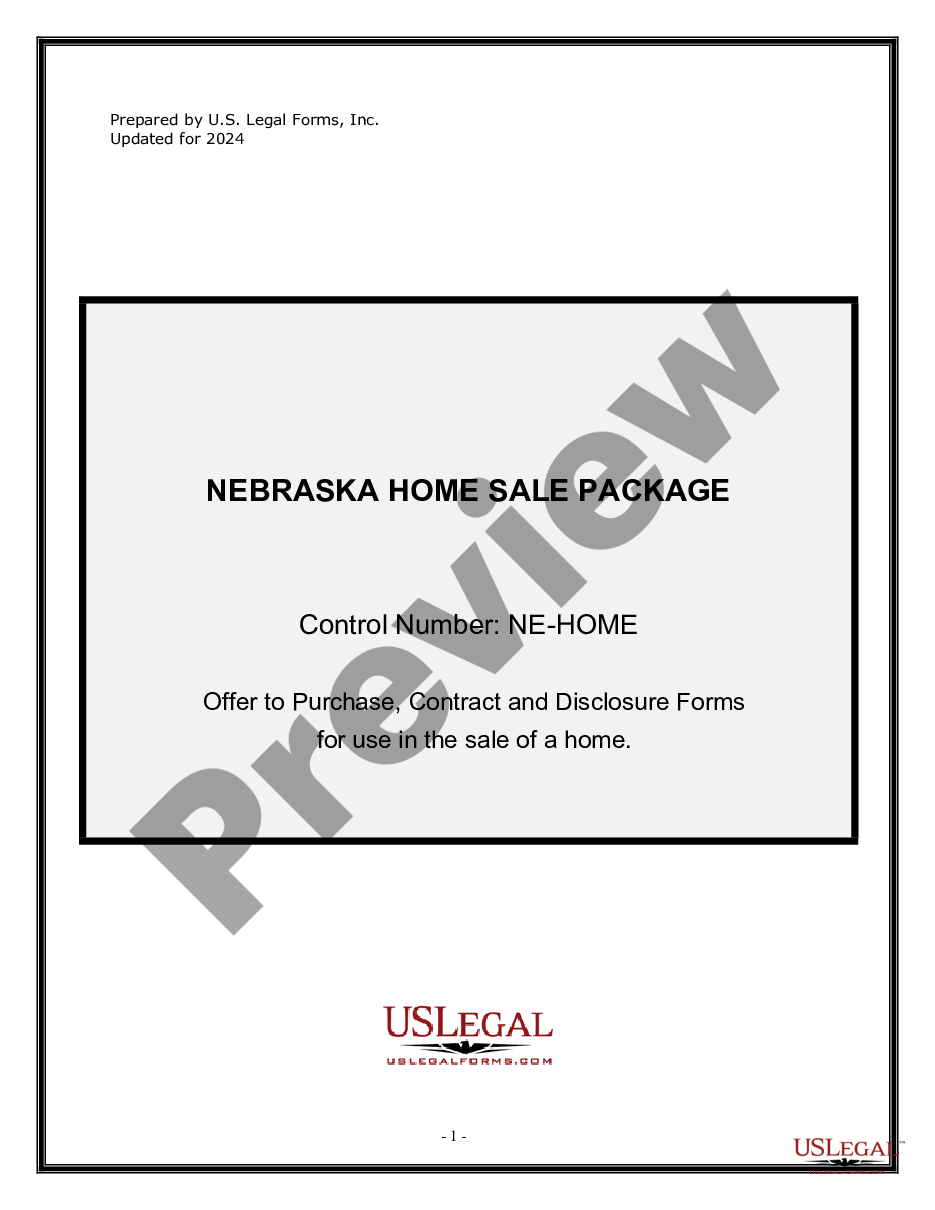
Similar documents: key differences
- Purchase Agreement vs. Letter of Intent — a purchase agreement is a binding contract, while a letter of intent is a non-binding expression of interest.
- Warranty Deed vs. Quitclaim Deed — a warranty deed guarantees clear title to the buyer, while a quitclaim deed transfers only the seller's existing interest without guarantees.
- Earnest Money Receipt vs. Closing Statement — the earnest money receipt documents the deposit at offer stage, while the closing statement accounts for all funds at settlement.
- Property Disclosure vs. Home Inspection Report — a disclosure reflects what the seller already knows, while an inspection report reflects what a licensed inspector independently discovers.
- Purchase Agreement vs. Lease-Purchase Agreement — a standard purchase agreement transfers ownership at closing, while a lease-purchase agreement combines a rental period with a future purchase obligation.
- General Warranty Deed vs. Special Warranty Deed — a general warranty deed covers the full ownership history, while a special warranty deed only covers the period the seller held title.
Search for more forms
Common Nebraska Home Sale Forms documents
- Purchase Agreement — establishes the price, terms, and conditions both buyer and seller agree to before closing.
- Property Disclosure Statement — informs the buyer of any known defects or material conditions affecting the property.
- Deed Transfer Form — legally conveys ownership of the property from the seller to the buyer.
- Earnest Money Receipt — confirms the buyer's good-faith deposit has been received and held pending closing.
- Lead-Based Paint Disclosure — required for homes built before 1978, notifying buyers of potential lead paint hazards.
- Home Inspection Contingency Addendum — makes the sale conditional on the results of a professional property inspection.
- Closing Statement — itemizes all financial credits, debits, and fees for both parties at the time of settlement.
FAQs
No. Nebraska law allows homeowners to sell their property without a licensed agent in a For Sale By Owner (FSBO) transaction. You will still need to complete all required disclosure forms and prepare a valid purchase agreement.
Nebraska sellers must provide a Seller Property Condition Disclosure to buyers before or at the time of signing the purchase agreement. Homes built before 1978 also require a Lead-Based Paint Disclosure under federal law.
Earnest money is a deposit the buyer provides to show good faith when making an offer. It is held in escrow and applied toward the purchase price at closing, or returned to the buyer if the sale falls through under a qualifying contingency.
At closing, all parties review and sign the final documents, funds are transferred, and the deed is delivered to the buyer. A closing statement itemizes every financial transaction, and the deed is then recorded with the county to complete the title transfer.
Attorney-drafted standard forms cover the vast majority of residential home sales in Nebraska. For unusual circumstances — such as seller financing, estate sales, or complex contingencies — consulting a real estate attorney to review or customize the agreement is a good idea.
Key legal points
- Nebraska sellers are required by law to complete a property condition disclosure before or at the time of signing a purchase agreement.
- Residential properties built before 1978 require a federally mandated lead-based paint disclosure regardless of the property's current condition.
- Earnest money deposits in Nebraska are typically held in escrow by a title company or real estate broker until closing.
- Nebraska does not require an attorney to be present at closing, but using one is always an option and can be helpful for complex transactions.
- The deed must be signed, notarized, and recorded with the county register of deeds to complete the legal transfer of title.
- FSBO (For Sale By Owner) sellers in Nebraska are subject to the same disclosure obligations as sellers working with licensed agents.
- A home inspection contingency gives the buyer a defined window to request repairs or withdraw from the contract without penalty.
- Nebraska follows a buyer-beware standard for conditions not disclosed, making complete and accurate disclosure forms especially important.
- Real estate closing costs in Nebraska typically include title insurance, recording fees, and prorated property taxes, all documented on the closing statement.
How to get started
Start your Nebraska home sale in minutes with these simple steps.
- Search the Nebraska Home Sale forms library to find the template that matches your transaction.
- Preview the document to confirm it covers the terms and details relevant to your property.
- Subscribe to access the full, attorney-drafted template ready for use.
- Open the form in the online editor and fill in your property details, names, dates, and agreed terms.
- Download, print, or share the completed document with the other party or your closing agent.
Practical tip
In Nebraska, always record the signed deed with your county register of deeds promptly after closing — delays can create title complications that are difficult and costly to resolve later.