Mississippi Home Sale Forms
Handle every step of a Mississippi home sale with confidence. Our attorney-drafted templates cover purchase agreements, disclosures, and closing documents.

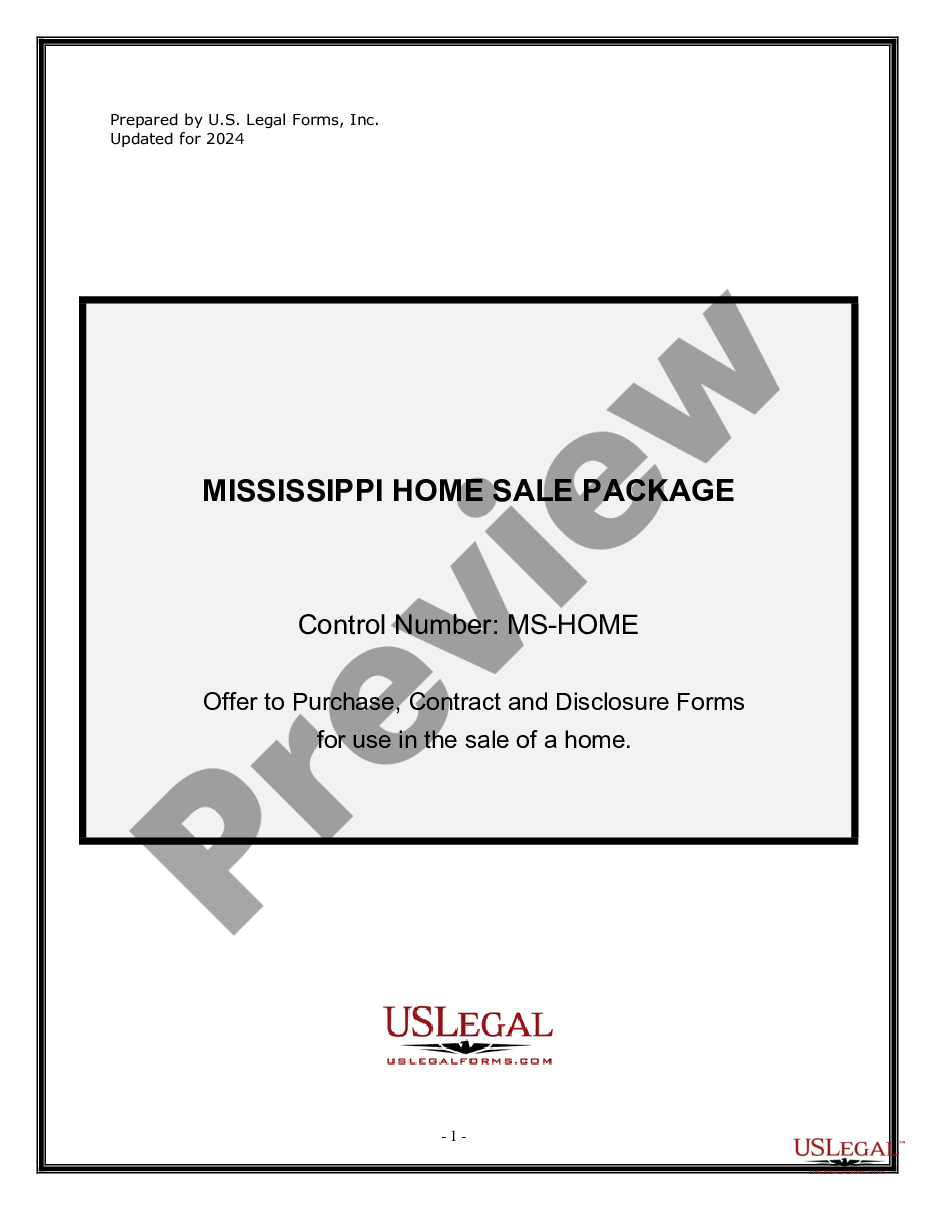
Home Sales Package
PopularEverything needed to sell or buy a home - sale contract, offer to purchase, disclosure statements, and lead-paint disclosure.
Similar documents: key differences
- Purchase Agreement vs. Letter of Intent — a purchase agreement is binding with full terms; a letter of intent is a preliminary, non-binding expression of interest.
- Warranty Deed vs. Quitclaim Deed — a warranty deed guarantees the seller's clear title; a quitclaim deed transfers only whatever interest the seller currently holds.
- Property Disclosure vs. Home Inspection Report — a disclosure is completed by the seller based on personal knowledge; an inspection report is prepared by a licensed third-party inspector.
- Earnest Money Receipt vs. Purchase Agreement — the receipt confirms the deposit was received; the purchase agreement governs the full terms of the sale.
- Closing Statement vs. Title Commitment — the closing statement details final financial figures; the title commitment outlines the conditions under which title insurance will be issued.
- FSBO Agreement vs. Agent-Brokered Agreement — an FSBO agreement is used when the seller manages the sale directly; a brokered agreement involves a licensed real estate agent acting on one or both parties' behalf.
Search for more forms
Common Mississippi Home Sale Forms documents
- Purchase Agreement — establishes the agreed price, terms, and conditions between buyer and seller.
- Property Disclosure Statement — informs the buyer of known defects or material conditions affecting the property.
- Deed Transfer Form — legally conveys ownership of the property from the seller to the buyer.
- Earnest Money Receipt — confirms the buyer's good-faith deposit and outlines conditions for its return.
- Lead-Based Paint Disclosure — required for homes built before 1978 to notify buyers of potential lead hazards.
- Home Inspection Contingency Addendum — allows the buyer to request repairs or withdraw based on inspection findings.
- Closing Settlement Statement — itemizes all costs, credits, and funds exchanged at the close of the transaction.
FAQs
Mississippi does not legally require an attorney to close a residential sale. That said, having an attorney review your documents adds an extra layer of protection, especially in complex transactions.
Mississippi sellers are required to disclose known material defects that could affect the property's value or the buyer's decision to purchase. Federal law also requires a lead-based paint disclosure for homes built before 1978.
Earnest money is a good-faith deposit made by the buyer when submitting an offer. Whether it is refundable depends on the contingencies written into the purchase agreement, such as a financing or inspection contingency.
Yes. A For Sale By Owner (FSBO) transaction is fully legal in Mississippi. You will still need the same legal forms — including a purchase agreement and property disclosure — that an agent-assisted sale would require.
The deed is signed at closing and becomes effective upon delivery to the buyer. To be fully protected, the buyer should have the deed recorded with the local chancery court clerk promptly after closing.
Key legal points
- Mississippi law requires sellers to disclose known material defects in the property before closing.
- A signed purchase agreement is a legally binding contract once all parties accept the terms.
- Earnest money terms — including refund conditions — should be clearly spelled out in writing.
- Federal law mandates a lead-based paint disclosure for any home built before 1978, regardless of state.
- Mississippi does not require an attorney to be present at closing, but legal review is always an option.
- The deed must be properly executed and recorded with the county chancery court to complete the title transfer.
- Contingency clauses — such as financing or inspection contingencies — protect buyers if conditions are not met.
- FSBO sellers are still bound by the same disclosure and contractual requirements as agent-represented sellers.
- Title insurance is not required by Mississippi law but is strongly recommended to protect against future ownership disputes.
How to get started
Start your home sale in minutes with these straightforward steps.
- Search the Mississippi Home Sale forms library and select the template that matches your needs.
- Preview the document to confirm it covers the right terms and suits your transaction.
- Subscribe to access the full template library for your state.
- Open the form in the online editor and fill in all required details for your property and parties.
- Download the completed document, print it for signatures, or send it electronically to the other party.
Practical tip
In Mississippi, record your deed with the chancery court clerk in the county where the property is located as soon as possible after closing to protect the buyer's ownership rights.